
86.9 out of 100. That single number, published by the independent testing firm Artificial Analysis on October 13, 2026, tells most of the story: Grok Voice 3.0, the new speech-to-speech model from SpaceXSI — the company formerly known as xAI, after SpaceX acquired it and renamed it — now leads the global Speech-to-Speech Index, ahead of OpenAI's GPT-Live-1 and Google's Gemini 3.8 Live. The official launch came on October 14, 2026, with a striking commercial decision: the price stays at 8 US cents per minute, or $4.80 per hour, exactly where the previous generation sat. Our coverage, updated October 15, 2026, breaks down the official numbers and what they mean for developers and businesses worldwide.
Source: Tesla's official X account — as referenced in the official launch announcement
The Official Numbers: Grok Voice 3.0 vs the Field
The following table is reproduced from the official launch announcement, with Artificial Analysis data dated October 13, 2026:
| Benchmark | Grok Voice 3.0 | Grok Voice 2.0 | GPT-Live-1 | Gemini 3.8 Live |
|---|---|---|---|---|
| Overall Speech-to-Speech Index | 86.9 | 81.3 | 83.2 | 82.6 |
| Speech reasoning — Big Bench Audio | 98.5% | 97.2% | 90.1% | 97.7% |
| Human preference — Speech Agent Arena (Elo) | 1070 | 1011 | 1048 | 990 |
| Task Success Rate | 94.8% | 94.6% | 87.4% | 89.1% |
| Conversational dynamics — Full Duplex Bench | 97.0% | 95.1% | 94.9% | 91.9% |
| Cost per completed task | $0.025 | — | $0.030 | $0.055 (GPT-Realtime-2.1) |
The overall index combines speech reasoning, the τ-Voice test for support calls with diverse accents and background noise, and listener preference from blind head-to-head calls. In the details, GPT-Live-1 still wins τ-Voice outright at 74.5% against 71.6% — but Grok reaches near-parity with roughly 40% faster time to first audio, the intelligence-versus-responsiveness trade-off every project must weigh against its own audience.
Where It Already Runs in Production
What separates this launch from laboratory demos is that the model already carries real operational load:
- Tesla: millions of voice conversations per day inside vehicles — calendar checks and email replies through Connectors, bigger errands like ordering coffee or booking dinner through Grok Bot, whose voice mode runs on the new model.
- Starlink: about 20,000 customer calls per day across multiple languages. Roughly 70% are resolved with no human in the loop, and one in four sales calls ends in a purchase before the caller hangs up. A single agent built on the model verifies customers, troubleshoots hardware, issues credits, and ships replacement equipment — an end-to-end chain with no human step.
Nitin Aggarwal, Senior Director of Product Management at ServiceNow — whose open-source EVA-Bench scored the model highest on accuracy at 74% across 200+ enterprise scenarios — said Grok Voice 3.0 "pairs top accuracy with a natural, responsive conversation, setting a new standard for what enterprises can expect from AI on the front line of customer service."
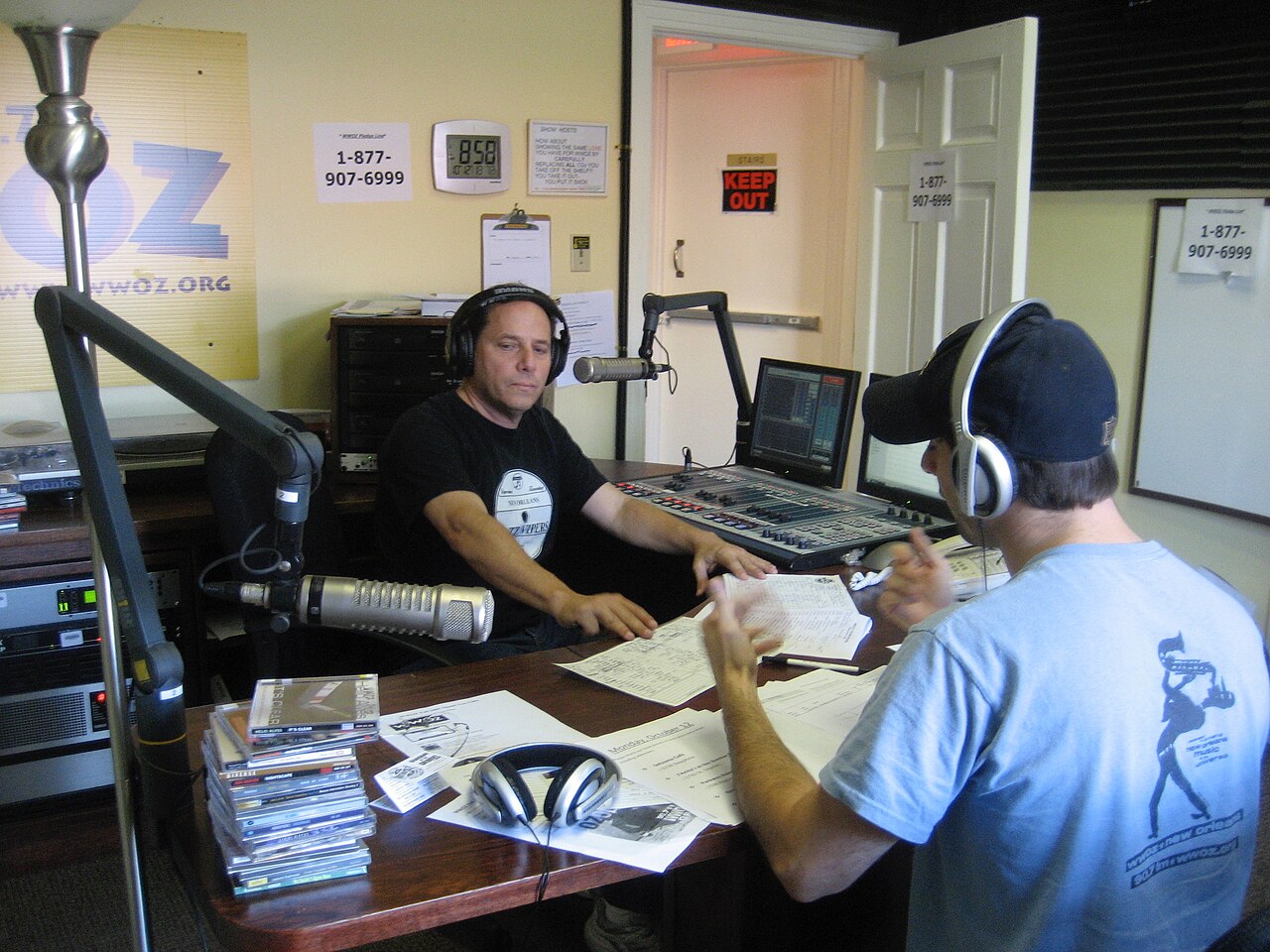
Source: Wikimedia Commons — CC BY 3.0

Pricing and Availability for Developers
Grok Voice 3.0 is available today in the Voice Agent API at $0.08 per minute ($4.80 per hour) — unchanged from Grok Voice 2.0 despite the capability jump, making it the cheapest per completed task among the frontier models in the table above. The most practical detail: developers already pointing at the grok-voice-latest alias were migrated to the new version automatically, with zero code changes required. The official developer documentation lists the model grok-voice-3.0 on the REALTIME endpoint, accepting and returning both text and audio, with concurrency tiers scaling from 10 to 400 simultaneous sessions as workloads grow.
The arithmetic makes the gap concrete. A typical 6-minute support call costs $0.048. A hotline handling 1,000 minutes a month pays $80; at 10,000 minutes — a mid-sized support operation — the bill is $800. Given that competing models cost 20% to 120% more per completed task in Artificial Analysis's own measurements, existing operators get a performance upgrade and a relative price cut simultaneously, with no migration risk.
What This Means for You
- If you run customer support anywhere: the dominant cost in contact centers is the human minute. A model that completes 94.8% of tasks at 8 cents per minute resets the economics of any support operation, especially where accented callers and noisy lines are the norm rather than the exception.
- If you are an everyday user: you will feel this model gradually — in Tesla vehicles, in Grok apps, and across X's bundled X Subscription with Grok and Cursor — without lifting a finger.
- For independent developers: the low price plus automatic migration lowers the barrier to experimentation; a working voice-agent prototype can be assembled in hours using the xAI Voice Agent Builder.
- For anyone tracking the race: the gap between the big three voice vendors has narrowed sharply — compare our earlier coverage of GPT-Live-1, OpenAI's voice model and Grok 4.5 from SpaceXAI. The ultimate winner is the developer, who now has three excellent options at similar prices.
Quick Comparison: Which Voice Model Fits Your Project?
| Criterion | Grok Voice 3.0 | GPT-Live-1 | Gemini 3.8 Live |
|---|---|---|---|
| Overall index | 86.9 (first) | 83.2 | 82.6 |
| Task completion | 94.8% | 87.4% | 89.1% |
| Time to first audio | Fastest (under a second) | ~40% slower | Middle |
| Accents and noise (τ-Voice) | 71.6% | 74.5% | 68.6% |
| Best for | Budget-conscious customer support | Very multilingual markets | Google-stack shops |
What the Table Does Not Tell You
Three caveats before you commit. First, the headline numbers come from a single, independent-but-one-source evaluator (Artificial Analysis, October 13); rigorous as it is, it is not a verdict on every use case. Second, OpenAI still leads the hardest accent-and-noise test, so very multilingual audiences may find the difference worth paying for. Third, the claimed superiority is specific to enterprise voice workloads — support and sales — not free-form long-form conversation, where other factors dominate. And regional infrastructure realities, such as response latency from your part of the world, deserve a real-world pilot before full deployment.
A fourth, quieter caveat concerns scale planning: the advertised concurrency path (10 simultaneous sessions at entry tier up to 400 at the top tier) is a capacity ceiling per account, not a guarantee of sustained throughput at peak. Teams designing high-volume deployments — think national hotlines or seasonal sales spikes — should negotiate capacity with SpaceXSI in advance rather than discovering the ceiling mid-launch.
Frequently Asked Questions
What does Grok Voice 3.0 cost in the API?
8 US cents per minute, or $4.80 per hour — the same price as the previous generation despite the performance gains.
Is it available to individual developers or enterprises only?
Everyone, through the Voice Agent API, with concurrency tiers from 10 to 400 simultaneous sessions.
How is it different from Grok's previous 21 voices?
Those were speaking-voice options for conversations; Grok Voice 3.0 is the reasoning engine itself — it listens, thinks, and speaks. See our earlier guide to Grok's 21 voices.
Does it understand languages other than English?
Starlink reports customer calls in multiple languages, but no detailed official language list has been published; the public benchmarks are English-centric. Test with samples of your own audience first.
Why is the company called SpaceXSI now?
SpaceX acquired xAI in February 2026, renamed it SpaceXAI in July, and settled on SpaceXSI earlier this month.
Do I need to change code to upgrade from Grok Voice 2.0?
No — anyone using the grok-voice-latest alias was switched to 3.0 automatically.