
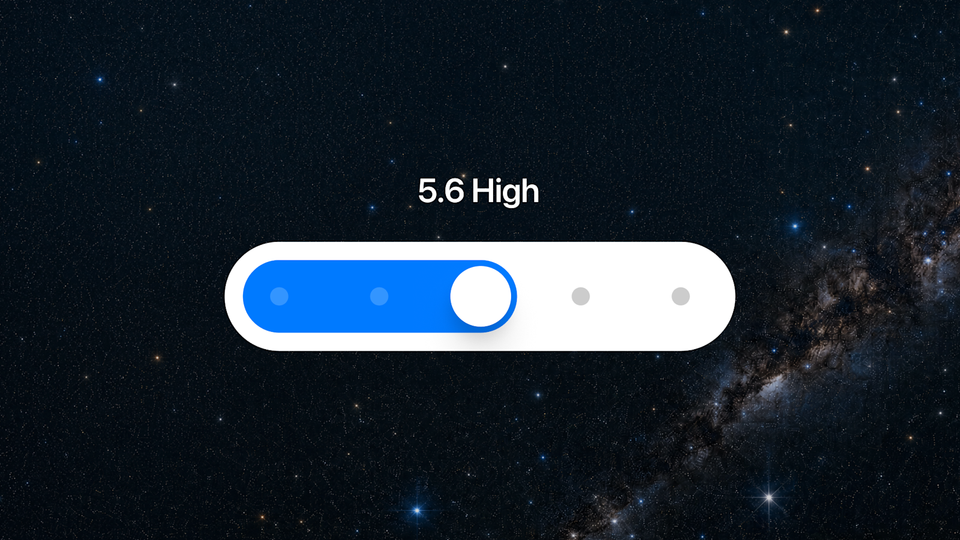
On 6 August 2026, OpenAI shipped a ChatGPT product update that reshapes everyday access: GPT‑5.6 Sol becomes more focused and fact-reliable for Plus and Pro users with a new effort slider, while Free and Go users move to GPT‑5.6 Luna as the default and — starting the week after the announcement — get unlimited text chats plus a Think button for harder questions. This is a dated explainer (event: 6 August), not fake breaking news, written for international professionals and Arabic-speaking users who kept searching after the July GPT‑5.6 launch.
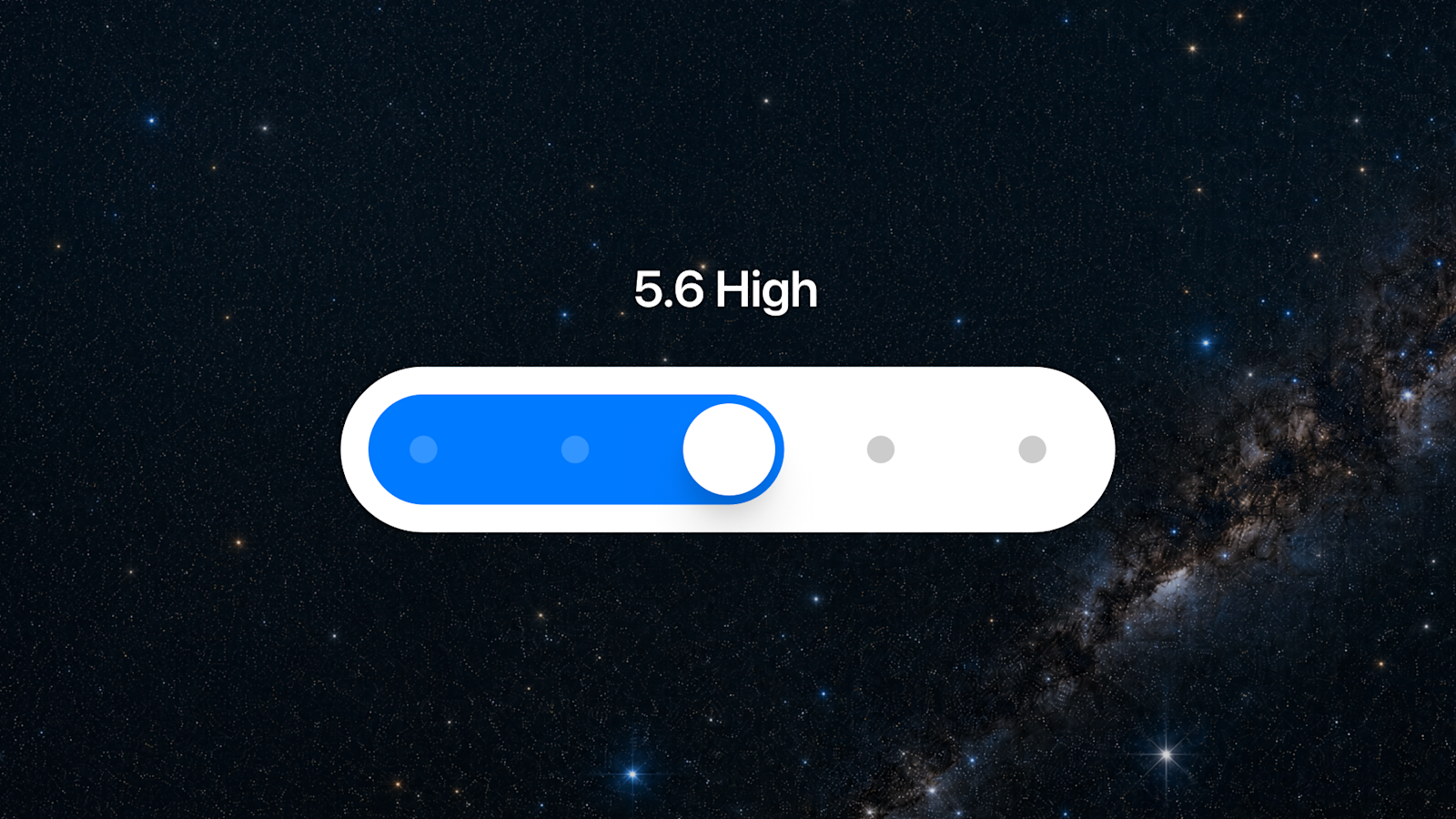
Source: OpenAI official Art Card via OpenAI’s Contentful CDN
Source: OpenAI post on X
What was announced?
OpenAI splits the release into two tracks:
- Plus and Pro: an updated GPT‑5.6 Sol in Chat, plus a slider that controls how much thought goes into each answer. The same Sol model now powers both Instant and deeper reasoning for a more consistent experience.
- Free and Go: Luna becomes the default model this week; next week adds unlimited text chats and a Think button (subject to abuse guardrails). Limits remain for file uploads, images, and other tools.
Critical fine print: the GPT‑5.6 Sol version that powers ChatGPT Work and Codex is not changing in this release. The new Sol is optimized for everyday Chat, not automatically for Work agents or Codex.
Numbers and context
- 1 billion people every week use ChatGPT for questions, search, planning, research, advice, and complex decisions — OpenAI’s framing for why everyday reliability matters.
- In an internal evaluation of financial, medical, and legal prompts requiring factual detail, responses containing at least one factual error were about 62% less common with Luna and 68% less common with Sol than with GPT‑5.5 Instant.
- Additional under-18 safety measures are documented in the August system-card update.
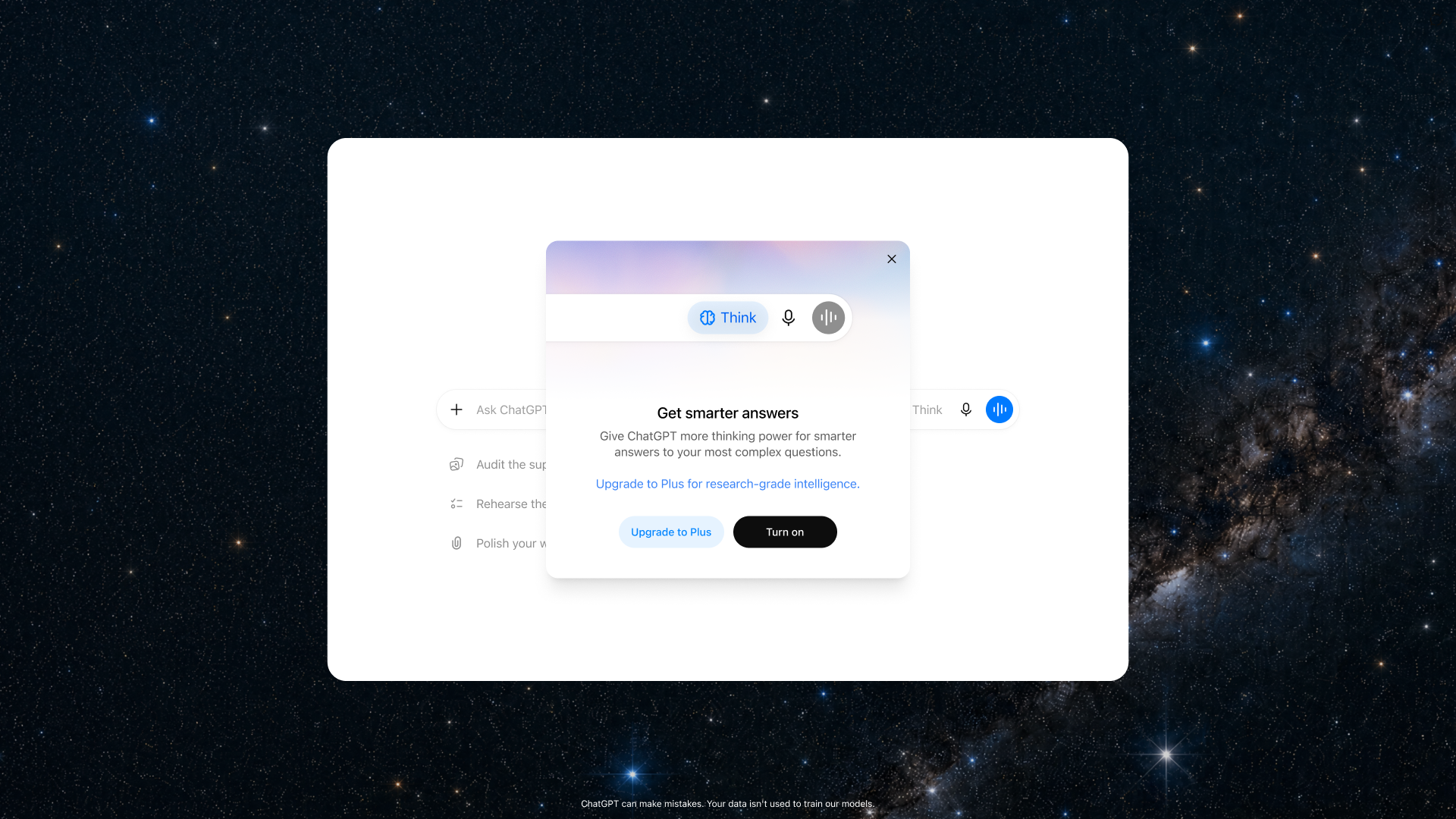
Source: Official free_hero image from the OpenAI post
Why “free Luna + unlimited text” is a big deal
After the July 2026 GPT‑5.6 family launch (Sol / Terra / Luna), the practical question was whether non-paying users would actually live on the new generation. This update answers part of that:
- Default model = Luna (fastest/most affordable tier in the family).
- Text-chat rate limits lift for Free/Go (with abuse guardrails).
- Think offers deeper reasoning without forcing an immediate Plus upgrade.
For students, freelancers, and small businesses — including across the Gulf and broader Arabic-speaking markets — long research sessions become more feasible on the free tier, as long as work stays text-centric.
What it means for you
Free users
- Expect staged rollout: Luna default this week; unlimited text + Think next week per OpenAI’s schedule.
- Use Think for multi-step work, not greetings.
- File/image/tool limits still apply.
- Judge Arabic quality yourself — the published internal eval is not an Arabic-specific leaderboard.
Plus / Pro users
- Updated Sol aims for tighter, more direct answers, expanding detail only when the task needs it.
- The slider unifies Instant vs deeper thinking as “more time,” not a different persona.
- If you depend on Work or Codex, do not assume Chat’s Sol improvements migrated there.
Teams and companies
- Broader free access raises the baseline for light knowledge work, but compliance and data controls still push serious workloads to Business/Enterprise.
- Fewer factual errors in an internal fin/med/legal set does not replace licensed local advice.
- See our ChatGPT Work coverage for agentic workplace workflows.
Quick comparison
| Dimension | Free/Go after update | Plus/Pro after update | Claude | Gemini app |
|---|---|---|---|---|
| Default model | GPT‑5.6 Luna | Updated GPT‑5.6 Sol + slider | Plan-dependent | Gemini family |
| Text limits | → unlimited (staged) | Plan quotas | Plan quotas | Google quotas |
| Depth control | Think button | Effort slider | Modes/models | Gemini modes |
| Work/Codex | Outside this Sol-Chat change | Work/Codex Sol unchanged here | Claude Code / Cowork | Workspace tools |
| Best fit | Extended study/chat | Higher quality + control | Coding/agents | Google integration |
Safety and under-18 behavior
The August deployment-safety update describes training to avoid romantic roleplay with teens, age-restricted challenges, and presenting the model as a substitute for real relationships, plus boundaries around sexual content, eating disorders, age-restricted goods, dangerous activities, and graphic violence, while encouraging connection to trusted people when support is needed. Shared family accounts should treat this as a product policy change, not a babysitter.
Source: deploymentsafety.openai.com
Honest limitations
- 62%/68% figures are internal on specific fin/med/legal prompts.
- Work and Codex Sol are out of scope for this Chat optimization.
- Files/images remain limited on Free.
- Abuse guardrails can still throttle automation.
- Rollout is staged by week; accounts may differ.
- Not a licensed professional substitute in medicine, law, or tax.
Background: July launch vs August product tuning
GPT‑5.6 launched 9 July 2026 as Sol/Terra/Luna for frontier work, agents, and API price-performance. Late July cut API prices for Luna (~80%) and Terra (~20%). 6 August tunes consumer Chat and free access. Mixing these layers is how shallow posts claim “everything is free now.”
A 30-day adoption plan for teams
Week 1: Inventory Free/Plus/Business seats and the model string you actually see.
Week 2: Run 20 standard tasks (summarize, research, tables, light code) with/without Think or the slider.
Week 3: Separate paths: general chat vs sensitive coding vs customer data on business plans.
Week 4: Write an internal policy for paste rules, human review, and upgrade triggers.
Common misconceptions
| Myth | Announcement reality |
|---|---|
| “All of Sol is free” | Free gets Luna; Sol is Plus/Pro in Chat |
| “Work got smarter automatically” | Work/Codex Sol unchanged here |
| “Truly no limits” | Unlimited text + abuse guards + tool limits |
| “Medical accuracy guaranteed” | Internal error reduction ≠ clinical clearance |
Practical checklist for this week
- Update apps and confirm Luna on a free account.
- Stress-test long Arabic/English research threads against prior rate limits.
- On Plus, A/B the slider on the same prompt for precision vs verbosity.
- Document whether Work still runs the previous Sol before org-wide process changes.
- Pair chat productivity with structured learning via AI tools on Truescho.
FAQ
Is GPT‑5.6 Luna fully free?
As the free default for text chat under the staged rollout, yes — with unlimited text later and non-text tool limits remaining.
Think vs Plus slider?
Think adds reasoning time on Luna for Free users. The Plus/Pro slider more finely controls Sol effort in Chat.
Does Arabic quality improve?
No separate Arabic metric was published in this post. Benchmark your own legal/medical/dialect tasks.
Do I still need Plus after unlimited free text?
Plus still buys Sol quality, capacity priority, and paid features. Unlimited free text reduces pain; it does not erase the quality gap.
Does this change API pricing?
This post is about ChatGPT Chat. API Luna/Terra price cuts were a separate late-July track.
Strategic reading after the update
OpenAI is not only shipping weights; it is defending daily habit. Unlimited text on Luna resets the competitive floor: paid products must justify themselves above a free chat that no longer dies mid-essay. In markets where shared Plus accounts are common, some users may stay free for schoolwork while Sol remains the quality tier for professional output.
For content and marketing teams, lower stated factual-error rates increase apparent trust — and increase the blast radius of a single remaining hallucination in a public campaign. Keep a verification layer for facts, prices, and regulations.
Metrics to watch for 14 days
- Share of tasks finished without upgrading to Plus.
- Weekly Think usage rate.
- Documented hallucination incidents in your working languages.
- Accidental confusion between Chat Sol and Work/Codex surfaces.
How this interacts with the wider GPT‑5.6 stack
Treat August’s Chat tuning as orthogonal to July’s model-family launch and late-July API price cuts. A developer optimising Luna API batch jobs is not the same buyer as a student celebrating unlimited text, and not the same as a COO evaluating ChatGPT Work. Segment your enablement docs accordingly so support tickets do not mix three roadmaps into one confused FAQ.
Extended scenarios for international professionals
Scenario A — Graduate student: You draft a literature outline over three hours. Previously free-tier cutoffs forced account juggling. Unlimited text keeps one thread coherent; Think helps on methodology comparisons; you still verify citations outside ChatGPT.
Scenario B — SMB operator: You generate customer email variants and a weekly content calendar. Luna default is enough for drafts; Plus slider on Sol is for board memos and financial narratives where the internal factual-error reduction matters more.
Scenario C — Automation engineer: You hoped “unlimited” meant unattended agents. Abuse guardrails and non-text tool limits still push serious automation to API + proper auth, not the free consumer surface.
Scenario D — Parent/school admin: Under-18 safety training is relevant if minors share devices. Policies are not a substitute for supervised accounts and school AUP documents.
Technical notes (non-hype)
- Chat optimization can change refusal style and verbosity independently of raw benchmark rank.
- Slider semantics are product UX, not a public guarantee of identical token budgets across platforms.
- System-card updates can ship on a different cadence than marketing blogs; bookmark the Deployment Safety Hub for the authoritative safety narrative.
- If you evaluate models with private benchmarks, re-run them after the Chat Sol update even if Work/Codex claim “unchanged,” so you do not attribute Chat regressions to the wrong surface.
Related reading on Truescho
Pair this explainer with our GPT‑5.6 launch archive posts where available, ChatGPT Work agent coverage, and AI tool roundups under /en/tools/ai. News pages should funnel into practical tooling, not endless hype cycles.
Analytical bottom line
About a month after the GPT‑5.6 family launch, the 6 August update targets access and everyday reliability, not another headline benchmark. For free users, it is the most tangible upgrade since launch. For professionals, the fine print matters: Chat Sol ≠ Work/Codex Sol. Redesign workflows only after you verify which surface you actually use.
Sources: OpenAI — Improving GPT‑5.6 Sol in ChatGPT (6 August 2026); GPT-5.6 August update system card; official @OpenAI post.
Hands-on appendix: prompt pack to test Luna and Think
Run these after the rollout and compare quality with/without Think:
- “Summarize in 8 bullets the practical differences between VAT registration for an online store in Saudi Arabia vs the UAE — and state you are not a tax adviser.”
- “Build a 14-day LinkedIn launch plan for a new engineering graduate targeting energy firms.”
- “Create a comparison table of three project-management tools for a 6-person remote team.”
- “Explain Dijkstra’s algorithm for second-year students with a tiny graph example.”
- “Rewrite this client email to be more formal for a Kuwait buyer: [paste draft].”
Log whether Luna keeps facts straight, whether Think adds useful depth or fluff, and whether dates/numbers hallucinate. Your internal table beats any marketing benchmark.
Editorial note on speed vs verification
This piece is intentionally a Lane B explainer rather than a same-hour flash post. OpenAI’s 6 August product blog is the primary source; the X announcement and Deployment Safety Hub corroborate rollout staging and under-18 training themes. We do not invent pricing beyond what those pages state, and we flag Work/Codex non-change so social reposts do not mislead operators.
Verification checklist for editors: primary OpenAI URL returns the Sol/Luna sections; X status ID matches research notes; Work/Codex non-change sentence preserved; free-tier limits for files still stated; under-18 paragraph cites Deployment Safety Hub rather than rumor blogs.