
Googlebook: Google Laptop Lineup, Prices and Release Dates
Last updated: September 2026
How much does Google's new laptop cost, and when can you actually buy one? Those are the two questions worth answering first. Yesterday, September 21, 2026, Google published a first look at Googlebook, a premium laptop line built with five hardware partners, with prices starting at $899 and preorders open right now on the Google Store and at Best Buy.
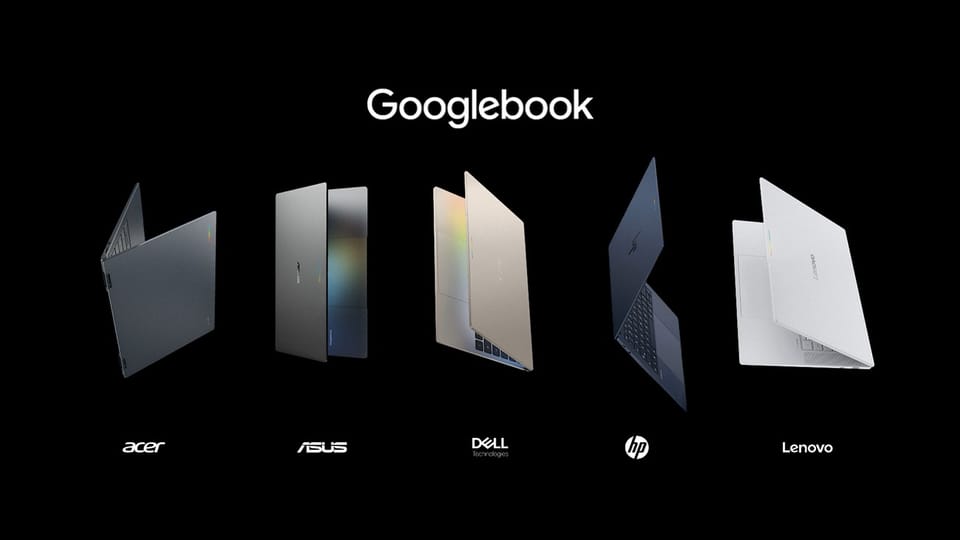
Googlebook is Google's new premium laptop line, unveiled on September 21, 2026, with five models built by Acer, ASUS, Dell, HP, and Lenovo. Prices start at $899, preorders are open at the Google Store and Best Buy, and the first devices ship October 4 in the US, then October 5 in Canada, the UK, Ireland, France, Germany, and Australia.
The announcement came from John Maletis, Google's vice president of Laptops & Tablets, under the banner that premium materials and striking design set Googlebook apart. The line was first announced back in May 2026; what happened yesterday is the launch of the finished 2026 models, with real availability and real prices. Here is what you get for your money, and whether it makes sense to wait if you live outside the first launch markets.
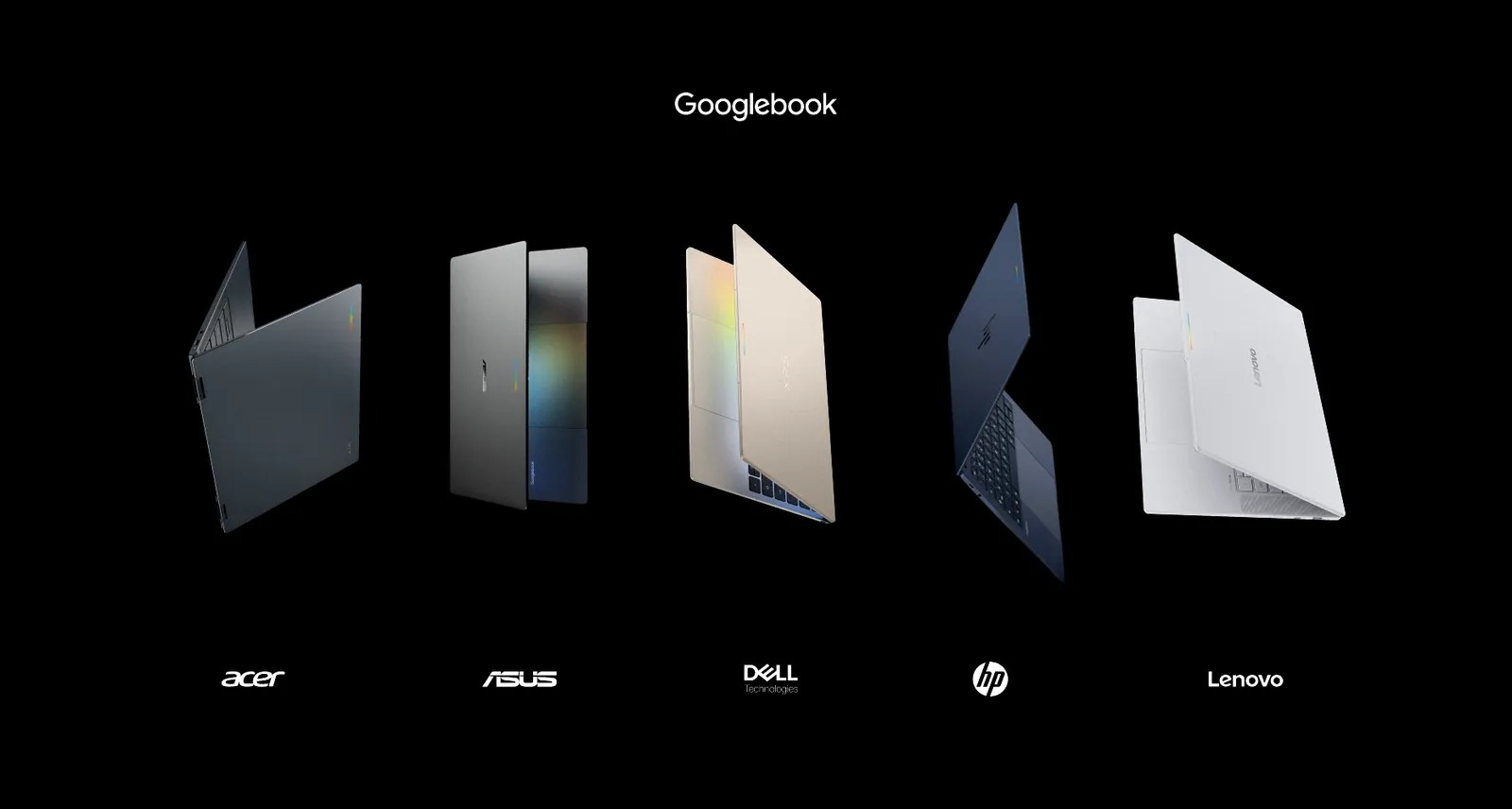
The five models at a glance
| Partner | What makes its Googlebook distinct |
|---|---|
| Acer | The only convertible, folding from laptop to tablet |
| ASUS | Feather-light at 2.2 pounds (about 1 kg), the travel companion |
| Dell | Bold and eye-catching, balancing height, weight, and screen |
| HP | The elegant one, beautiful closed or open |
| Lenovo | A spacious 15-inch screen for productivity, the workhorse |
Source: Google blog
Google says the five partners are among the best laptop makers in the world, and the division of roles is deliberate. One chassis per brand means you are not choosing between twenty near-identical configurations but between five clear personalities. Students who live out of a backpack will look at the ASUS; anyone who drafts long documents on a single screen will gravitate to the Lenovo's 15 inches.
Materials, display, and sound
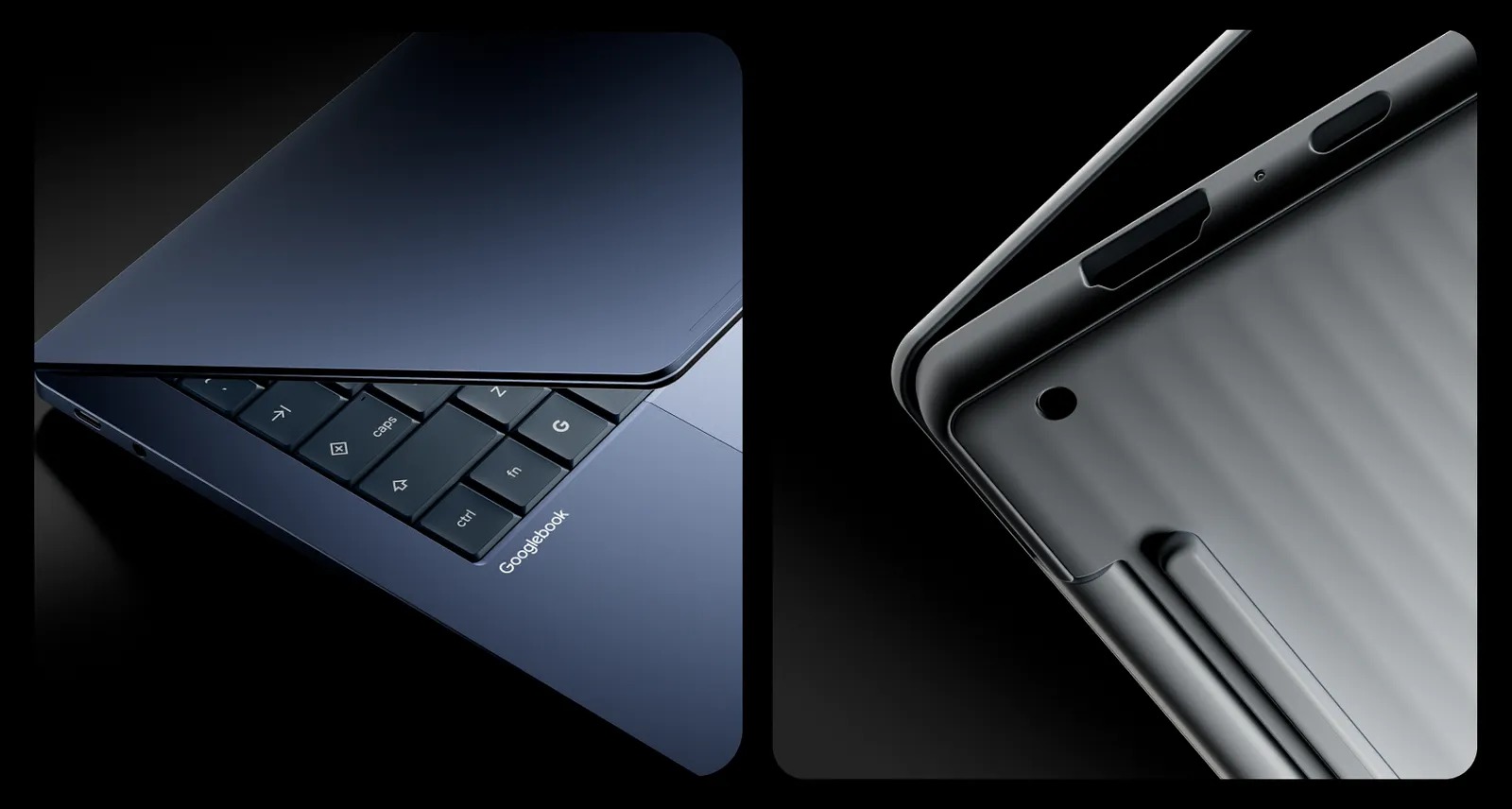
The build quality is where the premium claim is most visible. The chassis materials are aluminum, magnesium alloy, and carbon fiber, keeping the laptops light, elegant, and durable at the same time.
Source: Google blog
The displays are touch-enabled with resolution up to 2.8K, and Google emphasizes that they stay bright enough to use outdoors under direct sunlight without glare. Keyboards get dedicated layouts with backlighting, and the large glass trackpads are haptic and support system gestures. Audio is described as cinematic: up to six speakers with Dolby Atmos, plus studio-quality noise-canceling microphones for calls.
One design flourish returns from earlier Google hardware: the Glowbar, an interactive light strip that dances on boot, moves to show battery level, and plays playful patterns. It is open to developers who want to build custom animations, which hints at how Google expects an app ecosystem to grow around the laptops. Google has been polishing small details across its Gemini products all year, from output quality to visible watermarks on generated images, as our guide to the Gemini watermark toggle explains.
The main specifications
| Spec | Googlebook details |
|---|---|
| Display | Touch, up to 2.8K, bright enough for direct sunlight |
| Processors | Intel Core Ultra Series 3 or Snapdragon X Elite |
| AI silicon | NPUs exceeding 45 TOPS for on-device AI |
| Memory | 16GB RAM standard, up to 32GB on some models |
| Battery | Up to 14 hours of video, 16 hours of browsing |
| Materials | Aluminum, magnesium alloy, carbon fiber |
| Software support | Googlebook OS with updates for up to 10 years |
| Starting price | $899 |
The processors come from partnerships with Intel, Qualcomm, and MediaTek, and the neural processing units exceed 45 TOPS, which lets the machines run complex AI tasks on device without loud fans. Every model starts at 16GB of RAM, with some configurations reaching 32GB. Battery life reaches up to 14 hours of video playback and 16 hours of browsing, figures that matter more than any spec sheet for students working through a full day of lectures.
The software promise is unusually long: Googlebook OS will receive updates and new features for up to 10 years. Google has also published companion articles describing the laptops as designed for Gemini Intelligence, including pieces on how the built-in assistant changes everyday laptop use and how the devices pair with your Android phone.
The bundle: a year of Google AI Pro
Every Googlebook includes 12 months of Google AI Pro, which bundles 5TB of cloud storage with Gemini Advanced tools, plus 3 months of YouTube Premium and Adobe Photoshop among other perks. That bundle is a real part of the value, not a throwaway coupon, and it frames what these laptops are really selling: hardware designed around an AI subscription.
If you have been following Google's software side, this connects directly to the rollout we tracked in Gemini 3.5 coverage and the desktop expansion explained in our Gemini app for Windows guide. The laptop is the third leg of that strategy after the phone and the desktop app.
What this means for you
Now the honest part for international readers. The launch markets are the United States on October 4, then Canada, the United Kingdom, Ireland, France, Germany, and Australia on October 5. Google's announcement mentions no release date for any other region, so if you are reading this from India, Nigeria, Pakistan, Indonesia, the Philippines, Vietnam, Brazil, or Eastern Europe, there is no official launch date for you yet. Your realistic options are importing from a first-wave market at extra cost, or waiting for a broader rollout that Google has not announced.
Before you spend $899 or more on hardware just to get Gemini, though, separate the two purchases. The AI features are the subscription, not the machine, and they work on devices you already own. The Truescho digital shop offers a shared Gemini Advanced family plan at roughly €3 per month, a fraction of the official individual plan's price, which saves you more than 90 percent while delivering the same underlying tools. If your current laptop is fine, that is the smarter first upgrade for most students.
And while you weigh hardware versus subscriptions, remember that Truescho's free platform covers the rest of the student toolkit: AI study tools, a GPA calculator, 1500+ university rankings, and international scholarships and internships in one place. A new laptop is nice; a fully planned degree path is better.
Frequently asked questions
What is the Googlebook laptop lineup?
Googlebook is Google's premium laptop brand, first announced in May 2026. On September 21, 2026, Google revealed the finished 2026 models made with Acer, ASUS, Dell, HP, and Lenovo. They share aluminum, magnesium alloy, and carbon-fiber builds, up to 2.8K touchscreens, and Gemini Intelligence built in.
How much do Googlebook laptops cost?
The lineup starts at $899, as announced on September 21, 2026. On top of the hardware, every Googlebook includes 12 months of Google AI Pro with 5TB of cloud storage and Gemini Advanced tools, plus 3 months of YouTube Premium and Adobe Photoshop, so bundled software adds real value.
When can I buy a Googlebook?
Preorders are open now on the Google Store, Best Buy, and selected retailers. Sales begin October 4, 2026 in the United States, and October 5 in Canada, the United Kingdom, Ireland, France, Germany, and Australia. No launch dates for other markets have been announced yet.
Which companies make Googlebook models?
Acer, ASUS, Dell, HP, and Lenovo. Acer builds the only convertible, ASUS the 2.2-pound lightweight, Dell a bold balanced design, HP the most elegant chassis, and Lenovo a 15-inch productivity machine. Google says the partners are among the best laptop makers in the world.
Does Googlebook include Google AI Pro?
Yes, every Googlebook includes 12 months of Google AI Pro, which bundles 5TB of cloud storage with Gemini Advanced tools, plus 3 months of YouTube Premium and Adobe Photoshop among other perks. The AI software ships with the machine rather than as a separate purchase.
Googlebook vs Chromebook: what's the difference?
Googlebook is Google's new premium laptop line, while Chromebook has long been the company's simpler, cloud-first laptop brand. Googlebook adds premium materials like carbon fiber, up to 2.8K touchscreens, NPUs above 45 TOPS, the Glowbar, and up to 10 years of updates, launching from $899.
Is it worth waiting for?
If you live in a launch country and your current laptop is due for replacement, the answer is probably yes: $899 buys premium materials, a bright 2.8K touchscreen, all-day battery life, a year of Google AI Pro, and a decade of software updates. If you live elsewhere, importing adds cost and warranty risk with no announced local release date, and the strongest feature, Gemini — whose latest capabilities we tracked in the Gemini 3.5 rollout — does not require the hardware at all. A shared Gemini Advanced plan at around €3 per month from the Truescho digital shop gets you the intelligence without the $899, and you can revisit the hardware question when Google announces a second wave of markets. Either way, put the savings toward something that compounds: a scholarship application, a certification, or the next step in your degree, all of which you can plan for free on Truescho.
Sources
- Google blog — first look at Googlebook — official announcement by John Maletis, VP of Laptops & Tablets
- TechCrunch coverage — independent report on the launch and pricing
- Truescho digital shop — shared Gemini Advanced plan as a low-cost alternative to buying new hardware