
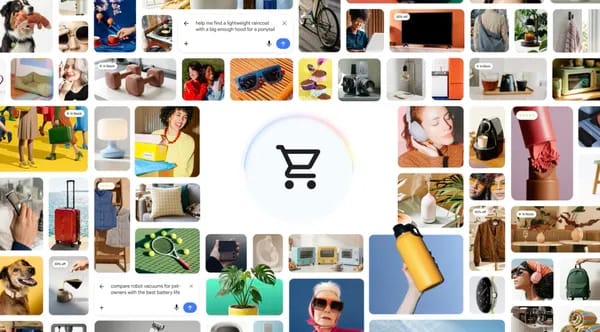
Google enters smart shopping: one cart that buys from every store
Online shopping has become powerful, but not simple. A student comparing laptops may open Google Search for reviews, YouTube for setup videos, Gmail for a discount code, a retailer site for stock, and a payment app for card perks. A parent buying school supplies may keep five tabs open and still miss the best bundle. A freelancer building a desk setup may know the monitor they want, but not whether the cable, dock, and laptop will work together.
Google Universal Cart is Google’s answer to that scattered experience. Announced at Google I/O 2026, it is an intelligent shopping cart designed to live across Google surfaces instead of inside one store. Google says people shop across Google more than one billion times per day, and its Shopping Graph now contains more than 60 billion product listings. Universal Cart uses that product graph, Gemini models, Google Wallet signals, and new commerce protocols to help users collect items, track deals, understand compatibility, and check out with less friction.
The important detail is that Google is not describing a magic button that buys anything, anywhere, without limits. The initial rollout is staged. Universal Cart is rolling out across Search and the Gemini app in the United States in summer 2026, with YouTube and Gmail to follow. Direct checkout is supported with select brands and many merchants, while other purchases may transfer to the merchant’s own site. The brand remains the merchant of record.
That makes Google Universal Cart less like a single global store and more like a shopping layer across Google. It may become especially useful for students, international families, and budget-conscious professionals who already use Google to compare prices before buying study gear, devices, travel accessories, or dorm essentials. Platforms such as Truescho, which helps students discover global opportunities at official link, sit in the same practical world: people need better tools to make large decisions with limited money, limited time, and many confusing options.
What is Google Universal Cart?
Google Universal Cart is an intelligent cart that can collect products from different shopping moments across Google. According to Google, users can add products while browsing Search, chatting with Gemini, watching YouTube, or reading Gmail. At launch, the first rollout is Search and Gemini in the U.S.; YouTube and Gmail support will come later.
The core idea is simple: the cart does not reset every time the user moves from one Google service to another. If you find a backpack in Search, compare a laptop through Gemini, see a dorm-room lamp in a YouTube setup video later, and receive a store promotion in Gmail, the long-term vision is that those items can live in one shopping hub.
The cart is also designed to keep working in the background. Google says it can find deals and price drops, show price-history insights, and alert users when an item comes back in stock. Because it is built on Gemini models, Google expects the experience to improve as those models improve.
That matters because online shopping is rarely just about clicking buy. It is about answering questions such as:
- Is this price actually good compared with recent history?
- Is the product in stock at a reliable store?
- Will this part work with the device I already own?
- Does my payment method give me better rewards at one merchant than another?
- Can I check out quickly, or do I need to create another account?
Universal Cart brings those questions closer to the cart itself. It turns the cart from a static list into a decision system.
Why a universal cart matters now
Most online carts are merchant-specific. Add a pair of shoes to one retailer, a laptop stand to another, and a textbook to a third, and you now have three carts, three checkout flows, three shipping calculations, and three return policies. That is normal, but it is inefficient.
Google’s advantage is that many shopping journeys already start before the merchant site. Users search, compare, watch reviews, ask questions, and check emails before deciding. Universal Cart tries to capture that earlier decision process.
The timing also fits Google’s broader move from answer systems to agentic tools. In the same I/O 2026 cycle, Google discussed other products that help users do tasks rather than only read information, including Gemini Spark: an assistant that works 24 hours even while you sleep and Goodbye to coding? Google AI Studio turns an idea into an Android app. Universal Cart is the commerce version of that shift. It is not just showing product links; it is helping users manage a purchase path.
For students, the value can be practical. Imagine preparing for a semester abroad. You may need a laptop sleeve, plug adapter, noise-canceling headphones, a power bank, a used monitor, and a few books. Some items are urgent, some can wait for a price drop, and some must fit specific technical requirements. A cart that tracks the whole list across merchants could reduce wasted money and duplicate purchases.
The Shopping Graph: 60 billion listings behind the cart
Google says its Shopping Graph includes more than 60 billion product listings. That number is central to the Universal Cart story because an agentic cart is only useful if it can compare products across a large and current catalog.
The Shopping Graph helps Google understand product names, variants, availability, prices, stores, and related details. Universal Cart can use that information to compare options and surface useful context. For example, a user may search for a laptop with a specific chip, screen size, and memory configuration. A normal cart holds the item after selection. An intelligent cart can keep watching for a better price, related accessory, or stock update.
Google’s official announcement also highlights price history. This is important because a discount label alone can be misleading. A product marked “20% off” may still be expensive if it was cheaper last month. Price-history insights help users judge whether a deal is real, whether to wait, or whether to buy before stock disappears.
The same applies to back-in-stock alerts. Students often buy within tight deadlines: a laptop before classes begin, a calculator before an exam, a suit before an interview, or a tablet before travel. Missing stock by two days can be expensive. Universal Cart’s background monitoring could make those decisions less manual.
Cross-merchant shopping without pretending every store is the same
The phrase “one cart that buys from every store” captures the ambition, but the official reality is more careful. Universal Cart can work across merchants, but direct checkout depends on supported experiences. Google says checkout uses the Universal Commerce Protocol, or UCP. Users can check out with Google Pay in a few taps with many brands, or transfer items to a merchant site.
Google named initial or select checkout partners including Nike, Sephora, Target, Ulta Beauty, Walmart, Wayfair, and Shopify merchants such as Fenty and Steve Madden. That does not mean every merchant on the web supports direct Universal Cart checkout. It means Google is building a standard path for merchants that participate.
The merchant-of-record detail is also critical. Google says the brand remains the merchant of record. In practical terms, the seller is still the merchant, not necessarily Google. The merchant’s policies, fulfillment, returns, taxes, and customer support may still matter.
For users, that means Universal Cart should be treated as a coordination layer. It may make checkout easier, but shoppers should still review the final merchant, price, delivery date, return policy, warranty, and payment details before confirming.
How Universal Cart compares with today’s shopping flow
| Shopping task | Typical current experience | Google Universal Cart approach | Why it matters |
|---|---|---|---|
| Collecting products | Separate carts or browser tabs for each merchant | One intelligent shopping hub across supported Google services | Fewer lost items and easier comparison |
| Price tracking | Manual checks, third-party alerts, retailer emails | Background deal and price-drop tracking | Better timing for expensive purchases |
| Price context | Discount labels without full history | Price-history insights | Helps users judge whether a deal is meaningful |
| Stock monitoring | Rechecking product pages repeatedly | Back-in-stock alerts | Useful when buying limited or urgent items |
| Compatibility | User researches parts separately | Cart can flag incompatibilities and suggest alternatives | Reduces costly mistakes, especially for electronics |
| Payment benefits | User checks cards, loyalty accounts, and offers manually | Google Wallet can factor payment perks, loyalty data, and merchant offers | May surface savings or rewards users would miss |
| Checkout | Different accounts and flows per merchant | Google Pay checkout with supported brands or transfer to merchant site | Less friction, while merchant remains seller |
This table shows why Universal Cart is not just another shopping list. The strongest value appears when a purchase involves comparison, timing, compatibility, or payment optimization.
A realistic example: Maya builds a study setup for $1,180
Maya is a 21-year-old engineering student in Chicago preparing for a remote internship. She has a budget of $1,200 for a home study setup. Her list includes a laptop dock, 27-inch monitor, keyboard, mouse, webcam, desk lamp, and external SSD.
In the old flow, Maya might open ten tabs and create carts at four retailers. She could easily buy a dock that does not support her laptop’s display output, miss a $40 price drop on the monitor, or forget that one card gives 5% back at a specific store.
With Google Universal Cart, her workflow could look different once the feature is available to her. She adds a monitor from Search, asks Gemini to compare docks for her laptop model, adds a keyboard she saw in a YouTube productivity video when YouTube support arrives, and later sees a Gmail promotion for a retailer after Gmail support follows. The cart tracks price changes in the background.
Suppose the monitor is $239 today but was $199 twice in the last six weeks. The price-history insight tells her to wait if the purchase is not urgent. The dock is $129, but Universal Cart flags that it may not support dual 4K output with her laptop. It suggests a $159 alternative that avoids a return. Her Google Wallet data may show that one payment method gives her better rewards at a supported merchant.
The result is not that the cart spends money for her without permission. The result is a more informed purchase. Maya may spend $1,135 instead of $1,205, avoid one incompatible accessory, and save three hours of checking. Those numbers are realistic for a multi-item electronics purchase, and they show where Universal Cart could be genuinely useful.
Compatibility checks could be the underrated feature
Google’s official example mentions a shopper building a custom PC from several retailers. The cart can flag product incompatibilities and suggest alternatives. This could become one of the most valuable parts of the product.
Compatibility problems are common in categories such as computer parts, laptop accessories, camera gear, smart home devices, school electronics, and travel adapters. A cart that understands relationships between products can prevent mistakes before checkout.
For example, a desktop PC build may include a motherboard, CPU, RAM, power supply, case, cooler, and graphics card. A beginner may not know whether the motherboard socket matches the CPU, whether the case has enough clearance, or whether the power supply is sufficient. A normal cart accepts the list. A smarter cart can warn the shopper.
This is where Google’s broader AI context matters. A user may already have read about changes in Google Search through Google Search's biggest change in 25 years: an intelligent box that understands, acts, and plans. Universal Cart extends that pattern from answering questions to checking decisions inside a purchase list.
For students, compatibility checks could help with devices required for courses. A design student buying a drawing tablet, a computer science student choosing a laptop, or a medical student buying a tablet for notes all face technical trade-offs. Better warnings can reduce returns and wasted money.
Google Wallet perks: savings beyond the listed price
Universal Cart is built on Google Wallet, which means it can understand payment method perks, loyalty information, and merchant offers, according to Google. This is a subtle but important layer.
The lowest sticker price is not always the best final deal. A $500 item at one merchant may be better than a $485 item elsewhere if the first merchant offers stronger card rewards, loyalty points, free shipping, a longer return window, or a trusted warranty. Conversely, a small discount may disappear after shipping or fees.
Google Wallet integration could help the cart surface those trade-offs. If a shopper has loyalty information or payment methods stored, Universal Cart may be able to show savings or points that the user would otherwise calculate manually.
There are privacy and control questions here, and Google’s official AP2 material emphasizes guardrails, accountability, privacy-preserving technology, and tamper-proof digital mandates. Users should still review what information they connect and what permissions they grant. The more useful an agentic shopping assistant becomes, the more important clear user control becomes.
UCP and AP2: the protocols behind agentic shopping
Universal Cart uses Universal Commerce Protocol for checkout. UCP is the commerce layer Google references for checking out with Google Pay in a few taps with many brands or transferring to a merchant site. Google says the UCP-powered checkout experience is expanding to Canada and Australia in the coming months and later to the United Kingdom. It is also coming to YouTube in the U.S. and to more verticals, starting with hotel booking and local food delivery.
The other key term is Agent Payments Protocol, or AP2. Google created AP2 for secure agentic payments with guardrails, accountability, privacy-preserving technology, and tamper-proof digital mandates. According to the research, AP2 will begin coming to Google products in the coming months, starting with Gemini Spark.
The reason AP2 matters is that agentic commerce needs clear boundaries. If an AI system can help buy things, users need ways to define exactly what it can do. Google’s AP2 framing includes user-defined criteria such as specific brands, products, and spending limits before agents can purchase.
This is the difference between useful automation and risky automation. A student may be comfortable telling an agent, “Buy this exact textbook if it drops below $45 from a reputable seller,” but not, “Buy whatever you think I need.” Spending limits, product criteria, and confirmation rules are not small features; they are the trust model.
Availability: what is confirmed and what is not
The confirmed Universal Cart rollout is limited. Google says Universal Cart is rolling out across Search and the Gemini app in the U.S. in summer 2026. YouTube and Gmail support will follow. That is the key availability sentence for readers.
Google also says UCP-powered checkout is expanding to Canada and Australia in coming months and later to the U.K., but that is not the same as saying full Universal Cart is globally available. Writers, shoppers, and businesses should keep those details separate.
What is not confirmed:
- Universal Cart availability in every country.
- Direct checkout support for every merchant.
- A complete list of launch retailers beyond the names Google gave.
- The exact date when YouTube and Gmail support will arrive.
- Whether every product category will support compatibility checks equally.
That uncertainty does not make the product unimportant. It simply means early users should treat it as a staged rollout, not a universal replacement for all shopping flows on day one.
How students and international shoppers can use the idea
Even before global availability is clear, the Universal Cart concept points to a smarter way to shop. Students and international applicants often buy under pressure: exam devices, dorm items, winter clothes, travel gear, application tools, or language-learning materials. They may also be comparing scholarship deadlines, universities, and costs on platforms such as Truescho’s opportunity database at official link or university rankings at official link.
A smart cart can support that life stage in three ways.
First, it helps users wait when waiting saves money. Price history and price-drop alerts can prevent rushed purchases.
Second, it helps users avoid mistakes. Compatibility checks are valuable for electronics, adapters, and academic tools.
Third, it reduces administrative load. Students already manage applications, documents, visas, travel, and budgets. One cart across supported surfaces can reduce scattered decision-making.
This is also why Universal Cart belongs in the same conversation as other Google I/O agentic tools. AI Studio, covered in Goodbye to coding? Google AI Studio turns an idea into an Android app, lowers the barrier to building apps. Gemini Spark, covered in Gemini Spark: an assistant that works 24 hours even while you sleep, points toward background task agents. Universal Cart applies that direction to buying.
Risks and practical cautions
Universal Cart could make shopping easier, but easier checkout can also make impulse buying easier. Users should use spending limits, review final totals, and avoid treating AI suggestions as financial advice.
There is also the issue of merchant differences. Even if one cart coordinates products, each merchant may still have different return windows, warranty terms, shipping speeds, and customer support standards. The merchant-of-record detail means users should know who is actually selling and fulfilling the order.
Compatibility suggestions should also be checked for important purchases. AI can reduce errors, but users buying expensive devices, medical-related equipment, or safety-critical products should verify details from manufacturer pages.
Finally, users should watch privacy settings. A shopping assistant becomes more useful when it understands payment perks, loyalty data, Gmail promotions, and browsing context. That usefulness should come with deliberate permission choices.
Bottom line
Google Universal Cart is one of the most practical agentic products from Google I/O 2026 because it addresses a daily frustration: shopping is fragmented across search, videos, emails, chats, stores, and payment systems. By combining a 60-billion-listing Shopping Graph, Gemini models, price tracking, compatibility checks, Google Wallet perks, UCP checkout, and AP2 payment guardrails, Google is building a cart that can do more than hold items.
The strongest version of this product is not a reckless shopping bot. It is a controlled shopping assistant that helps users compare, wait, save, verify, and check out with fewer mistakes. The official rollout is still limited: Search and Gemini app in the U.S. in summer 2026, with YouTube and Gmail later. Direct checkout depends on supported brands, and the merchant remains the seller.
If Google executes the rollout carefully, Universal Cart could become the default planning space for complex purchases, especially for students and professionals who need to stretch budgets. It is not the end of merchant websites, but it may change where the purchase decision happens.
FAQ
What is Google Universal Cart?
Google Universal Cart is an intelligent shopping cart announced at Google I/O 2026. It is designed to work across Google services such as Search and Gemini first, with YouTube and Gmail to follow. It can collect items, track deals, show price history, monitor stock, and support checkout through approved flows.
When will Google Universal Cart be available?
Google says Universal Cart is rolling out across Search and the Gemini app in the United States in summer 2026. YouTube and Gmail support will follow later. Google has not announced full global availability for Universal Cart, so users outside the U.S. should wait for official updates.
Can Universal Cart buy products automatically?
Google is building agentic payment infrastructure, but the official safety framing emphasizes user-defined criteria, guardrails, accountability, and spending limits. Users should not assume the cart can freely buy anything. The safer expectation is controlled purchasing under conditions the user defines and approves.
Which retailers support Universal Cart checkout?
Google named select checkout partners including Nike, Sephora, Target, Ulta Beauty, Walmart, Wayfair, and Shopify merchants such as Fenty and Steve Madden. That list does not mean every merchant supports direct checkout. Some purchases may transfer users to the merchant’s website.
What is the Universal Commerce Protocol?
Universal Commerce Protocol, or UCP, is the checkout layer Google references for Universal Cart. It supports Google Pay checkout with many brands and can also transfer items to merchant sites. Google says UCP-powered checkout is expanding to Canada, Australia, and later the U.K.
How is Universal Cart different from Google Shopping?
Google Shopping helps users discover and compare products. Universal Cart goes further by acting as a persistent shopping hub across supported Google services. It can track price drops, show price-history insights, monitor stock, consider Wallet perks, and help with checkout where supported.
Is Universal Cart useful for students?
Yes, especially for multi-item purchases such as laptops, accessories, dorm equipment, books, or travel gear. Students can benefit from price alerts, compatibility checks, and payment perk awareness. It will be most useful where the feature is officially available and supported merchants participate.