
Google smart glasses are back: will they succeed after Google Glass failed?
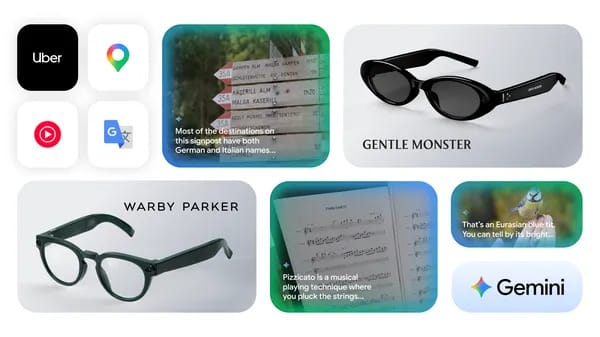
Google smart glasses 2026 are not being presented as a second attempt at the same old Google Glass idea. Google now calls the category intelligent eyewear, and the new push sits on Android XR, Gemini, phone pairing, and partnerships with Samsung, Qualcomm, Gentle Monster, and Warby Parker.
That matters because the original Google Glass failed for reasons that were not only technical. It felt socially awkward. It raised privacy concerns. It was expensive. It did not have enough everyday use cases. Battery life and design expectations were hard to satisfy. Many people could not explain why they needed a camera and display on their face.
The 2026 version has a better story. Gemini can understand context. Glasses can answer questions about what the user sees, translate speech or writing in real time, summarize messages, provide directions based on location and facing direction, help with calls and texts, play music, capture photos and videos, and start background tasks such as preparing a DoorDash coffee order pending final confirmation.
But a better story is not the same as guaranteed success. Google still has to solve the social contract of face-worn computing. People need to know when they are being recorded. Users need enough battery to trust the device. The design must look normal enough to wear in public. The price must make sense. The features must be useful more often than they are creepy.
What Google announced at I/O 2026
Google's official Android XR announcement says the company is working on intelligent eyewear built on Android XR with Samsung and Qualcomm. It describes two types of glasses: audio glasses, which provide spoken help in the ear, and display glasses, which show information when needed.
The rollout begins with audio glasses later in fall 2026. Google mentions display glasses as a second type, but the official material does not give an exact launch date for them. Partners include Samsung, Gentle Monster, and Warby Parker.
The glasses connect to Gemini through "Hey Google" or by tapping the frame. They pair with Android and iOS phones, which is a major strategic difference from a product locked to one phone ecosystem. Use cases include asking about the world around you, reading parking signs, getting natural turn-by-turn directions, making calls, reading or summarizing messages, listening to music, capturing photos and videos, using Nano Banana edits, translating speech and writing in real time, and connecting with apps such as Uber and Mondly.
For broader context, see Truescho's coverage of Google's AI Search box, Gemini 3.5, Google AI Ultra, and Gemini Omni video creation.
Why Google Glass failed
Google Glass arrived before the world was ready for face-worn cameras and always-available AI assistants. The device had novelty, but it did not have enough everyday utility for ordinary users. It also carried a social penalty. Wearing it could make other people uncomfortable because they did not know whether they were being recorded.
Design was another issue. Glass looked like technology first and eyewear second. Most people choose glasses as part of their face, identity, and style. If a device makes the wearer look like a beta tester, adoption stays limited.
The original product also lacked the modern AI layer. It could show information and capture media, but it did not have a deeply capable multimodal assistant that could understand a sign, translate a conversation, summarize messages, compare options, or handle background tasks in natural language.
The 2026 comeback tries to answer those weaknesses. Fashion partners help with design. Gemini helps with utility. Android XR gives developers a platform. Phone pairing reduces the need to put all computing inside the frame.
Comparison: Google Glass vs Google's 2026 intelligent eyewear
| Issue | Google Glass-era challenge | 2026 intelligent eyewear approach | Still unresolved |
|---|---|---|---|
| Social acceptance | Looked unusual and made people worry about recording | Fashion partners such as Gentle Monster and Warby Parker may improve normal wearability | Public comfort around cameras remains difficult |
| AI capability | Limited assistant intelligence by today's standards | Gemini can answer contextual questions, translate, summarize, and support tasks | Real-world accuracy and latency need proof |
| Device types | Display-first perception | Audio glasses launch first; display glasses come later | Users may want displays, but displays raise design and battery pressure |
| Ecosystem | Narrower early use case set | Android XR, Samsung, Qualcomm, app integrations | Developer support must become practical |
| Phone relationship | Felt like a standalone futuristic gadget | Pairs with Android and iOS phones | Battery and dependency details are not fully specified |
| Privacy | Recording concerns became a defining problem | Official post mentions capture and contextual Gemini use | Hardware indicators, policies, and social norms need clarity |
Audio glasses first is a smart move
Launching audio glasses first may be the most important decision. Audio glasses are less visually intrusive than display glasses. They can help with directions, message summaries, translation, music, and quick questions without placing a screen in front of the eye.
That makes them closer to smart earbuds plus glasses than to a full augmented-reality headset. For many users, that is enough. A student walking through a university campus in Berlin can ask for directions without pulling out a phone. A traveler in Tokyo can hear a sign translated. A commuter in New York can get message summaries while keeping eyes on the street.
Display glasses are more exciting but harder. The moment information appears in the field of view, design, safety, battery, brightness, prescription options, and distraction become tougher. Google is wise to mention display glasses without forcing them to be the first mass-market test.
A realistic example: Aisha's first semester in Toronto
Aisha is a 19-year-old student from Kenya starting university in Toronto. In her first month, she spends about CAD 120 on transit mistakes, missed appointments, and food delivery errors because she is still learning the city and campus.
With intelligent audio glasses, she could ask Gemini to read a parking sign, guide her to the correct lecture building based on where she is facing, summarize a message from her study group, translate a notice, and prepare a coffee order for final confirmation while she walks to class.
The glasses do not replace student planning tools. Aisha still needs to compare programs on Truescho rankings, track scholarships on Truescho opportunities, and calculate academic eligibility with the GPA calculator. But glasses could reduce small daily frictions once she is already on campus.
If the device costs too much, lasts only a few hours, or makes classmates uncomfortable, she will stop wearing it. That is the central challenge: the product has to be useful and socially acceptable at the same time.
Phone pairing changes the economics
Google says the glasses pair with Android and iOS phones. That is important because it lets the phone handle connectivity, apps, accounts, and some processing. It also makes the product more accessible to iPhone users, not only Android loyalists.
Phone pairing could reduce hardware complexity inside the glasses. It may also make setup easier: messages, calls, music, location, app integrations, and identity already live on the phone. The glasses become a wearable interface to the phone and Gemini rather than a fully independent computer.
The downside is dependency. If the phone connection is weak, permissions are confusing, or battery drain affects both devices, users may become frustrated. Google has not provided enough official detail yet about battery life, pricing, exact countries, or hardware privacy indicators.
Privacy will decide mainstream trust
The most sensitive issue is not whether Gemini can read a sign. It is whether people nearby know what the glasses are doing. A device that captures photos and videos, sees context, and listens for commands must make its behavior clear.
Google's official post mentions capture features and Gemini using context, but the fetched source does not provide detailed information about privacy hardware indicators, exact regional availability, pricing, or battery life. Those gaps matter.
In an office, classroom, hospital, airport, or protest, glasses can create tension. Even if the wearer is using them innocently, other people may not trust the device. Google will need visible indicators, strong permissions, clear enterprise rules, school policies, and easy ways to disable capture in sensitive places.
Privacy is not only a policy page. It is a social design problem.
What could make the comeback work
Google has three advantages that did not exist in the same way during the Glass era.
First, AI is now useful enough to create everyday reasons to wear the device. Real-time translation, contextual directions, message summaries, and visual questions are easy to understand.
Second, fashion partnerships can make the glasses feel like glasses. Gentle Monster and Warby Parker know that people care about face shape, comfort, prescription options, and style. If the product looks normal, the social barrier drops.
Third, Android XR gives Google a platform story. Samsung and Qualcomm bring hardware and ecosystem credibility. App integrations such as Uber and Mondly suggest that Google wants the glasses to do practical things, not only show demos.
What could still make it fail
The failure risks are familiar. If battery life is poor, users will not trust the glasses for navigation or translation. If the price is high, adoption will stay niche. If recording indicators are unclear, public backlash could return. If the design feels awkward, fashion partnerships will not save it. If Gemini makes mistakes in public, users may feel embarrassed or unsafe.
There is also a use-case problem. Smart glasses need to be useful many times per day. A phone is already excellent at directions, translation, messaging, ordering, and search. Glasses must win moments when hands-free, eyes-up access is clearly better.
That may happen while walking, biking, cooking, traveling, studying, shopping, or working in the field. It may not happen while sitting at a desk.
Verdict: better positioned, still unproven
Google's 2026 intelligent eyewear is better positioned than Google Glass because it has Gemini, Android XR, fashion partners, phone pairing, and a more practical audio-first path. The use cases are easier to explain than they were a decade ago.
But success depends on the details Google has not fully announced yet: price, battery life, exact countries, display-glasses timing, privacy indicators, prescription options, and real-world reliability. Audio glasses arriving first in fall 2026 will be the first serious test.
The comeback can work if the glasses feel like useful eyewear with intelligence inside. It will struggle if they feel like surveillance hardware with a fashion frame.
Why 2026 is a different market from the Google Glass era
The biggest difference is that people now understand voice assistants, earbuds, smartwatches, phone cameras, translation apps, and AI chat. A decade ago, face-worn computing felt like a strange leap. In 2026, the idea of asking an assistant to summarize a message, translate a sign, identify a landmark, or help with directions is familiar. The new question is whether those tasks are better on glasses than on a phone.
That matters because product categories succeed when they solve repeated friction. Smartphones won because they combined communication, internet, camera, navigation, payments, and apps in one device. Smartwatches found a role around notifications, fitness, payments, and quick glanceable information. Smart glasses need their own repeated moments: times when pulling out a phone is inconvenient, unsafe, rude, or too slow.
Google's examples point toward those moments. Walking through a city while asking for directions based on where you are facing is more natural than repeatedly unlocking a phone. Hearing a translation during a conversation is faster than opening an app. Asking about a parking sign while your hands are full is more useful than typing. Getting a message summary while moving through an airport can reduce friction. Preparing an order for final confirmation shows how Gemini could handle background tasks without turning the glasses into an uncontrolled agent.
The second market difference is fashion. Google is not only working with traditional hardware companies. Gentle Monster and Warby Parker signal that the frame itself matters. Glasses are not like a phone in a pocket. They sit on a person's face. They affect identity, comfort, confidence, and social perception. A technically brilliant frame that people feel embarrassed to wear will fail outside early adopters.
The third difference is platform maturity. Android XR, Samsung, Qualcomm, and app integrations give Google a broader ecosystem story than a single experimental device. That does not guarantee developer support, but it gives the category more structure. If apps can connect to useful everyday tasks, glasses become less dependent on one or two showcase features.
The use cases that could make people wear them daily
Directions are the clearest use case. Phones are good at maps, but they still require looking down. Glasses can potentially guide the user while keeping attention on the street. Google's official description of natural turn-by-turn directions based on location and facing direction is important because orientation is often the confusing part of navigation. A phone map can say turn left, but a user may not know which left if they just exited a station.
Translation is the second strong use case. Real-time speech and writing translation can help travelers, international students, immigrants, conference attendees, and service workers. If audio glasses can translate without forcing people to hold up a phone, the experience becomes more natural. The risk is accuracy. A mistranslation in a restaurant is annoying. A mistranslation in a medical, legal, or academic setting can be serious.
Messaging is the third use case. Calls, texts, and message summaries can be useful when commuting, walking, cooking, or carrying bags. But this feature must be restrained. If glasses constantly interrupt the user, they become stressful. The best version would summarize only what matters and let the user respond without losing attention.
Visual questions are the fourth use case. Asking about what you see is where Gemini could make glasses feel genuinely different. A user might ask what a cloud formation suggests about weather, whether a plant looks unhealthy, what a museum label means, how to interpret a washing machine symbol, or whether a parking sign allows stopping at a certain time. These are small questions, but they happen often.
Light capture is the fifth use case. Photos and videos from glasses can be useful for travel, sports, field work, accessibility, and memory. It is also the use case most likely to create privacy tension. Google will need to make capture obvious and controllable if it wants public trust.
What audio-first gets right
Audio-first glasses may sound less futuristic than display glasses, but that restraint could be an advantage. Many users do not need a screen in front of the eye all day. They need quick help without touching a phone. Audio can provide that while avoiding some of the design and battery problems of displays.
Audio also fits existing habits. People already wear earbuds for directions, music, calls, and voice assistants. Audio glasses extend that pattern into a frame people may already need for vision or style. If the design is comfortable, the product can feel like an upgraded everyday object rather than a separate gadget.
The limitation is information density. Some tasks are easier to see than to hear. A route, a translated menu, a shopping comparison, a calendar grid, or a visual instruction may work better on display glasses. That is why Google's two-type approach makes sense. Audio glasses can test mainstream acceptance first, while display glasses can target users who need more visual information.
The challenge is expectation management. If buyers expect full augmented reality from audio glasses, they may be disappointed. If Google presents them as practical assistant glasses, the value proposition is clearer.
Display glasses: more powerful, more difficult
Display glasses are the more exciting version of the category because they can place information in the user's field of view. They could show translations, route arrows, call details, task prompts, visual labels, or lightweight app interfaces. For field workers, tourists, students, and accessibility use cases, that could be powerful.
But displays make every problem harder. The frame must stay light. The screen must be bright enough outdoors but not distracting. Battery life must support real use. Prescription support becomes more complex. The interface must avoid blocking important real-world information. Social acceptance may be harder because people nearby may not know what the wearer is seeing or recording.
Google's decision to mention display glasses without giving the same launch timing as audio glasses is therefore sensible. The company can build confidence with audio models first and avoid forcing the hardest version of the product to carry the whole comeback.
Lessons Google must apply from Google Glass
The first lesson is that technology is not enough. Google Glass had a strong novelty factor, but novelty fades. The new glasses need everyday value that survives after the first week.
The second lesson is that privacy must be visible. A policy hidden in settings will not calm a person sitting across from someone wearing camera-equipped glasses. People need to understand when capture is happening. Schools, workplaces, airports, hospitals, and event venues may also need simple rules.
The third lesson is that design cannot be an afterthought. Smart glasses compete with normal glasses, sunglasses, earbuds, watches, and phones. If the frame is uncomfortable, unattractive, heavy, or awkward, the software will not save it.
The fourth lesson is that price shapes perception. Google has not announced official pricing in the fetched source. If the product is expensive, users will compare it with phones, watches, earbuds, laptops, and travel. The value must be obvious enough to survive that comparison.
The fifth lesson is that developers need a reason to care. Android XR gives a platform foundation, but developers will build for glasses only if there is a real user base and clear use cases. Early apps should solve simple, repeated tasks rather than chase science-fiction demos.
A practical day-in-the-life test
Imagine a student named Lucas arriving in Amsterdam for an exchange semester. On his first day, he needs to find a train platform, understand a ticket machine, read a university sign, reply to a housing message, navigate to a registration office, and order lunch. A phone can do all of this, but it requires constant stopping, unlocking, switching apps, and looking down.
Audio glasses could make that day smoother. Lucas could ask for the platform direction while walking, hear a translation of a sign, receive a short summary of the housing message, and prepare a food order for confirmation. He could still use Truescho's opportunities, rankings, and GPA calculator for planning before and during his studies. The glasses would not replace research tools; they would reduce friction in the physical world.
Now test the downside. If the battery drops before the afternoon, Lucas stops trusting the device. If classmates ask whether he is recording them, he feels uncomfortable. If translation is wrong during registration, he may make a costly mistake. If the frame looks strange, he may stop wearing it after the novelty fades. This is why the product must succeed across hardware, software, design, and social behavior at the same time.
Decision table: who should be excited and who should wait
| User type | Why the glasses may help | Why waiting may be wiser |
|---|---|---|
| Frequent traveler | Directions, translation, signs, quick capture | Price, battery, and country availability are unknown |
| International student | Campus navigation, message summaries, translation | School privacy rules and classroom norms may limit use |
| Commuter | Hands-free directions, calls, music, summaries | Earbuds and a phone may already solve enough |
| Field worker | Visual questions, capture, task support | Enterprise policies and durability details matter |
| Accessibility user | Spoken help and context may be valuable | Real-world reliability must be proven |
| Creator | First-person capture and quick assistance | Public recording concerns can create backlash |
| Privacy-sensitive buyer | Clear utility is possible | Wait for hardware indicators, policies, and reviews |
What Google has not told buyers yet
The most important missing detail is price. Without price, it is impossible to judge value. A product that feels excellent at USD 299 may feel niche at USD 999. Official pricing will shape whether these glasses are a mainstream accessory, a premium gadget, or a developer-focused category.
Battery life is another major unknown. Glasses must be light, comfortable, and useful for long stretches. If they need frequent charging, users will leave them at home. Battery expectations also depend on use: audio assistance, capture, translation, and display features will consume power differently.
Regional availability is not fully specified in the fetched official source. Google says audio glasses launch first later in fall 2026, but users need to know countries, languages, retail channels, prescription options, and support terms.
Privacy hardware indicators are also not fully detailed in the fetched source. This matters because social trust depends on what other people can see, not only what the wearer has accepted in an app. A visible capture indicator, clear audio cues, and strong controls could reduce tension. Weak signals could revive the same concerns that hurt Google Glass.
Display-glasses timing remains open. Google mentions display glasses as a second type, but the first launch focus is audio glasses. Buyers who want a visual interface should wait for official details instead of assuming it arrives with the first fall products.
The privacy problem is also a manners problem
Smart glasses raise legal and policy questions, but they also raise everyday manners questions. Is it acceptable to wear camera-enabled glasses in a classroom? At dinner? In a doctor's office? During a job interview? At airport security? At a concert? Around children? Different cultures, institutions, and countries will answer differently.
Google can design safeguards, but users will also need norms. A responsible wearer may remove the glasses in sensitive settings, announce when recording, disable capture where prohibited, and avoid using visual AI on people without consent. Schools and workplaces may need simple policies that distinguish navigation and translation from recording or analysis.
If the category succeeds, these norms may become ordinary, just as phone camera etiquette evolved. If the norms fail, the product could become socially uncomfortable even when technically impressive.
How to judge reviews when audio glasses launch
When reviews arrive, do not look only for spectacular demos. Look for boring reliability. Do directions work after 40 minutes of walking? Does translation handle accents and background noise? Can the glasses summarize messages without exposing private content aloud? Is the tap gesture reliable? Does "Hey Google" trigger accidentally? Are photos and videos good enough to be useful? Do people nearby understand when capture is happening?
Comfort matters as much as intelligence. Reviewers should report weight, heat, pressure on the nose, prescription compatibility, all-day wear, charging habits, and how the frames look in normal settings. Smart glasses are successful only if people keep wearing them after the demo.
Also watch how well the glasses work with both Android and iOS phones. Google's official support for both ecosystems is important, but the quality of pairing, permissions, notifications, and app integrations will determine whether iPhone users feel like first-class users or guests.
The most realistic verdict
Google's smart glasses comeback is credible because the company is not repeating the exact Google Glass formula. The new effort has a better assistant, a clearer platform, stronger hardware partners, fashion involvement, phone pairing, and an audio-first launch path. Those are real improvements.
The product is still unproven because smart glasses live in the most difficult place in consumer technology: on the face, in public, around other people. Phones can be put away. Earbuds are socially understood. Watches are discreet. Glasses with AI, cameras, microphones, and possibly displays ask for more trust.
The best outcome is not a futuristic headset that tries to replace the phone. It is ordinary-looking eyewear that quietly solves repeated problems: translation, directions, quick context, message triage, hands-free help, and controlled capture. If Google delivers that at the right price with clear privacy signals, the comeback has a real chance. If it overreaches or underexplains, the old Google Glass lesson will return quickly.
FAQ
What are Google's 2026 smart glasses?
Google calls them intelligent eyewear built on Android XR with Gemini. The category includes audio glasses that speak help into the ear and display glasses that show information when needed.
When will Google's intelligent eyewear launch?
Google says audio glasses will launch first later in fall 2026. Display glasses are also mentioned, but the official fetched source does not give an exact launch date for display models.
What can Gemini do on the glasses?
Google describes visual questions, directions based on location and facing direction, message summaries, calls, texts, music, photos and videos, real-time translation, Nano Banana edits, and background tasks such as preparing an order pending final confirmation.
Do Google's smart glasses work with iPhone?
Yes. Google's official announcement says the glasses pair with Android and iOS phones. That broad pairing could help adoption because users are not limited to one phone ecosystem.
What is the difference between audio glasses and display glasses?
Audio glasses provide spoken help in the ear and are launching first. Display glasses can show information when needed, but Google has not provided the same launch timing detail for them in the fetched official source.
How are the new glasses different from Google Glass?
The new effort has Gemini, Android XR, phone pairing, and partners such as Samsung, Qualcomm, Gentle Monster, and Warby Parker. It also starts with practical audio glasses rather than relying only on a futuristic display-first identity.
Did Google announce a price for the glasses?
No official price was found in the fetched Google source. Pricing, exact countries, battery life, and detailed hardware privacy indicators remain important unanswered questions before buyers can judge value.
What privacy concerns come with AI smart glasses?
The glasses can capture photos and videos and use Gemini to understand context. People nearby may worry about recording or analysis. Clear indicators, permissions, policies, and social norms will be essential for trust.
Sources
- Google Android XR I/O 2026 announcement: Google official blog
- Sundar Pichai Google I/O 2026 keynote post: Google official blog
- The Verge Google coverage: The Verge
- WIRED Google I/O coverage: wired.com