
Google's New Gemini Agent Gets Its Own Email and Works Like a Coworker
Last updated: October 2026
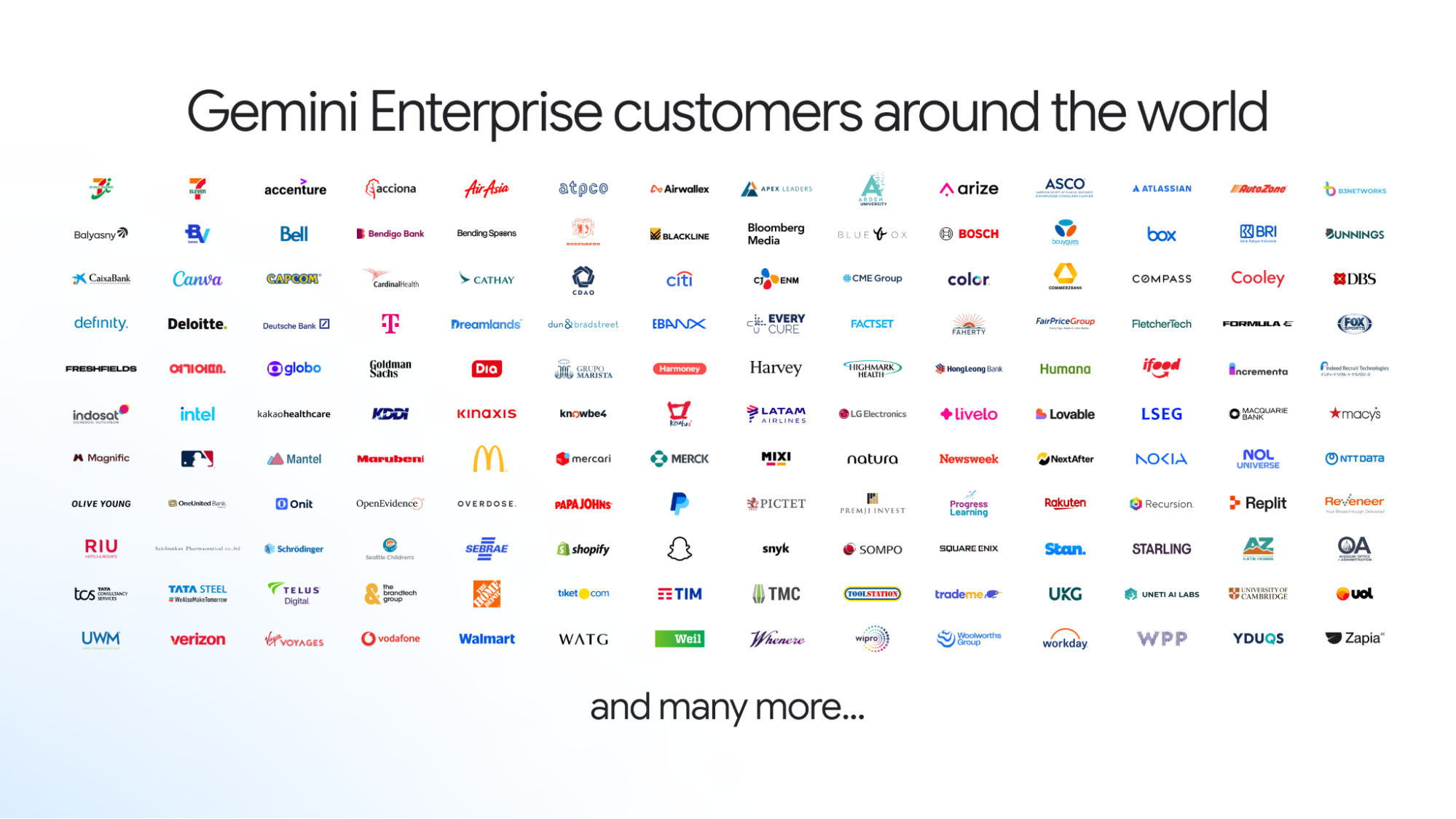
More than a billion people now use Gemini every month, and roughly 90% of Fortune 100 companies already pay for Gemini Enterprise at work. On top of that base, Google announced on October 8, 2026 at its Gemini at Work 2026 event a genuinely structural shift: an AI agent simply called the "Gemini agent" that will operate inside your organization as a full digital employee — with its own Workspace account, its own email address, and its own working context, reachable the same way you reach any teammate. The rollout starts with businesses before consumers, and as we will unpack, this is a fundamentally different animal from any chatbot you have tried.
What is the Gemini agent? The direct answer
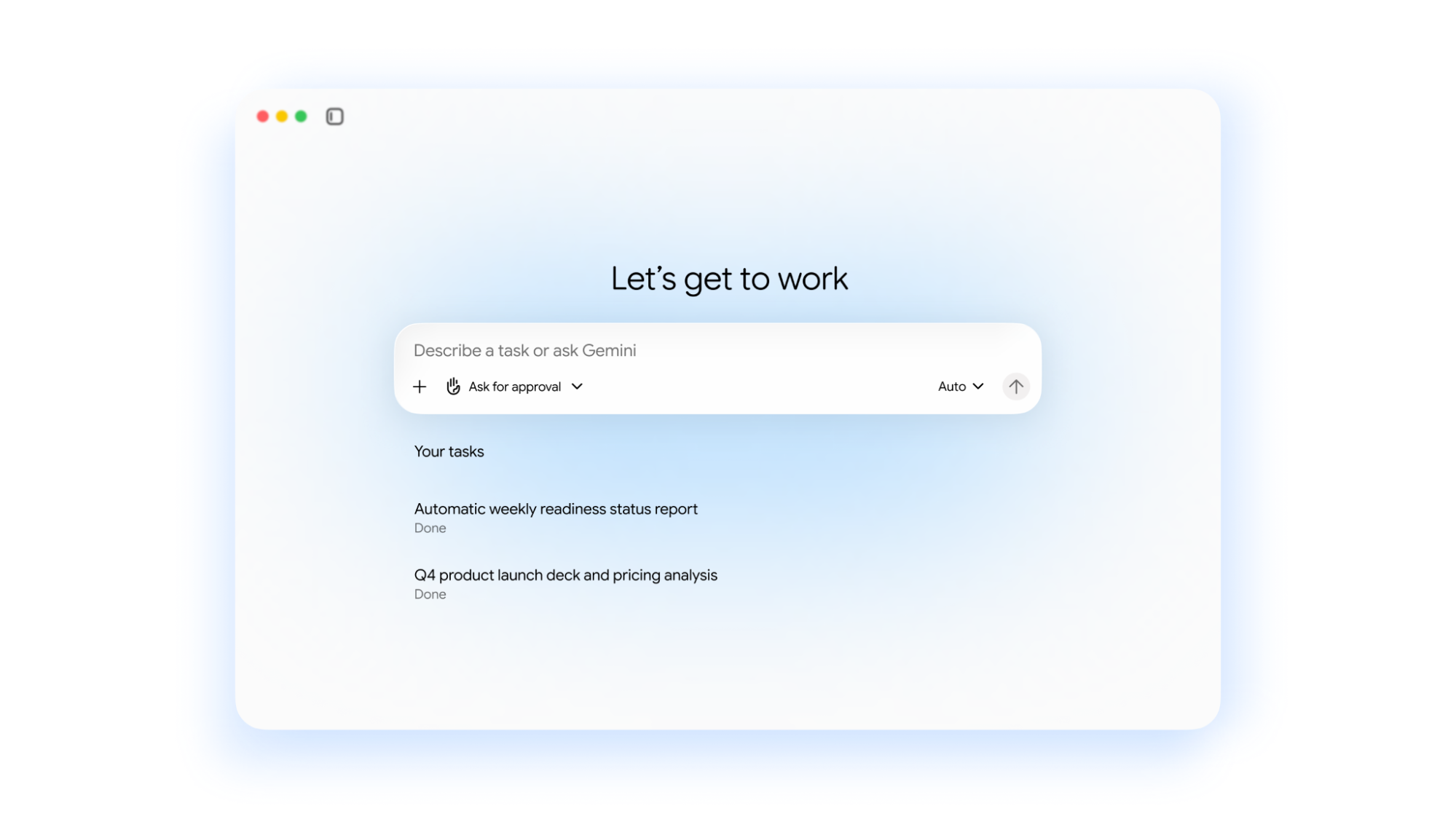
The Gemini agent is Google's first "single, universal agent for work," announced in Google Cloud CEO Thomas Kurian's keynote at Gemini at Work 2026. The core idea: instead of giving an assistant step-by-step instructions, you give it a final objective — "prepare the monthly sales report and share it with the team" — and it plans the work, uses skills and tools, connects to your company's systems, and comes back with finished work inside your actual documents. The agent answers questions, handles knowledge work, creates images and media, writes and runs code, all from a single prompt box, and it is exposed to developers through a single API.
Source: Google Cloud Blog
Source: Google Cloud official YouTube channel
How it actually works: the email, the tasks, the access
The headline innovation is not raw model intelligence — it is organizational integration. The Gemini agent gets its own Workspace account, meaning a real email address and an independent working context, functioning, in Google's words, as if it were "just another co-worker." It knows who sits on which team, their time zones, who needs to approve which items, and what is on everyone's calendars. You can reach it the way you reach colleagues: tag it in a chat, email it, share a file with it, or add it to a group.
For oversight, Google introduced a "tasks inbox" interface that shows what the agent is doing in real time: its thinking process, the subtasks it delegated to smaller subagents, the skills it loaded, the code it is running, and its progress. The agent also supports MCP (Model Context Protocol) servers inside or outside the company network — giving it a standards-based arm into your internal systems without surrendering your security perimeter.
Native integration across the work stack
Google says the agent's capabilities work inline inside Workspace tools themselves: Gmail, Drive, Docs, Slides, Sheets, Chat, and Calendar — carrying the same memory, skills, and controls everywhere it appears. Practically, this means the agent that knows your sales data in Sheets is the same one drafting your email in Gmail and assembling your deck in Slides, with no copy-paste bridges and no context loss between apps.
Google also announced new data and analytics skills that let both technical teams and everyday business users reach actionable operational insights in minutes using plain-language questions, plus the first industry specializations for financial services and legal teams — with sector-specific tools, skills, connectors, and knowledge for each.
The finance and legal packages deserve a closer look. Financial services skills target investment-memo drafting, client-file summarization, compliance checklist preparation, and market-trend scans — work that used to consume junior analyst hours. The legal package focuses on contract review, mapping clauses to internal policies, and extracting obligations from long correspondence threads. The single idea behind both bundles: the same general-purpose agent, loaded with an additional "sector talent" — much like a new hire receives specialized training after joining.
One technical detail matters for anyone evaluating these announcements seriously: Google confirmed the agent runs with the same memory and the same controls across all these surfaces — mail, documents, spreadsheets, and the tasks inbox. In practice, a "what the agent may see" policy is defined once, centrally, and applies everywhere, instead of scattered per-app permissions that open gaps at their edges. That is the real organizational difference between "an assistant embedded in each app" and "one agent living inside a full suite" — and it is the structural advantage Google is betting on here more than any pure model capability.
Source: Google Cloud Blog
The numbers behind the announcement
The launch does not come from a standing start. Nearly 500 Google Cloud customers each processed more than one trillion tokens over the past year. Close to 80% of all Google Cloud customers use its AI products. Roughly 90% of the Fortune 100 use Gemini Enterprise. And as Alphabet CEO Sundar Pichai emphasized at the event's opening, Gemini now serves over one billion monthly active users. Google's stated logic for starting with businesses rather than consumers: enterprise demand is "harder and deeper," and it sharpens the product faster.
What agentic tasks look like in practice
The difference between a traditional assistant and an agent shows best by example. With a conventional assistant you ask: "summarize this file" — and you get a summary. With the Gemini agent you write a full objective: "Prepare the quarterly marketing performance pack: analyze campaign numbers from Sheets, pull the latest client feedback from chat threads, build three slides in Slides, then email the team lead to review before Monday's meeting." The agent decomposes the objective into subtasks, delegates some to subagents, runs whatever tools it needs, shows you all of it in the tasks inbox — and hands back finished slides inside your documents.
Notice what you never opened: Sheets, Slides, Gmail. The objective traveled from one prompt box directly to finished work, with every intermediate step inspectable after the fact. This is "programming by outcomes," and it is a genuinely new usage pattern that will take learning — exactly as prompt engineering did two years ago.
Why Google is moving now
The competitive context makes the strategy legible. The enterprise AI-agent market is heating fast: OpenAI is pushing always-on agents, and cloud providers are racing to host agentic workloads before they commoditize. What Google alone owns is the full stack: the model, the cloud, and the actual work tools where employees spend eight hours a day. The "digital coworker with an account and an inbox" announcement translates that overlap into a moat competitors cannot quickly copy. And the adoption numbers — 80% of platform customers already using AI products — suggest the installed base is there; the remaining move is from "using an assistant" to "employing an agent."
What this means for you
The practical takeaways split across four groups, wherever you are in the world:
- Business owners and managers: the agent arrives through Gemini Enterprise first, as a paid, organization-grade product. If your company already runs on Google Workspace, you are in the front row for this shift. The question to work through with your IT lead: which processes do we expose to the agent first, and which stay fully human? Start with repetitive, low-risk workflows — weekly reporting, meeting summaries, deck drafts — then expand deliberately.
- Employees and job seekers: do not expect the agent in your free account tomorrow. Google has stated the cadence is businesses first, consumers later. Meanwhile, your "agent-directing" skills — framing objectives rather than instructions, and delegating compound tasks — are becoming a genuine labor-market skill you can start building today.
- Students and researchers: the educational AI tools continuously reviewed in Truescho's AI tools hub include strong free alternatives for study workflows, while our coverage of the Gemini 4 Argon launch gives you the model background powering these capabilities, and Google's October access-policy change maps availability across versions.
- App developers: a single API exposing the full agent — from planning to code execution — means building products on top of a "ready-made working agent" is now possible without training your own models. Builders targeting student and education markets can realistically ship "digital study-buddy" applications that were science fiction a year ago.
Quick comparison: the Gemini agent versus the alternatives
| Criterion | Gemini agent | ChatGPT agents & Dots | Traditional assistants |
|---|---|---|---|
| Standalone work account with email | Yes — full Workspace account | Partial, via connectors and tasks | None |
| Integration with mail and documents | Native inside Gmail, Docs, Sheets | Through external integrations | Very limited |
| Visibility into agent's work | Tasks inbox with thinking and subtasks | Task boards and step review | None |
| Cost governance | Multi-model routing, real-time spend caps | Subscription tiers and usage packs | Fixed contracts |
| Availability | Businesses first, consumers later | Rolling out gradually | Available for years |
The table explains why Google believes the coming battle is not about "the smartest model" but about "the deepest integration": whoever owns your mail, documents, and calendar owns the context — and whoever owns the context owns the agent. For the fuller picture across competing agent philosophies, see our coverage of OpenAI's always-on Dots agents and the ChatGPT GPT-6 intelligent interface review.
Security and governance: holding the leash on an agent that roams your systems
The first question any IT leader asks: what happens when the agent makes a mistake or oversteps? Google announced an enterprise control package that raises the comfort ceiling: unified identity and policy management, fine-grained authorization and permission controls per connector, secure sandboxing, and network gateways that route agent traffic through company checkpoints. On the billing front — the front that genuinely scares enterprises with agents — Google built multi-model orchestration that routes each task to a cheaper or more capable model as needed (Smart Routing), with real-time spend caps that monitor cost during execution rather than after the invoice.
Honest limits: what Google has not said yet
In fairness to the reader, gaps remain. Google has not published a standalone, unified price for the agent separate from Gemini Enterprise contracts. There is no firm consumer availability date. And any intelligent agent — regardless of guardrails — remains capable of factual error and hallucination. The incident we documented recently, in which Claude sent a false homicide tip to Philadelphia police, is a stark reminder that unsupervised agents can act on real systems in ways their own developers did not predict. The golden rule for the coming years: an agent without human review on sensitive decisions is an institutional risk, no matter whose logo is on it.
Frequently asked questions
What is Google's new Gemini agent for work?
It is a universal AI work agent announced by Google on October 8, 2026 at the Gemini at Work 2026 event. You give it a final objective instead of detailed instructions; it plans the work, executes it through tools connected to your company's systems, and returns finished work inside your documents — all from one prompt box and a single developer API.
Does the Gemini AI agent really get its own email address?
Yes. The agent receives its own Google Workspace account and operates like an employee of the company: a dedicated email address, an independent working context, and knowledge of teams, approvers, and calendars. You can reach it by email, by tagging it in conversations, by sharing files with it, or by adding it to groups.
When will the Gemini agent be available to individual users?
No firm date. Google has said the rollout starts with businesses through Gemini Enterprise and extends to consumers later, on the logic that harder enterprise demand polishes the product faster. Individual users should expect the capabilities to reach standard Gemini apps gradually over the coming period.
How much does the Gemini agent cost for companies?
Google has not published a standalone unified price; the agent ships within the Gemini Enterprise ecosystem, priced contractually by scale and usage. What Google has announced are built-in cost controls: smart routing between models depending on task complexity, plus real-time spend caps that monitor consumption during execution rather than after the fact.
How is the Gemini agent different from ChatGPT agents?
The core difference is organizational depth. The Gemini agent lives inside Workspace itself, with its own account and email, and understands your company's structure — while ChatGPT agents typically operate through external integrations with your systems. Google's agent also exposes its reasoning and subtasks in a unified tasks inbox, and ships with governance controls and real-time spending caps built in.
Could the agent put my company's data at risk?
The agent operates under centrally managed enterprise identity and permissions, with secure sandboxing and network gateways. But any agent can still err. Sound practice: start with low-sensitivity tasks, review the tasks-inbox log regularly, and keep sensitive financial and legal decisions under mandatory human review.
Your next step
The shift Google announced is not a "new feature" — it is a redefinition of where AI sits in the org chart: from a tool you summon to a colleague with an account, an inbox, and assignments. Whether you are a manager planning your team's first agent pilot or a student building skills for the coming job market, the right moment to understand this deeply is now, before the agent becomes your actual coworker. Follow every meaningful AI development through Truescho, and explore scholarships and international programs if your direction is academic. And before signing any agent contract for your organization, return to the comparison table above and answer one question honestly: which of our processes deserves a digital coworker today, and which deserves a human?
Sources
- Google Cloud Blog — Gemini at Work 2026: Introducing Gemini agent — the primary source (Thomas Kurian keynote)
- TechCrunch — Google brings agentic AI to Gemini, starting with businesses — account, email, and Pichai details
- YouTube — Gemini at Work 2026 (Google Cloud official channel) — full event recording