
Last updated: August 2026
If you're searching for gold prices in Syria today, you likely need three numbers: the price per gram of 21K, 18K, and 24K gold in Syrian pounds, and an explanation of why those numbers move the way they do. The challenge is that most published figures conflate new pounds with old pounds (100 old = 1 new), and mix the official exchange rate with the parallel market rate. This guide decomposes every variable so you can calculate the gram price yourself, regardless of what the news headline says.
⚠️ The figures below are observational for August 2026 and change daily. They are not a binding offer. Always confirm the execution price with the jeweler or exchange office, and always distinguish new Syrian pounds (1 new = 100 old).
How Much Is a Gram of Gold in Syria Today?
Gold pricing in Syria works in three layers: the international ounce price in USD, the USD-to-SYP exchange rate, and the karat ratio. Let's start with the result, then break down the math.
The international gold price in early August 2026 is estimated at approximately $4,342 per troy ounce (based on globally observed spot prices). Converting this to grams and then to Syrian pounds at the parallel market rate (~130.10 new SYP per USD, per sp-today monitoring), gram prices reach the following estimates:
| Karat | Gram in New SYP (parallel) | Gram in Old SYP | Gram in USD |
|---|---|---|---|
| 24K | ~18,160 | ~1,816,000 | ~139.6 |
| 22K | ~16,647 | ~1,664,700 | ~128.0 |
| 21K | ~15,890 | ~1,589,000 | ~122.1 |
| 18K | ~13,620 | ~1,362,000 | ~104.7 |
| 14K | ~10,593 | ~1,059,300 | ~81.4 |
At the official Central Bank of Syria rate (122.00 new SYP per USD, bulletin dated 6 August 2026, cb.gov.sy), the figures are slightly lower:
| Karat | Gram in New SYP (official) |
|---|---|
| 24K | ~17,029 |
| 21K | ~14,900 |
| 18K | ~12,772 |
Why the gap between official and parallel? Because gold is an international commodity priced in dollars. A jeweler in Damascus or Aleppo needs actual dollars to trade, and dollars cost more in the parallel market than the Central Bank's published rate. Buyers who pay directly in hard currency sometimes get different pricing than those paying in Syrian pounds.
How Gold Prices Are Calculated in Syria — Step by Step
Understanding the pricing mechanism protects you from surprises and lets you recalculate independently whenever the exchange rate or ounce price shifts. The formula is simple but requires precision:
Step 1 — Get the international ounce price in USD
The standard unit for precious metals is the "troy ounce," which equals exactly 31.1035 grams. This never changes. What changes is the price of this ounce on global exchanges. To find the international price per gram of 24K gold:
Gram price (24K) in USD = Ounce price in USD ÷ 31.1035
Example: If the ounce is $4,342, then the gram = 4,342 ÷ 31.1035 = $139.58 per gram for 24K.
Step 2 — Convert to Syrian pounds
Multiply the gram price in USD by the exchange rate:
Gram price in SYP = Gram price in USD × Exchange rate
Example at parallel market rate: 139.58 × 130.10 = 18,160 new SYP per gram for 24K.
Step 3 — Adjust for karat
24K gold is pure (99.9%). Other karats are calculated by the ratio of pure gold they contain:
Gram price (XK) = Gram price (24K) × (X ÷ 24)
Example for 21K: 18,160 × (21 ÷ 24) = 15,890 new SYP per gram.
These three steps are all you need. No magic — a global price in dollars, a conversion to local currency, and a karat adjustment.
24K vs 21K vs 18K Gold: Which Is Right for You?
Gold in the Syrian market comes in four main karats, each with a different purpose and profile:
24K (99.9% pure gold)
The most expensive per gram because it's essentially pure gold with no significant alloying. Its color is a deep yellow with an orange tint, and its texture is relatively soft, making it impractical for heavy daily wear. It's the most sought-after for investment and savings because its value tracks the international gold price directly. Available as investment bars and coins.
21K (87.5% gold)
The most popular karat in Syria and the broader Middle East. It combines an attractive color with good durability thanks to the copper and silver alloy content. Most wedding jewelry and gift items in the Syrian market are 21K — a deep-rooted tradition that has made liquidity in this karat higher than any other. When you sell, a jeweler can easily purchase and reshape it.
18K (75% gold)
Preferred by those seeking intricate design details, as the higher proportion of alloy metals gives it greater hardness that allows for finer engravings and more complex shapes. The per-gram price is lower, but the "making charge" may be higher due to design complexity. Common in stone-set rings and luxury pieces.
22K and 14K
22K (91.6%) is used in some markets for small bars and coins. 14K (58.3%) is the least pure and appears in budget or imported pieces. Neither is ideal for investment purposes.
| Criterion | 24K | 21K | 18K |
|---|---|---|---|
| Purity | 99.9% | 87.5% | 75.0% |
| Best Use | Investment & savings | Wedding & gift jewelry | Luxury & stone-set pieces |
| Liquidity in Syrian market | Moderate | Highest | Moderate |
| Durability | Lower (soft) | Good | Highest |
| Tracks world price | Directly | 87.5% ratio | 75% ratio |

Gold Prices Across Syrian Cities: Damascus, Aleppo, and Beyond
The gold market in Syria is not a single screen. Prices differ between cities for practical reasons: jeweler density, liquidity depth, proximity to border crossings, and the influence of the Turkish lira in northern areas. Differences are typically small (1–3%) but become noticeable on larger transactions.
Damascus — The primary pricing reference. The Al-Hariqa and Al-Salihiya markets host a high concentration of jewelers, which narrows spreads through competition. Damascus prices are what news outlets report and serve as the benchmark for comparison.
Aleppo — Follows Damascus on calm days with a slight differential. The Al-Halfa and Al-Tall markets are active and diverse, with traditional demand for gold as a store of value.
Latakia and Tartus — Occasionally slight differences due to domestic tourism and port activity. Some coastal jewelers price in Turkish lira or dollars for out-of-town customers.
The North (Idlib and Turkish border areas) — Dual sensitivity to both the dollar and the Turkish lira. Some transactions are conducted in Turkish lira or dollars directly.
Al-Hasakah and Northeast — Documented historical differences may appear due to unique currency flow patterns and border crossing activity.
The practical rule: ask a jeweler in your city for today's price. Don't rely on a figure relayed from a capital-based news report. The difference may seem small per gram, but it compounds across a hundred grams.
Gold Ounces and Investment Bars in Syria
Those buying gold for investment rather than adornment deal in different units:
The Ounce (31.1035 grams) — The standard unit for investment gold worldwide. Priced directly at pure 24K gold price without "making charges." At current exchange rates, its value in Syrian pounds reaches approximately 564,800 new SYP (parallel market rate). Available as minted bars in precise weights.
Small Bars (5g, 10g, 20g, 50g, 100g) — Practical for those entering with smaller amounts. Price = bar weight × gram price + a small minting premium (typically 1–3% above world price, depending on the producer).
Gold Sovereign (8 grams, 21K or 22K) — Common in Egypt and some Arab markets. Less prevalent in Syria but recognized. Price = 8 × gram price (21K) = approximately 127,120 new SYP at current market rates.
For investing in gold inside Syria, note the following: buy from a trusted jeweler who weighs in front of you on a calibrated digital scale, and request a receipt or voucher noting weight, karat, and gram price at time of purchase. Sealed (unopened) investment bars and coins retain their value better than used jewelry.
Gold as a Store of Value in Syria's Volatile Economy
Gold is not a guaranteed profit vehicle in local currency — it's a value stabilizer. Syrians who bought gold years ago discovered that its value in pounds rose because the pound fell against the dollar, not because gold climbed exceptionally. This distinction is critical.
Let's unpack the numbers:
- If you bought a gram of 21K gold a year ago when the exchange rate was 110 new SYP/USD, the gram would have cost about 13,500 new SYP.
- Today at 130 new SYP/USD, that gram is priced at about 15,890 new SYP.
- The increase in pounds: ~17.7%, but it reflects the pound's decline, not gold's rise.
Conversely, if you measured that gram's value in dollars, you'd find it relatively stable (that's the essence of value preservation).
This doesn't mean gold is risk-free:
- Short-term volatility: International gold moves in both directions. Buying at a local peak can mean short-term losses.
- Buy-sell spreads: Jewelers buy at a discount to world price (sometimes 2–5%) and sell at a premium. This "spread" exists in any market.
- Storage and liquidity: Physical gold requires safekeeping, and liquidating it quickly may cost an urgency discount.
Practical strategy for Syrians looking to preserve savings:
1. Don't put all savings in gold — diversify between hard currencies, gold, and other assets.
2. Buy gradually (a fixed amount monthly) to avoid buying the entire sum at a peak.
3. Prefer bars over jewelry if the goal is investment — don't pay making charges.
4. Keep receipts — weight, karat, and date matter at resale.
Source: SYPNow on Google Play
Factors That Move Gold Prices in Syria
The gram price in Damascus or Aleppo isn't a random number; it responds to several interacting local and global factors:
Local USD exchange rate — The most important and fastest-acting factor. When the dollar rises in the parallel market, gram prices rise by roughly the same proportion, because gold is globally priced in dollars. This means tracking the Syrian pound exchange rate today is step one for tracking gold.
International ounce price — Gold is a global commodity affected by central bank decisions (especially the US Federal Reserve), interest rates, geopolitical tensions, and industrial demand. Rising rates typically pressure gold (because it yields no income), while tensions push it higher as a safe haven.
Local supply and demand — Wedding seasons (typically summer) and religious occasions drive up demand for jewelry, which can push "making charges" higher. Conversely, periods of forced collective selling (when people urgently need liquidity) can flood local supply and depress buyback prices.
Jeweler operating costs — The jeweler bears security, transport, and calibration costs. These are built into the final price and vary between jewelers. A high-volume jeweler may offer tighter margins than a small one.
Logistical constraints — Importing gold into Syria passes through specific channels. Any restriction on these channels raises the local "availability premium" above the world price. During periods when gold imports are difficult, the gap between world and local prices widens.
Common Mistakes When Buying Gold in Syria
Mistakes in the gold market can cost you more than any price fluctuation. Here are the most common:
Confusing "gram price" with "piece price" — A jeweler says "the set is 500,000 pounds" without specifying grams or karat. You don't know what you paid for gold versus workmanship. Solution: always ask for the per-gram price separate from the "making charge."
Relying on a stale quote — Between hearing the price in the morning and reaching the market in the afternoon, the number may change. Gold follows the exchange rate, and the exchange rate in Syria is dynamic. Confirm the price immediately before paying.
Ignoring how the making charge is calculated — In some pieces, the "making charge" is calculated as additional gold weight (e.g., a piece weighing 10 grams but billed as 11). Ask: "Is the charge a flat fee or additional weight?"
Buying unmarked gold — Gold without a karat stamp means you're relying solely on the seller's word. When selling to a different jeweler, they may require an acid test or XRF measurement and discover the karat is lower than claimed. The stamp is your first protection.
Not requesting a receipt — A receipt noting weight, karat, gram price, and date is your document in any dispute. Selling gold without a receipt may lead another jeweler to refuse it or buy it at a steep discount.
Panic selling — Gold shouldn't be liquidated in a moment of distress unless absolutely necessary. Rushed selling costs an urgency discount that can reach 5–8% of true value.
Gold vs Real Estate vs Dollars: Value Stores in the Syrian Context
A Syrian looking to protect savings faces multiple options: gold, real estate, dollars, or bank deposits. Each has advantages and limitations in the Syrian environment:
| Asset | Advantage in Syria | Challenge |
|---|---|---|
| Gold | High liquidity, divisible, globally recognized | Secure storage, buy/sell spreads, no yield |
| USD | Highest liquidity, universal acceptance | Volatility vs EUR/gold, counterfeiting risk |
| Real estate | Long-term inflation protection | Low liquidity, legal procedures, maintenance |
| Bank deposits | Potential yield | Limited trust in banking system, withdrawal restrictions |
Gold occupies a middle position: more liquid than real estate, more stable than holding cash dollars at home, and legally simpler. But it generates no income (no rent, no interest), making it a preservation tool rather than a growth tool.
Realistically, a mix works best for most Syrians: part in hard currency for daily liquidity, part in gold for long-term value protection, and part in other investment opportunities if available.
Tracking Gold Prices and Exchange Rates
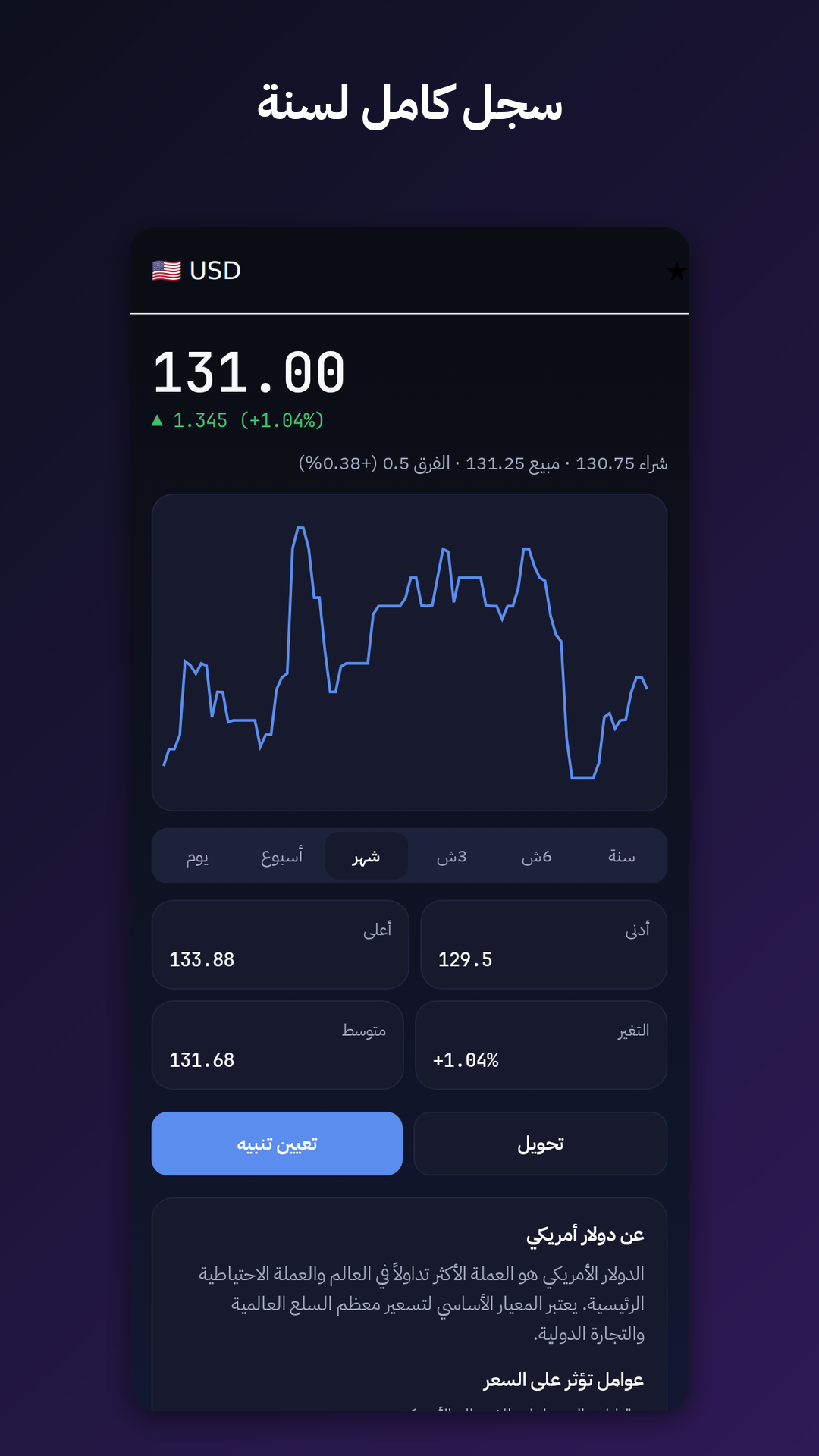
For tracking gold and currency prices in real time without relying on delayed news, the SYPNow app provides continuous monitoring of exchange rates and gold prices through a simplified Arabic interface. It's useful for anyone who deals with gold and currencies regularly and needs a quick reference before any buy or sell decision.
For deeper context, the Syrian economic cluster on Truescho covers related topics: if you're considering establishing a company in Syria or opening a bank account, understanding the gold market adds an important dimension to liquidity and savings management in a volatile economic environment.
Frequently Asked Questions
How much is a gram of 21K gold in Syria today?
Based on August 2026 monitoring and the parallel exchange rate (~130 new SYP/USD), 21K gold is estimated at approximately 15,890 new SYP per gram (1,589,000 old SYP). This estimate follows changes in the international ounce price and the local exchange rate.
How do I calculate the gold price myself?
Divide the international ounce price by 31.1035 to get the per-gram price in USD (24K), then multiply by the SYP exchange rate, then multiply by (karat ÷ 24) for the desired karat.
What's the difference between new and old Syrian pounds?
The new pound = old pound ÷ 100. All prices mentioned here are in "new" pounds unless stated otherwise. To convert to old, multiply by 100. (Example: 18,160 new = 1,816,000 old.)
Is gold a guaranteed investment in Syria?
Gold is not a "guaranteed" investment but a value preservation tool. Its price in dollars fluctuates, but it historically protects against pound depreciation. Don't put all your savings in gold — diversify.
Why do gold prices differ between jewelers?
Differences are natural due to "making charges," premium or discount rates, and the timing of daily price updates. Differences are usually small (1–3%) but can be larger on luxury pieces.
Do gold prices differ between Damascus and Aleppo?
Yes, typically by a small margin (1–3%). Damascus prices are the media benchmark, but jewelers in other cities may price with a local differential reflecting liquidity and demand.
When is the best time to buy gold?
There's no proven "ideal timing." The practical strategy is gradual purchasing (a fixed amount periodically) to avoid buying the full sum at a peak, rather than trying to time the market.
How do I verify the gold I'm buying is genuine?
Three practical methods: (1) a trusted stamp on the piece, (2) buying from a jeweler with established market reputation, (3) requesting a karat test using an XRF device if available. Don't rely on visual and tactile assessment alone.