
Germany Votes in Two States Today After the AfD's 43.8% Eastern Win: What Actually Changes for Migrants and Students?
Last updated: September 20, 2026 — election day
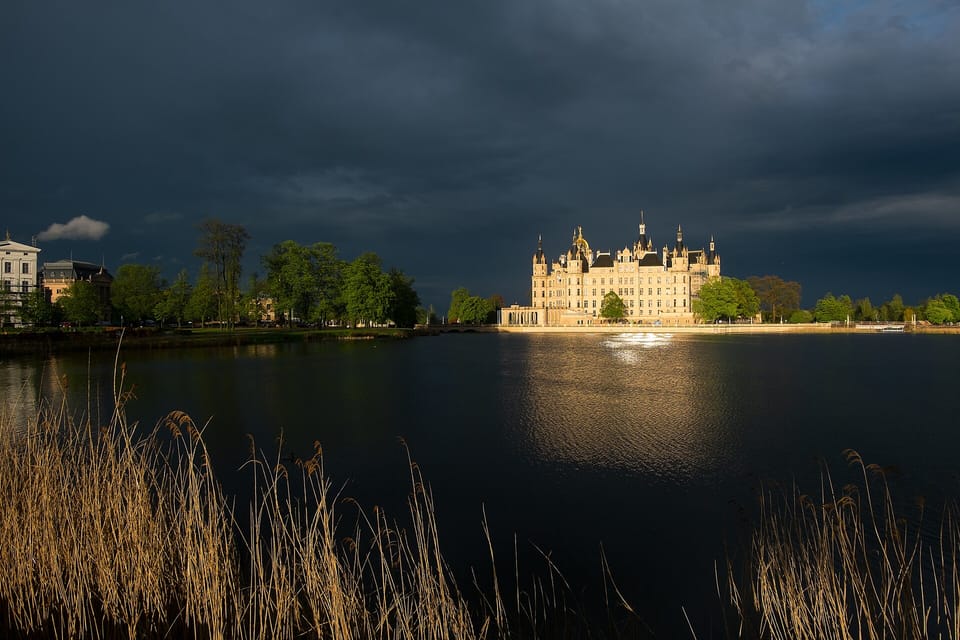
Around 1.3 million eligible voters in the north-eastern German state of Mecklenburg-Western Pomerania go to the polls on Sunday, September 20, 2026, to elect a new state parliament — on the same day Berlin elects its city parliament, the Abgeordnetenhaus. The vote comes exactly two weeks after the far-right Alternative for Germany (AfD) won 43.8% in Saxony-Anhalt's state election on September 6, the highest share any single party has ever recorded there. But the question that matters to international readers — foreign workers, students, and anyone planning a move to Germany — is different: does any of this change your visa, your residence permit, or your study plans? The short, honest answer is no, not today: immigration law in Germany is federal, not state law. Still, there are three things worth watching closely, and this guide walks through them with verified numbers and primary sources.
What Happened in Saxony-Anhalt on September 6?
To understand today's noise, rewind two weeks. On September 6, 2026, the AfD took 43.8% of the vote in Saxony-Anhalt and won 39 of the 83 seats in the state parliament — just three seats short of an absolute majority. It was the first time the party topped a state election there by such a margin, while the Christian Democratic Union (CDU) of state premier Sven Schulze collapsed to 17.2% without winning a single direct constituency. The SPD landed at 9.3%, the Greens at 8.9%, and the Left at 8.6%.
The practical meaning of those numbers: even at 43.8%, the AfD could not form a government alone in Saxony-Anhalt, because the other parties combined hold a clear majority and refuse to coalition with it — the so-called firewall (Brandmauer). That single fact is the key to reading today's elections without either panic or complacency.
What Exactly Is Being Elected Today?
In Mecklenburg-Western Pomerania, roughly 1.3 million voters — the state lowers the voting age to 16, below the federal threshold — are choosing a new Landtag, which in turn picks the state government and its premier. The race for the premiership looks largely settled in favor of the incumbent, Manuela Schwesig (SPD, in office since 2017): an Infratest dimap poll on the direct question "who should be premier?" gave her 49% against just 27% for the AfD's lead candidate Leif-Erik Holm.
The race for first place among parties, though, is historically tight:
- The AfD polls at 36 to 38% (latest INSA survey from September 16) and has led state polling for more than three years. Its 2021 result was just 16.7%, so it is on course to roughly double its share — a prospect Holm embraced at the party conference in Grimmen in late May: "We will put our country back in order with a government of our own." Even so, Greifswald political scientist Jochen Müller considers AfD participation in government "unrealistic," because the other parties combined retain a clear majority.
- The SPD under Schwesig narrowed the gap in the final days: the ZDF Politbarometer Extra published in the last stretch before the vote put the Social Democrats narrowly ahead of the AfD for the first time this cycle.
- The rest of the map: the Left holds a stable 9–11%, the Greens sit exactly at the 5% threshold, Sahra Wagenknecht's BSW at about 4%, and the FDP is largely out of the race. The current red-red coalition (SPD and Left) may fall just short, opening the door to a red-red green arrangement if the Greens clear the bar.
In Berlin, voters elect the city-state's parliament amid wide European coverage framing the vote as a test for the continent's political center after a sustained AfD rise in capital-city polling to levels the party has never seen there. Once again: even if the AfD becomes the second or third force in Berlin, the remaining parties can keep it out of government — which is what has happened in every German state so far.
Source: Al Jazeera English — Germany state election: SPD faces challenge from rising AfD
The Question That Matters: Is Your Visa or Permit Affected Today?
This is where precision matters, because rumors outrun facts on days like this:
- The Residence Act is federal, not state law. Germany's Residence Act (AufenthG), the Skilled Immigration Act, and work visa routes — including the Opportunity Card (Chancenkarte), the §81a fast-track procedure, and the EU Blue Card — are all federal statutes passed by the Bundestag. No state parliament can amend or cancel them. Your application file at the embassy or the foreigners' office is untouched by today's result.
- Visas are issued under federal rules everywhere. Even Berlin's local foreigners' office (Landesamt für Einwanderung) applies federal law verbatim and has no political leeway to change approval criteria.
- What states actually control are different files that shape daily life: state police, schools, state universities and their budgets, administration of integration courses in coordination with the federal migration agency (BAMF), and housing policy. Those portfolios can shift with a new state government — but none of them touches your legal status as a resident.
So Why Are Watchers Treating Today as Big?
Because the direction matters. Three eastern elections in a single month — Saxony-Anhalt, then Mecklenburg-Western Pomerania and Berlin — signal the political climate in the east specifically, the region where more than 191,000 foreign nationals now work, as we detailed in our analysis of foreign workers in eastern Germany. Today's result also puts pressure on Chancellor Friedrich Merz and his federal coalition and redraws the map of forces that will negotiate future legislation — including any eventual changes to immigration law, which at this point remain party talking points, not passed bills.
And the fair-minded point deserves repeating: the AfD's rise in eastern ballot boxes is real, but it has not translated into a single change in federal immigration law, nor into any new instructions to embassies or foreigners' offices. Anyone claiming otherwise — in either direction — is building on fear, not documents.
What Does This Mean for You?
- You have a pending visa or permit application: it proceeds under the rules in force; today's vote adds no condition and removes none. Track your case only through official channels.
- You are planning to work in Germany: the existing routes stand — see our guides on working in Germany in 2026 without German and the §81a fast-track procedure with its €411 fee.
- You are considering the Opportunity Card: its points table and proof-of-funds requirement (€1,091 per month) are unchanged — full details in our Opportunity Card 2026 guide.
- You live in Berlin or one of the eastern states: your legal status does not change, but do follow the new local government's decisions on housing, transit, and schools, which genuinely are state matters.
- You want results fast: polls close at 18:00 CET, with first exit projections (Hochrechnungen) minutes later on official broadcasters such as tagesschau.
What Happens After the Polls Close Tonight?
Polling stations in both states close at 18:00 German time, and the first projections (Hochrechnungen) follow within minutes on public broadcasters such as tagesschau and ZDF, built from exit polls taken as voters leave the stations. A preliminary official result is usually known the same evening, while the certified final result takes days as postal ballots finish being counted and the figures are verified. Then comes the longest phase: coalition talks over the state government, which can run for weeks — and in which the practical question is settled: a renewed coalition around Schwesig, or a broader arrangement that includes the Greens if they clear the parliamentary threshold. The point for migrants specifically: none of this changes any law or consular instruction overnight — your file runs on federal law already in force, not on the speed of the count or the size of the coalition bargain.
Frequently Asked Questions
Does today's election affect German citizenship law?
No. Citizenship law is entirely federal, and any change requires Bundestag legislation. No amendment had been adopted as of September 20, 2026, and the rules in force are the ones we explain in our German citizenship rules 2026 guide.
Can I vote in a German state election?
Voting in state parliamentary elections is reserved for German citizens (in Mecklenburg-Western Pomerania from age 16). EU citizens vote in municipal and European elections instead. Non-EU residents do not take part in either — one more reason to know your rights from reliable sources rather than random group chats.
Do foreigners' offices stop processing files because of elections?
No. Foreigners' offices run on their normal schedules; election day is simply a public quiet day and has no bearing on file processing.
What if the AfD actually wins Mecklenburg-Western Pomerania?
Even in that scenario the party would need a coalition partner that currently does not exist — every other parliamentary party refuses to govern with it, and analysts consider a Schwesig-led administration in a modified constellation the far likelier outcome. Federal legislation is outside any state government's reach in any case.
I'm an international student in Berlin — does my university change?
Universities are state-funded and state-administered institutions, but international admission programs and recognized degrees do not change with one night's ballot. For the big picture on foreign students in German universities — a record number this year — see our separate analysis of 492,600 foreign students in Germany.
Your Move Now
Do not put your life plans on hold for a ballot box that cannot change your residence law in the first place. What you do control is your file: better German, a profession from the shortage list, and a precise understanding of the route that fits your qualifications. Start from documented guides, and when you need a real opening, use platforms that track updated jobs and opportunities daily instead of conflicting headlines.
Start Your Journey With Truescho Now
Whether you are planning to work in Germany or looking for a scholarship to fund your first year, truescho.com brings you official guides, jobs, and opportunities in one place.
Get Started Free →
Sources
- n-tv — All the data on the 2026 Mecklenburg-Western Pomerania election — voters, polls, electoral system
- Merkur — Final polls before the MV vote: AfD at 36–38% — INSA September 16 and Holm quotes
- tagesschau — Results of the 2026 Saxony-Anhalt state election — official results and historical context
- statistiken-aktuell — Saxony-Anhalt: AfD 43.8% and 39 of 83 seats — detailed breakdown
- Al Jazeera English — Germany state election: SPD faces challenge from rising AfD — official video coverage
- Make it in Germany — the official portal for working in Germany — routes in force, unchanged