

German Citizenship 2026: Five Years of Residence and a €255 Fee — the Complete Naturalization Rules
Last updated: 31 August 2026 — every figure below is taken from the official naturalisation page of Germany's Federal Office for Migration and Refugees (BAMF)
€255. That is the entire official fee an individual pays to apply for German citizenship, according to the official BAMF naturalisation page. Since the reformed citizenship law took effect on 27 June 2024, the standard residence requirement has dropped from eight years to five, and dual citizenship is generally allowed. Applicants who demonstrate exceptional integration efforts can naturalize after just three years. These are not media summaries — they are the rules currently published on an official German government portal, and this guide breaks down every one of them step by step.
What this means for you
If you live in Germany on a work permit, an EU Blue Card, or a post-study residence title, the distance between you and a German passport is now measured in months of paperwork, not decades of waiting: five years of ordinary residence, German at B1 level, a 33-question test in which you need 17 correct answers, and a clean financial file with no social benefits. And if you are still planning your move, the visa class you choose today determines when your five-year clock starts. See also: Germany's Opportunity Card 2026: 12 Months Without a Job Offer.
The two routes: 5 years for everyone, 3 years for exceptional integration
The standard route — 5 years. You are entitled to naturalization after five years of habitual, lawful residence in Germany. This is the general rule after the 2024 reform and it applies to the vast majority of applicants.
The fast route — 3 years. The same law allows naturalization after only three years for applicants who demonstrate special aptitude toward integration — for example particularly good academic or professional performance combined with very good German skills. This route is still codified in the law in force and listed on BAMF's official naturalisation page as of this update, but its evidentiary bar is far higher: documented excellence, not course attendance. Before building your timeline around it, verify its current status with the official source, because German migration law is amended frequently.
Special case — spouses of German citizens. The residence period drops to three years for people married to a German citizen, provided the marriage has lasted at least two years at the time of application.
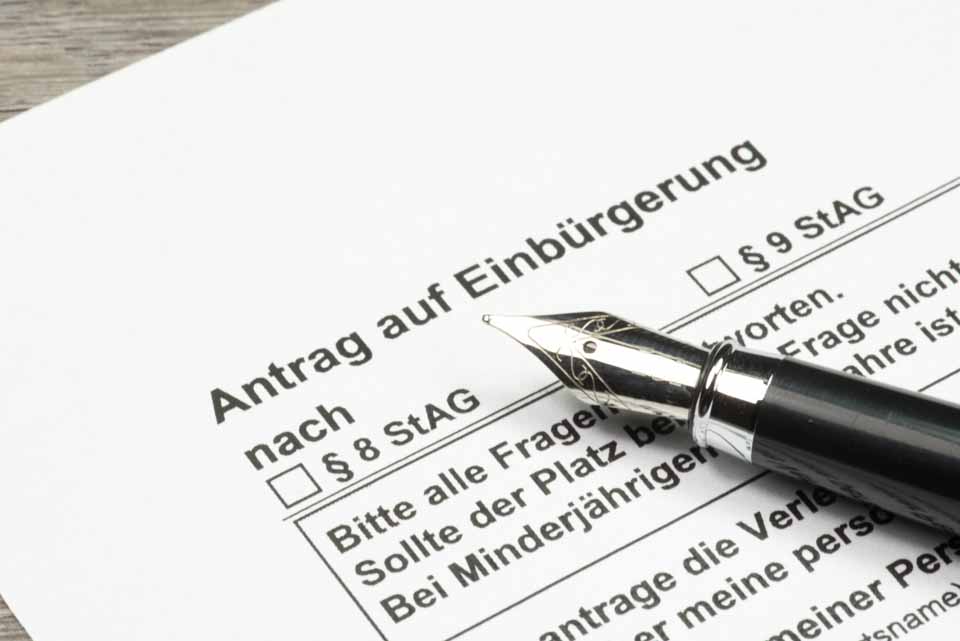
Source: BAMF — Federal Office for Migration and Refugees
The eight requirements, exactly as the official page lists them
The residence period interacts with a fixed list of conditions, none of which substitutes for another:
- Habitual, lawful residence for five years (or three under the routes above).
- Clarified identity and nationality, proven with a valid official document such as a passport.
- Commitment to the free democratic basic order of Germany's Basic Law, including acknowledgment of Germany's special historical responsibility and, in particular, the protection of Jewish life, and rejection of wars of aggression.
- A permanent right of residence at the time of naturalization — a settlement permit, a permit under the Switzerland–EU agreement, an EU Blue Card, or a temporary permit that by law leads to permanent residence.
- Financial self-sufficiency: you must support yourself and your dependents without claiming citizen's allowance or social benefits under Social Code II or XII.
- No criminal record.
- German at B1 level of the Common European Framework of Reference for Languages.
- Knowledge of Germany's legal and social system and living conditions — usually proven by passing the naturalization test.
The naturalization test: 33 questions, 60 minutes, 17 to pass
The test is less intimidating than its reputation. You receive a form with 33 questions, have 60 minutes, and choose from four options per question. 17 correct answers is a pass. Thirty questions cover "living in a democracy", "history and responsibility", and "people and society"; three questions concern the federal state where you are registered. Tests are administered at BAMF-licensed centres, and if you score below 17 you may retake it.
Notable exemptions: holders of a German school leaving certificate are generally exempt, as are those who cannot take the test for physical, mental, or psychological reasons.
The fees, in exact numbers
| Item | Official fee |
|---|---|
| Individual applicant | €255 |
| Minor naturalizing together with parents | €51 |
| Minor naturalizing without parents | €255 |
The fee can be reduced or paid in instalments for very low incomes or when several children naturalize together — request this in writing when you file rather than leaving it to discretion.
Dual citizenship and children born in Germany
Before the 2024 reform, most naturalizing citizens had to give up their previous nationality. Today dual citizenship is generally possible under the law in force — one of the provisions that recalculated the plans of millions of immigrants in Germany. Children have their own rule: a child born in Germany acquires German citizenship at birth if one parent has completed five years of lawful residence and holds a permanent right of residence, and the child may keep the parents' nationality alongside the German one.
For a sense of scale: 168,775 people naturalized in 2022 alone, and 74.2% of them retained their previous nationalities according to published data — and that was before the 2024 reform made dual nationality the general rule, which explains the surge in applications in the years since. The practical message behind the number: naturalization is a mass, institutional process, not a rare exception granted to a select few.
Discretionary naturalization: the fallback door most applicants never hear about
If one of the conditions is not fully met, the file does not automatically end. The official rules provide for "discretionary naturalization": the authority can approve your case if it sees a public interest in naturalizing you while some of the minimum requirements are fulfilled. You should not build your primary plan on this door, but it is a legitimate legal option worth raising with the competent authority when your case sits at the margin — for instance fully documented residence years with one explainable missing element. The decision truly is discretionary; there is no entitlement to claim it. But ignoring its existence means denying yourself a question that costs nothing to ask.
Five mistakes that sink otherwise ready files
- Applying on the wrong permit class: a temporary permit that does not lead by law to permanent residence fails requirement four, regardless of how many years you have accumulated.
- An expired or nearly expired passport: identity and nationality proof is a standalone condition, and an expiry freezes the file until renewal.
- Gaps in self-sufficiency evidence: incomplete employment certificates or undocumented periods without income invite questions about benefit dependence.
- Leaving the naturalization test to the last minute: slots in large cities are limited, and postponing it delays the entire application by months for no reason.
- Non-certified translations: saving on translation costs you a full refile; insist on certified translation accepted by German authorities from the start.
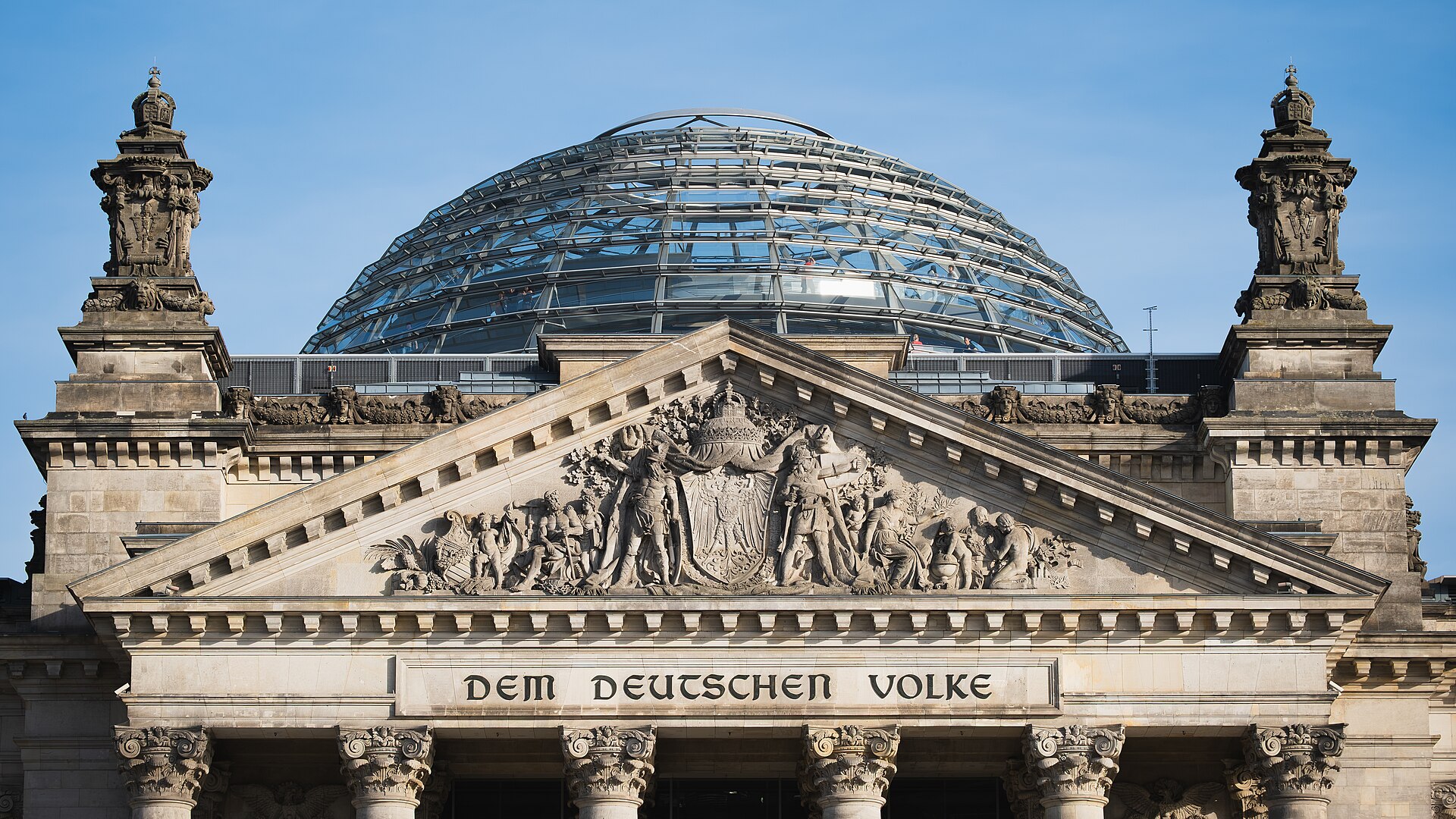
Source: Wikimedia Commons — photo by Christian David (CC BY-SA 4.0)

Your application, step by step
- Count your residence years precisely from your address registration (Anmeldung), not from your arrival date.
- Run the official quick check on the Federal Ministry of the Interior website — a non-binding self-assessment that tells you which requirement is still missing before you spend anything on translations.
- Reach B1 German with a recognized certificate, and book the naturalization test early; slots in large cities fill weeks ahead.
- Assemble your documents: valid passport, residence proofs, income evidence, criminal record certificate, B1 certificate, naturalization test certificate.
- Get certified translations — the biggest hidden cost in the file. Our official document translation service handles exactly this step.
- File with the competent naturalization authority for your city; from your 16th birthday you may apply yourself.
- Track your file and renew any document that expires while you wait.
From today's studies to tomorrow's passport: the full arc
Your years as a student or job seeker count as lawful residence, but the "permanent residence" requirement demands the right permit class. The arc we see succeed repeatedly: funded studies through German scholarships for international students, then employment with the EU Blue Card, which opens permanent residence in 21 months, then citizenship once the years are complete. Applicants without a job offer can enter on the Opportunity Card with its 6-point system and monthly financial proof — especially across the six occupations Germany officially lists as in-demand. And if you want a professional review before any step, use our file evaluation and documentation service.
Frequently asked questions about German citizenship 2026
Do I have to give up my current nationality?
No. The law in force generally allows dual citizenship after the 2024 reform — but always check your origin country's own rules, since some states restrict dual nationality on their side.
Do study and work years all count?
Any period of lawful habitual residence counts toward the years, but requirement four (permanent residence or a permit leading to it, at the time of application) is the decisive filter — not the raw number of years.
What if I fail the naturalization test?
You retake it. Each attempt has its own fee and scheduling.
Are my children born in Germany automatically citizens?
Yes, if one parent completed five years of lawful residence with a permanent right of residence before the birth — and the child keeps the parents' nationality as well.
Does the Opportunity Card lead directly to citizenship?
The Opportunity Card is a 12-month job-seeker residence; its months count as residence, but naturalization ultimately requires a permit in the settlement-eligible category plus every other condition.
Sources and references
- BAMF — Naturalisation in Germany (official page)
- Make it in Germany — official German government portal for skilled workers
- Reform of German citizenship law 2024 — German nationality law
Start your journey with Truescho now
Citizenship is not a distant dream; it is a sequence of correct administrative decisions that starts today. Audit your conditions, count your years, and start assembling the file before the queue grows. The Truescho team is ready to review your file and point you to the fastest lawful route.