
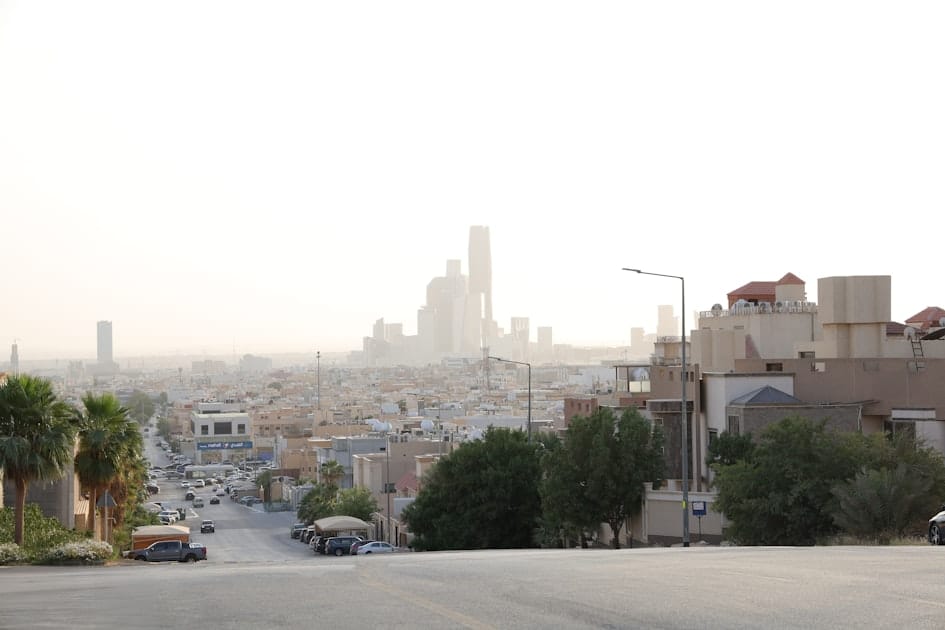
Foreigners Buying Property in Saudi Arabia 2026: Allowed Zones, Fees, and the New Law
Last updated: June 2026
For decades, foreigners property ownership in Saudi Arabia was effectively closed to most international buyers. That changed on 22 January 2026, when a new ownership system took effect under Royal Decree M/14. If you are an investor, a senior professional already living in the Kingdom on a work visa, or a Gulf-based expat looking to put capital into a fast-growing market, the rules now allow you to buy in ways that were simply not possible before.
This guide explains exactly who can buy, which cities and districts are open, what you will pay in fees and tax, and one point that trips up almost every newcomer: owning a home in Saudi Arabia does not, by itself, give you residency. The two are separate systems. We will walk through both so you can plan with clear numbers rather than rumors.
The short answer: Yes, non-Saudis can now own residential property in approved districts within designated cities as of 22 January 2026. Expect a real-estate transaction tax of 5% plus documentation costs, pushing your total fees to roughly 10% of the purchase price. Makkah and Madinah remain restricted. Ownership is not the same as residency.
What the New Ownership Law Actually Says
The legal foundation is the Non-Saudi Real Estate Ownership Law, issued by Royal Decree M/14 and brought into force on 22 January 2026. It is regulated by the Real Estate General Authority, known as REGA, which publishes the official list of where foreigners can and cannot buy.
The law recognizes five eligible categories of foreign owner:
- Individual foreign nationals (residents and, in approved zones, certain non-residents).
- Foreign companies.
- Saudi companies that have foreign shareholders.
- Non-profit entities.
- Diplomatic missions.
For ordinary individuals, the most common route is buying a single residential property for personal use. A foreign resident holding a standard work and residence permit may own one residential property for housing purposes, with authorization from the Ministry of Interior, processed through the national Absher platform.
The headline cost is the real-estate transaction tax, the 5% real-estate transaction tax (RETT), which applies to all buyers including non-Saudis. Penalties for breaking the rules are severe: fines reach up to SAR 10 million (around USD 2.67 million), and any property bought using misleading information can be sold at public auction. This is part of why getting the eligibility and the zone right before you transfer money matters so much.
A connected but separate program is Premium Residency. Buying a residential property worth at least SAR 4 million (about USD 1.07 million) plus a one-time fee of roughly SAR 800,000 (about USD 213,000) grants permanent residency and broader ownership rights. That is a different track from the standard ownership law, and we compare them below.
Why This Matters in 2026
Saudi Arabia is the largest economy in the Gulf, and until this year its property market was largely sealed off to foreign individuals. The opening on 22 January 2026 is one of the most significant shifts in the region's real estate landscape in a generation.
The change sits inside the Kingdom's Vision 2030 program, which aims to lift the real estate sector's contribution to the economy and to attract foreign direct investment at scale. By letting international capital into approved residential zones, the government is widening the pool of buyers in cities that are already seeing heavy construction and rising demand.
For you as a buyer, three things make 2026 the year to understand this properly. First, the framework is brand new, so the approved-zone list is still being finalized by REGA and worth checking before every purchase. Second, the 5% transaction tax and roughly 10% total fee load are now fixed enough to budget around. Third, early entrants into newly opened districts often buy before the wider market has priced in the demand the law is designed to create.
If you are weighing a Saudi purchase against other Gulf options, it is worth reading our guide to the Dubai retirement visa 2026, where one of the three qualifying routes is also a property purchase of around the same value. The two markets attract similar buyers for very different reasons.
Step-by-Step: How a Foreigner Buys Property in Saudi Arabia
Here is the practical sequence for a typical individual buyer who already holds a Saudi residence permit and wants one residential home.
- Confirm your eligibility category. Decide whether you are buying as a resident individual, a non-resident in an approved zone, a foreign company, or via Premium Residency. Your category decides what and where you can buy.
- Check the approved zone with REGA. Before you fall in love with a listing, verify the city and district appear on REGA's geographic-scope document. Districts cited in early guidance for Riyadh include Al-Narjis, Al-Arid, and Al-Fursan, but the binding list is the one REGA publishes, so treat that as your source of truth.
- Verify the property and its title. Use a licensed real estate broker and confirm the property has a clean, registered title deed. Avoid any seller who is vague about ownership records.
- Agree the price and sign a preliminary contract. Negotiate terms in writing. Make your purchase conditional on Ministry of Interior authorization where required.
- Apply for ownership authorization through Absher. Resident individuals submit the request to own one residential property via the Absher platform, with the supporting documents the Ministry requires.
- Pay the transaction tax and documentation fees. Budget the 5% real-estate transaction tax plus notarization and registration costs. Together these typically bring your total to around 10% of the price.
- Complete title registration. Once authorization is granted and fees are paid, the title is transferred and registered in your name. Keep every receipt and the final deed.
Throughout the process, deal only with licensed professionals and official platforms. The SAR 10 million penalty ceiling exists precisely because the government wants to keep the new market clean.
Who Can Buy and Where: Zones, Buyers, and Fees Compared
The table below brings together the three questions buyers ask most: who is eligible, where they can buy, and what it costs.
| Buyer type / zone | What you can own | Where it is allowed | Indicative cost on top of price |
|---|---|---|---|
| Foreign resident (standard work/residence permit) | One residential property for personal housing, via Absher + Ministry of Interior authorization | Approved districts in designated cities | ~10% (5% transaction tax + documentation) |
| Premium Residency holder | Residential, and broader ownership rights | Most cities except Makkah and Madinah | SAR 4M+ purchase plus ~SAR 800,000 one-time fee, then standard transaction costs |
| Foreign company | Property tied to licensed business activity | Approved zones per REGA scope | 5% transaction tax + documentation |
| Non-resident individual | Property only in specifically approved investment zones | Approved zones only (not open nationwide) | 5% transaction tax + documentation |
| Any foreigner in Makkah / Madinah | Restricted; ownership generally limited to Muslims under specific controls; non-Muslims excluded | Makkah and Madinah | Not generally available to most foreign buyers |
Two points deserve emphasis. Makkah and Madinah are treated differently from the rest of the Kingdom: ownership there is restricted, generally limited to Muslims under specific controls, and closed entirely to non-Muslims. And the standard ownership law and Premium Residency are different products. The first lets a resident own a home; the second is a paid residency status with wider rights.
Real Story: How Imran in Riyadh Bought His First Home
Imran is a Pakistani engineering manager who has worked in Riyadh for nine years on a standard work visa. For most of that time he rented, assuming ownership was off-limits to him. When the new law took effect in January 2026, he decided to test it.
He started by checking REGA's approved districts and shortlisted an apartment in Al-Narjis priced at SAR 1.4 million (about USD 373,000). His broker confirmed the title was clean and registered. Imran submitted his ownership authorization through Absher, listing it as his single residential property for personal housing.
When he budgeted the full cost, the price was only part of it. The 5% transaction tax came to SAR 70,000 (about USD 18,600), and notarization and registration added several thousand more, bringing his all-in cost to roughly SAR 1.54 million (about USD 410,000), close to the 10% rule of thumb.
The lesson Imran shares with colleagues is the one this guide keeps repeating: his new title deed did not change his visa. He still holds the same work and residence permit, renewed by his employer. Ownership gave him a home and an asset, not a new immigration status.
Common Mistakes Foreign Buyers Make
- Assuming ownership equals residency. It does not. A title deed gives you property rights, not a visa. Your residence status stays exactly as it was.
- Buying in a non-approved district. A property can be in an open city but in a district that is not on REGA's approved list. Always verify the specific district, not just the city.
- Budgeting only the 5% tax. Documentation, notarization, and registration push your real cost toward 10%. Plan for the full load, not the headline number.
- Confusing the standard law with Premium Residency. These are two different tracks with very different price tags. Do not assume one when you mean the other.
- Trying to buy in Makkah or Madinah without checking restrictions. These two cities are governed by separate rules and are off-limits to most foreign buyers.
- Skipping the Absher authorization step. Resident individuals must get Ministry of Interior authorization through Absher. Buying without it risks heavy penalties.
- Working with unlicensed intermediaries. Given the SAR 10 million penalty ceiling and the public-auction risk for misrepresented purchases, use only licensed brokers and official channels.
Ownership Versus Residency: The Distinction You Cannot Ignore
This is the single most important idea in the new system, so it gets its own section. Under the standard ownership law, buying a home does not grant you the right to live in Saudi Arabia. Your ability to stay still depends on your work and residence permit, sponsored in the normal way.
If your goal is the right to live in the Kingdom long-term and own property more freely, the relevant track is Premium Residency, which requires a property worth at least SAR 4 million plus a substantial one-time fee. That buys status, not just an asset.
So before you transfer any money, get clear on your real objective. If you want an asset and already have a valid permit, the standard law is your route. If you want permanent status, Premium Residency is the path, and the numbers are far larger.
The Total Cost Calculator: Beyond the Sticker Price
Buyers consistently underestimate the all-in cost. Here is how it stacks up on a sample SAR 1,000,000 (about USD 267,000) home:
- Purchase price: SAR 1,000,000.
- Real-estate transaction tax at 5%: SAR 50,000 (about USD 13,300).
- Notarization, registration, and documentation: typically several thousand riyals.
- Approximate all-in total: around SAR 1,100,000 (about USD 293,000), reflecting the roughly 10% rule.
Run this calculation on your own target price before you commit. The difference between budgeting 5% and the real 10% can be tens of thousands of riyals on a mid-priced home.
How the Saudi Market Compares for Foreign Buyers
It helps to put Saudi Arabia next to the other Gulf option international buyers consider most: Dubai. Both opened residential property to foreigners, but the logic is different, and understanding that difference helps you choose where to put your capital.
In Dubai, foreign ownership has been established for years, the market is mature, and a property purchase can also feed directly into a residency route, such as the property path to the Dubai retirement visa 2026. In Saudi Arabia, the market is freshly opened as of 22 January 2026, ownership and residency stay strictly separate, and prices in newly approved districts have not yet fully reflected the demand the law is designed to attract.
That makes Saudi Arabia a different kind of opportunity. You are entering earlier in the cycle, in a far larger economy, with a clear 5% transaction tax and an approved-zone system that is still expanding. For an investor comfortable with a newer framework, that early position can be the whole point. For someone who wants residency bundled with the purchase, Dubai's programs are the more direct fit.
What to Verify Before You Transfer a Single Riyal
Because the framework is new, a short verification checklist protects you from the most expensive errors. Run through it before any payment.
First, confirm the specific district appears on REGA's current approved list, not just the city. Second, check the title deed is clean, registered, and matches the seller. Third, get your buyer category confirmed in writing so you know whether you are buying as a resident individual, a non-resident in an approved zone, a company, or via Premium Residency.
Fourth, budget the full 10% and have it ready, not just the 5% tax. Fifth, complete your Absher authorization before, not after, you commit funds. Working through these five points with a licensed broker is the single best way to avoid the penalties that can reach SAR 10 million for misrepresented purchases.
Planning a cross-border move or a Gulf investment can feel like assembling a puzzle with missing pieces. Truescho gathers verified opportunities, residency programs, and practical guides in one place, so you can compare your options with real numbers instead of guesswork. Explore what fits your goals at truescho.com.
If you are also weighing residency programs in the wider region, our guides on the Dubai retirement visa 2026 and the Kuwait exit permit and residency rules for 2026 are useful companions, and our overview of the UAE Golden Visa 2026 categories covers the longer-term residency picture.
Frequently Asked Questions
Can a foreigner on a work visa buy property in Saudi Arabia?
Yes. Under the law effective 22 January 2026, a foreign resident holding a standard work and residence permit may own one residential property for personal housing. You apply for authorization through the Absher platform with Ministry of Interior approval, and you pay the 5% transaction tax plus documentation fees.
Do I need a Saudi residency to own property?
For the standard individual route, yes, you generally need a valid Saudi residence permit to own a residential home for personal use. Non-residents can buy only in specifically approved investment zones, not nationwide. The exact eligibility depends on your buyer category under the new law.
Can a non-Muslim buy property in Makkah or Medina?
No. Makkah and Madinah are governed by separate, stricter rules. Ownership there is restricted and generally limited to Muslims under specific controls. Non-Muslims are excluded from owning property in these two cities, regardless of the wider opening to foreign buyers elsewhere.
Which zones can foreigners buy property in for 2026?
Foreigners can buy in approved districts within designated cities, as published by REGA in its geographic-scope document. Districts cited in early guidance for Riyadh include Al-Narjis, Al-Arid, and Al-Fursan, but you should always confirm the binding, current list directly with REGA before purchasing.
How much is the transfer fee for non-Saudis?
The real-estate transaction tax (RETT) of 5% applies to all buyers, including non-Saudis. On top of that, notarization, registration, and documentation costs typically bring your total to around 10% of the purchase price. Budget for the full 10%, not just the headline 5%.
Does buying property give me Saudi residency or Premium Residency?
No. Under the standard ownership law, buying a home does not grant residency. Your stay still depends on your work and residence permit. If you want permanent status, that is the separate Premium Residency program, which requires a property worth at least SAR 4 million plus a one-time fee.
Can a non-resident tourist buy property in Saudi Arabia?
Non-residents are not free to buy anywhere in the Kingdom. They may purchase only in specifically approved investment zones defined under the new law and REGA's scope. A casual tourist without an eligible buyer status should not assume open access to the residential market.
Can foreign companies buy commercial property in Saudi Arabia?
Yes. Foreign companies are one of the five eligible categories under the law. They can own property linked to licensed business activity in approved zones per REGA's scope. The 5% transaction tax and documentation costs apply, and the same penalty framework governs misrepresentation.
Conclusion
The opening of Saudi property to foreign buyers on 22 January 2026 is a genuine turning point for investors and expats across the Gulf. The rules are clear once you separate the two systems: the standard ownership law lets eligible foreigners buy in approved districts, while Premium Residency is a separate, higher-cost path to permanent status.
Get three things right and the rest follows. Confirm your buyer category, verify the exact district with REGA, and budget the full 10% rather than just the 5% tax. Above all, remember that a title deed is an asset, not a visa. Plan around that distinction and you can enter one of the region's most important markets with confidence.
Sources
- Real Estate General Authority (REGA) — Non-Saudi Real Estate Ownership
- White & Case — Saudi Arabia Approves Landmark Real Estate Ownership Law for Non-Saudis
- U.S. Library of Congress — Saudi Arabia New Law Opens Ownership of Real Estate to Foreigners
- Saudi Gazette — Saudi Arabia to Implement New Foreign Property Law in 2026
Start Your Journey with Truescho
Whether you're investing abroad or planning your next move, truescho.com gives you everything.
Get Started Free →