
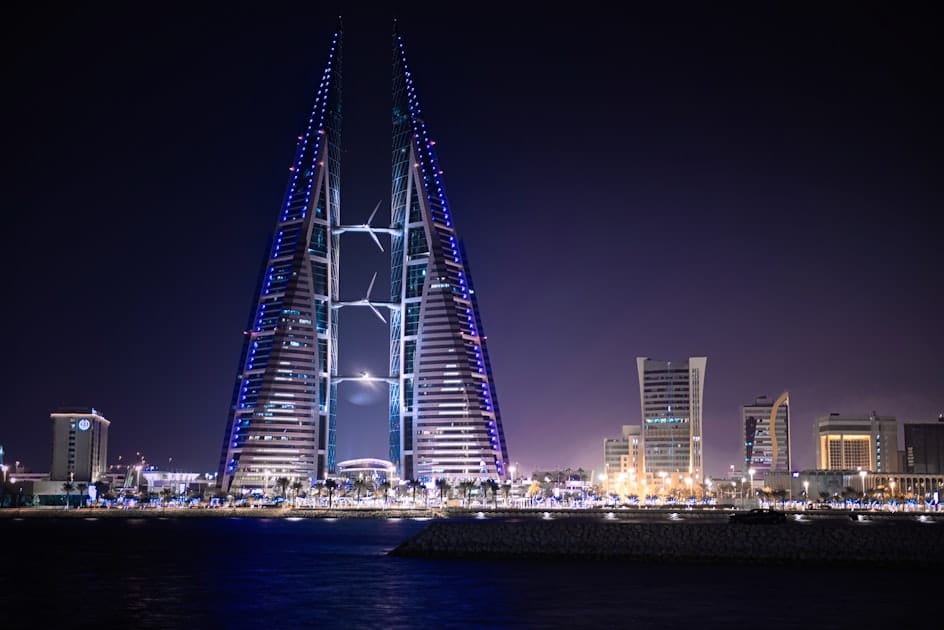
100% Foreign Ownership In Bahrain 2026: Who Really Gets The BHD 100,000 Rule?
Last updated: July 2026
Bahrain is one of the easier Gulf jurisdictions to misunderstand. The country is genuinely open to foreign founders, regional groups, family companies, manufacturers, consulting firms, and technology businesses. Bahrain Economic Development Board promotes 100% foreign ownership across most sectors, the commercial registration journey is centralized through Sijilat, and a foreign investor can often own a Bahrain company without a local sponsor.
The confusion starts with a single number: BHD 100,000. Many summaries of Bahrain Decision 53/2024 present that figure as if every foreign-owned company now needs that level of capital. That is not the correct reading. Decision 53/2024 is narrow. It changes the conditions for specified commercial activities and authorised-distributor situations, including cases involving a parent company with at least EUR 750 million in revenue and presence in ten markets. It is not a universal capital floor for every consultant, software founder, holding company, or regional service provider.
The practical answer is simple: Bahrain generally supports 100% foreign ownership across most sectors, but your ownership rights depend on the exact Sijilat activity code, the legal form you choose, and any sector regulator involved. Before you budget capital, sign office space, or promise a launch date to the board, check the activity first.
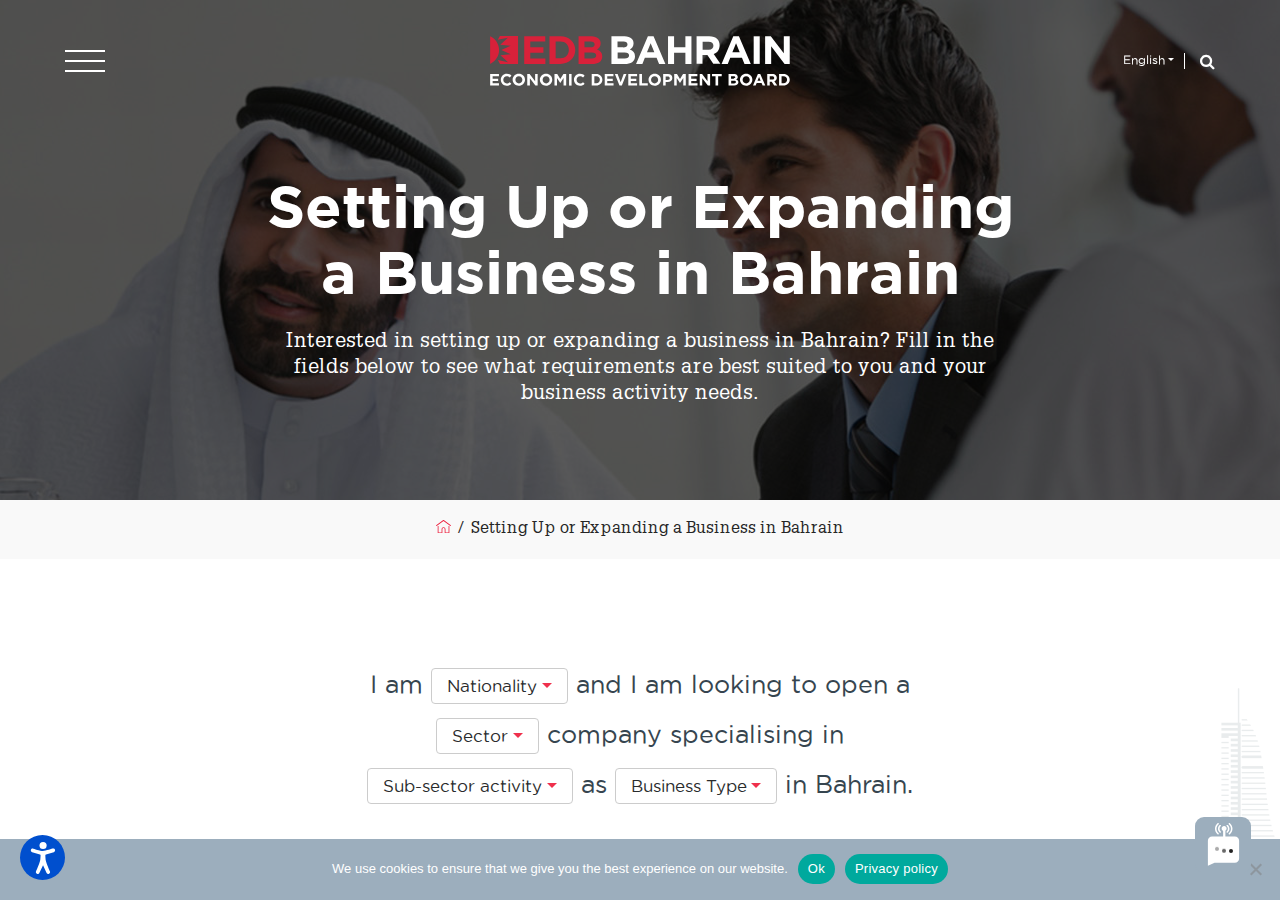
Source: Bahrain Economic Development Board
The Short Answer For Investors
Foreigners can own 100% of a Bahrain company in many activities, and Bahrain remains one of the Gulf's most business-friendly ownership regimes. The Bahrain EDB setup page says investors benefit from 100% foreign ownership across most sectors, and the EDB's business-friendly page repeats the same point for many of Bahrain's priority sectors.
But the headline needs three qualifications.
First, the exact activity matters. Bahrain licenses companies by commercial activity, so a broad statement about "consulting" or "trading" is not enough. You need the activity code that will appear on your commercial registration.
Second, Decision 53/2024 does not make BHD 100,000 a universal requirement. That number sits inside a defined legal route for specified activities and authorised-distributor cases. For ordinary service, technology, professional, industrial, and many holding or trading structures, the question is not "do I have BHD 100,000?" but "does my selected activity permit 100% foreign ownership, and what capital does this legal form require?"
Third, Bahrain is low-tax, not tax-free in every sense. VAT is 10%. Oil and gas and certain regulated sectors can have their own tax rules. A 15% Domestic Minimum Top-up Tax applies to large multinational enterprise groups that meet the global revenue threshold. Most small and mid-sized foreign-owned companies are not in that DMTT population, but tax should still be modelled before registration.
What Decision 53/2024 Actually Changed
Decision 53/2024 amended parts of Decision 40/2021, which lists commercial activities that foreign-capital companies may be licensed to carry out. The update is important, but it is narrower than the market commentary suggests.
The BHD 100,000 capital condition appears with other strict conditions. The parent company must have total revenue of at least EUR 750 million or the equivalent in Bahraini dinars, and it must have presence in ten markets. The decision also interacts with authorised-distributor cases, where Bahrain historically protected local participation in distribution for certain goods and trademarks.
That means a multinational brand owner or a major regional distributor may use Decision 53/2024 to assess whether it can own a Bahraini distributor outright. A boutique consultancy, SaaS company, specialist manufacturer, design studio, or management office is usually having a different conversation. Those investors should not automatically import the BHD 100,000 number into their budget.
| Question | Practical answer |
|---|---|
| Is 100% foreign ownership possible in Bahrain? | Yes, across most sectors, subject to activity-code and regulator checks. |
| Is BHD 100,000 required for every foreign-owned company? | No. It is tied to specified Decision 53/2024 cases, not every WLL. |
| Does Decision 53/2024 help ordinary founders? | Indirectly, because it confirms Bahrain's direction, but the ordinary founder still checks Sijilat activity rules. |
| Can an authorised distributor be 100% foreign-owned? | In defined cases, subject to the decision's conditions and any required approval. |
| Should you rely on a formation website headline? | No. Confirm the activity code, legal form, and regulator position before spending. |
The most useful way to read Decision 53/2024 is as a targeted widening of foreign ownership for certain restricted or sensitive commercial activities. It is not the starting point for every Bahrain company. Your starting point is the activity code.
Sijilat Activity-Code Check Before You Spend
Sijilat is the Bahrain commercial registration portal. It is where the chosen legal form, activity, shareholders, directors, trade name, approvals, and final commercial registration come together. For an international founder or CFO, the key job before incorporation is to test the proposed activity code, not just the broad business idea.
Suppose a company says it will do "regional distribution." That label is too broad. Distribution of software subscriptions, wholesale goods, regulated equipment, medical devices, or branded consumer products can lead to very different ownership and approval outcomes. The same issue appears in consulting. Management consultancy, engineering consultancy, tax advisory, legal services, and regulated investment work do not sit in one identical bucket.
Before signing with an adviser, ask for a short activity memo covering four items:
- The exact Sijilat activity code and English description.
- Whether 100% foreign ownership is permitted for that activity.
- Whether any ministry, regulator, municipality, or professional body approval is required.
- Whether the chosen activity creates capital, office, staffing, or licensing conditions that affect bank onboarding.
This check prevents the most expensive Bahrain setup mistake: forming the wrong entity, then discovering that the revenue-generating activity cannot be added without a different ownership structure or regulator approval. Our deeper guide to setting up a Bahrain business for foreign investors covers the broader incorporation route, but the activity-code check should always come first.
WLL vs Foreign Branch: The Structure Decision
Most foreign investors choose between a Bahrain company with limited liability, commonly called a WLL, and a branch of a foreign company. Both can be useful. They solve different board-level problems.
A WLL is a Bahrain company with its own legal personality. It is usually the cleanest choice when you want a local operating presence, local contracts, a Bahrain bank account, employees, and a structure that can stand apart from the parent. It is also easier to sell, restructure, or use as the operating company for a Gulf expansion. For most founders and private groups entering Bahrain for the first time, the WLL is the default option.
A foreign branch is an extension of the overseas parent. It can be attractive where the parent wants to perform a specific contract, keep the Bahrain presence tied to the parent balance sheet, or avoid creating a separate subsidiary. The tradeoff is that the branch is not as neatly ring-fenced as a WLL. Banks, counterparties, and regulators will look through to the foreign parent more directly.
| Factor | Bahrain WLL | Foreign branch |
|---|---|---|
| Legal identity | Separate Bahrain company | Extension of the foreign parent |
| Liability profile | Generally ring-fenced to the company | Parent exposure is more direct |
| Best for | Market entry, local hiring, recurring operations | Parent-led contracts or representative presence |
| Capital | Depends on activity and structure | No separate share capital in the same way |
| Bankability | Often stronger for local operations | Depends heavily on parent profile |
| Future sale or restructuring | Easier to isolate | More tied to parent operations |
The practical test is this: if Bahrain is a market you want to build in, choose a WLL unless there is a specific reason not to. If Bahrain is only a project or representative channel for an existing multinational, a branch may be cleaner.
Step By Step: How A Foreign Investor Sets Up In Bahrain
The official Bahrain EDB setup journey groups incorporation into three broad stages: getting started, obtaining initial approvals, and receiving final licences and regulatory approvals. In practice, founders and CFOs should manage the process in seven operating steps.
- Define the activity and ownership route. Start with the Sijilat activity code. Confirm whether 100% foreign ownership is permitted, whether a Bahrain partner is needed for the selected activity, and whether Decision 53/2024 is relevant or irrelevant to your case.
- Choose the legal form. Decide between WLL, branch, or another structure. Most foreign operating businesses use a WLL. A branch is more useful where the foreign parent wants a direct Bahrain extension.
- Reserve the trade name and prepare owners. Bahrain will review the company name, owners, shareholders, directors, and proposed structure. Make sure ultimate beneficial owner documents are ready before the adviser starts the filing.
- Secure address and office substance. Bahrain is friendly, but it is not a paper-only jurisdiction for serious businesses. Your address, activity, staffing plan, and operating model should match what the company will actually do.
- Submit through Sijilat and obtain initial approval. Once the core information is approved, the Commercial Registration Certificate can be issued in the initial stage. You may still need final activity licensing before trading, hiring foreign staff, or carrying out regulated activities.
- Complete licensing, notarisation, and capital deposit. Depending on the activity, this stage can include municipal approvals, regulator approval, licence fees, notarised constitutional documents, and paid-up capital deposit.
- Open the bank account and set compliance routines. The bank will review owners, activity, source of capital, customers, suppliers, and expected account flows. If VAT registration applies, handle it early. Build accounting, payroll, board approvals, and contract records from day one.
The incorporation filing is often not the long pole. Bank onboarding and regulator clarifications cause more delay than the CR application itself. A CFO should therefore run the Sijilat route, bank readiness, and tax assessment in parallel.
Bahrain Tax Reality: Low-Tax Does Not Mean No Tax
Bahrain's tax positioning is attractive, especially compared with many jurisdictions that now tax business profits more heavily. But a serious investor presentation should avoid the lazy phrase "no tax" because it is incomplete.
The first tax to model is VAT. Bahrain's standard VAT rate is 10%, in force from 1 January 2022. Businesses that exceed the registration threshold must register with the National Bureau for Revenue, charge VAT where applicable, file returns, and keep records. If your Bahrain company sells to VAT-registered customers, the commercial impact may be manageable. If it sells to consumers or VAT-exempt customers, pricing needs more care.
The second point is sector tax. Bahrain's broad corporate tax environment is favourable for many non-oil businesses, but oil and gas and other specific sectors can face their own rules. Do not turn a general advantage into a universal promise.
The third point is DMTT. Bahrain introduced Domestic Minimum Top-up Tax rules for large multinational enterprise groups in line with the global minimum tax framework. This matters for groups at or above the EUR 750 million consolidated revenue threshold. It will not usually affect an independent founder-owned WLL, but it matters to listed groups, global distributors, and large family conglomerates.
| Tax item | Bahrain position to model |
|---|---|
| VAT | Standard rate 10%, with registration and filing duties where thresholds apply. |
| Corporate income tax | Low-tax environment for many businesses, but sector rules can apply. |
| Oil and gas | Special tax treatment can apply to oil/gas activities. |
| DMTT | Relevant to large MNE groups meeting the global revenue threshold. |
| Withholding and extraction issues | Review by payment type, treaty position, and business model. |
The right board memo says: Bahrain can be materially tax-efficient, but the company still needs VAT readiness, sector review, and group-tax analysis.
Bahrain vs UAE: Ownership, Tax, And Substance
Bahrain and the UAE both offer strong Gulf market-entry routes. Both can work. The choice depends on market access, tax, bankability, customer location, activity, and operating substance.
The UAE has a larger domestic market, deeper free-zone choice, and a strong international brand for holding companies and regional headquarters. It also has a federal corporate tax regime. The standard UAE corporate tax rate is generally 9%, while a qualifying free-zone person can access 0% on qualifying income only if the required conditions are met. Those conditions include adequate substance, qualifying income, compliance, and other restrictions.
Bahrain is often simpler and more cost-effective for lean regional operations, especially where the investor wants a low-cost Gulf base, access to Saudi Arabia, and straightforward foreign ownership in the selected activity. Its weakness is not the legal openness; it is that activity-code nuance and bank due diligence still need careful handling.
| Decision factor | Bahrain | UAE |
|---|---|---|
| Foreign ownership | 100% across most sectors, subject to activity rules | 100% common in many mainland and free-zone cases |
| Corporate tax | Low-tax for many businesses, with sector and DMTT nuance | 9% generally; 0% free-zone treatment only where conditions are met |
| VAT | 10% | 5% |
| Setup ecosystem | Centralized Sijilat route with EDB support | Many mainland and free-zone authorities |
| Market perception | Efficient Gulf and Saudi-access base | Larger global hub and broader free-zone marketplace |
| Best for | Lean operating companies, Gulf service businesses, selected industrial activity | Regional headquarters, free-zone groups, larger market-facing operations |
If your plan is primarily Bahrain and Saudi market access, Bahrain deserves serious consideration. If your plan needs a UAE free-zone ecosystem, global investor familiarity, or proximity to Dubai/Abu Dhabi capital markets, the UAE may justify the higher complexity. Compare the UAE tax angle in our guide to UAE free-zone corporate tax and QFZP status, and the banking angle in our guide to UAE corporate bank accounts for non-residents.
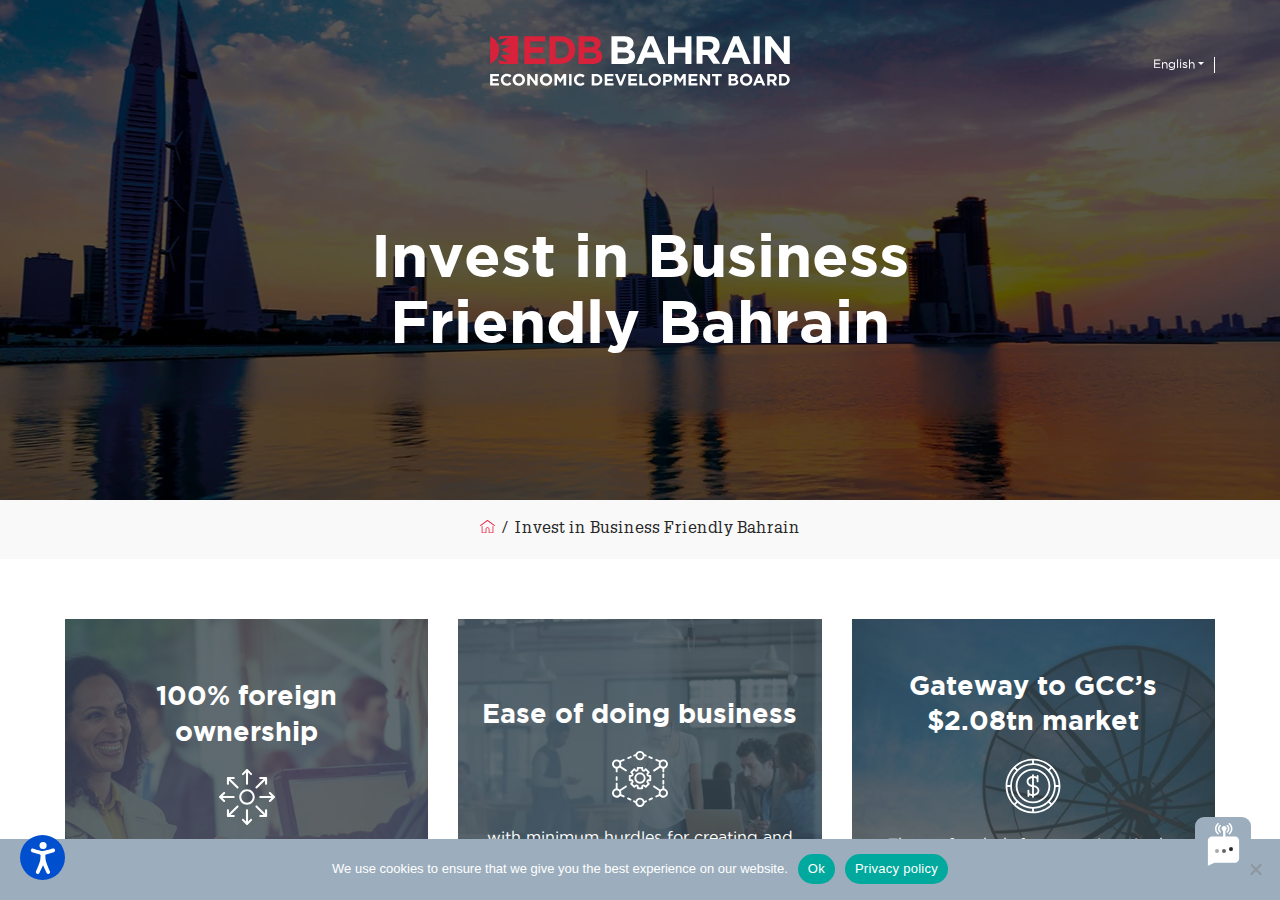
Source: Bahrain Economic Development Board
Bankability After Registration
A Bahrain CR is not the same as a bankable company. Banks care about the economic story behind the registration. They will ask who owns the company, where capital came from, what the company sells, who the first customers are, where contracts will be performed, and why Bahrain is the right jurisdiction.
For a professional services company, the strongest evidence is a signed service agreement, a real operating address, owner CVs, and a clear explanation of expected account flows. For trading, distribution, holding, or management companies, banks will focus on supplier/customer logic, group charts, board approvals, related-party contracts, and substance.
This is where the WLL versus branch decision becomes practical. A WLL with clear contracts, a matching activity code, a physical or approved office, and clean owner documentation can be easier to understand. A branch may work well when the parent is large and well documented, but weaker when the foreign parent is new, thinly capitalized, or hard to verify.
Scenario: A European SaaS Group Expanding Into Bahrain
Consider a profitable software group based in Amsterdam with USD 4 million in annual recurring revenue and enterprise customers in Saudi Arabia, Kuwait, and Bahrain. The founders want a Gulf base that can hire account managers, sign regional service contracts, and support Saudi clients without the cost of a Dubai headquarters.
At first, they worry about the BHD 100,000 headline. Their adviser explains that Decision 53/2024 is not the general rule for their activity. The relevant Sijilat activity is software and IT services, not an authorised-distributor route for a global consumer brand. The company chooses a Bahrain WLL, owned 100% by the foreign parent, with a modest paid-up capital figure aligned to the activity and bank expectations.
The board prepares a bankability pack: group chart, parent accounts, customer letters, Bahrain hiring plan, draft office agreement, expected account-flow ranges, and a VAT timing note. Incorporation is not the difficult part. The launch depends on activity-code and bank-readiness work before filing.
That is the core Bahrain lesson. The jurisdiction is open, but the successful investor treats openness as a starting point, not as a substitute for precise licensing.
Common Mistakes To Avoid
- Treating BHD 100,000 as universal. It is not. It belongs to defined Decision 53/2024 cases, not every foreign-owned WLL.
- Skipping the Sijilat activity-code check. A generic business description can hide a restricted activity or extra approval requirement.
- Choosing a branch because it looks simpler. A branch can be right, but it ties the parent more directly to Bahrain operations. Many operating businesses are better served by a WLL.
- Calling Bahrain tax-free in board papers. Bahrain is tax-efficient for many businesses, but VAT, sector taxes, DMTT, and compliance duties still matter.
- Assuming the bank account is automatic. Banks assess substance, owner profile, customer logic, and source of capital. Prepare for bank onboarding before the CR is issued.
- Copying a UAE free-zone structure into Bahrain. Bahrain has its own licensing route, activity logic, and substance expectations. Do not import assumptions from another jurisdiction.
- Ignoring residence and mobility planning. If owners or senior managers will live in Bahrain, connect company setup with the Bahrain golden visa investment route and the wider Gulf golden visa comparison.
When Bahrain Is The Better Gulf Choice
Bahrain can be the better choice when the company wants a cost-efficient Gulf base, a straightforward operating company, English-friendly professional services, and proximity to Saudi Arabia. It may be less suitable where the business needs a specific UAE free-zone regulator, a Dubai address for investor signalling, or a larger domestic customer base.
For regional context, compare Truescho's guides to setting up a business in Oman and setting up a business in Qatar. The best Gulf jurisdiction is the one where ownership, tax, bankability, customer access, and operating substance all line up.
Frequently Asked Questions
Can foreigners own 100% of a Bahrain company in 2026?
Yes. Bahrain allows 100% foreign ownership across most sectors, subject to the exact commercial activity and any regulator conditions. The safe approach is to check the Sijilat activity code before incorporation, because some activities remain restricted or require special approval.
Does the BHD 100,000 capital rule apply to every foreign investor?
No. The BHD 100,000 condition is tied to specified Decision 53/2024 cases, including certain activities and authorised-distributor situations with large parent-company conditions. It is not a universal capital floor for every foreign-owned Bahrain WLL.
What did Bahrain Decision 53/2024 actually change?
Decision 53/2024 amended parts of Decision 40/2021 on activities foreign-capital companies may carry out. It introduced conditions including BHD 100,000 capital, EUR 750 million parent revenue, and presence in ten markets for defined cases. It should be read narrowly, not as a general incorporation rule.
How do I check whether my Bahrain activity permits 100% foreign ownership?
Start with the Sijilat commercial registration portal and the Ministry of Industry and Commerce service route. Identify the exact activity code, then confirm ownership limits, regulator approvals, office requirements, and capital expectations before signing formation documents or office agreements.
Is a Bahrain WLL better than a foreign branch?
For most operating businesses, a WLL is usually better because it creates a separate Bahrain company with clearer local contracting and bankability. A branch can work where the foreign parent wants a direct extension for a specific project or parent-led Bahrain presence.
What taxes apply to a foreign-owned Bahrain company?
Bahrain is low-tax for many businesses, but VAT is 10%, oil/gas and some sector rules can apply, and DMTT applies to large MNE groups meeting the global revenue threshold. A normal founder-owned WLL may be outside DMTT, but it still needs VAT and compliance review.
Is Bahrain better than the UAE for company formation?
Bahrain can be better for cost-efficient Gulf operations and Saudi-market access. The UAE may be better for a larger free-zone ecosystem, Dubai or Abu Dhabi presence, and global investor familiarity. The answer depends on activity, tax profile, customers, and banking.
Can an authorised distributor be 100% foreign-owned in Bahrain?
In defined cases, yes, but the rules are specific. Decision 53/2024 includes conditions involving parent revenue, market presence, capital, and sometimes approvals. Distribution activities should always be reviewed against the exact product, trademark, and Sijilat activity before registration.
Do I need a local sponsor in Bahrain?
Often no. Many activities permit full foreign ownership with no local sponsor or partner. However, some activities remain restricted or need approvals, so the correct answer depends on the activity code rather than the investor's nationality alone.
Official Sources
- Bahrain Legal Affairs - Decision 53/2024
- Bahrain EDB - Setup Your Business
- Bahrain EDB - Business-Friendly Bahrain
- Bahrain Ministry of Industry and Commerce - E-Services
- Bahrain National Portal - VAT in Bahrain
- Bahrain NBR - DMTT Executive Regulations
Bahrain is open, but the winning setup is precise: choose the right activity, match the legal form to the operating model, prepare for the bank, and model tax honestly. Truescho helps founders and investors compare Gulf company-formation routes, connect with vetted advisers, and avoid the expensive mistake of building around a misunderstood headline.