
Last updated: August 2026
For many households the euro rate in Syria and the Turkish lira (TRY) rate decide monthly net income more than abstract macro talk. Early August 2026 monitors (sp-today): EUR about 149.20 buy / 151.00 sell new SYP; TRY about 2.71 / 2.74. CBS euro mid on 6 August: 140.79 new SYP (cb.gov.sy). USD reference: parallel ~130.10/130.60; official 122.00. Observational only.
Main comparison table
| Currency | Official mid (new) | Parallel buy | Parallel sell | Who cares most |
|---|---|---|---|---|
| USD | 122.00 | 130.10 | 130.60 | Broad pricing |
| EUR | 140.79 | 149.20 | 151.00 | Europe-based senders |
| TRY | — | 2.71 | 2.74 | North + Turkey corridor |
| SAR | 32.48 | 34.27 | 34.75 | Gulf senders |
| AED | 33.22 | 35.07 | 35.56 | Gulf senders |
Source: SYPNow on Google Play
Dollar as reference leg
Even in a EUR/TRY article, USD is the mental unit for many contracts. Moves often correlate imperfectly because local supply differs. Dollar depth: buy/sell guide.
Euro deep dive
Euro liquidity is thinner than USD in many local prints, so spreads can run wider (about 1.8 new SYP in the early-August snapshot versus 0.50 on USD). If you receive EUR and need SYP, ask for the EUR buy side, fees, and new-pound labeling. If you need EUR for travel, you face the ask. Compare direct EUR→SYP versus EUR→USD→SYP on net.
Turkish lira deep dive
TRY matters operationally across northern markets and among workers paid in Turkey. Early August ~2.71/2.74 new SYP per TRY. Drivers mix global USD/TRY with local SYP liquidity and corridor demand. Invoice in TRY, spend in SYP, settle sometimes in USD—write three columns or lose the margin in noise.
Which path fits you?
Europe salary → family in Syria
Optimize EUR payout net; USD secondary; TRY only if routing via Turkey.
Worker in Istanbul/Gaziantep → countryside Aleppo/Idlib
Model TRY→SYP and TRY→USD→SYP. Pick higher net after every hop.
Damascus merchant with euro-invoiced goods
Weekly EUR average + buffer; watch USD logistics legs.
Cross-rate caution
Global EUR/USD × local USD/SYP is a hint, not an executable. Spreads, scarcity, and asynchronous timestamps create gaps.
Source: SYPNow on Google Play
Regional notes
Damascus/Aleppo: stronger USD liquidity, EUR available with wider spreads at times. North: TRY more visible in daily pricing. Coast: verify whether quotes are local or relayed. Hub article: SYP today.
Europe remittances vs Turkey remittances
| Dimension | Europe (often EUR) | Turkey (TRY and/or USD) |
|---|---|---|
| Origin FX | Euro zone dynamics | TRY and/or USD |
| Receiver mental model | Often thinks in USD wrongly | May mix TRY and new SYP |
| What to compare | Net new SYP | Net new SYP |
| Lock time | Dual volatility risk | High if TRY swings |
Fees guide: international transfers.
Hold euro or convert immediately?
Not investment advice. Map spending currency, near-term EUR bills, and round-trip spread cost. Converting all to SYP then buying EUR later can mean paying spread twice.
Quick FAQ inside the comparison
EUR early Aug ~149–151 new parallel, 140.79 official. TRY ~2.71–2.74. “Best” currency = best net for your use case after fees—not a slogan.
Travel and rails
Multi-currency cards · Bank account · PAYMERA · Hotels.
Monitoring three currencies without chaos
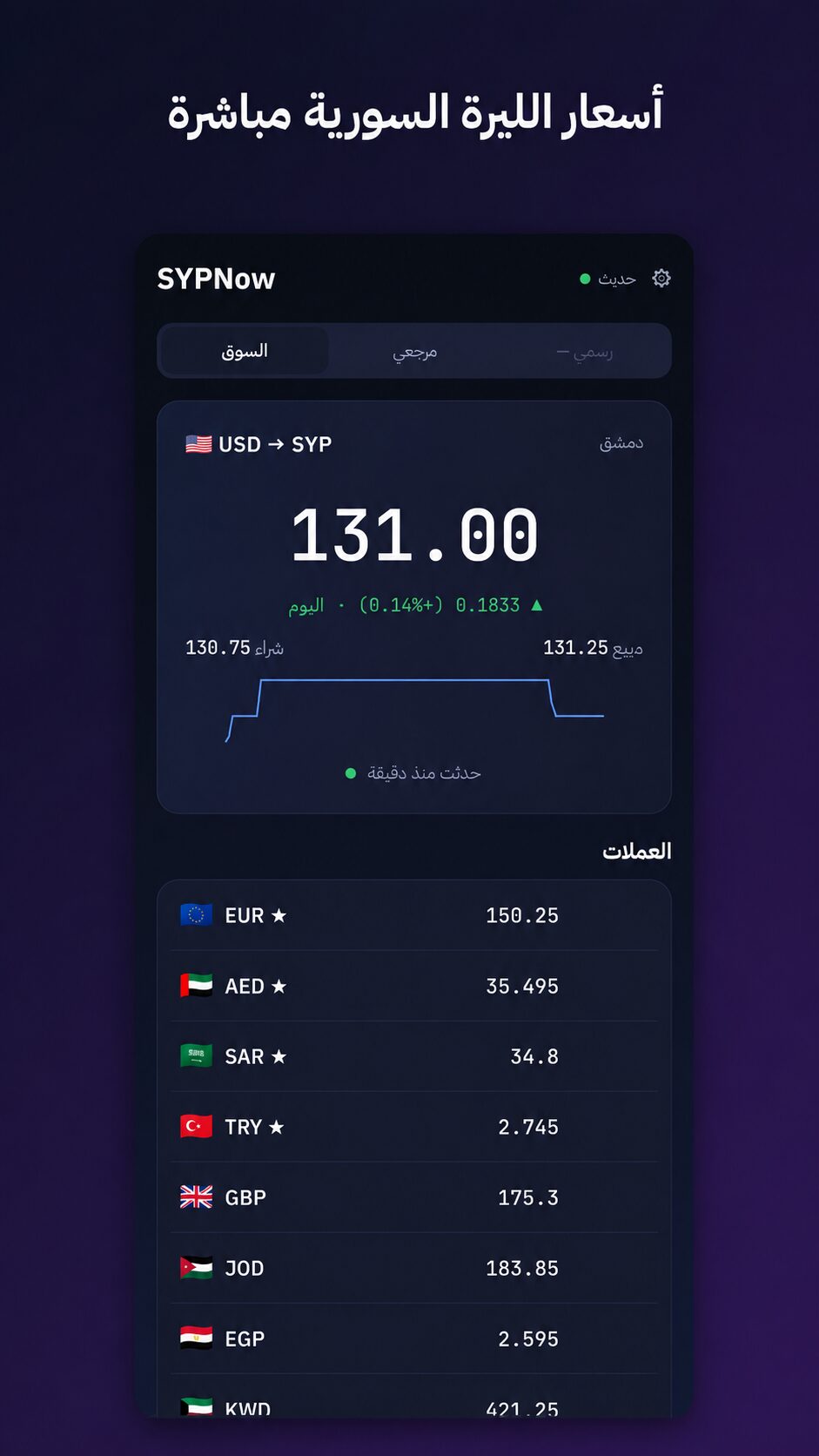
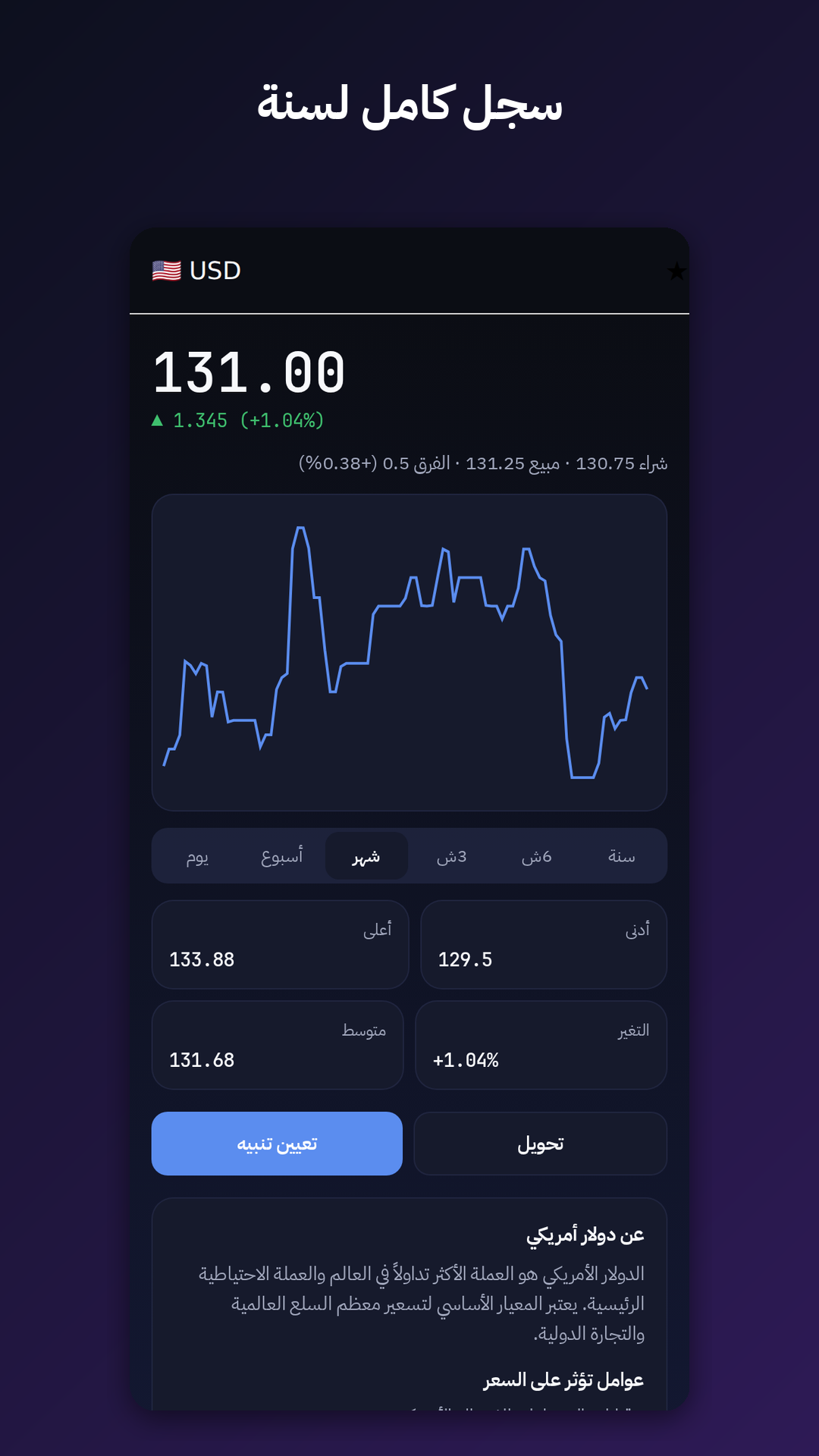
One screen, timestamps per print, optional alerts. SYPNow lists multiple currencies against SYP with source/time stamps, charts, offline converter on last download, and old/new calculator—as information only.
💬 Disclosure: SYPNow is developed by our team; cited because it matches the data workflow described here.
📲 Download SYPNow free on Google Play

Source: SYPNow on Google Play
Our verdict
- Macro map → SYP pillar
- USD bid/ask & cities → dollar guide
- EUR/TRY income → use the table, compute nets, label new pounds, avoid unnecessary double spreads
We do not crown a “winning currency.” We crown a calculation method that stops ambiguity losses—often costlier than half a pound of spread.
📲 Download SYPNow free on Google Play
Field notes for practitioners (en3-1)
Treat every Syrian pound quote in 2026 as a four-part object: unit (new vs old), channel (official bulletin vs parallel market vs remittance network), side (bid vs ask), and stamp (city + time + source). If any part is missing, you do not yet have a number you can defend in a family chat or a supplier call. The 2026 redenomination removed two zeros—100 old pounds equal 1 new pound—so a conversation that mixes units is not a debate about the economy; it is a unit error that can look like a 100x scandal.
Official mid-market prints published by the Central Bank of Syria on 6 August 2026 put the U.S. dollar near 122.00 new SYP and the euro near 140.79 new SYP. Parallel-market monitoring snapshots around early August (for example sp-today.com) showed dollar buy/sell near 130.10 / 130.60 new SYP, euro near 149.20 / 151.00, and Turkish lira near 2.71 / 2.74. Those prints move. They are observational, not a promise of execution. Trading Economics series near 122 in early August align more with the official reference than with street bid/ask—another reminder that aggregators and street quotes answer different questions.
Remittances add a third price: the network rate after fees, possibly locked at send time rather than payout time. Always compare net new SYP received, not the prettiest headline rate. Keep a weekly log. Merchants should reprice from weekly averages plus a spread buffer, not from a single panicked screenshot. Households should agree on the new-pound unit before arguing. None of this is investment advice; it is operational literacy. No leveraged FX, no loan products, no named unofficial dealers appear here on purpose.
Field notes for practitioners (en3-2)
Field notes for practitioners (en3-3)
Field notes for practitioners (en3-4)
Field notes for practitioners (en3-5)
Field notes for practitioners (en3-6)
Field notes for practitioners (en3-7)
Sources
- CBS
- sp-today — parallel-market buy/sell monitoring
- Trading Economics
- Wikipedia — Syrian pound
- SYPNow