

Latvia Golden Visa Is Gone (September 2026): Best EU Investment Residency Alternatives for Global Investors Now
Last updated: September 2026
Latvia closed its property and bank-deposit residence routes on 15 September 2026. The strongest remaining EU options are Greece from €250,000 in exception categories, Cyprus at €300,000, Portugal from €250,000, Italy from €250,000, and Malta's permanent residency from roughly €113,000 in first-year outlays. Latvia itself keeps business and bond routes only.
The closure landed at the end of a two-year repricing of European investment migration, and the demand data explains why the timing matters. Greek golden visa applications fell 63.5% in January 2026, according to Kathimerini, and by August 2026 the inflow had roughly halved year on year. Investors from India, Nigeria, Pakistan, the Philippines, the UK and the Gulf have not left the market. They are being forced to re-map it, program by program, threshold by threshold.
This article does that re-mapping with verified September 2026 numbers: what Latvia actually abolished, a working comparison of the eight programs still open, and two traps that most summaries miss — a Latvian fund route that does not yet exist, and a Greek transfer-tax change in July 2027 that will quietly add €96,000 to an €800,000 purchase.
What actually changed in Latvia on 15 September 2026
Latvia's parliament, the Saeima, adopted a new immigration law on 20 August 2026, and the law took effect on 15 September 2026. The official notice from the Office of Citizenship and Migration Affairs (PMLP), published on the day itself under the headline "New Immigration Law Takes Effect", confirms the two abolished lanes: residence permits for purchasers of real estate, and permits for investors in subordinated bank capital.
The closed routes were substantial. The property route required €250,000 in qualifying property plus a 5% supplement, and the subordinated-deposit route required €280,000 held for five years in a Latvian bank plus €25,000 in fees. Applications submitted before 15 September 2026 are still assessed under the previous law, per GetGoldenVisa's updated guidance of 18 September 2026, so anyone who filed in August is unaffected.
One date caveat is worth knowing because it is spreading through secondary sources. IMI Daily's 3 September 2026 coverage headlined the property and deposit routes as ending "September 14". The PMLP notice is authoritative: the law took effect on 15 September 2026. We track the full sequence of announcements, filings and deadlines in our dedicated piece on the end of the Latvia golden visa in September 2026.
What survives in Latvia is narrower: a business route at €50,000 or €100,000 in a qualifying company plus roughly €10,000 in government fees, carrying a two-year residence permit, and a government-bond route at €250,000 plus about €38,000 in fees. A €150,000 investment-fund route also appears in the statute — with a serious catch we cover below.
Eight EU programs compared: entry price, permit status, and the catch
The table below is the decision layer most advisory write-ups skip: the minimum documented threshold, what the permit actually is, and the single biggest caveat for each program as of September 2026.
| Country | Minimum documented entry (2026) | Permit status | Key caveat |
|---|---|---|---|
| Latvia | Business route €50,000–€100,000 + €10,000 fees; bonds €250,000 + €38,000 fees | Two-year temporary permit | Property (€250,000) and deposit (€280,000) routes closed 15 Sept 2026; €150,000 fund route not yet operable |
| Greece | €250,000 property in exception categories; €400,000 and €800,000 zones; bonds €500,000; funds/shares €350,000–€400,000 | Renewable residence permit | Transfer tax for non-EU buyers set to rise from 3% to 15% on 1 July 2027 |
| Portugal | €500,000 fund investment; cultural donation from €250,000; 10 jobs; R&D €500,000 | Residence permit with renewal path | Real estate excluded since October 2023; 2026 nationality-law changes affect the citizenship route |
| Italy | €250,000 startup investment; €500,000 company; €2m bonds; €1m donation | Investor visa after prior Nulla Osta clearance | Flat tax of €300,000 per year plus €50,000 per family member, up to 15 years |
| Malta (MPRP) | Rent €14,000/year or purchase €375,000; €60,000 government contribution; €37,000 contribution; €2,000 donation; €500,000 capital requirement | Permanent residence from day one | Processing runs 12–18 months; contributions are non-refundable |
| Cyprus | €300,000 in property, company or fund | Permanent residence | Requires proven external income of €50,000 a year, plus €15,000 for a spouse and €10,000 per child |
| Bulgaria | €512,000 investment/fund for direct permanent residence; €305,900 property for temporary | Permanent (€512k) or temporary (€305.9k) | Parliamentary proposal tabled August 2026 to add a physical-presence requirement |
| Spain | €2m government bonds; €1m shares or deposits; qualifying business project | Residency permit via surviving lanes | Only the property lane closed (3 April 2025) — not the whole program, contrary to most summaries |
Thresholds are drawn from PMLP's official notice, Reuters and IMI Daily reporting on Greece, GetGoldenVisa's September 2026 program data (unlinked; commercial source used for corroboration only), and SchengenVisaInfo and KPMG coverage of Spain. Now the country-by-country detail.
Country by country: what your money buys now
Greece: the market every Latvia applicant looks at first
Greece is the natural first comparison because it kept its property product — just repriced it. The entry tier of €250,000 survives only in exception categories, principally converted or listed buildings. Most areas investors actually want now sit in the €400,000 band, and the prime markets — central Athens, Thessaloniki, Mykonos, Santorini and the Cyclades islands — carry an €800,000 threshold. Non-property routes run at €500,000 in government bonds or €350,000–€400,000 in shares and funds.
Demand has already adjusted. After applications fell 63.5% in January 2026 and halved by August, negotiation leverage has shifted toward buyers in the €400,000 band, where stock competes for fewer qualified bidders. Anyone weighing the prime €800,000 zones should read our analysis of the Greece golden visa thresholds and the €800,000 band before shortlisting districts, and then the transfer-tax warning further down this page.

Source: Wikimedia Commons

Portugal: the fund route professionals prefer
Portugal removed real estate from its golden visa in October 2023 and now runs a capital-and-jobs program: €500,000 into a qualifying fund, €500,000 into scientific research, €500,000 into an existing company (or the creation of ten jobs), and a cultural-heritage donation from €250,000 — €200,000 in low-density areas. Processing sits with AIMA, the immigration agency formed in 2023, whose caseload and renewal backlog remain the program's main friction point.
Two 2026 variables deserve attention. The nationality-law amendments working through parliament change how quickly investors and their families can move from residence to citizenship, which is the single biggest reason buyers pick Portugal over cheaper programs. We break down the mechanics, fund selection and timelines in our Portugal golden visa fund-route guide at €500,000.

Source: Wikimedia Commons

Italy: startup capital at €250,000, with a flat-tax catch
Italy's investor visa is the cheapest documented ticket into a large EU economy: €250,000 into an innovative startup, €500,000 into an Italian company, €2 million into government bonds, or €1 million in philanthropic donation. Applicants clear a prior Nulla Osta authorisation before filing for the visa itself, and buying a home does not qualify — a point the authorities have repeated publicly.
The catch is fiscal. Investors who become Italian tax residents enter a flat-tax regime documented at €300,000 per year, plus €50,000 per family member, for up to 15 years, per GetGoldenVisa's updated Italy guidance of 11 September 2026. That is efficient for high earners and expensive for everyone else, so model it against your actual income before committing. Our Italy golden visa tracks and costs breakdown works through the arithmetic for each lane.
Malta: permanent residence from day one
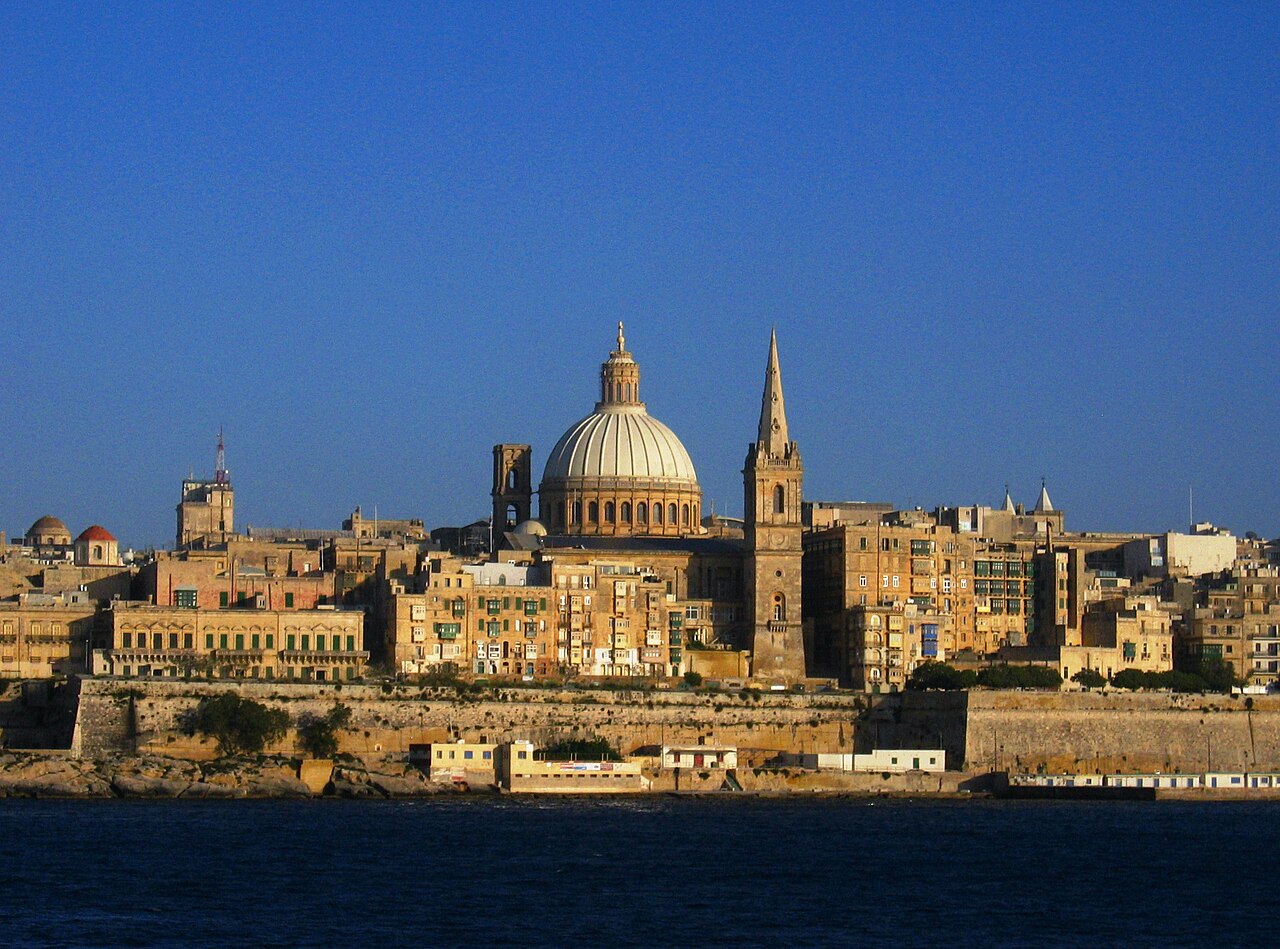
Malta's MPRP is the only program on this list that grants permanent residence immediately upon approval. The documented structure: a government contribution of €60,000 (non-refundable), a contribution of €37,000, a €2,000 charitable donation, and either a property purchase of €375,000 or a lease of at least €14,000 per year. Applicants must show €500,000 in capital, of which €150,000 must be financial assets.
For a family of four leasing, the first-year outlay is roughly €113,000 in contributions, donation and rent (about $122,000) — the lowest permanent-residence entry point in the EU, and the reason Malta consistently wins the budget comparison despite its higher capital-proof requirement. The trade-off is patience: processing runs 12 to 18 months. We come back to that number in the verdict.
Source: Wikimedia Commons

Cyprus: €300,000 plus an income test
Cyprus permanent residency starts at €300,000 in property, a company, or a collective investment fund. The distinguishing feature is the income condition: applicants must prove €50,000 a year in external income — salary, pensions, rents, dividends — rising by €15,000 for a spouse and €10,000 per dependent child. The permit is permanent from issuance, with no renewal ladder.
For retirees and owners of income-producing assets, the income test is trivially satisfied and Cyprus is arguably the cleanest €300,000 ticket in Europe. For applicants whose wealth is locked in a business, the paperwork burden is real.
Bulgaria: the fastest route to permanent residence — for now
Bulgaria runs a two-tier offer: €512,000 in a Bulgarian investment fund or comparable instrument buys direct permanent residence, while €305,900 in property yields a temporary permit with a later upgrade path. Direct permanent residence at the €512,000 level is unique among EU programs, which normally stage you through renewals.
Watch one live development. In August 2026 a parliamentary proposal surfaced to add a physical-presence requirement to the program, as reported by IMI Daily — the same policy drift that ended Latvia's passive routes and Spain's property lane. If permanence without relocation is your goal, filing before such an amendment passes is the rational posture. Our Bulgaria golden visa guide for 2026 tracks the proposal in detail.
Spain: only the property lane died
Spain terminated its real-estate golden visa on 3 April 2025, and a remarkable number of otherwise competent summaries report the whole program as closed. It is not. The surviving lanes are €2 million in Spanish government bonds, €1 million in shares or bank deposits, and a business project deemed of general interest to the Spanish economy, per SchengenVisaInfo's April 2025 reporting and KPMG's January 2025 analysis.
At those thresholds Spain is a €1 million-plus product, so it competes with Italy's bond and donation lanes rather than with Greece or Cyprus. The full picture, including what the property closure did to the rental market, is in our Spain golden visa status guide for 2026.
Three budgets, three strategies
Most failed applications trace back to a mismatch between budget and program, not to rejection. Map your capital to the right tier first.
| Budget | Strongest documented options | What you accept in exchange |
|---|---|---|
| Around €60,000 | Latvia business route: €50,000 in a qualifying company plus €10,000 in fees, two-year permit; government bonds at €250,000 + €38,000 fees for those with more capital | An active business commitment and a short permit horizon; there is no passive EU residency at this level — sub-€100k buyers should also compare the Gulf programs in our golden visa comparison for 2026 |
| Around €300,000 | Cyprus at €300,000 (permanent, with the €50,000 income test); Greece's €250,000 exception categories; Italy's €250,000 startup track | Cyprus adds an income-proof requirement; Greek exception stock is limited; Italy's startup route is active capital |
| €500,000 and above | Portugal fund at €500,000; Greece bonds at €500,000 or the €800,000 core zones; Bulgaria at €512,000 for direct permanent residence; Malta's €500,000 capital requirement; Spain at €1m shares or €2m bonds; Italy at €2m bonds | You are choosing on citizenship timelines, tax exposure and family structure — not on whether you qualify |
If you are still matching a budget to a family's tax position, schooling needs and travel patterns, Truescho's expert consultants review exactly these trade-offs before capital moves — usually the cheapest hour in the whole transaction.
Buyers below the €100,000 level should also widen the map beyond Europe before settling for an active business route. Several Gulf programs now compete directly for the same capital at comparable or lower thresholds, and our Gulf golden visa comparison for 2026 sets them side by side with the EU options above.
The €150,000 Latvia fund route exists on paper only
Here is the trap that could cost real money in the next few months. Latvia's new statute includes a €150,000 investment-fund route, and its headline number is already circulating in agency marketing as "Europe's cheapest golden visa".
The problem is documented by PMLP itself: the government fund the route depends on has not been created. There is no vehicle to receive the €150,000, no application pathway, and no timeline for activation. Any intermediary currently accepting money for this route is selling something that cannot be filed.
Until PMLP announces the fund's establishment, treat every €150,000 Latvia offer as a red flag. The functional floor for Latvia remains the business route at €50,000–€100,000 plus fees — real, fileable, and two years long.
The Greece transfer-tax trap: 3% becomes 15% in July 2027
The Greece threshold numbers everyone quotes understate the real change coming. From 1 July 2027, the property transfer tax for non-EU buyers is set to rise from 3% to 15%, per GetGoldenVisa's 2026 program data — the same class of buyer the golden visa targets. No enacting legislation has been published yet, which is exactly why it sits below most radar.
Run the arithmetic on the flagship zone. On an €800,000 apartment in central Athens (about $865,000), today's transfer tax is €24,000. Under the announced 15% rate it becomes €120,000 — a difference of €96,000 that dwarfs any fee negotiation you will have with a law firm.
Two practical implications follow. First, a Greek property purchase completed before the end of June 2027 locks in the 3% rate, effectively discounting the asset by six figures relative to later buyers. Second, because the measure is announced but not yet legislated, keep a contingency line in your model and monitor the parliamentary calendar through the spring session. Portugal's €500,000 fund route, which carries no property transfer at all, is the natural hedge for buyers who find the Greek math uncomfortable.
How a Karachi founder with €350,000 chose between Cyprus and Greece
Consider a composite case built entirely from the published 2026 rules. A 41-year-old IT services founder in Karachi exits a subsidiary for €350,000 in clean funds and wants EU residency for Schengen travel, an education base for two children, and minimal operational burden.
Greece eliminates itself quickly. His target profile — a modern Limassol-or-Athens-style apartment, family-sized — puts him in the €400,000 or €800,000 zones, not the €250,000 exception categories of converted and heritage stock. Stretching 14% over budget plus the 2027 transfer-tax exposure fails his risk test. Italy's €250,000 startup track fits numerically, but it is active capital in an early-stage company, and the flat-tax regime starts at €300,000 per year if he ever becomes fiscally resident.
Cyprus fits. A €300,000 new-build apartment meets the threshold with €50,000 left for fees, furnishing and application costs. His documented dividend income clears the €50,000 external-income test, his wife adds €15,000 to the requirement, each child €10,000 — all comfortably covered. The permit is permanent from issuance, with no renewal ladder and no physical-presence trap. He files with a Nicosia law firm, keeps his business in Karachi, and his family gains a settled European base without a forced relocation.
The case is illustrative, but the method is universal: match the budget tier first, then let family structure and tax exposure pick the country. Most buyers do the reverse and pay for it.
Frequently asked questions
Which EU golden visas are still open after Latvia closed its property route?
Latvia's closure removed only its property and subordinated-deposit lanes. Greece, Portugal, Italy, Malta, Cyprus, Bulgaria and Spain all remain open, though Spain has lost its property lane and Portugal its real-estate options entirely. Greece starts at €250,000 in exception categories, Cyprus at €300,000, and Italy's startup track at €250,000.
When exactly did the Latvia golden visa property and deposit routes end?
Both routes ended on 15 September 2026, the day the new immigration law took effect under the official PMLP notice. The Saeima adopted the law on 20 August 2026. Some international reports dated the end to 14 September; the PMLP notice is the authoritative source.
Can I still apply for Latvia residency through a business under €100,000?
Yes. Latvia's surviving business route requires either €50,000 or €100,000 in a qualifying company plus roughly €10,000 in government fees, and carries a two-year residence permit. Applications filed before 15 September 2026 were assessed under the previous law, and the €150,000 fund route remains inoperative.
Is Greece still the cheapest EU golden visa in 2026?
On paper yes, but only in narrow exception categories: converted or heritage buildings at €250,000. Most desirable areas now sit in the €400,000 or €800,000 bands, including central Athens, Thessaloniki, Mykonos and Santorini. Cyprus at €300,000 and Italy's €250,000 startup track often beat Greece in practice.
What replaced real estate golden visas in Europe?
Funds and deposits, mostly. Portugal moved to a €500,000 fund route after closing property in October 2023; Latvia now points investors to government bonds at €250,000 plus fees; Greece kept property but repriced it into zones. Spain's survivors are €2 million in bonds, €1 million in shares, or a qualifying business project.
Portugal vs Greece golden visa: which is faster in 2026?
Neither program publishes fast-track timelines, and Malta alone among these programs documents a 12–18 month processing window. Greece's advantage is a physical asset you control; Portugal's is a €500,000 fund route with no property transfer tax exposure at all. Choose on total cost and risk, then plan for a multi-month wait.
Is Spain's investor visa fully closed or only the real estate option?
Only the real estate option closed, on 3 April 2025. Spain still grants investor residency for €2 million in government bonds, €1 million in shares or deposits, or a business project deemed of general interest. Many summaries wrongly describe the whole program as abolished.
Do Latvia permits issued before September 2026 stay valid?
Yes. The law that took effect on 15 September 2026 abolished the property and deposit routes for new applicants; it did not void permits already issued. Applications submitted before 15 September 2026 are assessed under the previous rules, per GetGoldenVisa's updated guidance of 18 September 2026.
Our verdict
Latvia's closure removed the last genuinely cheap passive property route in the EU, and it will not be the last closure — Bulgaria is already debating a presence requirement, and Greece is repricing its tax treatment of non-EU buyers from July 2027. Waiting for better terms is now a losing strategy; the direction of every program is toward higher thresholds and more conditions.
For most global investors in September 2026, two defaults dominate. If you want permanence at the lowest all-in cost and can evidence €50,000 in annual external income, Cyprus at €300,000 is the cleanest ticket in Europe. If citizenship is the end goal and you can deploy €500,000, Portugal's fund route buys the strongest passport path left on the market. Malta wins for families who want permanent residence from day one, Latvia's business route wins under €100,000 for founders willing to stay active, and Greece only makes sense completed before the end of June 2027. Before you wire anything, have Truescho's expert consultants pressure-test your chosen route against your family's tax residencies and timelines — one session costs less than a single point of the Greek transfer tax you are trying to avoid.
Sources
- PMLP — New Immigration Law Takes Effect: Key Changes and Regulations (15 September 2026)
- Kathimerini — Greek golden visa application volumes, March and August 2026
- Reuters — Greece golden visa threshold reporting (9 February 2024)
- IMI Daily — Every Golden Visa Still Open in Europe in 2026 (13 March 2026)
- SchengenVisaInfo — Spain ends its real estate investor route (3 April 2025)
- KPMG — Analysis of Spain's investor visa termination (January 2025)
For Greece specifically: before buying, read our analysis of the new 15% transfer tax for non-EU buyers taking effect July 2027 — it fundamentally changes entry costs into Greek residential property.