
Europe Stopped Stamping Passports in April 2026: What the EES Border System Means for Your Next Trip
Imagine landing at Paris–Charles de Gaulle from Dubai, Riyadh or Istanbul. The border officer does not open your passport to stamp it — instead you are directed to a self-service kiosk that photographs your face and scans four fingerprints. This is not a preview of 2030: the EU Entry/Exit System (EES) has been running in full at every border crossing of 29 Schengen countries since 10 April 2026, the date passport stamping officially ended as the record of your entries and exits. The system is operated by eu-LISA, the EU's agency for large-scale IT systems, after a progressive roll-out that began on 12 October 2025.
Why should you care if your next trip is months away? Because your first crossing will take slightly longer (first-time biometric enrolment), and because the system now counts your Schengen days automatically under the 90/180 rule — leaning on faded stamps or a forgiving memory is over. This guide explains exactly what the system records, who is affected and who is not, what happens at the airport, and how this connects to the ETIAS travel authorisation that has been postponed to 2027.
What the EES is and who runs it
The Entry/Exit System is an EU-wide electronic register that automatically logs every entry and exit of non-EU nationals making short stays in the Schengen area. It is operated by eu-LISA and applies across 29 states: the Schengen members plus Switzerland, Norway, Iceland and Liechtenstein.
Before the system, an officer stamped your passport with an entry date and an exit date, and calculating your lawful days was largely your problem. Now a computer does it: the 90-days-in-any-180 rule is computed from one unified electronic file, and any overstay surfaces instantly at any crossing.
Source: EU Home Affairs official YouTube channel
Source: Council of the EU official YouTube channel
The official timeline: three dates to remember
| Milestone | Date | What happened |
|---|---|---|
| Progressive start | 12 October 2025 | The system began operating at crossings in stages |
| Full operation | 10 April 2026 | The European Commission announced the system live at all Schengen crossings; passport stamping ended |
| Today (August 2026) | — | Every entry and exit across 29 countries is logged electronically |
Summer 2026 was the first full season under the system, and British and European media — including The Times, The Guardian and The Independent — reported longer queues at some airports during July. We treat those reports honestly below: the experience varies sharply by airport and time of day, and a few practical habits remove most of the pain.
What the system records about you
At your first crossing, an electronic file is created containing your basic details (name, date of birth), your travel document data, a facial image, four fingerprints, and the date and place of every entry and exit, along with your visa or exemption status. The declared European purpose is border security and detecting overstayers — and by May 2026, European sources reported the system had already flagged thousands of overstays in its first months.
Equally important is what it does not do. It does not record EU citizens. It does not govern long-stay national visas such as full-year study or work permits — those remain in each country's own system. And it charges travellers nothing: this is, in essence, the digitisation of what ink used to do on your passport pages.
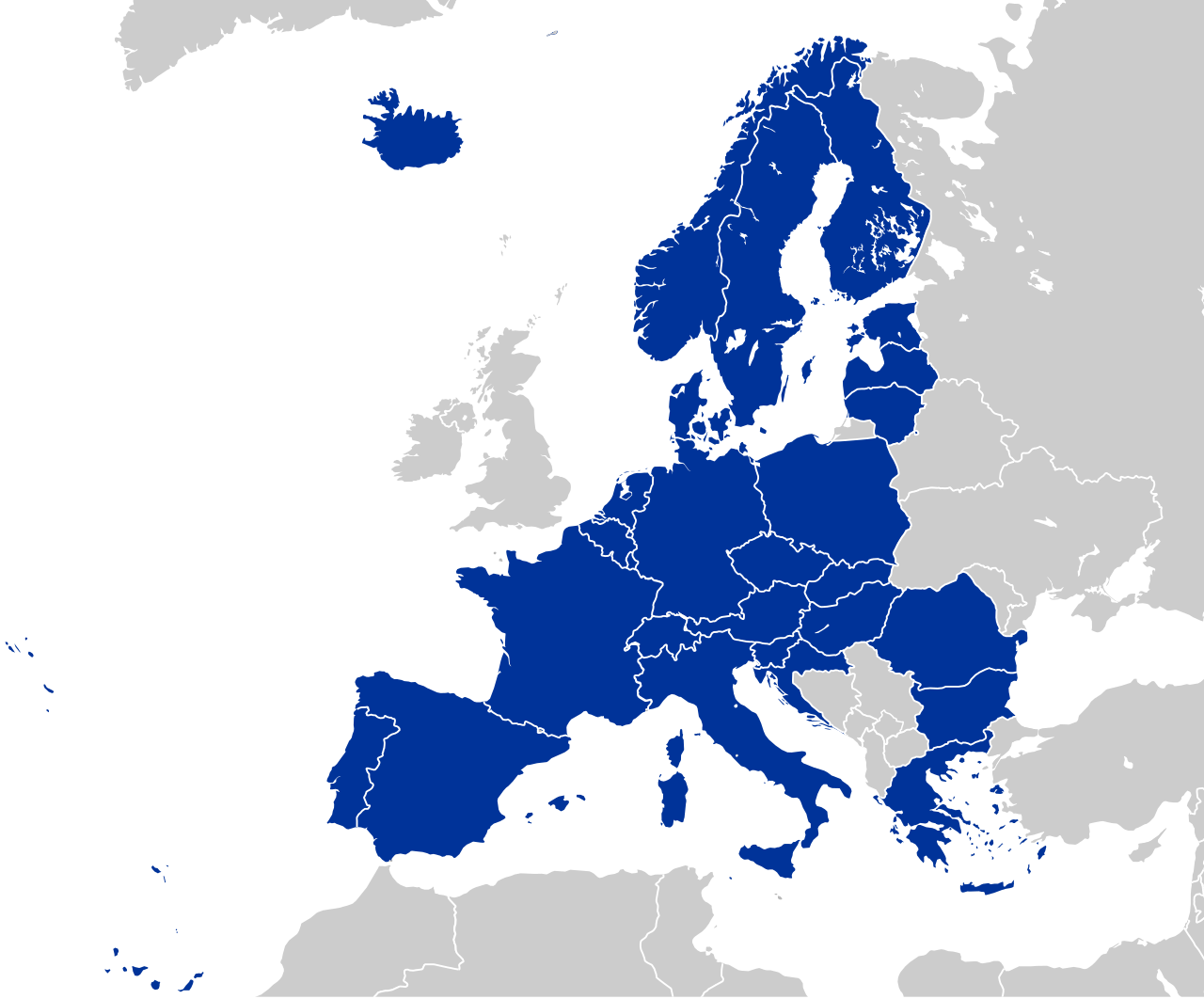
Source: EES Countries map — English Wikipedia
Who is affected — and who is not
- Affected: every non-European national entering the Schengen area for a short stay, whether with a Schengen visa (tourism, family visits, short business) or under visa exemption.
- Not affected: citizens of EU and Schengen states, and holders of long-stay national permits and visas (full-degree students, workers, family reunification) — these are stamped and administered separately.
- Short-trip students: if you are travelling for an admissions interview, an entrance exam or a short course on a short-stay visa, you are inside the system like any visitor.
A note for international students specifically: a clean record of entries and exits is quietly becoming an asset. The system now proves, with timestamps, that you always left on time — evidence that used to fade with paper stamps.
What actually happens when you arrive
On your first crossing after 10 April 2026 you stop at a kiosk or self-service gate to enrol your fingerprints and facial image instead of receiving a stamp — minutes of extra time at peak hours. Subsequent crossings are quicker, because your file already exists and officers or automated gates read it directly. Two conveniences are worth knowing: travellers who have crossed within the last three years and hold a biometric passport can use self-service kiosks where available, and certain countries offer pre-registration through the official "Travel to Europe" app before you fly.
ETIAS postponed to 2027: do not confuse the two systems
Plenty of sites blur EES with ETIAS, the upcoming travel authorisation — the EU's answer to the US ESTA — that will require visa-exempt visitors to obtain online clearance before travelling. The verified position at the time of writing: EES is live now, while ETIAS has been delayed, with parliamentary briefings and specialist reporting through July 2026 pointing to activation no earlier than 2027. Practically, that means no electronic authorisation is currently required if you are visa-exempt — but expect it to become mandatory once activated, and plan for a separate fee and form at that point.
How to cross with minimum waiting: the smart traveller's habits
Border reality under the system falls into three situations. Your first crossing after go-live means a full enrolment stop — facial image and fingerprints — so budget extra time before your connection or transfer. Every subsequent crossing is faster because your file already exists, and if you crossed within the last three years and hold a biometric passport, look for the self-service kiosks in the arrivals hall and use them directly instead of the staffed queue. At airports supporting the official "Travel to Europe" app, part of the process can be completed before you even land. The golden rule for your first two trips under the new system: arrive half an hour earlier than you normally would, keep your passport and ticket within reach, and read the signage — several airports split lanes between pre-registered travellers and first-time entrants.
The frequent traveller: planning trips under one electronic file
If your Europe trips stack up — family visits, business meetings, trade fairs, short university tours — the right mental model is now a calendar, not a passport page. The governing ratio is 90 days inside any rolling 180-day window, so map every day you have spent inside the Schengen area before booking anything. A "two weeks now, two weeks in two months" pattern looks harmless until it compounds, and the system does not forget. Where your trip spans several of the 29 countries, plan the itinerary first and let the border formalities follow it. And if you are considering one long stay, the cleaner route is a long-stay national visa for study or work, which sits outside this system entirely — see our European university admission guide 2026 if that is your direction — while a spotless exit record remains the best letter of introduction you can hand any consulate in the future.
What this means for you
- Your biometric passport is now a strategic asset — it unlocks self-service kiosks and saves minutes every crossing. Check that your passport is biometric and far from expiry.
- Count your own days before the system counts them against you: 90 days within every rolling 180. Frequent back-to-back trips to Europe stack up in one electronic file.
- Respect exit dates scrupulously. Overstays are exactly what the system catches first, and an electronic record is hard to argue with.
- Keep arranging Schengen travel insurance as always — see our Schengen visa insurance guide for Saudi and UAE residents and cheapest Schengen travel insurance comparison.
- September/October intake students: review the 2026 student visa documents checklist before booking autumn flights — the new system does not change the document list, but it logs every movement precisely.
- Arrive early on your first post-EES trip: add half an hour of buffer; first-time enrolment takes longer than a routine stamp.
Frequently asked questions
Will I be stopped if I never pre-registered my fingerprints?
No advance registration is mandatory. Enrolment happens at your first border crossing under the new system. Some countries offer optional pre-registration via the Travel to Europe app to cut waiting times, but the kiosk at the border is sufficient.
Is EES the same as the electronic ETIAS visa?
No. EES is the entry/exit logging system live since 10 April 2026 across 29 countries; ETIAS is a pre-travel authorisation for visa-exempt visitors whose launch has slipped to 2027. Travelling today does not require ETIAS.
What happens if I exceed 90 days in any 180?
That counts as overstaying, and the system records it automatically. Consequences range from fines and refused entry to temporary bans from Schengen states depending on the case — so count your days before planning consecutive trips.
Does the system apply to long-term students in Europe?
No — long-stay national study visas sit outside EES. The system covers short stays up to 90 days; full-degree students receive national residence permits on arrival instead.
Did stamping stop everywhere at once?
Effectively yes — since full operation was announced on 10 April 2026, non-EU passports are no longer stamped at Schengen crossings and are registered electronically instead. Your passport may still collect stamps from non-European countries.
Sources
- Official EES page — eu-LISA, the EU agency operating the system
- Entry/Exit System article with European Commission citations — English Wikipedia
- Travelling in the EU — official Your Europe portal
- Official video: the Entry/Exit System — EU Home Affairs
Start Your Journey with Truescho
From student visas to fully funded scholarships, Truescho supports you from your first document to your first lecture.
Plan your study journey now →