

ETIAS Explained: Why Europe's €20 Travel Permit Slipped to 2027, and What It Means for Your Trip
Will you need to fill in a form and pay €20 before your next flight to Paris or Rome? Not this year. That is the short, useful answer that emerged from a summer of mixed signals: in July 2026 the Financial Times reported that Brussels would postpone the ETIAS travel authorisation, and by mid-August the launch date had disappeared from the official EU travel website altogether. Euronews, The Independent and Time Out all confirmed the same thing — Europe's Electronic Travel Information and Authorisation System will not start before 2027, and no exact date is currently on the table.
ETIAS is a pre-travel digital authorisation — not a visa — for nationals of countries exempt from Schengen visas. It will cost €20, stay valid for three years, allow stays of up to 90 days in any 180, and cover 30 European countries. Its launch is now expected in 2027 at the earliest, delayed by the troubled rollout of the EES border system it depends on. If you already hold a Schengen visa, ETIAS will never apply to you. Here is the full picture: why the delay happened, who will actually need the permit, how the application will work, and how to dodge the scam sites that have multiplied around the confusion.
When does ETIAS actually start?
Not before 2027 — and anyone selling you a more precise date is guessing. The sequence of official and well-sourced reporting tells the story cleanly:
| Date | What happened |
|---|---|
| 12 October 2025 | EES (the Entry/Exit biometric system) launches progressively — the technical foundation ETIAS runs on |
| 6 July 2026 | Financial Times reports the EU will delay ETIAS after border queues and technical glitches |
| July 2026 | European and international press confirm the postponement (The Telegraph, The Local, euronews) |
| 11–14 August 2026 | The launch date is removed from the official EU travel website; "delayed indefinitely, no start before 2027" becomes the operative reality |
| September 2026 | Status unchanged: no date announced, transitional period expected at launch |
The cause is not political but operational. ETIAS needs the EES databases — the biometric entry/exit records — functioning smoothly at every external Schengen border before it can layer a new mandatory pre-check on top. EES itself works, but its first year produced queues at major airports and intermittent technical problems serious enough for member states to ask Brussels for breathing room rather than risk a second disrupted summer.
For travellers this is genuinely good news wearing a confusing costume: nothing is being asked of you right now, no fee exists to pay, and the extra time means that by the launch date the application process will have been tested against real EES data rather than optimistic projections.
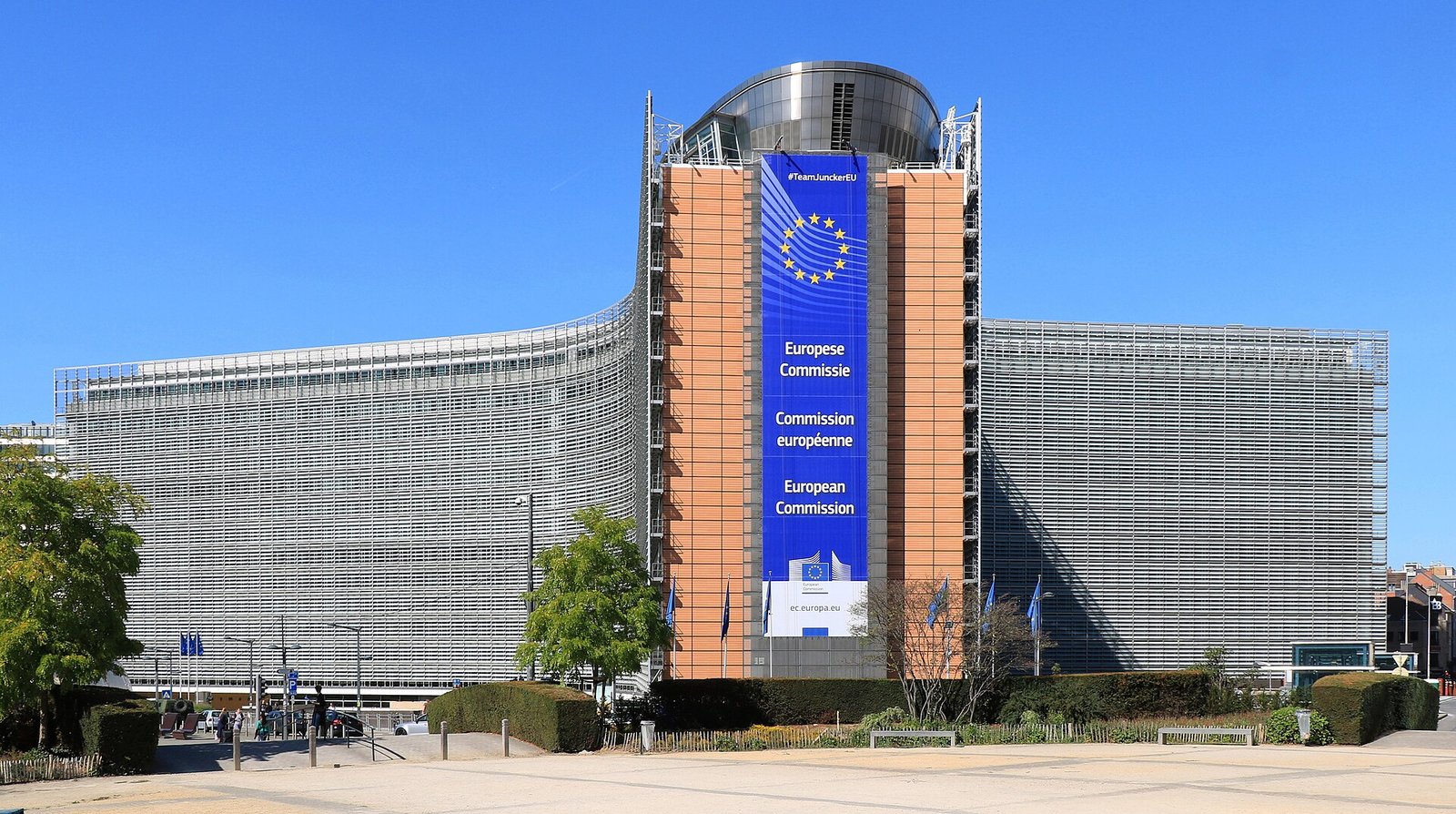
Source: Wikimedia Commons — Berlaymont, Brussels

What exactly is ETIAS?
The European Travel Information and Authorisation System is a digital pre-screening layer for people who visit the Schengen area without a visa. Run by the EU agency eu-LISA under a regulation adopted in 2018, it works like the American ESTA or the British ETA — a short online form, an automated check of your answers against EU security and migration databases, and a fast decision in most cases. The EU expects around 95% of applications to be approved within minutes.
It is emphatically not a visa. There is no embassy appointment, no financial documentation, no interview. It does not give you rights beyond those you already have as a visa-exempt visitor; it simply adds a pre-departure screening step for travellers who previously just showed up with a passport. And like every such system, final entry always remains the border officer's call.
Geographically, ETIAS will cover 30 countries: the 29 Schengen states plus Cyprus. Ireland stays outside — its border policy is separate — so a trip to Dublin has nothing to do with this file, while a trip to Athens, Lisbon or Helsinki does.
ETIAS versus EES: two systems, one border
Confusion between the two acronyms is the most common error in comment sections, so here is the clean split:
| System | What it does | Status |
|---|---|---|
| EES (Entry/Exit System) | Registers fingerprints and a face image at external Schengen borders; replaces passport stamps | Live since 12 October 2025 — this is what queues at EU airports have been about |
| ETIAS | Pre-travel online authorisation before you fly, for visa-exempt nationals | Delayed to 2027 at the earliest |
EES already affects you if you crossed a Schengen external border since late 2025: no more ink stamps, four fingerprints and a camera at first entry, lighter biometric checks thereafter, and a precise digital count of your 90-in-180 days. ETIAS, when it eventually launches, adds a form and a fee before you even board — for visa-exempt passport holders only. Our full walkthrough of the EES entry/exit system covers what changed at the border itself.
Who will need ETIAS — and who never will
The system applies to nationals of the roughly 60+ countries that enjoy Schengen visa exemption: the United States, Canada, the United Kingdom (post-Brexit), Australia, Japan, Brazil, Hong Kong, Singapore — and, one country that matters greatly in the Gulf corridor, the United Arab Emirates, the only GCC state with a Schengen visa exemption.
The equally important reverse list — people ETIAS will never touch:
- Anyone who needs a Schengen visa anyway. Citizens of Egypt, Syria, Iraq, Pakistan, India, Nigeria and most other non-exempt countries keep applying for regular Schengen visas exactly as before. No new form, no new fee, no change.
- Holders of a valid Schengen visa or residence permit — the stronger document always wins.
- EU and Schengen-country citizens travelling on their own passports.
So the practical Gulf picture is simple: Emirati citizens will add one quick online step to their Europe trips from 2027; other GCC nationals see no change at all, because their route is the Schengen visa they already know. That is worth stating plainly because scam messaging deliberately blurs it — more on that below.
What ETIAS will cost, and what you get for it
| Item | Detail |
|---|---|
| Fee | €20 per application (about £17 at summer 2026 rates, as UK press calculated) |
| Fee exemptions | Under 18s and over 70s — authorisation required, but free |
| Validity | 3 years, or until your passport expires |
| Entries | Multiple during validity |
| Maximum stay | 90 days in any 180-day period |
| Countries covered | 30 (29 Schengen + Cyprus) |
Compared with its siblings, ETIAS is the best value of the three: three years of validity for roughly the same money as the UK's two-year £20 ETA or the US ESTA. A family of four with two children under 18 pays €40 total, not €80. And because the fee is per application rather than per trip, a frequent traveller's effective cost falls to a few euros per journey.
One budgeting warning for when the system goes live: pay only on the official EU site. The €20 figure is fixed in the regulation; any checkout asking more is selling you a middleman's typing service. Which raises the ugliest feature of the ETIAS landscape right now.
The scam problem the EU itself keeps warning about
Every delayed system breeds two things: confusion, and businesses that monetise confusion. In August 2026, alongside the delay coverage, European papers carried the EU's renewed warnings about lookalike websites charging inflated "processing fees" for a permit that does not exist yet. The pattern to recognise:
- "Pre-registration" or "waitlist" offers today are selling nothing — there is no queue, no early-bird advantage, no discount for signing up before launch. The regulation has no such concept.
- Official domains end in europa.eu. Anything else with an official-looking crest and a checkout page is a commercial intermediary, some honest (they will say so), many not.
- Never hand passport data to a "quick check eligibility" form. Passport details plus a small fee is precisely what fraud needs; the real application will ask for your data once, on the real site, when the system exists.
The bitter irony is that the delay, which frustrates planners, protects everyone from exactly this: by launch there will be one official channel, widely publicised, and no legitimate reason to have paid anyone anything in advance.
How the application will work when it opens
Based on the regulation and the official traveller portal's published plans:
- One online form — passport data (read from the chip or typed), personal details, education and current occupation, and your travel/health background questions.
- Automated screening against Europol data, the Schengen Information System, Eurodac and the ETIAS watchlist.
- Minutes for the many: about 95% of applications are expected to clear automatically and instantly.
- Days for the few: files flagged for manual review go to a human decision within days, not weeks.
- Refusals are reasons-based — security risk, irregular-migration risk, epidemic risk, or serious doubts you will leave — and each refusal can be appealed through the concerned member state's channels.
Honest answers beat polished ones. The system's whole design is cross-checking your form against records that already exist; an inconvenient truth on the form is a footnote, while a convenient omission discovered in a database becomes the story of your application. The same principle governs the UK ETA — our UK ETA 2026 guide walks through that parallel system's £20 fee and process.
Source: Wikimedia Commons — European Commission headquarters
.jpg?ref=blogs.truescho.com)
A traveller's story: planning around a date that kept moving
Consider a planner we will call Amira, a Dubai-based software engineer mapping a grand four-country European tour with three friends. In spring 2026 her spreadsheet assumed ETIAS would be mandatory by summer: four €20 fees, forms completed a week before booking. July's delay reporting deleted the fees; August's removal of the launch date deleted the assumption. Her decision — to travel now under the current rules and file for ETIAS only when it actually exists — saved the group €80 and, more usefully, spared them the anxiety of submitting data to a system mid-restructure.
The transferable lesson is not about Europe specifically. It is the habit of anchoring plans to rules in force today while tracking announced changes without freezing for them. Borders worldwide are digitising — ESTA for the US, ETA for the UK, ETIAS for the EU, and regional schemes elsewhere such as the planned unified GCC visa — and each moves on its own clock. Flexibility with information beats rigidity with outdated certainty.
The full timeline, 2016 to 2027
| Year | Milestone |
|---|---|
| 2016 | First EU proposal for a pre-travel authorisation modelled on ESTA |
| 2018 | Regulation (EU) 2018/1240 establishes ETIAS in law |
| 2023–2024 | Platform build-out and database integration at eu-LISA |
| 12 October 2025 | EES launches progressively — ETIAS's technical dependency |
| Mid-2026 | ETIAS start (previously pencilled in) cancelled; date withdrawn from official site |
| 2027 at the earliest | Expected launch, after EES stabilises — with a transition period before enforcement |
If you keep one rule from this table, make it this: any exact ETIAS start date you encounter on social media, in a forum, or from a booking site's pop-up before the European Commission announces it, is fiction. The official traveller portal is the only clock, and right now that clock simply says "not before 2027".
Frequently asked questions
When will ETIAS actually launch?
Not before 2027, with no exact date announced. The EU removed the launch date from its official travel website in August 2026 after deciding to wait until the EES border system stabilises. A transition period is expected at launch before enforcement becomes strict, and the Commission will publicise the date well ahead of time.
Who needs ETIAS?
Nationals of the 60+ countries exempt from Schengen visas — including the US, UK, Canada, Australia, Japan and the UAE (the only GCC state with visa exemption). Everyone who needs a Schengen visa anyway — most Arab, South Asian and African nationalities — is completely unaffected and continues with normal visa applications.
Do I need ETIAS if I already have a Schengen visa?
No. A valid Schengen visa or residence permit fully replaces ETIAS for its validity period. ETIAS only adds a step for travellers who otherwise enter visa-free; it never applies on top of an existing visa.
How much will ETIAS cost?
€20 per application, valid for three years or until passport expiry, with unlimited entries during validity. Applicants under 18 and over 70 get the authorisation free. The fee is fixed in the EU regulation — anything higher on a third-party website is a middleman's markup.
Is ETIAS a visa?
No. It is a pre-travel authorisation — a short online form and an automated background check, with no embassy, no interview and no financial documents. It grants exactly the visit rights you already have as a visa-exempt traveller; it simply screens you before departure instead of at the border.
Why was ETIAS delayed again?
Because its technical foundation, the EES biometric entry/exit system, suffered technical glitches and border queues after its October 2025 start. Member states asked for stabilisation before adding a mandatory new pre-travel layer, and in July–August 2026 Brussels pushed ETIAS to 2027 at the earliest.
Can an ETIAS application be refused?
Yes, on legally defined grounds: security risk, irregular-migration risk, epidemic risk, or serious doubts about leaving the territory. Refusals can be appealed through the concerned country's procedures. In practice the EU expects roughly 95% of applications to be auto-approved within minutes.
How do I avoid ETIAS scam websites?
Pay nothing to anyone today — the system does not exist yet, so no "pre-registration" is real. When it launches, apply only via official europa.eu domains or the official app. Treat any site promising guaranteed approval, early access, or discounted fees as a fraud signal.
Sources
- European Commission — Smart Borders: EES and ETIAS — the official programme pages
- Official EU travel portal — ETIAS — the traveller-facing official site (launch date currently withdrawn)
- Wikipedia — European Travel Information and Authorisation System — fee, validity, country coverage (updated September 2026)
- GOV.UK — UK ETA — for comparison with the UK's parallel scheme
The smartest move while Europe's paperwork catches up with itself is a boring one: plan your trips on today's rules, check the official portal once a quarter if Europe is a regular destination, and keep every document in one place. Truescho exists for exactly that — destination guides, visa and travel consultants for complicated cases, and planning tools that keep your trips, documents and deadlines together whether you are heading to one continent or three.