
eSIM vs Physical SIM: Complete 2026 Comparison
Last updated: May 2026
💬 Disclosure: Some links in this article are affiliate links. We may earn a small commission when you complete a purchase at no extra cost to you. This helps us keep our content free, and it does not affect the integrity of our recommendations.
If you bought a phone in the last three years, you are probably staring at an unfamiliar choice every time you travel: stick with the plastic SIM card you have used for two decades, or switch to the digital one already baked into your device. The eSIM vs physical SIM debate is not just a tech-blog argument anymore. According to the GSMA Intelligence Q1 2026 report, 51% of new eSIM users discovered the technology through international travel, and global eSIM connections are projected to hit 4.9 billion by 2030, accounting for 55% of all mobile connections worldwide.
For a Filipino OFW heading to Riyadh, an Indian software engineer flying to Dubai, a Nigerian student arriving in Manchester, or a Brazilian backpacker hopping islands in Indonesia, the decision can mean the difference between a $5 weekly bill and a $300 roaming shock. This guide breaks down every meaningful difference between an eSIM and a traditional plastic SIM in 2026, with a 14-row comparison table, real-world cost math, honest pros and cons for both sides, and a clear answer to the question everyone asks first: which one should you actually use?
Quick answer (40-60 word quick answer): A physical SIM is a removable plastic chip you insert into your phone. An eSIM is a digital profile downloaded onto a chip soldered inside the device. eSIMs activate in minutes, store up to eight profiles, resist theft, and are cheaper for travel — but physical SIMs remain easier to swap between phones and work in older or carrier-locked devices.
What is the difference between eSIM and physical SIM?
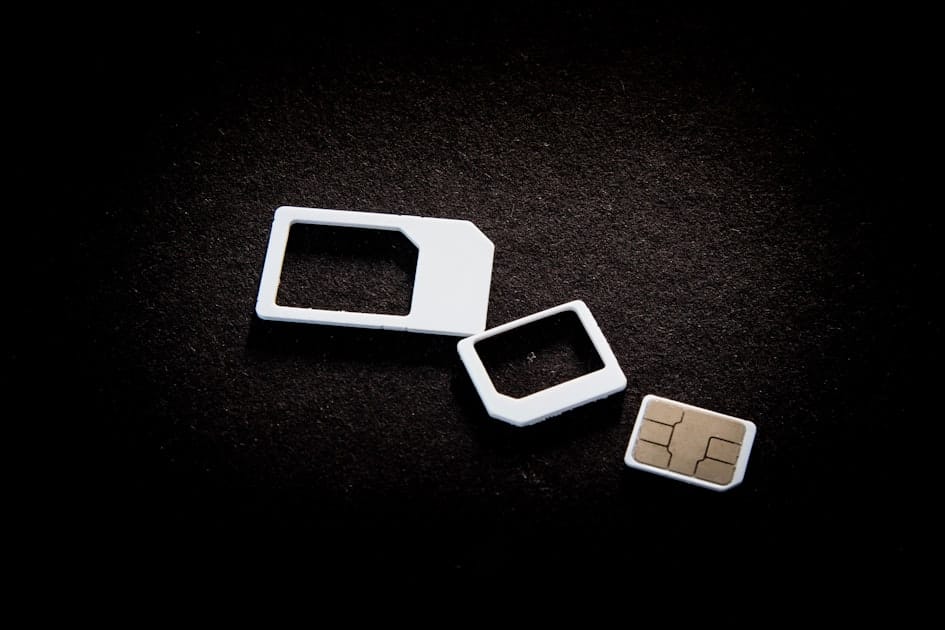
A physical SIM (Subscriber Identity Module) is the plastic chip you have been popping in and out of phones since the 1990s. It carries your subscriber identity, authenticates you to a mobile network, and physically moves with you between devices. Standard sizes shrank from full-size to mini, micro, and finally nano-SIM (12.3 mm by 8.8 mm) — the format used in almost every smartphone sold from 2012 onward.
An eSIM (embedded SIM) does the same job, but the chip itself is permanently soldered to the phone's motherboard during manufacturing. Instead of swapping plastic, you download a digital "profile" issued by your carrier or a travel provider like Airalo. The profile is delivered through a QR code, an in-app activation, or an over-the-air push from your carrier. The hardware standard is defined by GSMA's SGP.22 (consumer) and SGP.32 (IoT) specifications, so any compatible device on Earth can install any compliant eSIM profile.
The result: same phone number, same network access, same call quality — but a fundamentally different way of getting that profile onto the chip. According to GSMA Intelligence, roughly 1.5 billion eSIM-enabled devices were already in circulation by the end of 2025, and consumer awareness of the format jumped from 25% to 60% in just 18 months. For a deeper primer on the technology itself, see our guide on what is eSIM.
Why this matters for international travelers in 2026
For frequent travelers, the eSIM versus physical SIM decision used to be theoretical. In 2026 it is a budget line item. The global travel eSIM market is projected to be worth $1.75 billion this year alone, and 15% of all roaming connections now happen over an eSIM rather than a physical chip.
The math is brutal for physical SIMs. A Vietnamese factory worker landing in Doha pays around $25 for an airport SIM with 5 GB and a 30-day window — assuming the kiosk is even open at 2 a.m. A digital nomad arriving in Lisbon faces queues at MEO or Vodafone counters and a passport-registration requirement that takes 20-40 minutes. An Indian engineer touching down in Dubai discovers that du and e& demand a local Emirates ID for a postpaid SIM, leaving only overpriced tourist plans.
An eSIM kills all of that friction. You buy it on your couch in Manila, scan the QR code, land in Jeddah, toggle data roaming, and you are online before you reach baggage claim. For OFWs who fly home twice a year, students who do summer internships abroad, and remote workers who hop continents quarterly, the cumulative savings cross $500-1,000 per year. That is why eSIM vs physical SIM is not just a tech question — it is a financial decision.
eSIM vs physical SIM: Detailed feature breakdown
Each format wins on different dimensions. Here is what actually matters in daily use:
Installation and activation. A physical SIM takes 5-30 minutes if you can find a store, plus the time to request, register, and insert the card. An eSIM activates in 1-5 minutes, fully self-service, anywhere with Wi-Fi or a working cellular connection.
Number of profiles. A physical SIM tray holds one chip (or two on dual-SIM Android devices). An eSIM can store 8-10 profiles simultaneously — your home carrier, your work line, a US travel eSIM, a Schengen plan, and so on — though only one or two can be active at a time depending on the model.
Theft and physical security. A stolen phone with a physical SIM is a thief's playground: pop out the chip, drop it in a burner phone, drain prepaid balance, intercept SMS 2FA codes. An eSIM cannot be physically extracted. To use the line, the thief needs the unlocked phone and the carrier account credentials.
Switching carriers. Want to leave your provider? Physical SIM means a store visit, paperwork, and a new chip. eSIM means tapping "Add Cellular Plan," scanning a QR, and you are on the new network in three minutes — the foundation of why regulators in the EU, India, and Brazil love the format.
Moving to a new phone. This is where physical SIMs win. Pull the chip out of the old phone, slide it into the new one, done in 10 seconds. Transferring an eSIM requires either Apple/Google's eSIM Quick Transfer (same-brand only) or contacting the carrier for a re-issued QR code, which can take hours.
Speed and battery. Identical. Both formats use the same radio, modem, and antenna. Anyone claiming eSIM is "faster" or "drains battery" is misinformed — independent tests by AnandTech and GSMArena confirm zero measurable difference.
Water resistance. eSIM-only phones (like the iPhone Air or US iPhone 17 lineup) ship without a SIM tray, eliminating one of the few remaining ingress points for water and dust. IP68 ratings are easier to achieve.
Local cost. A new physical SIM in Cairo costs 15-50 EGP (about $0.30-1.00). An eSIM activation from Vodafone Egypt costs 350 EGP (~$7). Locally, plastic still wins on price. Internationally, the math flips completely.
Comparison table: eSIM vs physical SIM (14 dimensions)
| Criterion | Physical SIM | eSIM |
|---|---|---|
| Installation | Manual, requires tray ejection | Digital, scan QR or download in-app |
| Activation time | 5-30 minutes (sometimes hours) | 1-5 minutes |
| Switching networks | Need new physical chip | Tap settings, switch profile |
| Profiles stored | 1 (or 2 on Dual SIM) | Up to 8-10 |
| Concurrent active lines | 1, or 2 on dual-SIM phones | 1 on iPhone XS-12; 2 on iPhone 13+ |
| Theft resistance | Removable, easily abused | Cannot be physically extracted |
| Cloning protection | Possible to clone | Hardware-encrypted at chip level |
| Water/dust ingress | Tray opening exists | No tray, better IP rating |
| Phone-to-phone transfer | Pop out, plug in (10 sec) | Re-issue QR or Quick Transfer |
| Local SIM cost | $0.30-5 (one-time) | $5-15 (one-time) |
| Travel cost (1 GB / 7 days) | $10-50 from airport kiosks | $4.50 from Airalo |
| Device support | Every phone since 1991 | iPhone XS+ (2018), Galaxy S20+ (2020) |
| Battery impact | None | None (identical hardware) |
| Environmental waste | Plastic + packaging + shipping | Zero materials, zero waste |
Real traveler experiences: what actually happens in the wild
Maria, Filipino caregiver in Riyadh. Maria flies home to Cebu twice a year. Before switching to eSIM in early 2026, she paid Mobily 75 SAR (~$20) for a 7-day data add-on every visit, and another $35 for a SmartBro chip on the Manila side. Now she keeps her STC line on physical SIM (her boss's family calls it) and adds an Airalo Philippines eSIM for $4.50 the night before her flight. Annual savings: roughly $110.
Rajesh, Indian software engineer based in Dubai. Rajesh travels to Bengaluru, Singapore, and London for client work. His employer reimburses physical SIM purchases but the paperwork takes weeks. He now keeps his Reliance Jio India number on eSIM (active when he lands in Bangalore), his du UAE number on physical SIM, and adds country-specific travel eSIMs as needed. Total monthly mobile spend dropped from $180 to $65.
Adaeze, Nigerian master's student in Manchester. Adaeze arrived in the UK on a student visa with an old Galaxy A52 (physical SIM only). She bought a Three UK SIM at Heathrow for £20 and only learned about eSIM six months later when she upgraded to a Galaxy A55. She now uses a UK physical SIM as her primary line and an Airalo eSIM whenever she visits family in Lagos or travels around Europe — saves about £40 per trip versus Three's roaming pass.
Lukas, Czech digital nomad. Lukas works remotely from Bali, Lisbon, and Mexico City. He runs three eSIMs simultaneously on his iPhone 15 Pro: one home Czech line, one work eSIM with a virtual European number, and one rolling local data eSIM that he swaps every 30 days. Zero physical SIMs in his life since 2024.
Common mistakes and expert tips for choosing between eSIM and physical SIM
- Forgetting to enable Data Roaming on the eSIM line. This is the #1 reason travelers think their new eSIM is broken. Settings → Cellular → [eSIM name] → Data Roaming → ON. Without it, the profile downloads but never connects.
- Buying an eSIM for a carrier-locked phone. A US phone bought on a Verizon, T-Mobile, or AT&T installment plan often refuses third-party eSIMs until the loan is paid off. Same problem with Smart and Globe contracts in the Philippines, and some Reliance Jio bundles in India. Always run *#06# and check carrier-lock status before paying for travel data.
- Assuming all iPhones support eSIM equally. Mainland China iPhones (sold through China-only resellers) ship without eSIM support entirely, except for the iPhone 17e and iPhone Air introduced in 2026. Hong Kong and Macao iPhones support eSIM only on a limited subset of models. Confirm before you fly. Our phones that support eSIM guide covers regional restrictions in detail.
- Throwing away your physical SIM the moment you install an eSIM. Keep it. If your phone's screen breaks abroad, you cannot extract an eSIM but you can slot the plastic chip into a friend's phone and stay reachable. Smart travelers carry both.
- Installing the eSIM after landing instead of before. Pre-install the eSIM at home over Wi-Fi. Activate the data line only after landing. This avoids airport Wi-Fi nightmares — particularly in places like Lagos, Manila, and Karachi where free airport Wi-Fi is often non-functional or requires a local SMS code.
- Ignoring the QR-code single-use rule. Most travel eSIM QR codes are valid for one installation only. If you uninstall the eSIM, you must request a new QR from the provider. Don't experiment with deletes.
- Underestimating eSIM-only iPhones in the US. If you buy an iPhone 14, 15, 16, or 17 in the United States, it has no SIM tray at all. If you bring it to a country where your local carrier does not yet support eSIM (some smaller African and Central Asian markets), you are stuck. Check carrier eSIM compatibility for your home country before importing.
Tip from a Bangkok-based digital nomad we interviewed: "I keep my home physical SIM as the safety net and use an Airalo data eSIM whenever I land somewhere new. Costs me less than one Starbucks per week and I'm online before I leave the airplane. The physical SIM exists purely so my mom can still call me on my old number."
When to choose eSIM (and when not to)
Choose eSIM if:
- You travel internationally more than twice a year
- You own an iPhone XS or newer, or a Galaxy S20 or newer
- You want to keep your home number active while using local data abroad
- You hate paperwork at carrier stores
- You worry about phone theft (eSIMs cannot be ripped out and resold)
- You want to switch carriers without leaving your couch
Stick with physical SIM if:
- You own a phone older than 2018 (iPhone X or earlier, Galaxy S9 or earlier)
- Your phone is carrier-locked and your carrier doesn't support eSIM
- You frequently swap your SIM into other devices (work phone, backup phone)
- You live in a country where eSIM provisioning isn't supported by local carriers (a small but shrinking list)
- You travel mainly within one country and almost never abroad
For travelers in the second category, our comparison of eSIM vs international SIM card covers a related decision: pre-paid international physical SIMs versus eSIMs.
additional practical detail: angles other guides miss
Hidden carrier subsidies. Some carriers (notably T-Mobile US and Verizon US) charge no activation fee for eSIM but still charge $30 for a physical SIM. Others (e.g. Vodafone Egypt) reverse the pricing. Always compare both options before assuming eSIM is cheaper locally.
Sharia-conscious disclosure. Travel eSIMs sold by international providers like Airalo, Saily, and Jetpac are pre-paid data products, not credit-based subscriptions. There are no late fees, no auto-renew traps, and no interest-bearing components. For travelers who avoid debt-based products on principle, this is a meaningful structural difference from postpaid roaming bundles.
The annual-trip math test. A traveler who takes four international trips of 7 days each spends roughly $80-200 on physical SIMs from airport kiosks per year (varies by destination). The same four trips on Airalo data plans cost $18-32 total. For a remote worker doing 30-day stays in three countries, the annual gap can exceed $700.
Why eSIM is not faster. Speeds are determined by carrier tower density, your phone's radio bands, and network congestion — none of which change based on whether your subscriber identity sits on plastic or silicon. If your eSIM feels slower than your physical SIM, the cause is the carrier you bought it from, not the format.
Frequently Asked Questions
What is the main difference between eSIM and physical SIM?
A physical SIM is a removable plastic chip slotted into a tray. An eSIM is a digital profile downloaded onto a chip permanently soldered inside the phone. Both authenticate you to a mobile carrier in identical ways, but eSIM eliminates physical handling, enables remote provisioning, and supports multiple stored profiles.
Is eSIM safer than a physical SIM card?
Yes, generally. A thief who steals your phone cannot eject and abuse an eSIM the way they can a physical chip. eSIMs are also harder to clone because the secret keys are protected by hardware-level encryption on the embedded chip. However, you still need a strong passcode and SIM PIN to prevent account hijacking.
Can I use eSIM and physical SIM at the same time on iPhone 15?
Yes. iPhone 13 and newer (outside the US) support active dual SIM with one physical SIM and one eSIM running simultaneously. iPhone 15 Pro and newer also support dual eSIM in the US (where there is no physical SIM tray at all). You can receive calls and texts on both lines, but only one line uses cellular data at a time.
Does an eSIM cost more than a physical SIM?
For local subscriptions, eSIM activation often costs slightly more (e.g. $7 versus $1 in Egypt). For travel, eSIM is dramatically cheaper — a 1 GB / 7-day plan from Airalo runs $4.50 versus $10-50 for an airport physical SIM in most countries.
Can a thief use my phone's eSIM if it's stolen?
No, not without the unlock code and your carrier account credentials. The eSIM is bound to the device hardware and cannot be physically removed. Even with a factory reset, transferring the eSIM to another device requires re-issuance through the carrier — which won't happen without identity verification.
What happens to my eSIM if my phone screen breaks?
This is a real disadvantage. If your phone is bricked or unresponsive, you cannot extract the eSIM the way you would a physical SIM. You must contact your carrier or eSIM provider, prove your identity, and request a re-issued QR code to install on a replacement device. This can take hours to days.
Will my physical SIM still work if I add an eSIM?
Yes. On all dual-SIM-capable phones, your physical SIM continues to function normally after you install an eSIM. You can choose which line handles calls, texts, and data independently — most travelers keep the physical SIM for calls and SMS while routing data through the eSIM.
Does eSIM drain battery faster than physical SIM?
No. Independent benchmarks show identical battery life between the two formats on the same device. Both rely on the same modem, antenna, and radio firmware. Any battery-drain claim attributed to eSIM is anecdotal and not supported by measurement.
Conclusion: which format wins in 2026?
For most international travelers reading this in 2026, eSIM wins. It is faster to activate, cheaper for travel data, more secure against theft, and friendlier to multi-country lifestyles. The exceptions are clear: if your phone is older than 2018, carrier-locked, or you swap SIMs across multiple devices, physical SIM still earns its place.
The smartest move is rarely "all-or-nothing." Keep your home physical SIM for calls and SMS where loyalty programs, banking 2FA, and family contacts depend on the number. Layer travel eSIMs on top whenever you cross a border. The combined cost is lower than either format alone, and the convenience compounds with every trip.
Ready to try the format that 51% of new users discovered through travel? Start with Airalo — plans from $4.50, install in 5 minutes, and your home line stays untouched. If you want a privacy-first alternative with built-in VPN, Saily is the closest competitor.
Once you've decided, you'll want to know how to activate eSIM properly, check if your phone supports eSIM, and review the best international eSIM providers to pick the right plan for your route.
Sources
- GSMA Intelligence — Consumer eSIM Q1 2026 Report
- GSMA — eSIM Mass Market Deployment
- Apple Support — eSIM Setup Guide
- Samsung Australia — eSIM Compatibility
- Cellesim — 75+ eSIM Statistics 2026