
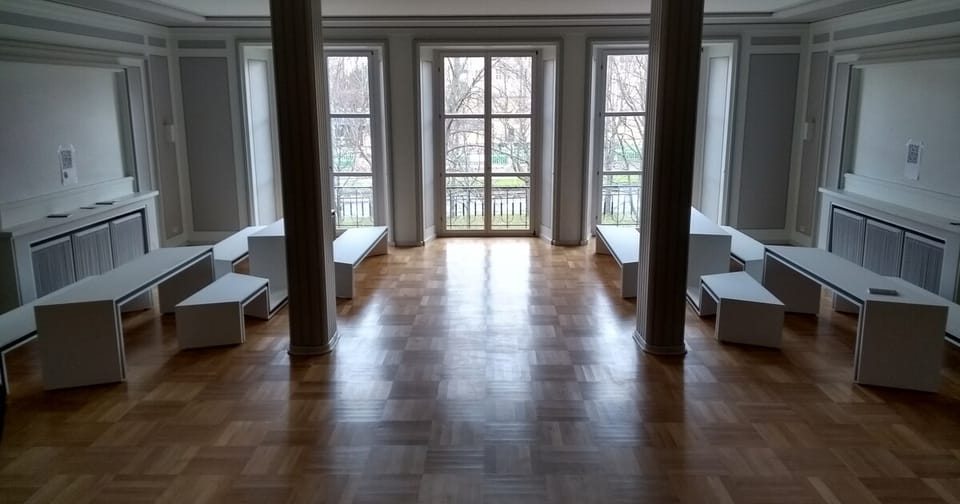
University of Erfurt Doctoral Scholarships 2027: €1,400 a Month for Three Years in Germany — Apply by 24 November 2026
A single fully funded doctoral seat in Germany is worth a lot; the University of Erfurt has just opened up to four of them, and the total basic value of each one is €50,400 spread over three years (€1,400 per month), funded by the German state of Thuringia through its graduate support programme (Landesgraduiertenförderung). Applications close on 24 November 2026 at 23:59 CET by email, funding starts on 1 April 2027, and a fourth extension year can be requested. This guide breaks down every requirement in the official call, so you can decide within ten minutes whether your file belongs in this competition.
The numbers at a glance
| Item | Amount / rule |
|---|---|
| Basic monthly stipend | €1,400 |
| First child allowance | €300 per month |
| Each additional child | €150 per month |
| Research and travel costs | Up to €600 per funding year (on approval) |
| Funding period | 3 years, extendable by one year on request |
| Earliest / latest funding start | 1 April 2027 / 1 July 2027 |
| Application deadline | 24 November 2026, 23:59 CET |
| Available scholarships | Up to 4 |
| Where to apply | [email protected] (one PDF, max 5 MB) |
One number deserves emphasis: public universities in Germany charge no tuition for doctoral studies, so this stipend is genuinely living money, not a rebate on fees. Erfurt, the capital of Thuringia in central Germany, is also one of the country's more affordable state capitals — noticeably cheaper than Munich, Hamburg or Frankfurt for rent and daily costs.
Who this scholarship is for
The programme funds doctoral research within the university's structured Erfurt Doctoral and Postdoctoral Programme (EPPP). In practice that means your project must be hosted by one of the university's certified Graduate Centres or by the Max-Weber-Kolleg, its institute for advanced studies. You are a realistic candidate if:
- You hold (or are about to hold) a Master's degree, a German Diploma or a Magister, with above-average results.
- You can present a research proposal of roughly 6–8 pages that stands on its own merits — the selection weighs academic record and project quality, significance and feasibility equally.
- You are willing to relocate and enrol at the University of Erfurt, with full membership in your Graduate Centre or the Max-Weber-Kolleg by the time funding begins.
- You can secure doctoral acceptance at one of the university's faculties — and note the useful sequencing: the call only requires acceptance by the start of funding, not before you apply for the scholarship.
This is not the right door if you need funding for a Master's degree, for distance study from abroad, or for a doctorate at a different German university. And with only four seats on offer, every serious applicant should run parallel applications elsewhere — we list realistic alternatives near the end of this article.
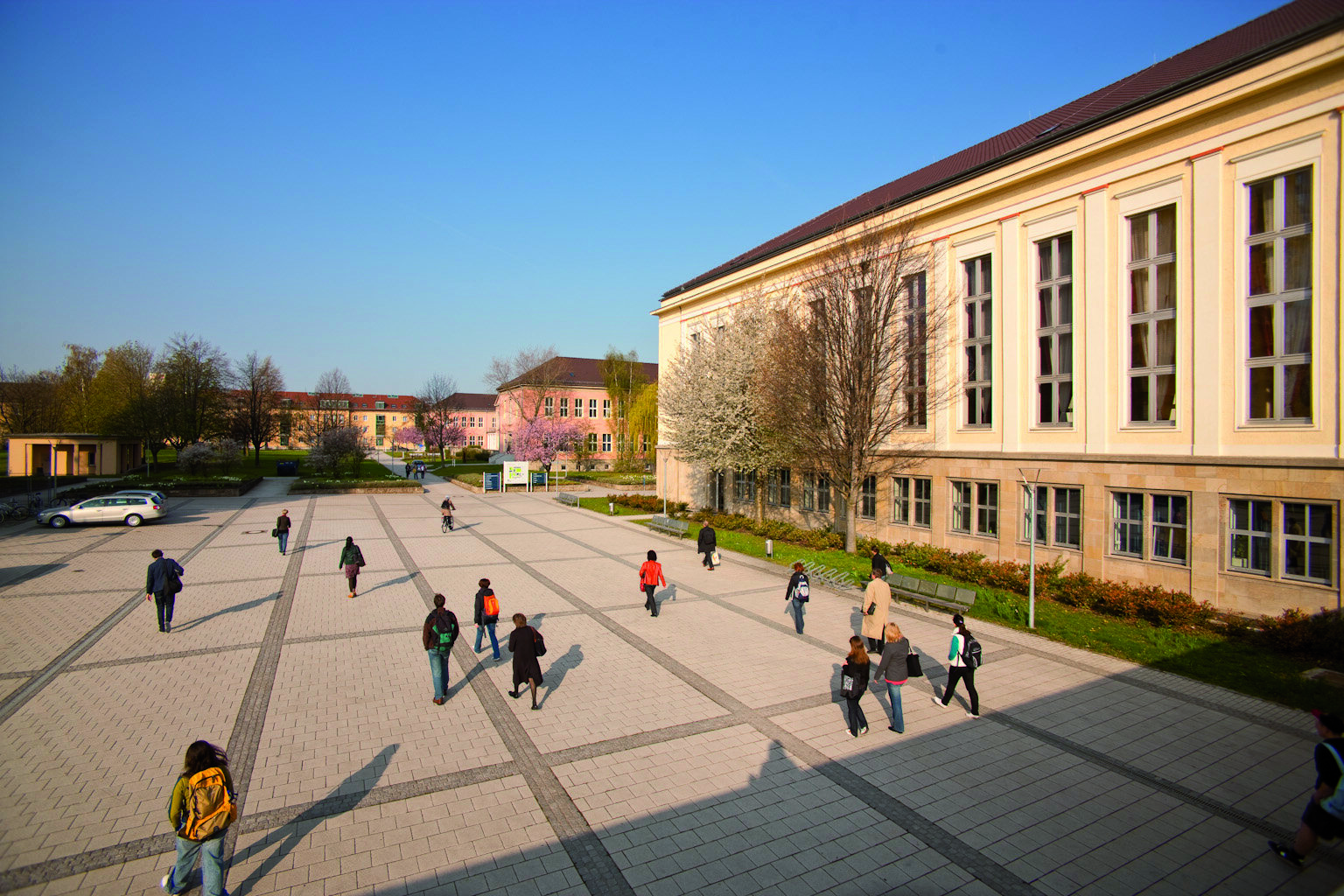
Source: Wikimedia Commons — Campus of the University of Erfurt

Eligibility requirements from the official call
The announcement published on the university website sets four non-negotiable conditions, all of which must be met by the funding start:
- Above-average academic achievement — demonstrated through examination results and prior academic work that shows particular aptitude for research.
- Acceptance as a doctoral candidate at one of the university's faculties or the Max-Weber-Kolleg. Attaching a confirmation strengthens your file; omitting it at application stage is not fatal, provided it arrives before funding starts.
- A certified research home — membership in a certified Graduate Centre or the Max-Weber-Kolleg, which is precisely why contacting a centre early matters.
- Valid health insurance and compliance with the rules on combining funding sources — you cannot stack this scholarship on top of another comparable grant.
The application package, document by document
The call is unusually specific about the file, and applications that break the format are excluded without review. Here is the full list:
- A cover letter of no more than two pages, explaining your chosen Graduate Centre or the Max-Weber-Kolleg, your reasons for applying, and the current progress of your project.
- A tabular CV plus the university's completed CV supplement.
- An exposé of the doctoral project: approximately 6–8 pages, excluding cover page and bibliography.
- A three-year work and time schedule.
- Confirmation of contact with the relevant Graduate Centre or the Max-Weber-Kolleg.
- Confirmation of doctoral acceptance, if already available.
- A list of academic publications and presentations, where applicable.
- Degree certificates.
- A complete copy of your final Diploma, Magister or Master's thesis.
- Signed consent regarding the processing of personal data.
If any document is not in German or English, you need a certified translation into one of those languages. If your final thesis was written in a third language, a two-page German or English summary is accepted.
How to submit — and the one mistake that voids everything
Combine everything into a single PDF of no more than 5 MB, with a table of contents and the documents in the required order, then email it to [email protected], stating in the subject line that it is an application for the State Graduate Scholarship together with your surname and first name.
The recommendation letter follows a different path entirely. It must be completed on the university's prescribed form by a professor or other university teacher — from Erfurt or another institution — and sent separately by the referee, directly from their email, by the same deadline. If you embed it in your main PDF, the application is formally invalid. Incomplete, non-compliant or late submissions are not considered at all; the form is part of the competition.
Working while funded: the hourly limits
Germany's state graduate scholarships restrict side employment, and Erfurt's round is no exception:
- Research or teaching employment at a higher education or non-university research institution: up to 12 hours per week.
- Any other employment: up to 5 hours per week.
- Teaching participation must not exceed an average of two teaching hours per academic year.
Exceeding these caps puts the scholarship itself at risk, so plan your budgeting around the stipend rather than around hypothetical side income.
Timeline and selection
| Stage | Date |
|---|---|
| Application deadline | 24 November 2026, 23:59 CET |
| Evaluation and decision | Approximately ten weeks |
| Expected notification | Around the end of February 2027 |
| Funding start | 1 April 2027 (latest possible: 1 July 2027) |
Scholars commit to active participation in their Graduate Centre or the Max-Weber-Kolleg, at least six Academic Skills Training courses over the funding period, and a progress report on the doctoral project after 18 months. These obligations are structural, not decorative — they are part of what the state money buys.
What this means for you
If you finished a Master's in, say, Lagos, Chennai, Hanoi or Nairobi and you have been waiting for a clearly documented, fully paid doctoral route in Europe, this is a workable one: no tuition fees, a stipend calibrated for a mid-cost German city, child allowances if you are a parent, and an April 2027 start that gives admitted scholars time to arrange visas and relocation. The honest counterweights: only four seats, an eight-week runway to the deadline, and the real bottleneck — securing a Graduate Centre willing to host your project before you can even file a complete application. Start with the centre search this week, not the form.
For comparison shopping, our guide to fully funded doctoral scholarships for 2026 lists open programmes by country, and the DAAD scholarship 2027 guide (€934 per month) covers the widest German alternative.
Why Erfurt is a stronger bet than its size suggests
The University of Erfurt is one of Europe's oldest universities — founded in 1379 and re-established in its modern form in 1994 — and today it is deliberately small. For a doctoral researcher that smallness converts into closer supervision and less competition for attention than at Germany's giant universities. Its Max-Weber-Kolleg, named after the sociologist born in Erfurt in 1864, operates on the model of an institute for advanced studies, mixing doctoral and postdoctoral researchers across disciplines. For candidates at an earlier stage who want a first taste of a German campus, the DAAD university summer courses (B1 German, closing 30 October) are a documented low-cost pathway.
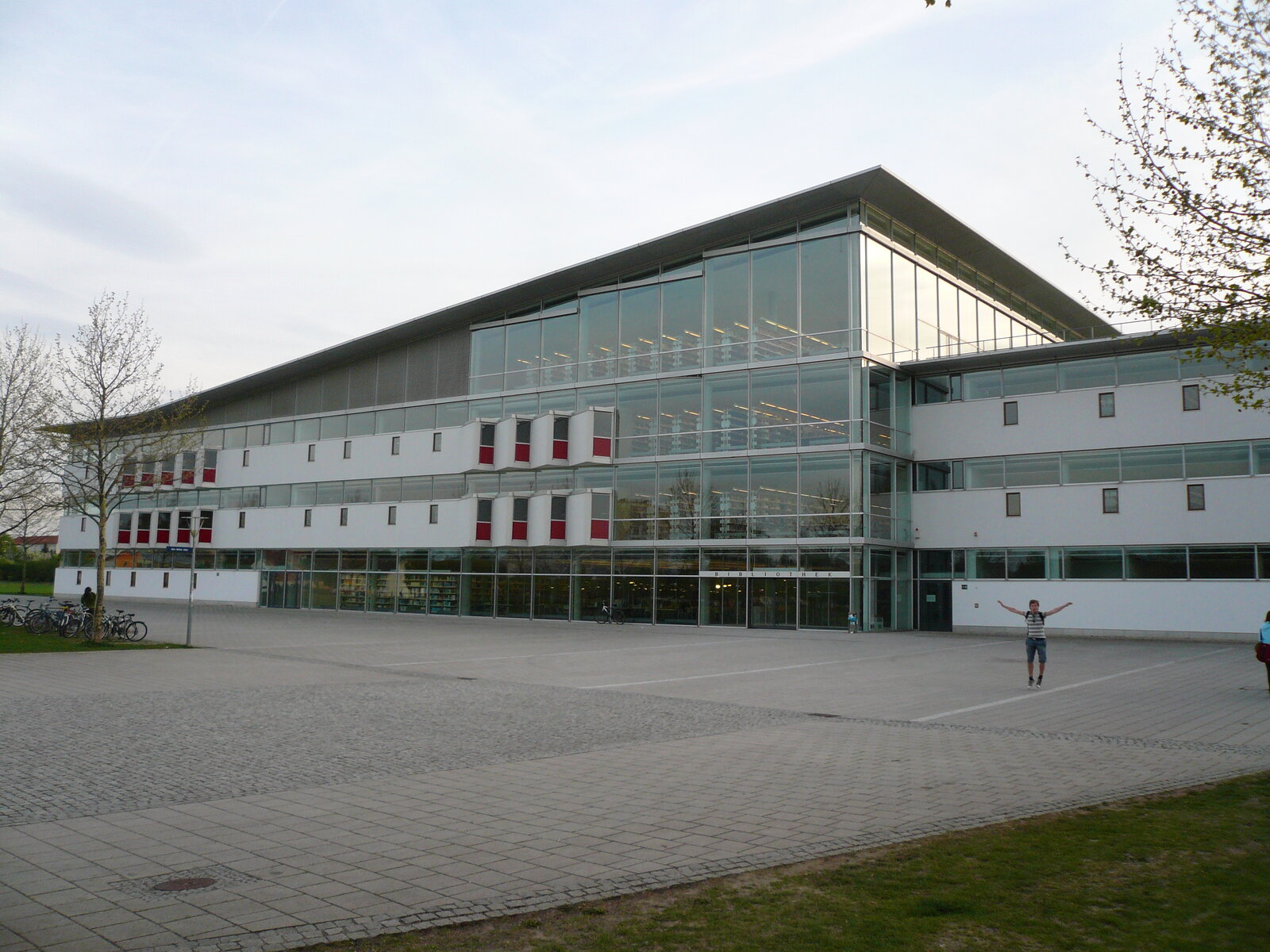
Source: Wikimedia Commons — Erfurt University library

If you are not selected: a parallel plan
Four seats mean most strong applicants will also be rejected, and treating that as the expected outcome is simply good strategy. Keep three tracks running at once: DAAD doctoral programmes open on rolling calls across the year; other German states run their own Landesgraduiertenförderung rounds each autumn and spring; and the Truescho opportunities platform tracks funded openings by degree level and country as they are announced. If you want a second pair of eyes on your exposé or CV before submission, the Apply For Me service handles exactly that, and a session with an expert consultant can sharpen your research direction before you commit it to paper.
Frequently asked questions
Can I apply before I have doctoral acceptance?
Yes. The call requires acceptance by the start of funding (April 2027), not at application time. A confirmation of contact with a Graduate Centre or the Max-Weber-Kolleg must be in your file, and an acceptance letter simply makes the file stronger.
Is there an application fee?
No. The application is a single PDF sent by email. Any third party charging money to "register" you for this scholarship is not part of the official process.
Do I need IELTS or a German language certificate?
The call does not mandate a named language test. The application file itself must be in German or English, with certified translations for anything else. Actual language expectations are set by the faculty or Graduate Centre hosting your project.
Can family members join me on the stipend?
The scholarship adds €300 per month for a first child and €150 for each additional child. Separate German visa rules for accompanying family members apply, so budget the move carefully.
How competitive is this round?
Up to four scholarships for the entire university. Assume a competitive file needs a genuinely above-average academic record and a polished 6–8-page proposal, then apply elsewhere in parallel regardless.
Sources
- University of Erfurt — official announcement of the Thuringian State Graduate Support doctoral scholarships — the university's official call page
- Full official call document 2026/2027 (PDF, in German) — amounts, documents, deadlines
- Campus and library photographs on Wikimedia Commons — openly licensed images used in this article
Start Your Journey with Truescho
Whether you are hunting a funded doctorate or planning your studies in Germany, truescho.com brings funded opportunities and planning tools together in one place.