
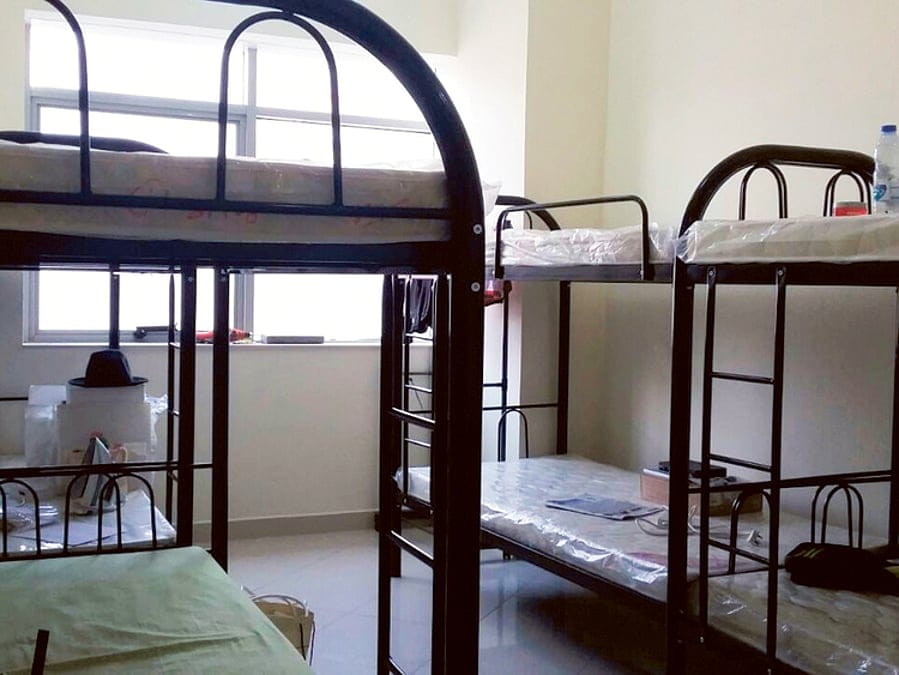
Dubai Shared Housing Law 2026: Landlord & Operator Compliance Guide (Fines up to Dh1 Million)
Last updated: September 2026
It is the first week of September 2026. An operator running 38 bed-spaces across four apartments in Al Barsha picks up the phone to a call every landlord in Dubai now dreads: a neighbour has complained about noise and parking, the building manager has forwarded it, and under the rules that took effect six days earlier the complaint itself is enough to open an inspection file. Nothing about the business changed that week. The law did.
Dubai Law No. 4 of 2026 took effect on 26 August 2026, exactly 180 days after publication in the Official Gazette on 27 February 2026. Fines for illegal shared housing now run from Dh500 to Dh500,000, repeat violations within one year double up to Dh1,000,000, and regulators can suspend operations for six months, cancel permits, cut services, and order evictions.
This guide sets out what the law actually requires, what compliance costs, and what happens when that complaint lands — written for landlords and operators, from the official record of the law and its enforcement.
What changed on 26 August 2026
Law No. 4 of 2026 on the regulation of the occupation and management of shared housing in Dubai was issued by Sheikh Mohammed bin Rashid Al Maktoum in his capacity as Ruler of Dubai, and was announced on 11 March 2026 through the Dubai Media Office and Gulf News. It was published in the Official Gazette on 27 February 2026 and came into force exactly 180 days later, on Wednesday 26 August 2026. That 180-day interval is the compliance clock everyone in the sector was running on — and it has now expired.
The law assigns enforcement to two regulators with distinct mandates. Dubai Municipality sets policy: occupancy ceilings per unit, the minimum area per occupant, which residential areas may host shared housing at all, and a unified digital platform for permits. The Dubai Land Department (DLD) runs the commercial layer: an electronic register of shared-housing units, model tenancy contracts, a dedicated rental index for shared housing, and compliance monitoring.
Scope matters more than most operators assume. The law applies inside free zones and special development zones — it is not limited to mainstream Dubai tenancy law — but collective workers' accommodation is explicitly excluded and stays under its own regime. The law lands on a market where shared units had become a quiet fixture of the wider property boom; our Dubai commercial real estate 2026 outlook covers that backdrop.
The fine schedule: from Dh500 to Dh1,000,000
The penalties are cumulative, not alternative — a serious violation can stack a fine, a suspension and a permit cancellation in one decision.
| Enforcement measure | What it means in practice | Documented ceiling |
|---|---|---|
| Standard fine | Issued per violation, from minor paperwork failures upward | Dh500 – Dh500,000 (about $136 – $136,000) |
| Repeat violation within one year | The same violation committed again within 12 months doubles the fine | Up to Dh1,000,000 (about $272,000) |
| Activity suspension | The shared-housing operation is halted while the violation is corrected | Up to 6 months |
| Permit cancellation | The shared-housing permit is withdrawn; continuing to operate becomes a fresh violation | Full cancellation |
| Licence withdrawal | The underlying trade licence can be pulled, ending the business activity itself | Full withdrawal |
| Service cut-off | Services to the unit are disconnected until the violation is rectified | Until corrected |
| Eviction | Occupants are removed from non-compliant units | Enforced removal |
The doubling rule is the number that should hold every operator's attention. A Dh200,000 penalty for an unlicensed bed-space operation becomes Dh400,000 on the second finding within a year, and a Dh500,000 finding becomes Dh1,000,000 — at which point the fine exceeds the annual profit of most small portfolios.
Permits and registration: the practical path
Compliance now runs through a specific sequence, and doing it in order avoids paying twice.
- Confirm the area is permitted. Dubai Municipality defines which residential areas may host shared housing; operating in a non-permitted area is a violation no paperwork cures.
- Secure the shared-housing permit through the Municipality's unified digital permit platform. Permits run for one year, or two years on request, and renew 30 days before expiry.
- Adopt DLD's model contracts for every occupant relationship in the unit.
- Register each occupant's contract separately through the Dubai REST app or the DLD website, at Dh177.75 per contract (about $48), inclusive of the service partner and knowledge and innovation fees. One lease covering a whole shared unit does not satisfy the law — a separate registered contract per occupant does.
- Price against the DLD shared-housing rental index, which the Land Department maintains to the unit's technical and service specifications as part of its monitoring mandate.
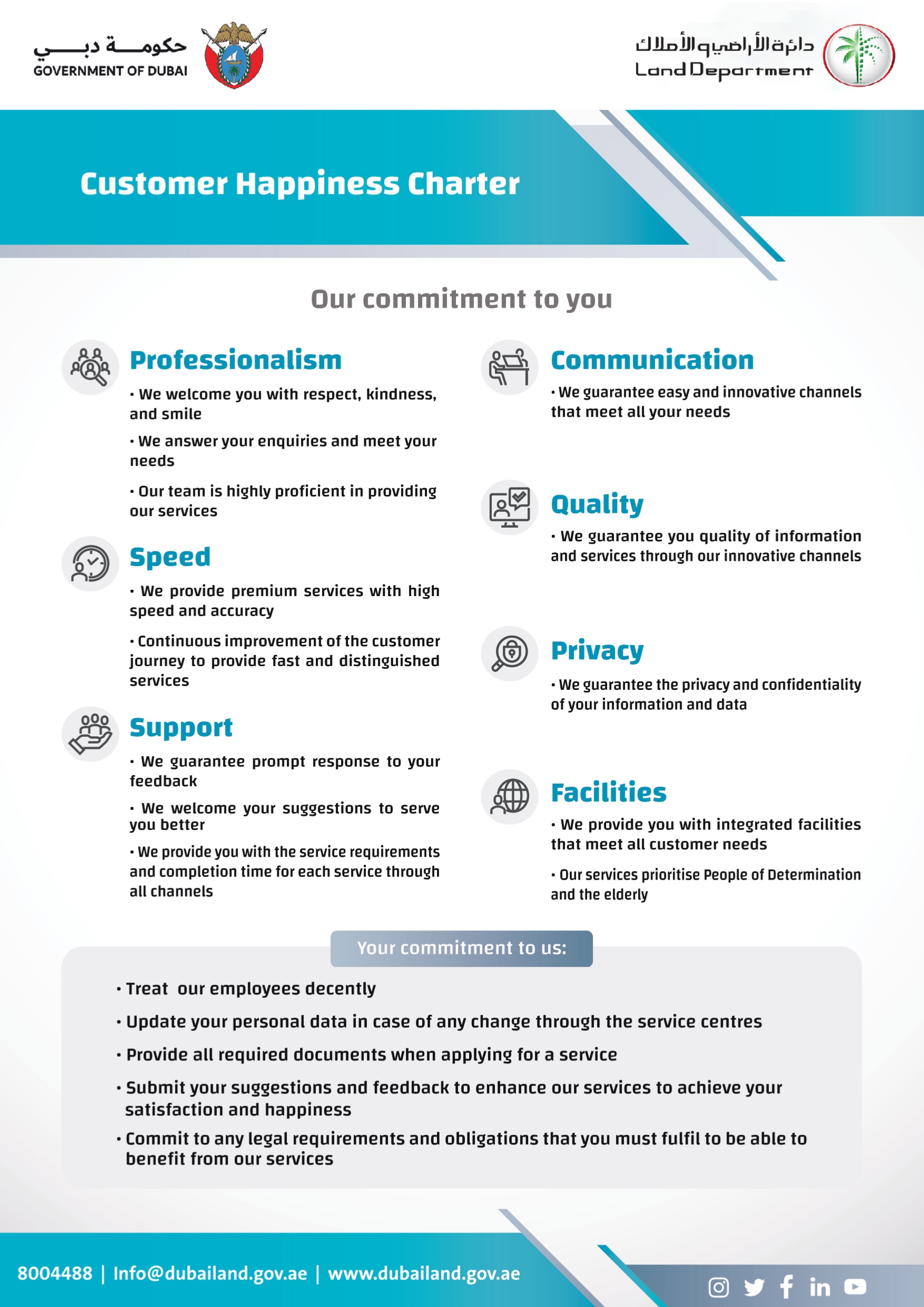
Source: Dubai Land Department
Two timing notes shape the sequence. First, Dubai Municipality confirmed to Khaleej Times in September 2026 that full licensing details — the concrete permit categories and fee schedule — would be announced during September 2026, with a new service added to the official services guide. Until that announcement, operators prepare everything else and treat the permit application as the final gate. Second, the underlying property side has its own rules: if the units are being financed or acquired, our guide to the Dubai golden visa through off-plan property and mortgages covers ownership structuring.

Source: Dubai Land Department
The 15 landlord obligations and 7 tenant obligations, summarised
Emirates Today's 30 March 2026 breakdown of the implementing rules counted fifteen obligations on the lessor and seven on the occupant. The full list is worth reading in the Arabic original with your counsel; grouped thematically, the fifteen landlord duties cluster around five themes: holding a valid permit before any leasing; registering every occupant's contract with DLD; respecting the Municipality's occupancy ceiling and minimum-area rules; keeping the unit safe, maintained and fit for the declared number of occupants; and keeping records that demonstrate all of the above on demand.
The seven tenant obligations mirror them from the occupant side: using the accommodation strictly per the registered contract, not subletting or re-letting bed spaces without the permits that would make that lawful, not exceeding the registered occupancy, maintaining the unit, and cooperating with the inspections the law authorises.
The interaction between the two lists is the point. A tenant who quietly sublets two beds breaches their own obligations — and simultaneously converts the landlord's fully registered unit into a violation, because the occupant count no longer matches the register. Operators who brief tenants on the seven duties are protecting their own permits.
Individual landlords sharing their own villa while planning a longer-term base in the Emirates have a separate calculus, which our Dubai retirement visa 2026 explainer sets out alongside the property rules.
The operator's 10-point pre-application checklist
Before touching the permit platform, run this sequence — each item traces to a requirement documented above.
- Confirm with Dubai Municipality that your building's area is on the permitted list for shared housing.
- Count current occupants against the occupancy ceiling and minimum area per person for the unit type.
- Secure the landlord's or owners' association written consent for shared-housing use.
- Decide the permit term — one year standard, or two years on request — and diarise renewal 30 days before expiry.
- Replace bespoke leases with DLD's model contracts for every occupant.
- Budget Dh177.75 per occupant contract for Dubai REST registration, and register every existing occupant, not just new ones.
- Benchmark every bed rate against the DLD shared-housing rental index before publishing prices.
- Verify whether each unit sits in a free zone or special development zone — the law applies there too, and permitting routes may differ.
- Check that no unit in the portfolio constitutes workers' accommodation, which falls outside this law entirely.
- Monitor Dubai Municipality's September 2026 licensing announcement and file under the new service the day it opens — early filers face the shortest queues.
What happens when a complaint lands
Article 30 is the enforcement heart of the law, and Khaleej Times' 1 September 2026 reporting set out how it works in practice. A neighbour's complaint is enough to open an investigation. Inspections come in two forms — routine campaigns and unannounced visits — and inspectors may be accompanied by police support where circumstances warrant. The same article notes the constraint that matters inside a home: inspections are conducted with respect for the sanctity of private residences.
The precedents pre-date the law. In 2025, inspection campaigns ran through Al Rigga, Al Muraqqabat, Al Barsha, Al Satwa and Al Raffa, targeting overcrowded and illegally shared units. The Toyota Building case documented apartments housing fifteen tenants each, and ended in evictions. That enforcement generation operated under older, weaker tools; the campaigns that follow 26 August 2026 carry fines an order of magnitude higher and a dedicated rental index to check declarations against.
For an operator, the practical read is this: the complaint itself is not the penalty, but it is the trigger. What determines whether a surprise inspection ends in a filed report or a clean sheet is whether the register, the permits and the physical occupancy all tell the same story on the day.
The grace year: twelve months, extendable once
Existing operators are not expected to be compliant overnight. The law grants a one-year grace period from 26 August 2026 to correct existing positions, and the Director General of Dubai Municipality may extend it once — a single extension, not an annual expectation, as Gulf News and Khaleej Times both reported in late August and September 2026.
New entrants get no grace period at all; the licensing system is the entry point from day one. The grace year is for regularising operations that already exist, which is why the September 2026 licensing announcement matters so much: the clock is running while the permit categories are still being published.
Operators using the grace year to restructure portfolios are also making capital-allocation decisions — some capital is weighing Dubai property against the European residency programs that reorganised this autumn, and the compliance logic transfers either way: regimes that changed in 2026 reward whoever read the rules first. And for operators who want an independent read on licensing exposure before the grace year closes, Truescho's expert consultants review property and compliance positions across markets.
The Al Barsha operator's first compliance month, by the numbers
Return to the operator from the opening — a composite case, though every rule and fee in it is from the official record. Thirty-eight bed-spaces across four apartments in Al Barsha, one of the areas where 2025 inspection campaigns already ran. A neighbour complaint in the first week of September 2026 opens a file under Article 30, and a routine inspection becomes likely rather than hypothetical.
The internal audit finds the typical gaps: 31 of 38 occupants are on informal arrangements rather than registered contracts, one apartment has drifted to eleven occupants as tenants squeezed in partners, and no shared-housing permit exists because the licensing categories have only just been announced. The remediation arithmetic is unforgiving but survivable. Registering 38 separate contracts at Dh177.75 costs Dh6,754.50 — real money, and 1.35% of the Dh500,000 fine ceiling it pre-empts. Occupancy drops to 32 beds pending the Municipality's minimum-area rule in the September announcement. The permit application is prepared for the day the new service opens, inside the grace year.
The lesson from the composite is the ratio: the entire documented compliance outlay of the first month — Dh6,754.50 — is 1.35% of the Dh500,000 ceiling and under 0.7% of the Dh1,000,000 repeat-offence maximum. The operators who lose licences in 2027 will not be the ones who spent Dh6,754.50 in September 2026.
Frequently asked questions
When did Dubai's shared housing law take effect?
Law No. 4 of 2026 took effect on Wednesday 26 August 2026, exactly 180 days after its 27 February 2026 publication in the Official Gazette. The law was announced publicly on 11 March 2026 through the Dubai Media Office and Gulf News coverage of the Ruler's decree.
What is the maximum fine under Dubai Law No. 4 of 2026?
The standard range is Dh500 to Dh500,000 per violation. Committing the same violation again within one year doubles the fine, up to a ceiling of Dh1,000,000 (about $272,000). Authorities can additionally suspend the activity for up to six months, cancel permits, cut services, and order evictions.
Is flat sharing still legal in Dubai after August 2026?
Yes, sharing remains legal inside the licensed system: the area must be permitted, the unit must meet occupancy and minimum-space rules, and every occupant needs a registered contract. What the law penalises is unlicensed bed-space letting — not sharing itself.
Do I need a permit to rent out bed spaces in Dubai?
Yes. Any shared-housing arrangement now requires a permit through Dubai Municipality's unified digital platform, plus DLD contract registration for each occupant. Dubai Municipality said full licensing details would be announced during September 2026, with a new service added to the official services guide.
How do I register a shared housing tenancy contract on Dubai REST?
Register each occupant's contract separately through the Dubai REST app or the Dubai Land Department website. The fee is Dh177.75 per contract, inclusive of service partner and knowledge and innovation fees. Use DLD's model contracts and price against the shared-housing rental index.
Can tenants sublet rooms in Dubai under the new law?
Not without the landlord's involvement and the proper permits. The law's seven tenant obligations require occupiers to use the unit according to the registered contract, and unauthorised subletting or bed-space re-letting exposes both tenant and landlord to fines that double on repeat.
Is labour accommodation covered by Dubai's shared housing law?
No. Collective workers' accommodation is explicitly outside the law's scope and stays under its own regime. The law does apply in free zones and special development zones. Ordinary shared housing — co-living, bed spaces, shared villas — is what Dubai Municipality and DLD now regulate.
How long do existing operators have to comply?
Existing operators get a one-year grace period from 26 August 2026 to correct their positions, extendable once by the Director General of Dubai Municipality. New entrants must be licensed from the start; the grace year exists to regularise operations that were lawful before the law changed.
The checklist to run before Dubai Municipality's inspectors do
By the time an inspector stands at the door, every item below should already be true — because Article 30 gives them the right to check, and the fine schedule gives the finding its price. Run the list now, and again after the September licensing announcement lands.
- Confirm the area appears on Dubai Municipality's permitted list for shared housing.
- Count occupants against the ceiling and minimum-area rules for the unit type — and de-list excess beds now, not after the visit.
- Hold the written consents: landlord, owners' association, and any free-zone authority where applicable.
- File the shared-housing permit application the day the new licensing service opens in September 2026, choosing the one- or two-year term deliberately.
- Register a separate Dubai REST contract for every occupant at Dh177.75 each, on DLD model terms.
- Align published bed rates with the DLD shared-housing rental index.
- Paper the fifteen landlord obligations into an operating file: permits, contracts, occupancy counts, maintenance records.
- Brief every tenant on the seven occupant obligations, and put the no-subletting rule in writing in every house agreement.
- Diarise permit renewal for 30 days before expiry, and the grace-year deadline of 26 August 2027.
- Write the complaint-response procedure now: who answers the phone, who assembles the file, who meets the inspector.
Operators who want a second pair of eyes on that file before the grace year closes — or before scaling into additional units — can book a compliance review with Truescho's expert consultants, who work these licensing questions across the UAE and beyond.
Sources
- Gulf News — Dubai issues new law to regulate shared housing with fines up to Dh500,000 (11 March 2026)
- Gulf News — Dubai's new shared housing law: a complete guide for residents and owners (March 2026)
- Gulf News — Shared housing law with up to Dh1m fines comes into effect (27 August 2026)
- Khaleej Times — Dubai rental index for shared housing units (6 August 2026)
- Khaleej Times — Crackdown on illegal sharing: surprise and routine inspections (1 September 2026)
- Khaleej Times — Dubai shared housing law licensing details announcement (9 September 2026)
- Dubai Land Department — official portal
- Dubai Media Office — official announcements