
1 ===
Dubai Crypto License 2026: Complete VARA Costs, Fees and Timeline for Every Activity Type
Last updated: September 2026
A crypto license in Dubai officially costs as little as AED 500 (about $136) for a license amendment — yet the realistic all-in budget for a licensed first year of operations runs from AED 250,000 to more than AED 600,000 ($68,000–$163,000+). The gap between those two numbers is where most founder budgets fall apart, because the published government fee schedule covers only a fraction of what a compliant Virtual Asset Service Provider (VASP) actually spends. This guide reconstructs the full cost picture for 2026, line by line, using the regulator's own published fees, the official public register of licenses issued this year, and the most recent independent cost survey updated in June 2026.
Our approach is deliberately unromantic: we separate what you pay to the government, what you must hold as capital, what compliance costs each year, and what establishment and advisory add to the total. A founder from Lagos, Karachi, Manila or São Paulo planning a Dubai entity tends to see only the first bucket in marketing brochures — and discovers the other three after signing an office lease. By the end of this article you will know which of the eight licensed activities fits your budget, what the two-stage licensing process actually charges at each step, and how the 2026 regulatory circulars changed the compliance line item.
Source: Virtual Assets Regulatory Authority (VARA)
Where the numbers come from
Three source layers feed every figure in this guide. First, the official VARA fee schedule published on the regulator's website (last published revision June 2023, still the operative schedule). Second, VARA's public register of licensed entities, which we checked for this year's license numbers and issue dates. Third, an independent Dubai cost survey updated 16 June 2026 covering application fees, supervision fees and advisory budgets across activity types. Where a number is an estimate rather than a published fee, we say so explicitly. Currency conversions use the pegged rate of AED 3.6725 per US dollar.
Who regulates what: VARA, the licensing authority, and the one exception
Dubai's Law No. 4 of 2022 created VARA as the dedicated regulator for all virtual asset activities in the Emirate of Dubai — including its free zones and territorial waters. But VARA does not incorporate your company. Company formation runs through the Dubai Department of Economy and Tourism (DET) for mainland entities, or through the authority of a free zone such as DMCC, Dubai Airport Free Zone or Dubai World Trade Centre. You deal with both: a formation authority to create the legal entity, and VARA to license the virtual asset activity itself.
The single structural exception is DIFC, the Dubai International Financial Centre. It runs its own complete regulatory regime under its own laws, and anyone targeting it applies to the Dubai Financial Services Authority directly, outside the VARA framework entirely. This matters for cost planning because DIFC's fee structure and capital expectations differ materially — it skews toward institutional asset managers and banks, while VARA's framework serves the broader market of exchanges, brokers, custodians and advisors.
Why founders endure the cost at all comes down to regulatory credibility. Dubai's "Fit-for-Purpose" rulebook of 2023 gave the Emirate one of the world's most complete virtual asset frameworks, and the economic strategy behind it is explicit: the D33 agenda targets more than AED 100 billion ($27 billion) in digital economy contribution, and the Dubai Metaverse Strategy aims to create 40,000 virtual jobs with an economic impact above $4 billion. A VARA license reads, to institutional counterparties and banking partners worldwide, as evidence you operate inside a real rulebook.
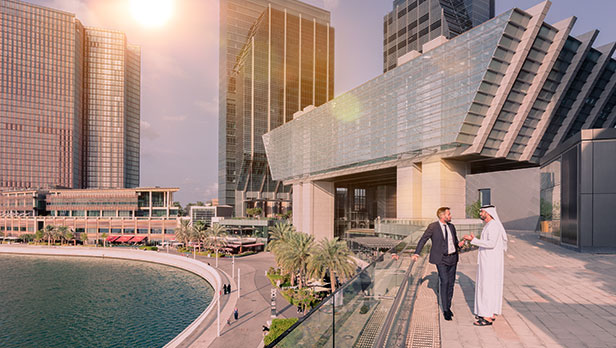
One further geographic note for firm selection: beyond Dubai entirely, the Abu Dhabi Global Market (ADGM) on Al Maryah Island runs its own common-law-inspired regime that competes directly for institutional digital asset firms — a serious alternative if your model resembles fund management more than retail services.
Source: Abu Dhabi Global Market (ADGM)
The eight licensed activities — and the one that is not licensed
Choosing your activity type is the single biggest cost lever in the entire process, because application fees, capital floors and supervision fees all scale with the activities you request. VARA licenses exactly eight:
| Activity | What it lets you do | Cost signal |
|---|---|---|
| Advisory | Provide advice and recommendations on virtual assets | Lowest tier — the common entry point |
| Broker-Dealer | Execute buy/sell orders for clients | Client protection obligations |
| Custody | Hold and safeguard client assets | Must be a standalone entity — no mixing |
| Exchange | Operate a trading platform | Highest fees and capital expectations |
| Lending & Borrowing | Provide credit against virtual assets | Strict disclosure rules |
| Management & Investment | Manage client portfolios | Ties into qualified investor rules |
| Transfer & Settlement | Move assets between parties | Travel Rule systems required |
| VA Issuance (Category 1) | Issue tokens representing assets | Whitepaper approval required |
Two rules trip up newcomers constantly. Custody cannot sit inside a multi-activity entity — it requires a standalone company, which doubles some establishment costs if you planned to bundle it. And proprietary trading — trading your firm's own capital — is not a licensable VASP activity at all. Firms doing it need a No-Objection Certificate (NoC) at AED 1,000 ($272) per year, with mandatory registration kicking in above AED 1 billion in assets under management or a specified 30-day trading volume threshold.
A pattern that works for budget-conscious founders: license Advisory alone first, operate, then add activities through the amendment process (AED 500 / $136 per amendment, plus the new activity's application fee). Staged licensing costs more in fees over three years but dramatically less in capital tied up and compliance headcount while your revenue is still small.
Two stages, two fee events: how the process actually charges you
The licensing path is split into stages with separate fee events, and confusing them is the most common budgeting error we see.
Stage 1 — Initial approval via your licensing authority. You apply through DET or your free zone authority (not VARA directly). This stage gives you the legal runway to build: open bank accounts, hire executives, lease an office, draft policies — but not yet to serve clients. The official guidance is that initial fees at this stage typically amount to 50% of the license application fee.
Stage 2 — the full VASP license. Once your regulatory file is complete — policies, governance, systems, capital proof — VARA issues the full license and you may serve clients. Annual supervision fees attach here, scaled by activity: heavy activities like Exchange and Custody run up to roughly AED 200,000 ($54,000) per year, while Advisory sits in the AED 40,000–80,000 ($11,000–22,000) range.
End-to-end timeline from first filing to full license: six to twelve months in practice. The files that move fastest arrive with complete anti-money-laundering policy packs; the files that stall arrive with template policies copied from a 2023 document.
The official fee schedule, verbatim
These are the published government fees on VARA's official fees page:
| Service | Official fee (AED) | Approx. USD |
|---|---|---|
| Proprietary trading NoC | 1,000 / year | $272 |
| License update/amendment | 500 | $136 |
| Activity withdrawal | 10,000 | $2,723 |
| Whitepaper filing (base) | 5,000 | $1,362 |
| Whitepaper additional review | up to 50,000 (cap 55,000 total) | up to $13,616 |
| Legal perimeter review | up to 4,000 | up to $1,089 |
Read this table twice, because it teaches two opposite lessons. The largest official fee belongs to token issuers (whitepaper review can reach AED 55,000), not to brokers or advisors. And yet the table does not contain the fee you will actually pay most: the per-activity license application fee, which market estimates place between AED 40,000 and AED 100,000 ($11,000–$27,000) per activity depending on type and licensing authority. The government fee schedule is a menu of side dishes; the main course is priced elsewhere.
The real first-year budget: four buckets
The June 2026 cost survey puts the realistic all-in first-year figure for a Dubai virtual asset license at AED 250,000–600,000+ ($68,000–$163,000+). Here is how that decomposes.
Bucket 1 — Government fees. Formation fees at DET or your free zone, the initial-stage fee (typically half the application fee), and the per-activity application fee. Mostly spent in the first quarter.
Bucket 2 — Required capital. Every activity has a minimum capital floor you must prove, not spend. It stays your money, but it must exist and be demonstrable at filing. Exchange, Custody and Issuance floors sit far above Advisory's. First-time founders often confuse capital with cost — the correct framing is locked cash flow you must plan for.
Bucket 3 — Annual compliance. Supervision fees (up to ~AED 200,000 for exchange/custody; AED 40,000–80,000 for advisory), a resident compliance officer's salary, independent audit, transaction monitoring systems, and policy updates with each new circular. Recurring, every year, forever.
Bucket 4 — Establishment and advisory. Office (many authorities require a physical inspection-ready premises), resident executives, and specialist regulatory advisory — the survey prices full-service regulatory advisory at roughly AED 320,000 ($87,000) for complete files, which explains the upper end of the range.
A practical bootstrap budget: AED 250,000–350,000 ($68,000–$95,000) for a first year built on a single Advisory or Broker-Dealer activity; plan from AED 500,000 ($136,000) upward for an exchange or custody play; add margin to every line if you outsource the whole file.
What the 2026 public register says about your odds
Instead of consultancy marketing, look at the register. The public register of licensed entities has passed fifty, and the 2026 license numbers reveal a steady monthly cadence — the mid-numbering (26/07, 26/08) means the seventh and eighth license series of 2026 were being issued on schedule:
| Entity | License type | Number | Issued |
|---|---|---|---|
| Flipster Exchange | Exchange | VL/26/07/002 | 14 July 2026 |
| DIMENT VA | Virtual asset services | VL/26/08/002 | 7 August 2026 |
The 2026 wave includes international names such as Flowdesk Omega, ARP Digital, ARBEAT, Tribe Tokenisation, CoinCorner, First Crypto and Liquidity Fintech. The practical reading: the pipeline works and moves monthly, but it is a real queue — complete files pass, thin files wait.
Five circulars from 2026 that changed your compliance budget
Each 2026 circular is a new line in a compliance budget. Ignoring them at application stage guarantees rework:
- 8 January 2026 — Qualified Investors. Tightened which client categories may access certain activities. Your client onboarding lists must reflect it.
- 24 February 2026 — Travel Rule. Mandatory originator/beneficiary data transfer for transfers between entities. This is a systems spend, not a policy edit.
- 4 March 2026 — AML/CFT implementation. Converted principles into inspectable procedures.
- 1 June 2026 — Proliferation financing risk assessment. A specialized, frequently-forgotten compliance module.
- 12 June 2026 — Business risk assessment guidance. Documented periodic review of your firm's risk profile is now mandatory.
Build all five into your policy pack from day one; retrofitting them after an inspection finding costs multiples.
The bank account: the gate that decides whether your license was worth it
Licensing is half the battle; banking is the other half. Banks in the UAE apply enhanced scrutiny to virtual asset firms — expect questions about client sources of funds, expected transfer volumes and jurisdiction mix, and expect some banks to require operating history or guarantees before opening accounts for newly licensed firms. Experienced founders sequence banking before licensing completes: they approach two or three banks during file preparation, embed the compliance answers into the business plan, and ask their advisor for introductions. A firm that licenses first and banks second burns months of runway — office rent and salaries with zero revenue.
Some free zones offer banking facilitation through partner programs for their licensed members, which is a genuine differentiator when comparing formation authorities against each other on total cost.
When Dubai is the wrong answer
Honesty cuts both ways. This route does not pay off for an experiment-stage project with no regional client base — a $68,000+ first year cannot be justified by a prototype. It is equally wrong for a firm that only wants to trade its own treasury: that is the AED 1,000/year NoC, not a VASP license. And if your entire target market is North America, a local license there may serve you faster, even though many US, European and Asian firms have chosen Dubai as their MENA base.
If your operations center on Saudi Arabia instead — hiring in Riyadh, serving Saudi clients — your binding constraint is usually not licensing but the expatriate work visa quota, which changed fundamentally in August 2026. We cover that system separately in our guide to Saudi work visa quotas for new companies.
Common questions about the Dubai crypto license cost
How much does a Dubai crypto license cost in 2026?
Published government fees are small (AED 500–10,000 per transaction), but the realistic all-in first-year budget is AED 250,000–600,000+ ($68,000–$163,000+), covering the per-activity application fee (AED 40,000–100,000), required capital proof, annual supervision, compliance staffing, office and advisory — per the June 2026 cost survey.
What is the difference between Stage 1 and Stage 2 VARA licensing?
Stage 1 is an initial approval through your formation authority (DET or free zone) letting you build the company — bank, hires, office, policies — without serving clients, typically at 50% of the application fee. Stage 2 is the full VASP license from VARA that authorizes client-facing activity and triggers annual supervision fees.
Can I get a crypto license in a Dubai free zone?
Yes. Free zones like DMCC, DAFZ and DWTC incorporate the entity under VARA's regulatory framework. The only exception inside Dubai is DIFC, which has its own independent regulator (DFSA) and a separate licensing track. Free zone choice affects office costs and banking facilitation more than VARA fees.
Is proprietary crypto trading legal in Dubai?
Yes, but it is not a licensable VASP activity. Firms trading their own capital need a No-Objection Certificate costing AED 1,000 ($272) per year, with mandatory registration if assets under management exceed AED 1 billion or trading volume crosses a defined 30-day threshold.
What is the minimum capital for a VASP license?
It varies by activity: Advisory carries the lowest floor, while Exchange, Custody and Issuance sit far higher. The capital must be provable at filing but is not spent — treat it as locked cash flow. Precise floors are confirmed during the application with your licensing authority.
How long does VARA licensing take end to end?
Six to twelve months from first filing to full VASP license in normal practice. Files with complete AML/CFT policy packs aligned to the 2026 circulars sit at the fast end; incomplete or templated policies trigger resubmission loops that consume quarters.
Do VARA fees differ by activity type?
Yes. Annual supervision reaches roughly AED 200,000 ($54,000) for Exchange and Custody, versus AED 40,000–80,000 ($11,000–22,000) for Advisory. Application fees also scale per activity requested, which is why staged licensing — one activity first — is the budget-friendly path.
Which international firms received VARA licenses in 2026?
The 2026 register wave includes Flipster Exchange (license VL/26/07/002, issued 14 July 2026), DIMENT VA (VL/26/08/002, 7 August 2026), plus Flowdesk Omega, ARP Digital, ARBEAT, Tribe Tokenisation, CoinCorner, First Crypto and Liquidity Fintech — a monthly cadence confirming the pipeline processes complete files steadily.
Your pre-payment checklist
Before moving any money: pick the single activity that matches your real revenue model · choose the formation authority and price both its fees and its banking support · prove the capital floor · hire the resident compliance officer · write the five policy packs against the 2026 circulars · get one specialist advisor's quote for the full file. Founders who complete this list spend the low end of the range and the fast end of the timeline.
And if you want an experienced hand on the file — from activity selection through regulatory assessment — Truescho's consultants advise on virtual asset licensing and company formation, with business opportunities and programs tracked continuously on the platform.
Sources
- VARA — official website — regulations, public register and fee framework
- VARA — official fees page — published government fee schedule
- Abu Dhabi Global Market (ADGM) — the alternative regulatory regime in Abu Dhabi
- Dubai Department of Economy and Tourism — mainland formation authority
- Ledgers.ae — Dubai crypto license cost survey (source name only, no link) — independent cost ranges updated 16 June 2026 (cited as market reference, no commercial relationship)