
Dubai Commercial Real Estate 2026: Office Boom, H1 Numbers and Where Investors Go Next
Last updated: September 2026
AED 15.81 billion (about $4.3 billion) in six months — that is how much money flowed into Dubai offices in the first half of 2026, roughly triple the same period of 2025. The wider commercial market — offices, retail and commercial land — turned over AED 65.23 billion (~$17.8 billion) across 6,487 transactions, up 8.5% year on year according to Dubai Land Department (DLD) figures. Before reading a single opinion, look at the sector scoreboard, because it explains where the opportunity actually sits:
| Sector | H1 2026 (AED) | In USD | Year-on-year | Deals |
|---|---|---|---|---|
| Offices | 15.81 billion | ≈ $4.3 billion | +200% | 2,571 (+38%) |
| Offices + retail (DLD registrations) | 19.5 billion | ≈ $5.3 billion | +183% | 3,415 |
| Retail | 3.71 billion | ≈ $1.0 billion | +174% | — |
| Commercial land | 33.19 billion | ≈ $9.0 billion | −9% | — |
| Total commercial | 65.23 billion | ≈ $17.8 billion | +8.5% | 6,487 (+13%) |
Read those five rows together and one structural story jumps out: money is rotating out of bare land and into income-producing buildings, and offices are the center of that rotation. The average office transaction in the DLD-plus-retail segment now runs at AED 5.7 million (~$1.55 million) — this is a market of serious capital, not a retail flurry. And the office segment alone has already exceeded its entire full-year 2025 total by 7.7% — in half the time.
Source: Engel & Völkers Dubai
Where these numbers come from — and why you can trust them
Dubai's commercial data is unusually clean for an emerging market: every transfer registers with the Dubai Land Department, and the H1 2026 sector split analyzed here comes from DLD data as processed by the real-estate platform Ghar.ae, cross-checked against international coverage by the Economic Times. Where we add our own calculations — dollar conversions at the pegged rate of 3.6725, or illustrative yield math — we label them as such. Anything marked "estimate" in this guide is a transparent assumption, not a DLD statistic. That discipline matters, because the internet is already full of round numbers about Dubai that nobody can source.
Option 1 — Ready offices: buy the income, pay today's price
The ready (completed) office segment is where the boom is most visible: average office pricing hit AED 3,202 per square foot in H1 2026, up 85% year on year. You buy a leaseable unit, sign a corporate tenant, and income starts within a quarter.
The economics, worked through. Take a representative 1,000 sq ft unit in a central business district, priced at the market average — AED 3.2 million (≈ $872,000 total, at the market average of AED 3,202 per sq ft). Add the 4% DLD transfer fee (AED 128,080), typical agency commission of 2%, and administrative registration costs estimated at AED 15,000–30,000: all-in acquisition cost lands around AED 3.41 million (≈ $930,000). On an assumed gross rent of 6% of purchase price — an illustrative, conservative figure, not a guarantee — that unit produces AED 192,000 in annual rent, from which building service charges (highly variable tower to tower; always demand the written two-year schedule before signing) and any vacancy gap subtract. Net yields realistically pencil out in the mid-single digits, and the precise number depends more on service charges and tenant quality than on the headline price.
Who this suits: investors who want income now, an asset they can inspect, and tenants they can interview — typically family offices and professionals allocating yield capital.
The honest risk: you are buying after an 85% price run. If rents plateau when new supply lands in 2027–2028, today's entry price offers little cushion. Underwrite the deal at today's rent, not at last year's growth rate.
Option 2 — Off-plan offices: buy the timeline, manage the wait
The other side of the same boom: developers sold roughly AED 13 billion of off-plan offices in H1 against only AED 2.7 billion of completed deliveries — a supply gap approaching five to one. That gap is precisely why ready-office rents and prices are surging, and it is what makes off-plan attractive: entry prices per foot sit below ready-stock levels and payment plans stretch across the construction period.
How to buy the safety with the timeline:
- Developer delivery record above all. The difference between a developer who has handed over projects on schedule and one who has not is measured in years of lost rent. Ask for actual completion dates of previous projects, not brochures.
- Official registration of every payment. Each installment on an off-plan unit must map to registered documentation of your specific unit — not a receipt for "the project".
- Payment schedule vs delivery date. The financial magic of off-plan is paying 2026 prices in installments while taking delivery of a 2028 asset; the smaller the fraction paid by handover, the wider your safety margin.
- Post-handover costs. Estimated service charges, and transfer fees should you resell before completion, determine your real liquidity — establish them before the first payment, not after.
Who this suits: investors with a 2–4 year horizon who prioritize capital efficiency over immediate income, and who can tolerate delivery risk in exchange for lower entry pricing.
Option 3 — Retail units and mixed assets: the +174% story nobody analyzes
Retail grew 174% to AED 3.71 billion, yet it gets a fraction of the coverage offices receive. The logic connecting them is simple: every new occupied office tower creates demand for coffee, lunch, clinics and services at its base. Street-front and podium retail in business districts is the derivative play on the office boom — smaller ticket sizes, and returns driven by footfall rather than by corporate covenants.
The trade-off is tenant durability: a café can fail where a corporate tenant signs five-year leases. Treat retail as a diversifier within a commercial allocation, sized so a vacancy does not define your year. Two practical notes for sizing the trade: retail units price their footfall, so corner plots and tower entrances command premiums that empty side-units do not justify; and lease structures differ from offices — turnover-linked rents are common in malls, which means your income tracks the tenant's sales rather than a fixed annual figure, for better and for worse.
Option 4 — Commercial land: the contrarian's quiet corner
Land fell 9% while everything else soared — which is exactly why it deserves a paragraph instead of a yawn. In previous Dubai cycles, land led the speculation and led the crash. This cycle, land is flat while buildings triple, meaning the boom is income-led rather than land-speculation-led — historically a healthier signature. For patient developers and land-bankers, a quiet land market during an office boom is when the interesting long-term entries are made, though this is a professional's game requiring zoning and phasing expertise.
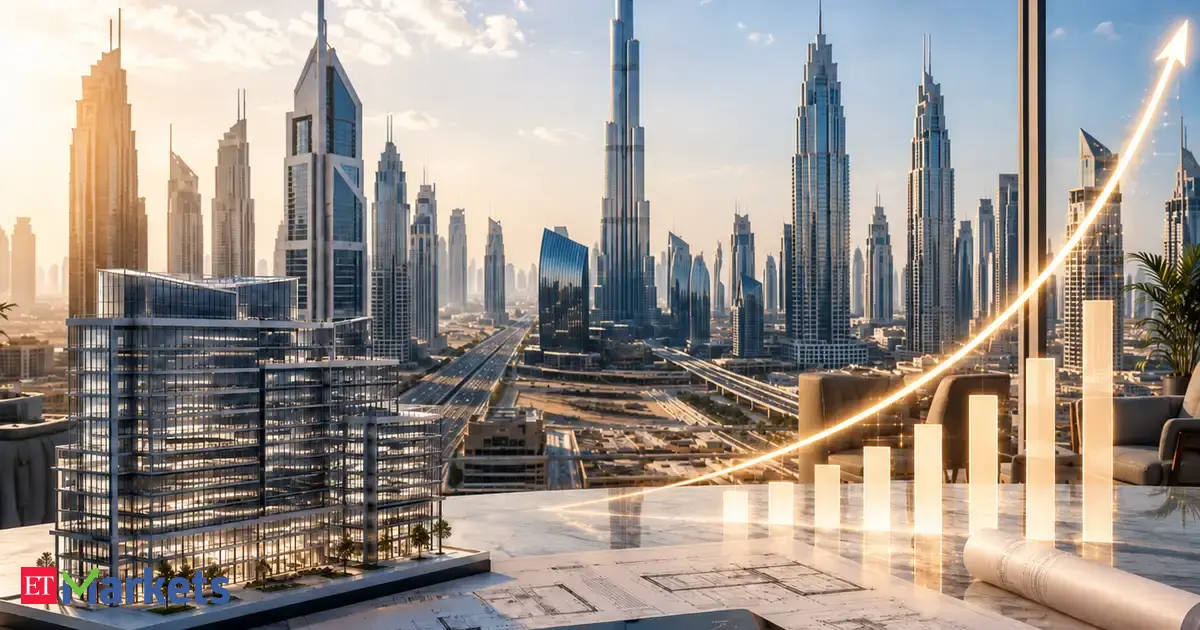
Source: Economic Times
Which option fits you? Three investor profiles, matched
Rather than a verdict for "everyone", match the instrument to your actual situation:
- The income allocator (yield-first capital, e.g., a family office balancing global rent rolls): ready offices in established business districts, underwritten at current rents with full service-charge diligence. Your edge is tenant selection, not timing.
- The growth allocator (2–4 year horizon, tolerance for construction risk): off-plan offices from developers with clean delivery records, payment plans weighted toward handover. Your edge is the ready-vs-off-plan price spread.
- The operator-investor (buying premises for your own business): owning your office converts rent from an expense to an owned asset — and if the property value qualifies, it feeds directly into the 10-year UAE Golden Visa framework we detail in Dubai Golden Visa through property in 2026, with the full category map in UAE Golden Visa 2026: new categories and rules.
A worked example makes the profiles concrete. An investor — call her Layla, a hypothetical case with real market numbers — arrives with AED 3.5 million. Option A: the ready 1,000 sq ft office above, all-in ≈ AED 3.41 million, gross rent AED 192,000, service charges estimated at AED 40,000, one month's vacancy — net ≈ AED 136,000, roughly a 4% net yield on total capital, plus whatever the asset does over five years. Option B: the same AED 3.42 million in dollar bonds at an assumed 4.5% yields ≈ AED 154,000 with zero vacancy risk and zero management. Year one favors the bond. The office wins only across a full cycle — rent growth in a supply-short market plus asset appreciation — which is precisely the multi-year horizon the Income-Asset Rotation Ratio says most current buyers are choosing.
Layla's tiebreakers beyond year one: she can raise leverage against a titled asset but not against a bond holding; she can hand the office to a management firm and keep the income; and if her own advisory firm later needs premises, the unit becomes an operating base instead of a passive holding. None of those options shows up in a first-year yield comparison, yet each has real value — which is why the bond-vs-building question is a horizon question before it is a math question.
The rotation ratio: the single most telling number in this market
Beyond the sector totals, one analytical indicator separates this cycle from Dubai's past: the Income-Asset Rotation Ratio — the share of buyers purchasing for income and holding rather than flipping — jumped from 0.18 to 0.59 in the analyzed DLD data. In plain terms, for every ten commercial assets bought in H1 2026, about six went to holders intending to rent and keep them, versus fewer than two in the comparable prior period. Speculative churn is being replaced by income ownership. For a later entrant this cuts both ways: it signals a more stable, less bubble-prone market — and it means the marginal buyer competing with you is a patient institution, not a leveraged flipper you could outwait.
Who is actually buying? Three demand engines
European relocations. The flow of British and European companies and principals establishing Dubai bases — driven by tax regimes we unpacked in Why wealthy Britons are moving to Dubai in 2026: the FIG regime — converts directly into office demand, because a relocated firm buys or leases premises before it hires locally.
Family offices. Wealth structuring into DIFC and ADGM has created a distinct buyer class for premium office space; our guide to Dubai family offices: DIFC vs ADGM costs maps the ecosystem. Every new family office means one or more office units absorbed for years.
Regional yield capital. Gulf-based and international individual investors rotating out of cooled residential plays into commercial income — often funding companies they operate, which connects office ownership to DMCC company formation costs and free-zone selection.
And a fourth engine is now switching on: Europe's own migration-policy retreat. Each European program closure — Latvia shutting its property and deposit routes on September 15, 2026, as we detail in Latvia Golden Visa 2026: what ends September 14 — redirects capital toward Gulf jurisdictions, and Dubai's property market is the deepest liquidity pool in the region to receive it.
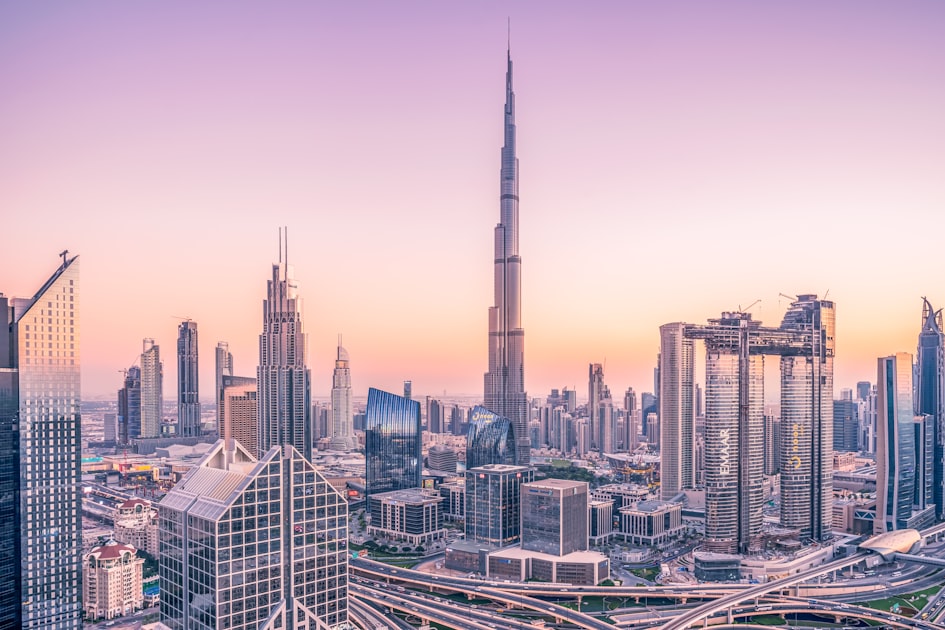
Source: Unsplash
Frequently asked questions
Is Dubai commercial real estate a good investment in 2026?
The H1 2026 data — offices up 200% to AED 15.81 billion, total commercial turnover AED 65.23 billion — shows exceptional momentum, and the supply gap (AED 13 billion off-plan vs AED 2.7 billion delivered) supports rents near-term. "Good investment" still depends on your entry math: underwrite at today's prices and rents, not yesterday's growth, and demand written service-charge schedules.
Can foreigners buy commercial property in Dubai?
Yes. Foreign nationals can own commercial property with full freehold title in designated areas, which include the principal business districts, with registration at the Dubai Land Department in the buyer's name. Residency in the UAE is not required to buy.
What fees do investors pay when buying commercial property in Dubai?
The core transfer fee is 4% of the purchase price paid to the DLD, plus administrative registration charges and the customary 2% agency commission on secondary-market deals. On the illustrative 1,000 sq ft office at AED 3.2 million, fees and commission add roughly AED 210,000–225,000 to all-in cost.
Why did Dubai office prices rise so sharply in 2026?
Corporate expansion collided with a thin pipeline of completed offices: off-plan sales of AED 13 billion against only AED 2.7 billion of completions in H1. Rents rose first, prices followed, and the average office rate reached AED 3,202 per sq ft — 85% higher year on year.
Do commercial properties qualify for the UAE Golden Visa?
Property values from AED 2 million can anchor the 10-year Golden Visa under the property category, subject to the qualifying rules — including how off-plan and mortgaged purchases are treated, which our Golden Visa property guide covers in detail. A qualifying commercial property enters the same value test as residential.
Which areas are best for office investment in Dubai?
Business Bay leads on volume and liquidity, DIFC commands the premium financial-sector tenant base, Downtown offers scarcity near mixed-use demand, and Deira/Bur Dubai trades at lower entry prices with stronger gross yields but lower capital-growth ceilings. Choose by the tenant profile you want, not by the district name alone.
Are there taxes on rental income from Dubai offices?
There is no personal income tax on rental income for individual owners in Dubai — a core part of the global investor math versus London or Frankfurt. Owners do pay building service charges annually, plus registration and renewal fees, and should verify any municipal fees applicable to commercial assets for their specific tower.
Should I buy now or wait for prices to correct?
The data shows no reversal signals yet: the supply gap persists into 2027–2028 deliveries, demand is corporate-led rather than purely speculative, and income-ownership share is rising. The rational stance is neither urgency nor waiting for a crash: buy only deals that clear your yield math at today's prices, with room for a vacancy quarter.
Our verdict
Dubai's commercial market in 2026 is a rotation story — capital moving from land speculation into income-producing offices and retail, powered by relocating companies, family offices and regional yield capital, with Europe's visa closures now adding a fresh tailwind. For income investors, ready offices still clear conservative math if — and only if — bought at underwritten rents with disclosed service charges. For growth investors, off-plan offices from proven developers price the wait attractively against a five-to-one supply gap. What we would avoid: buying momentum blindly late in a 200% run, and unpriced towers with opaque fees. If you are mapping an entry, the practical next step is a shortlist of three units in one district, each with actual rent rolls and written service-charge histories — and professional support for the numbers is available through Truescho's consultancy services and our application and advisory service.
Sources
- Ghar.ae — H1 2026 Dubai Land Department commercial market analysis — primary source for sector figures and deal counts
- Dubai Land Department — official registration authority for all property transfers
- Economic Times — international coverage of Dubai's commercial H1 2026 — cross-check of DLD figures
- Engel & Völkers Dubai — commercial market data and district pricing — pricing context for business districts