
Last updated: August 2026
People searching dollar rate in Syria today want executable literacy: bid, ask, city context, and remittance net—not a slogan. Early August 2026 parallel monitors printed about 130.10 buy / 130.60 sell new SYP per USD (sp-today), while CBS mid sat at 122.00 new SYP on 6 August (cb.gov.sy). Figures move; this article teaches reading, not memorizing.
What is the USD/SYP buy and sell rate in the latest snapshot?
| Reference | Buy (new) | Sell (new) | Old approx |
|---|---|---|---|
| Parallel early Aug monitor | 130.10 | 130.60 | 13,010 / 13,060 |
| Official mid 6 Aug | — | 122.00 mid | 12,200 |
| Example June city news band | ~135.5 | ~136.5 | ~13,550 / 13,650 |
Source: SYPNow on Google Play
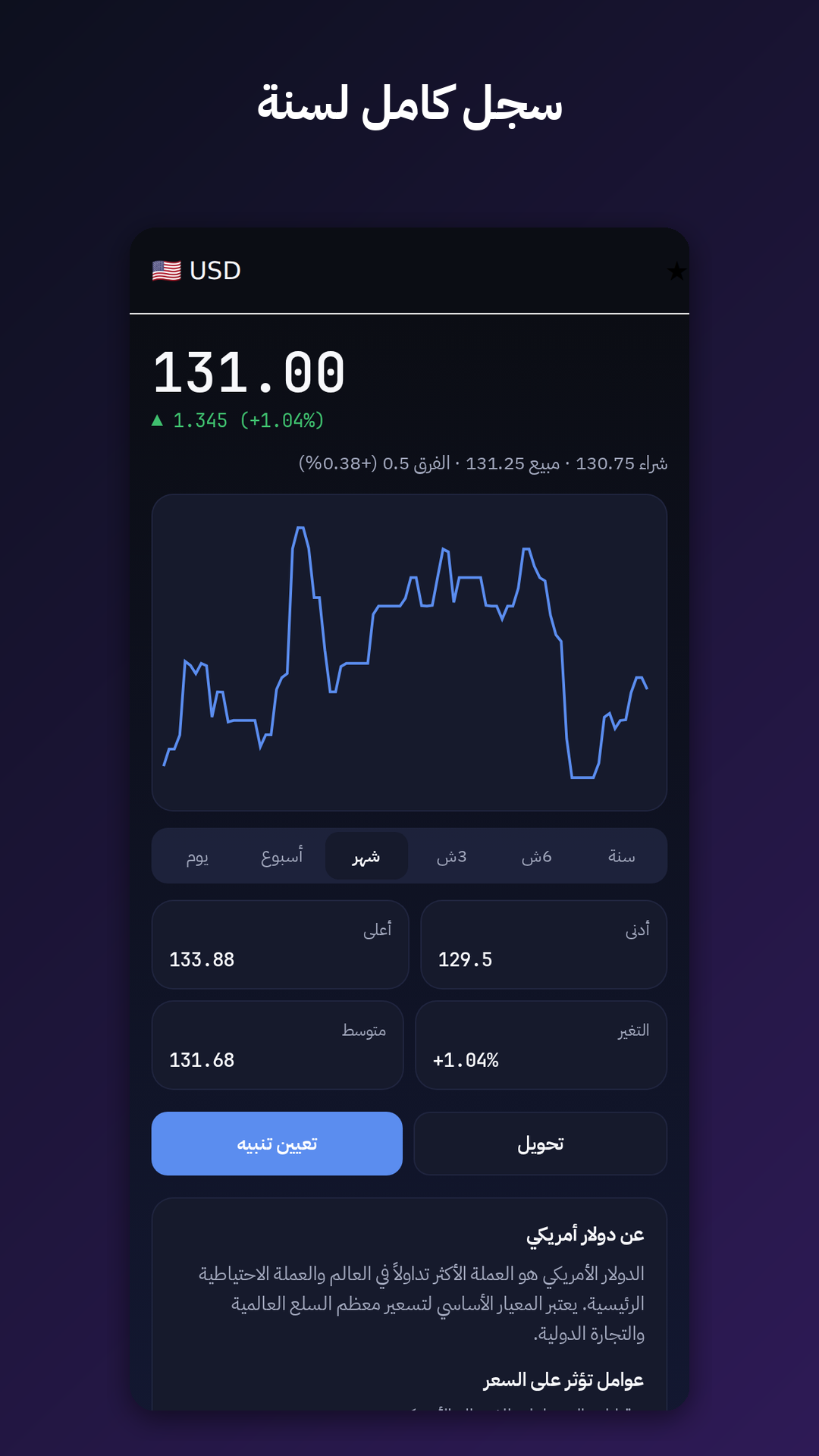
If you sell dollars, you typically receive the buy side. If you buy dollars, you pay the ask. At 130.10/130.60 the spread is 0.50 new SYP per dollar before extra fees.
Why do Damascus, Aleppo and the north print differently?
Liquidity, corridors, TRY presence, and remittance density differ. Media “Syria rate” is often a Damascus anchor. Price your city. Some June reports showed Hasakah gaps versus Damascus/Aleppo/Idlib—historical, not eternal.
Official vs parallel dollar
Official: bulletin and compliant institutional use. Parallel: cash clearing among private actors. August gap ~6–7% in the snapshot above. Cluster hub: Syrian pound exchange rate today.
For ready-made conversion tables, see the USD to SYP Converter.
Why remittance payout undershoots the news
Network rate, fees, lock timing, unit confusion. Ask: “How many new SYP net if I send $200 now, and when is the rate locked?” Compare nets: lower-fee international transfers.
How to convert $100 into new and old pounds
| Item | New SYP | Old SYP (×100) |
|---|---|---|
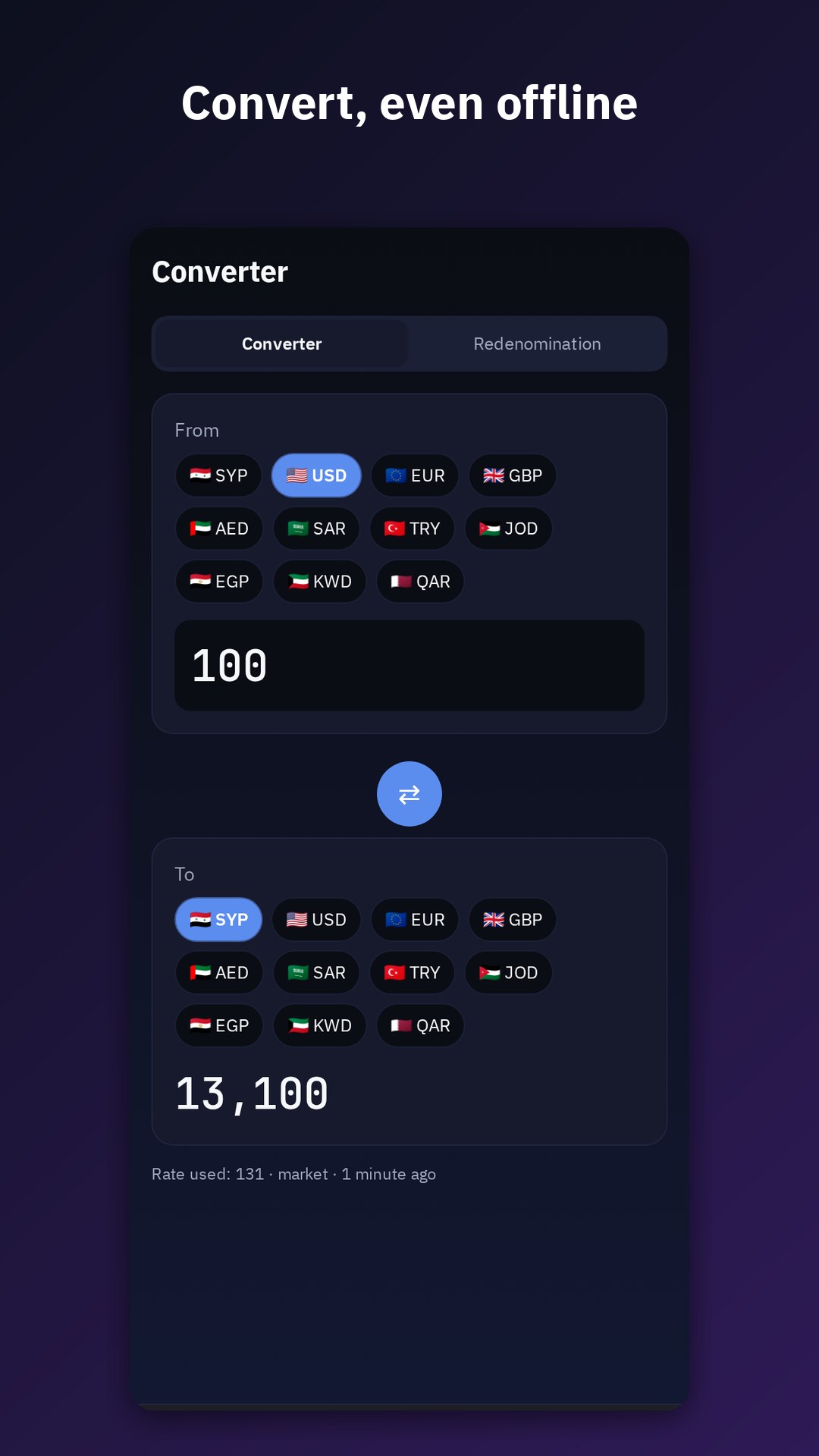
| $100 × official 122 | 12,200 | 1,220,000 |
| $100 × buy 130.10 (you sell $) | 13,010 | 1,301,000 |
| $100 × sell 130.60 (you buy $) | 13,060 | 1,306,000 |
| $500 × sell 130.60 | 65,300 | 6,530,000 |
Remember: 100 old = 1 new after the 2026 rescaling.
Source: SYPNow on Google Play
When does the dollar usually move during the week?
Morning adjustments, midweek remittance/trade cycles, pre-holiday spread widening, post-bulletin reactions—patterns, not guarantees. Merchants should prefer weekly averages.
What is a “normal” bid-ask spread?
It depends on liquidity, volatility, and size. The early-August general print showed 0.50 new SYP. Stress days can widen. “Zero spread + better than every monitor” without a clear business model is a red flag.
How to reduce FX fraud risk
Reject artificial countdown pressure; demand receipts with unit and side; never treat anonymous screenshots as contracts; avoid untraceable handoffs; remember this explainer is not a dealer directory and not a trading pitch.
How the dollar links to EUR and TRY
USD remains the mental unit for many contracts. Euro earners and Turkey-linked households still need dedicated quotes: euro and Turkish lira in Syria.
Scenario: Damascus resident converting $100 of cash
Identify side correctly (selling dollars → face buy). Compare two channels on net new SYP. Keep the receipt. Skip political commentary; finish the operational task.
Scenario: Berlin sender to Aleppo family
Optimize net and timing, not WhatsApp bravado. Multi-currency cards may help the traveler (guide) but do not automatically replace family remittance channels.
Scenario: Wholesaler pricing dollarized inputs
Weekly average + buffer + scheduled review. Written log for partners.
After you master bid/ask: calmer monitoring
If you check twice daily, use a tool that stamps source and time and can alert on thresholds you set. SYPNow provides Damascus buy/sell style market prints with timestamps, charts, and alerts as an information service—not a bank, not an exchange.
💬 Disclosure: SYPNow is developed by our team. We mention it because it operationalizes the same rate-reading ideas in this article.
📲 Download SYPNow free on Google Play

Source: SYPNow on Google Play
Dollar, gold, and local payments—boundaries
Gold deserves a separate piece later (no link today). Local payment rails: PAYMERA, bank accounts.
Fatal calculation errors
Unit mix-ups; wrong side; ignoring fixed remittance fees; hopeful under-pricing; city mismatch; treating ~122 aggregator series as street cash.
Business stack links
Company setup · Registration steps · FDI.
One-week self-training plan
Days 1–2 log official + parallel once daily. Days 3–4 add both sides. Day 5 log a real remittance net if any. Day 6 average. Day 7 review forecast errors. You become harder to scam with screenshots.
Household language upgrade
Replace “the dollar exploded” with “parallel buy 130.10 new, sell 130.60, official 122, source X, time Y.” Calm language reduces panic trades.
On forecasts
Responsible desks label projections as estimates. We stick to observed ranges and method—not promises.
Mental math cards
Old→new ÷100; new→old ×100; $250 × 130.60 = 32,650 new SYP at that illustrative ask.
The question markets dodge
“If official is 122 and parallel is 130, which is true?” Both, in their domain. The error is using one domain’s number to judge another without translation.
📲 Download SYPNow free on Google Play
Field notes for practitioners (en2-1)
Treat every Syrian pound quote in 2026 as a four-part object: unit (new vs old), channel (official bulletin vs parallel market vs remittance network), side (bid vs ask), and stamp (city + time + source). If any part is missing, you do not yet have a number you can defend in a family chat or a supplier call. The 2026 redenomination removed two zeros—100 old pounds equal 1 new pound—so a conversation that mixes units is not a debate about the economy; it is a unit error that can look like a 100x scandal.
Official mid-market prints published by the Central Bank of Syria on 6 August 2026 put the U.S. dollar near 122.00 new SYP and the euro near 140.79 new SYP. Parallel-market monitoring snapshots around early August (for example sp-today.com) showed dollar buy/sell near 130.10 / 130.60 new SYP, euro near 149.20 / 151.00, and Turkish lira near 2.71 / 2.74. Those prints move. They are observational, not a promise of execution. Trading Economics series near 122 in early August align more with the official reference than with street bid/ask—another reminder that aggregators and street quotes answer different questions.
Remittances add a third price: the network rate after fees, possibly locked at send time rather than payout time. Always compare net new SYP received, not the prettiest headline rate. Keep a weekly log. Merchants should reprice from weekly averages plus a spread buffer, not from a single panicked screenshot. Households should agree on the new-pound unit before arguing. None of this is investment advice; it is operational literacy. No leveraged FX, no loan products, no named unofficial dealers appear here on purpose.
Field notes for practitioners (en2-2)
Field notes for practitioners (en2-3)
Field notes for practitioners (en2-4)
Field notes for practitioners (en2-5)
Field notes for practitioners (en2-6)
Sources
- CBS
- sp-today — parallel-market buy/sell monitoring
- Trading Economics
- SYPNow
For gold prices as a value store, see Gold Prices in Syria Today.