
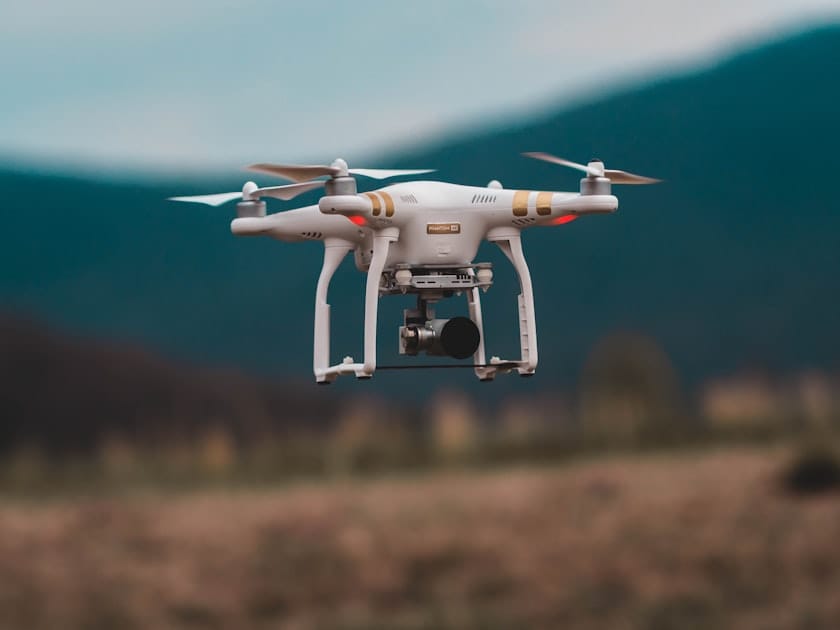
DJI Mavic 4 Pro 2026 Review: Is the 6K Camera Worth It for Professionals?
💬 Disclosure: Some links in this article are affiliate links. We may earn a small commission when you complete a purchase at no extra cost to you. This helps us keep our content free, and it does not affect the integrity of our recommendations.
The short version of this DJI Mavic 4 Pro 2026 review is simple: the Mavic 4 Pro is not the right drone for everyone, but it is one of the most serious folding camera drones DJI lists for professionals who need more than a clean wide-angle aerial shot. Its headline features are a 100MP 4/3 CMOS Hasselblad main camera, 6K/60fps HDR video, dual tele cameras, a 360-degree Infinity Gimbal, 0.1-lux nightscape omnidirectional obstacle sensing, DJI O4+ transmission rated up to 30 km, and a listed maximum flight time of 51 minutes.
That is a strong spec sheet, but the professional question is not whether the numbers look impressive. The real question is whether those numbers help you earn, deliver, or save enough to justify the cost of the aircraft, batteries, filters, insurance, storage, editing hardware, and training time. If you shoot paid real estate, destination work, commercial travel, inspections, short films, or agency content, the answer may be yes. If you mostly publish casual vertical clips, the Mavic 4 Pro is probably more drone than you need.
If you are comparing availability or bundles, check current price and availability through DJIUSA. DJIUSA listed the DJI RC 2 configuration at a regular price of $2,199 in the research source, but the page also showed an out-of-stock message, so treat stock and price as variables rather than guarantees.
What makes the Mavic 4 Pro different?
The Mavic 4 Pro is built around camera flexibility. The 100MP 4/3 CMOS Hasselblad main camera is the obvious centerpiece, especially for photographers who crop, deliver large files, or need strong detail from a compact aerial platform. The 6K/60fps HDR recording matters most for editors who want room to stabilize, reframe, and finish in 4K without immediately throwing away image quality.
The dual tele cameras are just as important. A wide drone shot is easy to recognize and easy to overuse. Telephoto angles make aerial work feel more cinematic because they compress distance, isolate buildings, stack landscapes, and let you shoot subjects without flying as close. For real estate, resorts, events, and tourism campaigns, that can be the difference between standard drone coverage and footage that looks intentionally directed.
The Infinity Gimbal also changes the creative equation. DJI lists 360-degree gimbal movement, which gives operators more freedom for rolling shots, unusual transitions, and dynamic framing. This is not essential for every paid job, but for commercial videographers it expands what can be captured without a larger cinema drone.
For buyers building a full creator kit, it is also worth comparing the Mavic 4 Pro with smaller drones. Our travel-focused comparison of the DJI Air 3S vs DJI Mini 5 Pro 2026 is the better place to start if portability and quick social content matter more than maximum camera range.
Key specs for professional buyers
| Feature | DJI Mavic 4 Pro | Why it matters in paid work |
|---|---|---|
| Main camera | 100MP 4/3 CMOS Hasselblad | High-resolution stills, cropping flexibility, premium deliverables |
| Video | 6K/60fps HDR | Reframing, stabilization, 4K delivery headroom |
| Additional cameras | 1/1.3-inch and 1/1.5-inch CMOS tele cameras | Cinematic compression, subject isolation, safer stand-off distance |
| Gimbal | 360-degree Infinity Gimbal | More creative camera moves and roll-based compositions |
| Obstacle sensing | 0.1-lux nightscape omnidirectional sensing | Better confidence in low-light environments, not a substitute for judgment |
| Flight time | Up to 51 minutes | Longer setup windows, fewer battery swaps in controlled conditions |
| Transmission | DJI O4+ up to 30 km, 10-bit HDR | Stronger monitoring and control range, subject to local rules and conditions |
| Listed DJIUSA price | $2,199 regular price for DJI RC 2 configuration | Base cost before batteries, accessories, storage, insurance, and permits |
The 51-minute flight time should be read like most drone battery claims: useful for comparison, not a promise that every real shoot will deliver that number. Wind, temperature, return-to-home margin, payload, speed, and pilot behavior all reduce practical flight time. Still, a high listed ceiling gives professionals more breathing room on long takes, large properties, and inspection routes.
Image quality: when 6K and 100MP actually matter
The Mavic 4 Pro's 6K video is worth paying for when your workflow benefits from resolution headroom. A wedding filmmaker might use 6K to stabilize a sweeping reveal and still export crisp 4K. A tourism agency might crop different formats from one flight: 16:9 for YouTube, 9:16 for vertical campaigns, and 1:1 for paid social. A real estate shooter might reframe a property approach without reshooting the flight path.
For still photography, the 100MP main camera matters when clients value detail. Luxury real estate, resort marketing, land development, architecture, and printed campaign work all benefit from higher-resolution source files. It also helps when the safest legal flight position is not exactly where you want the final composition to be. Cropping becomes a practical tool rather than a rescue operation.
Where it matters less is fast-turnaround social content. If a client only needs 1080p Reels and basic establishing shots, a smaller drone can look excellent after compression. The Mavic 4 Pro's quality advantage is most visible before social platforms crush the file: in grading, large screens, client review, commercial edits, and still-image delivery.
Professional use cases
For real estate, the Mavic 4 Pro gives you three useful advantages: a high-resolution main camera, telephoto composition, and long listed endurance. Wide aerials show the property, but tele shots can show proximity to water, skyline, golf courses, roads, and surrounding landscape with less empty space. For luxury listings, that matters.
For events and destination work, the dual tele setup can help you film people, venues, and movement with a more natural sense of scale. You still need legal clearance, safe operating distance, and client coordination, but telephoto coverage helps avoid the exaggerated wide-angle look that makes everything feel far away.
For travel campaigns and tourism boards, 6K HDR and flexible gimbal movement are strong creative tools. You can capture dramatic transitions, layered landscapes, moving vehicles, beaches, city skylines, and resort exteriors with a more premium look than a basic wide-only drone can provide.
For inspections, the value depends on the job. The tele cameras and long flight time can help when you need detail from a distance, but dedicated enterprise drones may still be better for thermal imaging, mapping, repeatable industrial workflows, or rugged field requirements.
For students and early-career creators building a media portfolio, the Mavic 4 Pro can be a serious investment. If you are pairing drone work with international study, creative courses, or portfolio development, Truescho's global education resources such as online courses and international opportunities can be useful alongside your gear research.
Mavic 4 Pro vs Air 3S vs Mini 5 Pro
The Mavic 4 Pro sits above travel-focused models because it offers a larger professional imaging package and more creative camera control. The Air 3S is a strong middle option with a 1-inch 50MP wide camera, a 1/1.3-inch 48MP 70mm medium tele camera, 4K/120fps slow motion, 45-minute listed flight time, and omnidirectional sensing plus forward-facing LiDAR. The Mini 5 Pro is the compact travel choice, listed at 249 g with a 50MP 1-inch CMOS camera, 36-minute listed flight time, and true vertical shooting.
| Buyer priority | Mavic 4 Pro | Air 3S | Mini 5 Pro |
|---|---|---|---|
| Best professional camera range | Strongest choice | Strong middle option | Good for compact travel |
| Highest still resolution | 100MP main camera | 50MP wide camera | 50MP 1-inch camera |
| Telephoto flexibility | Dual tele cameras | 70mm medium tele | No tele noted in research source |
| Portability | Larger professional kit | 724 g | 249 g |
| Travel convenience | Good if quality matters most | Good if wind and tele matter | Best if weight matters most |
| Social vertical workflow | Capable, but heavier | Capable | Strong due to true vertical shooting |
| Budget sensitivity | Highest cost class | Midrange | Lower entry point |
If your work regularly pays for aerial footage, the Mavic 4 Pro's extra imaging range can make sense. If you need one drone for travel, YouTube, creator work, and occasional paid shoots, the Air 3S may be easier to justify. If your biggest concern is carrying a light kit and reducing friction for recreational travel, the Mini 5 Pro may be the better fit.
Cost beyond the sticker price
The listed aircraft price is only the start. A realistic professional setup often includes extra batteries, a charging hub, ND filters, high-speed memory cards, a landing pad, a hard case or travel case, spare propellers, possible DJI Care or seller protection if available, liability insurance, and enough storage to handle 6K footage. Your computer also matters. Shooting 6K HDR only helps if your editing machine, drives, and backup workflow can handle the files without slowing every project.
There are also operational costs. Paid drone work may require certification, airspace planning, location permissions, client coordination, and weather backup days. In the United States, recreational and commercial rules differ, and drones that require registration may also need Remote ID compliance. If U.S. rules affect your purchase, read our buyer-focused guide on whether buying a DJI drone in America is legal in 2026 before you order.
Because stock can change, use affiliate links as a price-checking tool, not as proof that a model is available. You can check current DJIUSA availability here before making a final decision.
Pros
- Excellent professional camera package with a 100MP 4/3 CMOS Hasselblad main camera.
- 6K/60fps HDR video gives editors more room for stabilization, reframing, and 4K delivery.
- Dual tele cameras make footage look more cinematic and give safer framing options.
- 360-degree Infinity Gimbal supports more creative moves than standard gimbal designs.
- 51-minute listed flight time is useful for large sites and professional shoot pacing.
- DJI O4+ transmission rated up to 30 km with 10-bit HDR monitoring is strong on paper.
- Nightscape omnidirectional obstacle sensing improves confidence in low-light environments.
Cons
- It is expensive before accessories, insurance, storage, and workflow upgrades.
- DJIUSA stock can change, and the research source noted an out-of-stock message.
- Many social-only creators will not benefit enough from 6K and 100MP files.
- Larger, more capable drones can bring more travel, setup, and regulatory friction.
- Listed battery life will be lower in real-world wind, cold, fast flight, and safety margins.
- Professional features demand professional discipline; obstacle sensing does not remove pilot responsibility.
When it is not for you
Do not buy the Mavic 4 Pro just because it is the highest-spec consumer-facing option in your shortlist. It is not the best value if you mostly film short vertical clips, family vacations, casual landscapes, or basic YouTube B-roll. The Mini 5 Pro and Air 3S can already produce strong creator footage with less cost and less weight.
It is also not ideal if you work mostly in tight urban areas where permissions, people, buildings, and airspace restrictions limit what you can safely capture. In those environments, a smaller drone or even a handheld camera may get used more often.
Finally, skip it if you do not yet have clients who pay for premium aerial work. A drone this capable should support a business case. If you are still learning, renting, buying used from a transparent seller, or starting with a smaller model may be the better financial move.
Buying advice for 2026
The Mavic 4 Pro is easiest to justify if you can name the exact deliverables it improves: 6K commercial video, high-resolution property images, telephoto resort footage, cinematic travel campaigns, detailed inspection visuals, or premium client packages. If you cannot name those deliverables, you may be paying for features that will sit unused.
Before buying, check four things. First, confirm the current bundle and availability. Second, price the full kit, not only the drone. Third, verify warranty and return terms from the seller. DJI's warranty policy notes that warranty periods vary by local laws and regulations, so do not assume every seller or region gives the same support. Fourth, check FAA and FCC-related considerations if you are buying or flying in the United States.
For current purchase research, check DJIUSA pricing and availability, then compare the final cart against the accessories you realistically need. If the total cost still makes sense for your work, the Mavic 4 Pro is a serious professional tool rather than a spec-sheet indulgence.
Verdict
The DJI Mavic 4 Pro is worth it for professionals who can use its camera system, not for buyers who simply want the most impressive drone on paper. The 100MP Hasselblad main camera, 6K/60fps HDR video, dual tele cameras, 360-degree Infinity Gimbal, long listed flight time, and strong transmission system all support real professional workflows.
For real estate, commercial travel, tourism, destination events, and high-end aerial video, it can justify its cost. For casual creators, students learning drone basics, or social-first travel shooters, it is probably overkill. The right decision is not "Mavic 4 Pro or nothing." The right decision is whether your clients, projects, and workflow will actually reward the extra camera power.
If the answer is yes, check current Mavic 4 Pro availability through DJIUSA and buy only after confirming the exact bundle, warranty, and return terms.
FAQ
Is the DJI Mavic 4 Pro worth it for professional photographers?
Yes, if your work benefits from high-resolution aerial stills, controlled composition, and premium client deliverables. The 100MP 4/3 CMOS Hasselblad main camera gives photographers meaningful cropping and detail flexibility. It is harder to justify for casual creators who mainly post compressed social clips.
Does the DJI Mavic 4 Pro shoot true 6K video?
DJI's official store page lists 6K/60fps HDR video for the Mavic 4 Pro. That makes it useful for editors who want to stabilize, crop, or deliver polished 4K masters. As always, confirm exact recording modes, codecs, and storage needs before buying a specific bundle.
How much does the DJI Mavic 4 Pro cost in the U.S.?
The research source noted that DJIUSA listed the DJI Mavic 4 Pro with DJI RC 2 at a regular price of $2,199. The same page also included an out-of-stock message, so you should treat both price and availability as changeable and check the seller page directly before ordering.
Is the DJI Mavic 4 Pro better than the DJI Air 3S?
For maximum camera flexibility, yes. The Mavic 4 Pro offers a 100MP 4/3 Hasselblad main camera, 6K video, and dual tele cameras. The Air 3S is still a strong choice if you want a lighter, less expensive drone with a 1-inch main camera and 70mm medium tele lens.
Who should not buy the DJI Mavic 4 Pro?
Do not buy it if you mainly create casual Reels, travel snapshots, or basic YouTube establishing shots. It is also a poor fit if you do not have paid work, editing hardware, storage, legal planning, or insurance to support a professional aerial workflow.
Do you need FAA registration for the DJI Mavic 4 Pro?
In the United States, FAA recreational rules require registration for drones weighing 250 g or more, and registered drones generally need Remote ID compliance unless flown in an FAA-Recognized Identification Area. Rules can vary by use case, so verify current FAA requirements before flying.
Sources
- DJI Store: DJI Mavic 4 Pro
- DJIUSA: DJI Mavic 4 Pro
- DJI Air 3S specs
- DJI Store: DJI Mini 5 Pro
- FAA recreational flyers
- DJI warranty policy