

D&O Insurance For Startups 2026: Investor Requirements, Cost And Coverage
Last updated: July 2026
D&O insurance is the policy founders often discover too late: after the term sheet is signed, after the board seat is negotiated, and just before a venture investor asks for proof that the company has bound coverage in an amount satisfactory to the board. For founders, CFOs, and investors, the question is not whether D&O is "nice to have." The question is whether the people making company decisions are protected when a claim names them personally.
The short answer: startup D&O insurance protects directors and officers from personal liability arising from governance and management decisions. Venture investors often require it because their partner, nominee director, or board observer may be exposed once they join the company’s governance process. NVCA model documents point founders toward indemnification and D&O language, but they do not create one universal legal limit. In practice, seed and Series A companies use market benchmarks, investor requirements, board expectations, and risk profile to set limits, then review exclusions, Side A strength, and tail coverage before signing.
Source: Vouch
This is a governance article, not a product pitch. The policy must be read beside your charter, bylaws, indemnification agreements, term sheet, board consent package, and exit documents. A cheap D&O quote that fails at acquisition or insolvency is not cheap. It is an uncovered board risk.
What D&O Insurance Covers
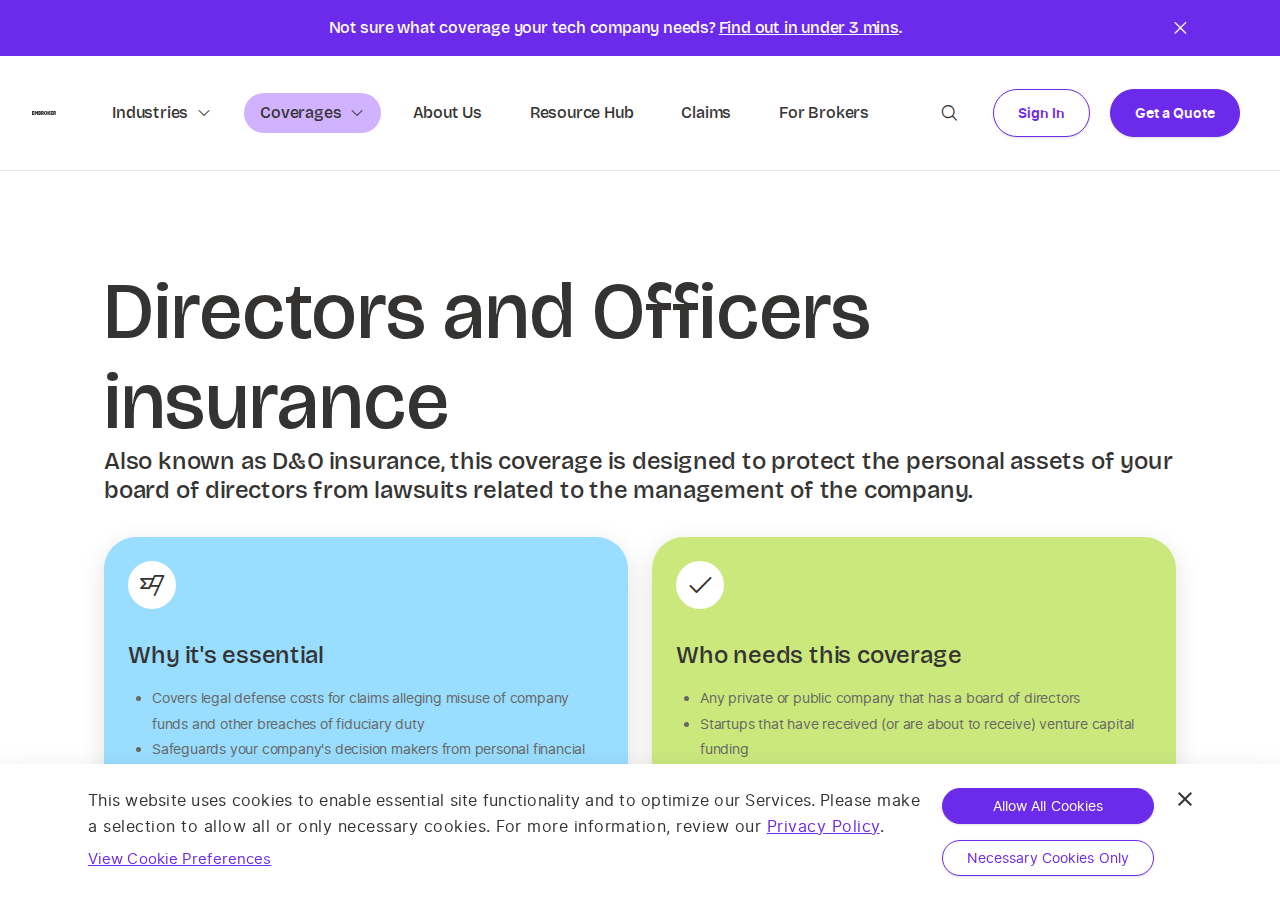
Directors and officers insurance responds when a director, officer, founder, or sometimes another insured person is accused of a wrongful act in their management capacity. Typical allegations include breach of fiduciary duty, misrepresentation to investors, errors in financial reporting, failure to supervise, conflicts of interest, employment-related management decisions, regulatory investigations, and disputes around an acquisition or down round.
The policy matters because plaintiffs do not always sue "the company" in a clean abstract way. They can name individual founders, investor directors, officers, and sometimes board observers. Even if the claim is weak, legal defence can be expensive and distracting. The point of D&O is to fund defence and covered settlements so that a board dispute does not become a personal financial crisis for the people involved.
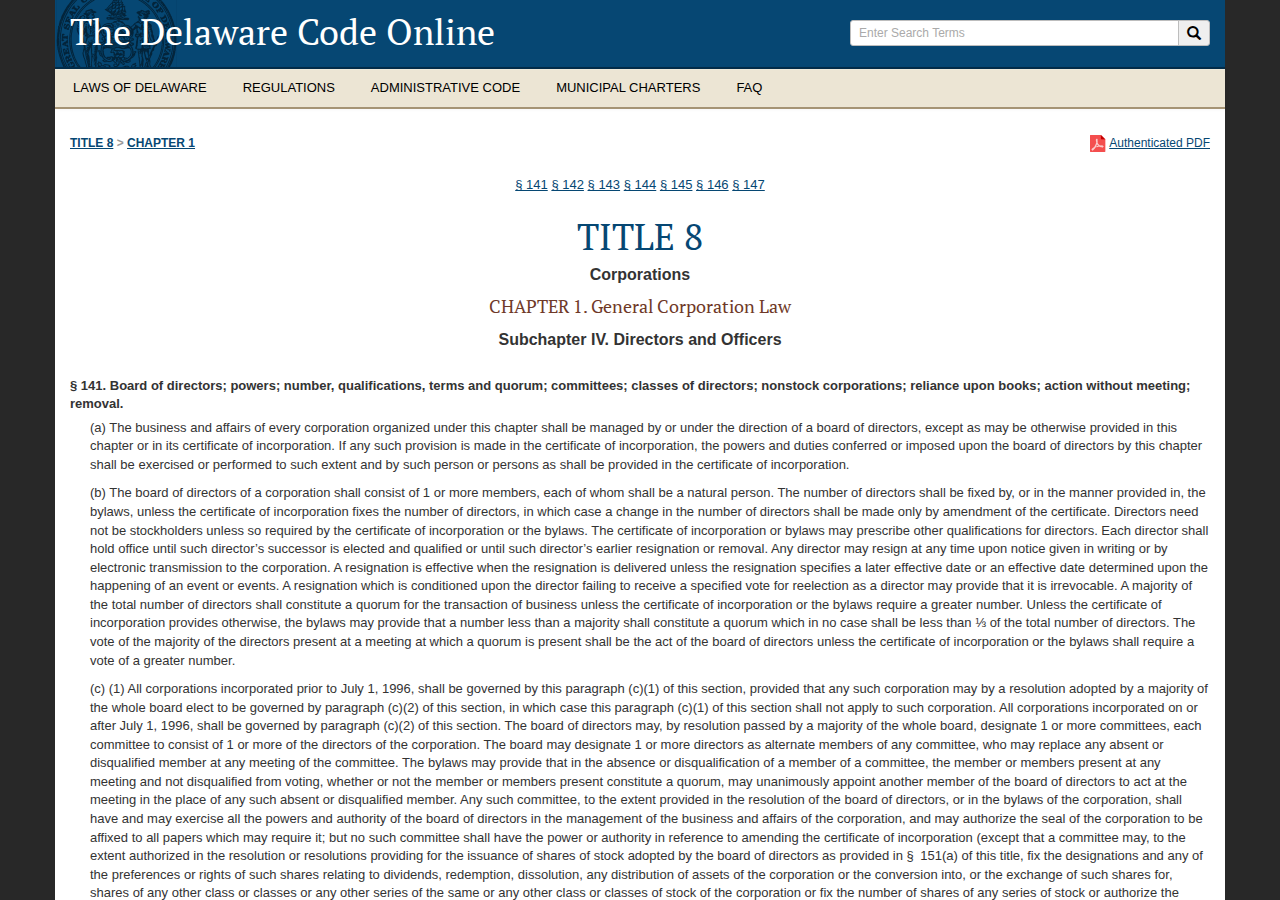
Companies House describes D&O as cover for individuals with management responsibility, including claims against them personally for issues such as errors in financial reporting or misadministration. Delaware law also matters for US venture-backed startups because many are Delaware corporations. Delaware General Corporation Law section 145 gives corporations power to indemnify directors, officers, employees, and agents in specified circumstances and separately gives power to purchase and maintain insurance for those people.
D&O is not a substitute for good governance. It is the financial layer behind good governance. You still need board minutes, conflicts procedures, accurate investor reporting, proper employment practices, and a clear authority matrix.
Side A, Side B, And Side C
Source: Embroker
D&O policies are usually described in three parts. Founders should understand them before negotiating limits.
| Side | Who is protected | When it matters most | Founder/CFO question |
|---|---|---|---|
| Side A | Individual directors and officers | When the company cannot or will not indemnify them | Does the policy protect personal assets if the company is insolvent or refuses indemnity? |
| Side B | The company | When the company indemnifies directors and officers and seeks reimbursement | Does the company recover cash spent defending covered individuals? |
| Side C | The entity itself | When the company is named in certain covered claims | Are entity claims included, and do they erode the same limit? |
The crucial point is that a single aggregate limit is often shared. A USD 3 million D&O policy does not necessarily mean USD 3 million for each Side. Defence costs, Side B reimbursement, and entity claims may all erode the same policy tower. That is why board members often focus heavily on Side A. In the worst scenario, Side A is the part that responds when the company cannot stand behind the individual.
Some later-stage companies buy dedicated Side A or excess Side A coverage. Early-stage companies may not need a complex tower, but they should at least ask whether Side A is non-rescindable, whether it has a retention, and whether conduct exclusions require final adjudication before the insurer can deny coverage.
The Investor Requirement: Board-Satisfactory, Not One Fixed Number
The outdated shortcut says "Series A term sheets require USD 3-5 million within 60-90 days." That may be common market practice, but it is not a universal legal rule. A better way to read the requirement is "maintain D&O insurance in an amount satisfactory to the board."
NVCA model legal documents are influential because they are widely used in venture financings and establish market norms. Their model set includes financing documents and an indemnification agreement. The exact D&O obligation in a live transaction depends on the negotiated documents, company stage, investor mix, jurisdiction, and board composition.
In a typical venture closing, investors ask three questions:
- Is there D&O coverage before their nominee joins the board?
- Is the limit appropriate for the round size, company risk, and shareholder base?
- Are investor directors, independent directors, officers, and sometimes board observers included or separately protected?
That last question is increasingly important. Board observers are not always formal directors, but they may attend meetings, receive sensitive information, and influence governance. Some policies define insured persons broadly enough to include them; others do not. If an investor observer has real influence but no policy protection, the side letter and insurance wording should be reviewed together.
Delaware Section 145 And Indemnification Agreements
Source: Delaware Code Online
For Delaware startups, D&O should be understood alongside DGCL section 145. Section 145 is the statutory backbone for indemnification and insurance. It gives a Delaware corporation power to indemnify specified people in certain proceedings and gives the corporation power to purchase and maintain insurance on behalf of directors, officers, employees, agents, and people serving at the company’s request in other enterprises.
This does not mean indemnification always works. Indemnification depends on the company’s legal power, charter and bylaw provisions, indemnification agreements, board approvals, and the company’s ability to pay. A company that is insolvent, in a dispute with the director, or restricted by law may not be able or willing to indemnify. That is exactly when Side A becomes important.
A serious funding round should therefore include:
- Charter and bylaw review.
- Separate indemnification agreements for directors and officers.
- D&O insurance aligned with the indemnification promise.
- Board approval of the policy and broker appointment.
- A process to update coverage after new rounds, acquisitions, jurisdiction changes, or regulatory expansion.
Investors often focus on D&O because they know indemnification promises can be hollow if there is no insurance and no company balance sheet behind them.
How Much D&O Coverage Startups Buy In 2026
No government regulator publishes an official startup D&O premium table. Provider ranges are only market benchmarks and must be quoted for your company.
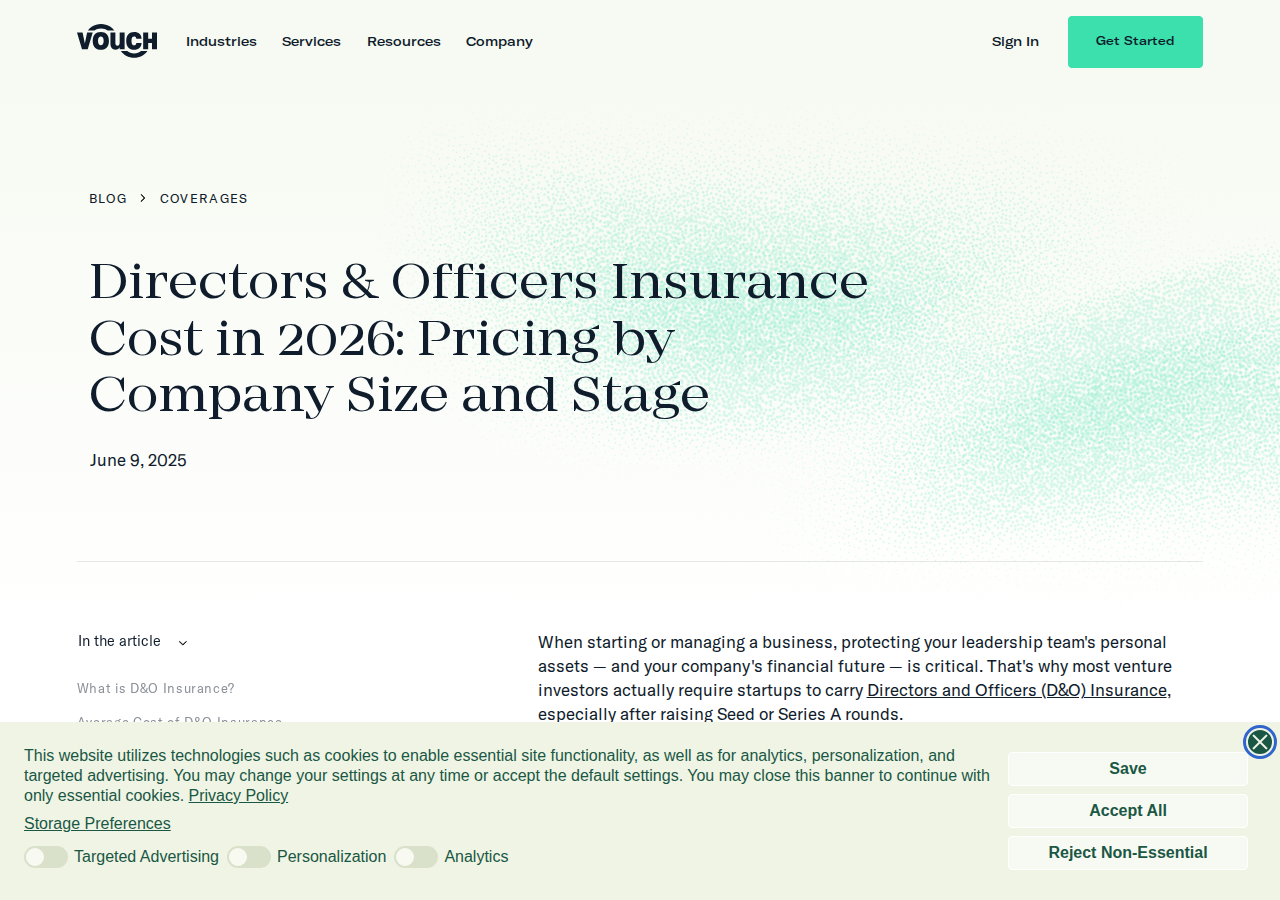
Vouch states that tech startup D&O commonly starts around USD 4,000 to USD 7,000 per year and shows common limits by stage such as seed at USD 500,000 to USD 1 million, Series A at USD 2 million to USD 3 million, Series B at USD 3 million to USD 5 million, and Series C at USD 5 million or more. Founder Shield states that startup D&O can range from USD 3,000 to USD 7,000 in premiums for each USD 1 million of coverage, with higher limits priced differently.
Use those as budgeting anchors, not promises.
| Stage | Common limit discussion | Provider benchmark premium lens | Practical board question |
|---|---|---|---|
| Pre-seed | Often deferred or USD 500,000 to USD 1 million if there are outside investors | Quote-specific; simple companies may be lower | Is there a board member, investor right, or regulated exposure? |
| Seed | USD 1 million is common for many early companies | Provider benchmarks often begin in the low thousands annually | Does the lead investor require proof before board appointment? |
| Series A | USD 2-5 million is a common market discussion | Vouch and Founder Shield ranges support budgeting only | Does the term sheet set a board-satisfactory amount? |
| Series B | USD 3-5 million or more | Premium rises with capital raised, risk, and claims history | Is Side A adequate after new investor directors join? |
| Growth | USD 5-10 million or towered program | Custom underwriting | Are public-company style claims, M&A, and international risks emerging? |
Pricing depends on capital raised, runway, revenue, sector, regulatory exposure, claims history, employee count, board composition, financial controls, and jurisdiction. Fintech, digital health, life sciences, and companies with complex cap tables may face deeper underwriting.
Step-By-Step: Binding D&O Before A Funding Round
The best time to price D&O is before you sign the term sheet, not after the closing clock starts.
- Pull the current charter, bylaws, cap table, investor rights documents, and board list.
- Identify who will join the board, who will observe, and who needs an indemnification agreement.
- Ask counsel whether the term sheet uses a fixed limit or board-satisfactory wording.
- Collect underwriting materials: financials, capitalization, funding history, claims history, employee count, sector details, and any pending disputes.
- Ask a broker for limits at two or three levels, for example USD 1 million, USD 3 million, and USD 5 million.
- Compare not just premium but Side A terms, retention, exclusions, entity coverage, securities wording, insolvency treatment, and board-observer status.
- Get board approval and bind before the investor director or observer starts participating.
- Store the certificate, policy wording, endorsements, and indemnification agreements in the corporate records.
- Calendar renewal at least 60 days early, especially if another raise or acquisition is likely.
This workflow keeps the D&O decision connected to governance. It also prevents a rushed purchase where the CFO accepts the cheapest premium and discovers later that key people were not insured.
D&O Does Not Replace PI, E&O, EPLI, Cyber Or Crime Cover
One of the most common startup insurance mistakes is using D&O as a catch-all. It is not.
| Policy | Main purpose | What D&O does not solve |
|---|---|---|
| D&O | Governance and management claims against directors, officers, and sometimes the entity | Client service failure, cyber incidents, workplace claims at scale, theft, product injury |
| Professional indemnity / E&O | Claims that your advice, software, consulting, or professional service caused client loss | Board mismanagement or investor fiduciary claims |
| EPLI | Employment practices claims such as discrimination, harassment, wrongful termination, or retaliation | Investor claims and board fiduciary disputes |
| Cyber | Data breaches, security incidents, incident response, and related third-party claims | Founder and board governance liability |
| Crime | Theft, social engineering loss, employee dishonesty, and related asset loss | Mismanagement claims against directors |
| Fiduciary liability | Duties connected to employee benefit plans | Ordinary D&O disputes unless endorsed |
If your startup sells consulting, implementation, managed services, analytics, or software that can financially harm a client, read our guide to professional indemnity insurance for consultants. If cyber exposure is material, pair this with cyber insurance for small business. Operational resilience also matters; a disruption claim belongs in a different discussion covered in business interruption insurance.
Exclusions And Negotiation Points CFOs Should Check
Most D&O coverage disputes come from assumptions. Read the actual policy and endorsements.
Key areas:
- Conduct exclusions: fraud, deliberate criminal acts, or illegal personal profit should require final adjudication before exclusion.
- Prior acts and pending litigation: old disputes may be excluded.
- Insured versus insured exclusions: claims between insured persons can be restricted unless exceptions apply.
- Major shareholder exclusions: some policies restrict claims by large shareholders unless negotiated.
- Insolvency treatment: early-stage companies need to know how the policy responds when the company cannot indemnify.
- Board observers: confirm whether they are insured persons or need separate wording.
- Outside directorship: if a founder serves on a subsidiary, JV, or portfolio board at the company’s request, check coverage.
- Defence costs: confirm whether they erode the limit.
- Retention: ensure the company can actually pay the retention during a claim.
- Territory and jurisdiction: important for international founders with US, UK, UAE, or Singapore structures.
The CFO’s goal is not to turn into an insurance lawyer. It is to make sure counsel, broker, and board are all reviewing the same risk map.
Tail Coverage At Acquisition
D&O is usually written on a claims-made basis. That means the policy responds to claims made during the policy period, subject to terms. When a company is acquired, merged, or otherwise changes control, the active policy may stop covering future claims except for covered acts before the transaction. This is where tail coverage, also called run-off coverage, becomes important.
Tail coverage extends the reporting window for claims about pre-closing conduct. Six years is a common negotiation period in private-company transactions, but the right period and cost depend on the policy and deal terms.
Founders should negotiate tail coverage before signing the acquisition agreement. Do not leave it to a post-closing scramble. The buyer, seller, investors, and directors all need to know who pays, how long the tail lasts, which policy period it attaches to, and whether the tail protects the individual directors and officers adequately.
Without a tail, a founder can sell the company in 2026 and face a claim in 2028 about a 2025 board decision with no clean reporting path. That is exactly the gap tail coverage is designed to close.
Scenario: A Series A Board Seat And Observer
Imagine a Delaware AI infrastructure startup headquartered operationally in London with customers in the US and Gulf. It raises a USD 9 million Series A. The lead investor gets one board seat. A strategic investor gets a board observer seat. The term sheet says the company must obtain D&O insurance in an amount satisfactory to the board before or shortly after closing.
The founder initially asks for the cheapest USD 1 million policy. Counsel pushes back. The investor director wants Side A clarity. The observer wants confirmation that they are included or protected under a side letter. The broker explains that the company’s customer contracts create E&O exposure, not just D&O exposure. The CFO prices USD 2 million, USD 3 million, and USD 5 million options, then the board approves USD 3 million with clear Side A wording and a separate E&O policy.
The company spends more than the cheapest option, but the funding closes cleanly. The investor director joins with indemnification signed. The observer’s status is documented. The policy certificate is stored with the board consent. That is the standard of process investors expect.
Common Mistakes Founders Make
- Treating D&O as a last-minute closing checklist item.
- Quoting only one limit and never seeing the cost curve.
- Assuming the NVCA model documents create a fixed mandatory limit.
- Forgetting board observers and investor nominee directors.
- Ignoring Side A because the company promises to indemnify everyone.
- Buying D&O but not signing indemnification agreements.
- Assuming D&O replaces PI, E&O, EPLI, cyber, crime, or fiduciary cover.
- Missing major shareholder or insured-versus-insured exclusions.
- Letting the policy terminate at acquisition without a negotiated tail.
- Failing to update coverage after a down round, international expansion, or regulated product launch.
For financial stack readiness around a funding round, founders may also need cleaner reporting and controls. Truescho’s guides to best accounting software for small business, UAE corporate bank accounts for non-residents, and US LLCs for non-residents can help frame the wider governance setup.
Frequently Asked Questions
Why do investors ask startups to buy D&O insurance?
Investors ask because their nominee director, partner, or observer may become exposed to claims connected to company decisions. D&O also signals mature governance, supports indemnification promises, and makes it easier to recruit experienced independent directors. It is a board-risk requirement, not just an insurance formality.
When should a founder buy D&O insurance before a funding round?
Start pricing D&O when serious term-sheet discussions begin. Bind before the investor director starts participating, or within the exact window agreed in the transaction documents. Waiting until after closing can create a rushed purchase, higher friction, and avoidable tension with the new board.
How much D&O coverage does a seed or Series A startup need?
There is no universal legal number. Seed companies often discuss USD 500,000 to USD 1 million. Series A companies commonly discuss USD 2 million to USD 5 million depending on round size and investor requirements. The actual limit should satisfy the board, counsel, and lead investor.
What do Side A, Side B, and Side C mean?
Side A protects individual directors and officers when the company cannot or will not indemnify them. Side B reimburses the company when it indemnifies those people. Side C protects the entity for certain covered claims. The sides often share one aggregate policy limit, so allocation matters.
Does D&O insurance protect a founder’s personal assets?
Yes, within the policy terms. Side A is the personal-asset backstop when the founder is named individually and the company cannot indemnify. It does not protect deliberate wrongdoing or every type of business dispute. The policy wording, exclusions, and final adjudication language matter.
Does D&O cover board observers and investor-appointed directors?
Investor-appointed directors are usually intended to be covered, but the policy and indemnification documents must confirm this. Board observers are more variable. Some policies include them by definition or endorsement; others do not. Review observer rights, side letters, and insurance wording together.
What is tail coverage in a startup acquisition?
Tail coverage extends the reporting period for claims about decisions made before the acquisition or change of control. Because D&O is claims-made, claims can arise after the deal even though the conduct happened earlier. Tail coverage is usually negotiated as part of the exit.
What exclusions should startup CFOs review before binding D&O?
Review conduct exclusions, prior acts, pending litigation, insured-versus-insured wording, major shareholder exclusions, insolvency treatment, entity coverage, defence-cost erosion, board-observer status, and territorial limits. A low premium with a weak exclusion profile can be poor value.
Is D&O the same as professional indemnity or E&O insurance?
No. D&O covers governance and leadership decisions. Professional indemnity or E&O covers claims that your professional service, advice, software, or deliverable caused a client loss. A venture-backed consulting, SaaS, or implementation company may need both policies.
Does a startup need D&O if it has no outside investors?
Maybe, but the case is weaker if there is no board exposure, no independent director, no investor rights, and low regulatory risk. The need rises quickly once outside investors join, the company appoints experienced directors, hires senior officers, enters regulated sectors, or prepares for acquisition.
Official And Market Sources
- Delaware Code Online - Title 8, section 145
- NVCA - Model Legal Documents
- Companies House - What insurance does a small business need?
- Vouch - Directors and Officers Insurance Cost in 2026
- Founder Shield - Startup D&O Insurance: What You Need to Know
D&O is one piece of a serious founder governance stack. If you are preparing a raise, adding investor directors, or planning a cross-border holding structure, Truescho can help you map the company formation, banking, tax, insurance, and board-readiness questions before investors turn them into closing conditions.