

Delaware LLC for Non-US Residents: The Recurring Costs and Tax Traps Nobody Mentions
A Delaware LLC for non-US residents gets sold on one number: the $110 state filing fee. What the ads do not mention is the stack of recurring obligations that follows the receipt — a $300 annual franchise tax with a $200 late penalty plus 1.5% monthly interest, a mandatory IRS Form 5472 whose absence costs $25,000, and a registered-agent requirement that bills every year for as long as the company exists. This guide is about the second number: what your Delaware LLC actually costs to keep, written from official sources only.
If you already know you want Delaware and need formation steps — name, registered agent, certificate of formation, EIN — our complete US LLC formation guide covers them, including how Delaware compares to Wyoming and New Mexico. This article deliberately does not repeat that material. It covers what comes after: the calendar, the filings, and the penalties.
The Recurring Cost Stack, Line by Line
1. The $300 franchise tax — due June 1, every year
Delaware's Division of Corporations levies a flat $300 annual tax on every LLC, due by June 1. The word franchise misleads people: it has nothing to do with restaurants. It is the price of the liability shield, and Delaware charges it whether the LLC earned money, lost money, or sat dormant.
Miss the deadline and the arithmetic turns ugly: a $200 late penalty plus interest at 1.5% per month on the unpaid tax. Delaware also cannot issue a certificate of good standing while the tax is unpaid — which surfaces at the worst moment, when a payment processor, a bank, or an acquiring investor asks for one.
2. The registered agent — required, and never free
Every Delaware LLC must maintain a registered agent with a physical Delaware address. The state itself does not provide one, so commercial agents sell this service, typically billed annually. Prices are set by the market, not by statute — compare what is included (forwarding, compliance reminders, document scanning) rather than the sticker price alone, because the agent's reminder emails are your first line of defense against the June 1 deadline above.
3. Form 5472 — the filing with a $25,000 price tag
This is the cost that defines Delaware LLCs owned by foreigners. A single-member LLC whose owner is a non-resident alien is a foreign-owned US disregarded entity, and the IRS requires it to file Form 5472 attached to a pro-forma Form 1120 every year — even if the LLC had no income, no expenses, and no activity beyond existing.
The pro-forma part sounds scarier than it is: per the IRS instructions, the 1120 carries only the LLC's name and address plus items B and E, with Form 5472 supplying the reportable-transaction detail. Part V of Form 5472 covers formation itself, plus dissolution, capital contributions, and distributions — meaning even the act of funding your new LLC with $500 of starting capital is a reportable event.
The filing mechanics are old-fashioned by design: a foreign-owned disregarded entity cannot e-file Form 5472. It goes by fax to 855-887-7737 or by mail to the dedicated IRS address in Ogden, Utah. The due date follows the pro-forma 1120's — April 15 for a calendar-year LLC — and an extension is possible via Form 7004, on which you write "Foreign-owned U.S. DE" across the top.
And the penalty: $25,000 per related party, per year, for failure to file — with an additional $25,000 for each 30-day period that passes after 90 days following an IRS notice, until the filing is corrected. There is no profit threshold, no small-entity relief, no first-time forgiveness printed in the instructions.
Source: Harvard Business Services — official channel
4. Banking and accounting — the quiet drags
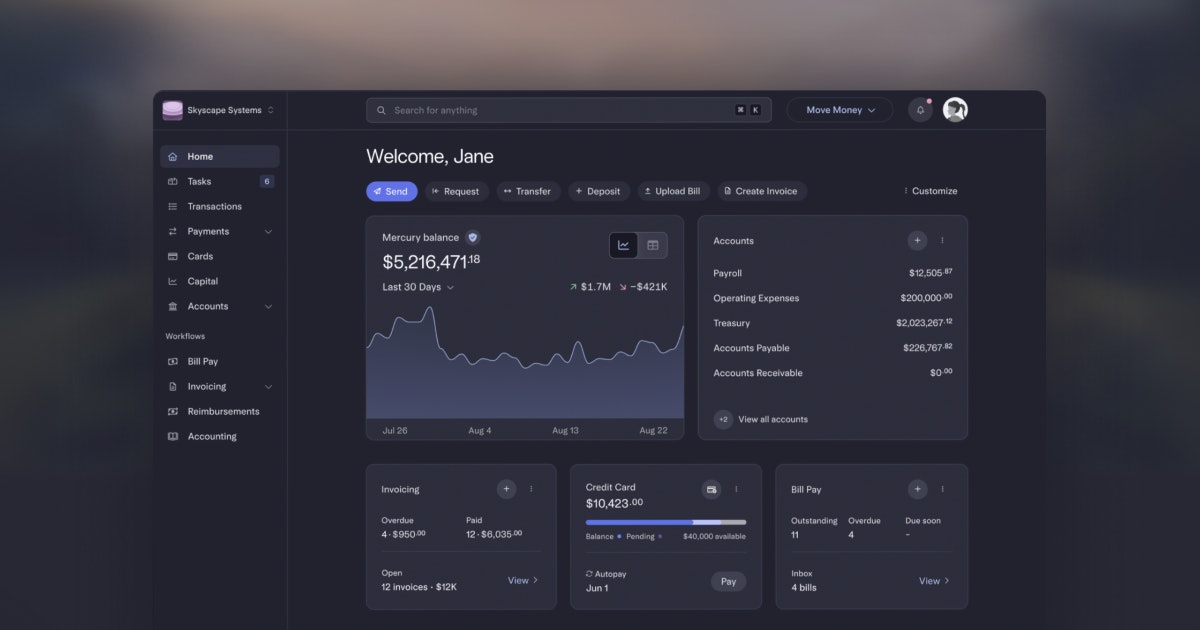
Two soft costs complete the stack. Banking can be $0/month — Mercury's official terms are $0 with no minimums for US entities owned by global founders, and Airwallex's entry plan is free — but only if you meet their address and documentation rules, which our best US business bank account round-up details. Accounting for a foreign-owned LLC usually means at least one professional who knows Form 5472; market rates vary, so collect quotes rather than budgeting from blog numbers.
Source: Mercury — business banking
The pattern across all four lines is the same: nothing is expensive until it is late. The Truescho team builds compliance calendars into its US business and residency guides because deadline discipline — not any single fee — is what keeps a Delaware LLC cheap.
Four Scenarios, Priced With Official Numbers Only
Abstract warnings do not change behavior the way arithmetic does, so run your own situation against these four patterns, built exclusively from the verified figures above.
Scenario A — the dormant shell. You registered the LLC to reserve a name and test an idea, did nothing all year, and plan the same next year. Cost: $300 franchise tax, $0 federal tax, one 5472 filing (self-filed by fax, or a professional's fee). Total state and federal cost: $300 per year. The trap: "doing nothing" feels like it should cost nothing, and skipping the 5472 converts a $300 year into a $25,000 one.
Scenario B — the missed June 1. Business is fine, but the $300 slipped. Cost: $300 tax + $200 late penalty + 1.5% per month interest. Three months late: roughly $513 and change, plus whatever the lost good-standing certificate costs you in a pending bank or platform review. Annoying, survivable, entirely self-inflicted.
Scenario C — the two-year 5472 gap. You filed nothing for the LLC's first two years because there was no income and nobody told you otherwise. Exposure: $25,000 per related party, per year — and the additional $25,000 per 30-day-period clock starts after 90 days if the IRS has already mailed a notice. This scenario is why professional help for a foreign-owned LLC is not a luxury line item.
Scenario D — the profitable operator. $60,000 of profit, none of it US-source effectively connected, owner non-resident. Cost: $110 formation (once), $300 per year, 5472 filed on time every April, $0 entity-level federal tax. Compare that against the UK Ltd's 19-25% Corporation Tax on the same profit in our US LLC vs UK Ltd comparison — the structures are aimed at different founders, and the numbers make that visible fast.
The Multi-Member Twist
Everything above assumes the most common non-resident setup: a single-member LLC, which the IRS treats as a disregarded entity. Add a second member and the federal picture changes shape — the entity is classified as a partnership, the annual filing becomes a partnership return rather than the 5472-plus-pro-forma-1120 pair, and members receive their allocated shares to report personally. Delaware's side stays identical: the same $110 formation, the same $300 every June 1. The planning point is simple but frequently discovered late: choose your member count with the filing regime in mind, because a 50/50 LLC you formed casually with a friend produces a different tax calendar than the solo structure this article describes.
Exiting Properly: Dissolution Is a Reportable Event Too
Founders who abandon an LLC they no longer want — just stop paying and walk away — leave two accumulating trails. On the state side, Delaware keeps the LLC on its records with the annual tax unpaid, and the penalty math from Scenario B accrues in the background. On the federal side, Part V of Form 5472 covers dissolution alongside formation, contributions, and distributions — meaning the year you close the company is itself a reporting year, not a blank one.
A clean exit runs in order: settle the franchise tax through the final year, file the certificate of cancellation with Delaware so the state's records actually close, and file the final 5472 reporting the dissolution. Each step is cheap; skipping each step is not.
The Compliance Calendar on One Screen
| Deadline | Obligation | Cost if missed |
|---|---|---|
| April 15 | Form 5472 + pro-forma 1120 (calendar-year LLC) | $25,000 per related party; +$25,000 per 30 days after 90-day notice |
| June 1 | Delaware $300 annual franchise tax | $200 penalty + 1.5% per month interest; no good-standing certificate |
| Continuous | Registered agent maintained | Administrative dissolution risk for the LLC |
| Ongoing | Bank KYC responses | Account freezes or closure at the fintech's discretion |
Print that table. It is, in practice, the entire recurring cost of a Delaware LLC that earns no US-source income — and every number in it comes from corp.delaware.gov or irs.gov, not from a reseller.
Three habits make the calendar nearly automatic. Anchor June 1 to something you cannot miss — put it beside a recurring personal date, and set a second reminder in April, because the franchise tax is the deadline easiest to lose in a busy quarter. Treat April 15 as a package with your personal taxes: even though the 5472 reports the entity, filing it while you are already in tax mode makes the two-cycle year (April federal, June state) feel like one season instead of two ambushes. Give your registered agent a second role: agents that send compliance reminders are worth their fee precisely for this — they are the only party in the stack whose business model depends on you not missing deadlines.
And notice what is absent from the calendar. There is no annual report for Delaware LLCs (corporations file one; LLCs do not — the $300 tax replaces it). There is no BOI filing anymore for domestically-formed entities. The recurring federal obligation is a single information return, and the recurring state obligation is a single flat payment. A Delaware LLC is expensive to neglect and genuinely cheap to maintain — the whole game is never being the founder who learns the penalty schedule retroactively.
What the Calendar Looks Like in a Real Year
Walk through one calendar year of a healthy, profitable, non-resident-owned Delaware LLC. January: nothing due; collect your prior-year totals. March: assemble the 5472 information — reportable transactions are few for a simple services LLC, and Part V items like contributions usually happened at formation, not now. April 15: 5472 plus pro-forma 1120 go out by fax or mail, keeping the transmission confirmation. April: pay the $300 franchise tax early while you are already in filing mode — Delaware accepts it well before June 1, and paying early removes the only state deadline entirely. June 1: passes unnoticed because the tax cleared in April. September to December: banking KYC refreshes get answered within days; the good-standing certificate, if a platform requests one, issues instantly because nothing is outstanding.
That is the whole year: one federal filing, one state payment, responsive emails. Founders who describe Delaware maintenance as stressful are usually describing the year they missed one of those two dates — which is why this article exists.
Who Actually Benefits From Delaware in 2026?
The honest version of the Delaware pitch, filtered for non-US residents:
- Strong fit: founders selling to US customers, running Stripe or US payment processors (see our Stripe via US LLC guide), raising from US investors who expect a Delaware entity, or holding IP.
- Neutral fit: location-independent service businesses whose customers neither know nor care where the entity lives. Delaware works, but so do its cheaper rivals — the formation guide's state comparison exists for exactly this case.
- Weak fit: founders whose real question is tax residency elsewhere. If your attention is on the UK side of the ledger, our US LLC vs UK Ltd annual cost comparison prices that route with the same official-numbers-only method, and the UK formation costs guide details its fees.
One 2026 simplification worth knowing: the FinCEN Beneficial Ownership Information (BOI) reporting that worried international founders was removed for domestically-formed US entities, per FinCEN's own FAQ — one regulatory layer you no longer need to budget attention for.
Paying Delaware From Abroad
The state's online tax system accepts payment from non-US cards and accounts, and many founders route the annual $300 through their multi-currency provider to avoid card-decline friction. If you use Airwallex or a similar platform for the LLC's banking, the payment is a routine USD outbound; Wise lists international wires from $1.13 as a benchmark for what a transfer layer should cost.
💬 Disclosure: Some links in this article are affiliate links. We may earn a small commission when you complete a purchase at no extra cost to you. This helps us keep our content free, and it does not affect the integrity of our recommendations.
FAQ
What is Delaware franchise tax for an LLC?
A flat $300 per year, due June 1, charged on every LLC by the Delaware Division of Corporations regardless of income or activity. Paying late adds a $200 penalty plus 1.5% interest per month, and Delaware will not issue a certificate of good standing until it is paid.
What is Delaware LLC taxation for non-US residents?
A single-member LLC owned by a non-resident alien is a disregarded entity: no US federal entity-level tax when there is no US-source effectively connected income. The LLC's owner is taxed personally where resident — but Form 5472 with a pro-forma 1120 must be filed with the IRS every year regardless.
Do I need to file Form 5472 even with zero revenue?
Yes. The obligation attaches to foreign-owned disregarded entities from their first tax year, with no minimum-income exception. Even funding the LLC with starting capital counts as a reportable transaction under Part V, which covers formation, contributions, distributions, and dissolution.
What is the penalty for not filing Form 5472?
$25,000 per related party for each year the form is missing, plus an additional $25,000 for every 30-day period beyond 90 days after the IRS mails a notice of failure to file. The form cannot be e-filed for foreign-owned disregarded entities — it goes by fax or mail.
Is Delaware LLC registration for non-residents still worth it in 2026?
Yes for US-facing businesses — USD banking, payment-processor access, and investor familiarity justify the $300/year stack when deadlines are respected. If your customers are elsewhere, compare against the UK Ltd or other states before defaulting to Delaware.
Do I need a US address for a Delaware LLC?
For the LLC itself, no — you need a Delaware registered agent's address as the official contact. For banking, providers set their own rules: Mercury accepts a US or international business address but rejects registered-agent and PO-box addresses.
Sources
- Delaware Division of Corporations — LLC annual tax instructions
- Delaware Division of Corporations — fee schedule
- IRS — Form 5472 instructions (pro-forma 1120, penalties)
- FinCEN — Beneficial Ownership Information FAQs
- Mercury — business banking terms
- Wise — US business transfer pricing
Get Started with Truescho
Whether you are registering a Delaware entity, building its banking stack, or comparing jurisdictions before you commit, Truescho brings the tools, data, and services together in one place.
Get Started →