
DAAD Scholarship 2027: Complete Guide to Fully Funded Master's & PhD in Germany
The German Academic Exchange Service (DAAD) is the world's largest funding organization for international academic exchange, providing over 100,000 scholarships annually to students and researchers from around the globe. If you are planning your Master's or PhD in Germany for 2027, the DAAD scholarship remains the premier option — fully funded education, a monthly stipend sufficient for living expenses, and a residence permit that opens doors across Europe.
What Is the DAAD Scholarship?
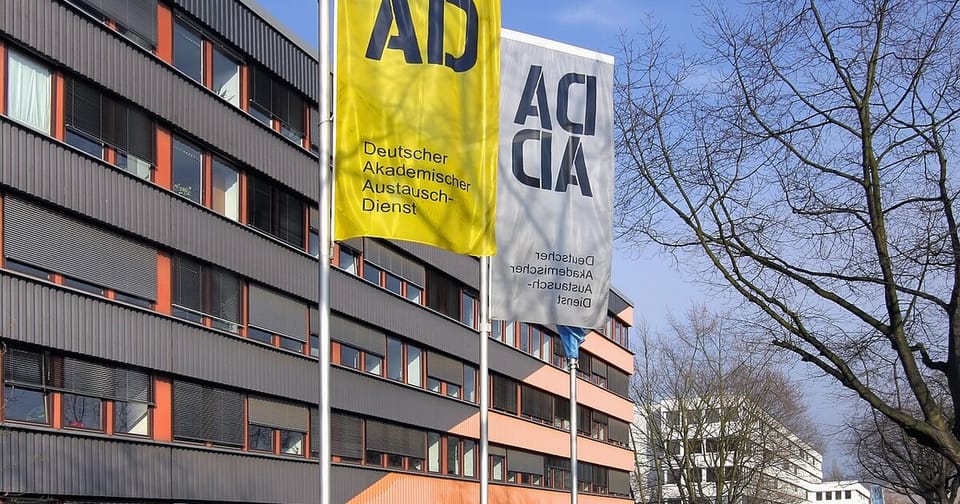
DAAD (Deutscher Akademischer Austauschdienst) was founded in 1925 and re-established in 1950 after World War II. Headquartered in Bonn, Germany, it maintains a network of 15 regional offices and 57 branch offices at universities worldwide. The organization is primarily funded by the German federal government (over 70% of its annual budget), along with contributions from the Federal Ministry for Economic Cooperation and Development (BMZ) and the Federal Foreign Office.
In 2025, DAAD supported over 120,000 individuals from 130 countries, with an annual budget exceeding €600 million. This is not a single scholarship program but an umbrella encompassing hundreds of diverse programs — from short summer language courses to four-year doctoral fellowships.
What Does the DAAD Scholarship Cover?
The financial coverage varies by program, but postgraduate scholarships (EPOS and others) typically include:
Monthly Stipend
- Master's: Approximately €934 per month (updated in 2024, may increase for 2027)
- PhD: Approximately €1,300 per month
- Postdoctoral researchers: Approximately €2,000–€2,500 per month depending on field and experience
Tuition Fees
German public universities do not charge tuition fees for international students (except a nominal semester contribution of approximately €150–€350 covering public transport). DAAD covers these administrative fees.
Travel Allowance
A one-time payment covering travel costs from your home country to Germany, ranging from approximately €1,000–€2,000 depending on your country of origin.
Health Insurance
Full coverage of health and medical insurance for the entire duration of the scholarship.
German Language Course
Many DAAD programs include a 6-month intensive German language course before studies begin, with full cost coverage.
Key DAAD Programs for Postgraduate Study
1. EPOS — Development-Related Postgraduate Courses
The most popular program for students from developing countries. It covers specialized Master's programs in development-related fields (engineering, economics, public health, agriculture, environmental management). Deadlines typically fall between August and October, depending on the program.
2. DAAD Research Grants — Doctoral/Postdoc
For obtaining a doctoral degree or conducting postdoctoral research at a German university. Support can extend up to 4 years for PhD candidates.
3. DAAD Study Scholarship — Master's
Funding for a Master's degree in any field at a German public university. Duration ranges from 12 to 24 months depending on the program.
4. WISE — Working Internships in Science and Engineering
For undergraduate students in science and engineering to complete a summer internship at a German research institute.
Eligibility Requirements
Academic Qualifications
- For Master's: A Bachelor's degree (or equivalent) in a relevant field, with a minimum GPA of approximately 2.5 (on a 4.0 scale) or equivalent
- For PhD: A Master's degree or Bachelor's with demonstrated academic excellence, plus a research proposal accepted by a supervisor at a German university
- Degrees must be recognized under the German system (verify via Anabin database)
Language Requirements
- English-taught programs: IELTS minimum 6.0 (some programs require 6.5 or 7.0) or TOEFL iBT minimum 80
- German-taught programs: DSH-2 or TestDaF level 4 in all sections
- Some programs accept alternative English tests
Work Experience
Some EPOS programs require at least two years of relevant work experience in a development-related field after graduation.
Nationality and Country
Most DAAD programs target citizens of developing countries listed on the DAC (Development Assistance Committee) list. Citizens of Arab countries (Morocco, Algeria, Tunisia, Egypt, Jordan, Palestine, Lebanon, Syria, Yemen, Sudan, Iraq, Mauritania) are eligible for most programs.
How to Apply for a DAAD Scholarship
Step 1: Find the Right Program
Use DAAD's interactive database at DAAD Scholarship Database to filter programs by degree level, field of study, and language of instruction. There are over 100 different programs available.
Step 2: Check the Deadline
Deadlines vary significantly: some programs close in August, others in October or January. Confirm the exact date for your chosen program.
Step 3: Prepare Your Documents
- Academic CV in German or English — see our academic CV guide
- Motivation Letter — avoid the common mistakes that lead to rejection
- Certified copies of degrees and transcripts
- Language certificate (IELTS or equivalent)
- Letters of recommendation (usually 2 from professors or supervisors)
- Research proposal (particularly for PhD)
Step 4: Submit via the DAAD Portal
Applications are submitted electronically through the portal at portal.daad.de. Submit your application at least two weeks before the deadline to avoid last-minute pressure.
Step 5: Interview
If your application passes initial screening, you may be invited for an interview (in-person or via video) at the German embassy or DAAD regional office in your country.
Tips to Maximize Your Chances
1. Choose the Right Program for Your Background
DAAD does not fund any program — it has a specific list of accredited programs. Applying to a program that does not match your academic background is a direct path to rejection.
2. Contact a Supervisor Early (for PhD)
If you are applying for a doctoral degree, secure a preliminary agreement from a supervisor at a German university before applying. This doubles your chances.
3. Demonstrate Development Relevance
For EPOS programs specifically, clearly explain how your studies will benefit your home country after graduation. This is a core evaluation criterion.
4. Write a Strong Motivation Letter
Your motivation letter is the most important document in your application. Avoid fatal mistakes and make it specific, honest, and connected to your chosen DAAD program.
5. Don't Forget Your Academic CV
DAAD requires a CV in European format (Europass) or traditional academic format. Include all publications, conferences, and research experience.
Alternatives to DAAD in Germany
If DAAD does not work out, other options exist:
- Erasmus Mundus Joint Masters: Comprehensive comparison with DAAD
- University-specific scholarships: Heidelberg University, TU Munich, and others offer their own funding
- Deutschlandstipendium: Government-funded €300/month for outstanding students
- Heinrich Böll Foundation: Scholarship with specific environmental and social requirements
- KAAD: For Christian students from developing countries
Life in Germany as an International Student
Cost of Living
You need approximately €900–€1,100 per month for living expenses in Germany (rent, food, mandatory health insurance, transportation). The DAAD stipend covers this amount fully.
Working During Studies
International students are permitted to work 140 full days or 280 half days per year. This can provide additional income support.
Post-Graduation Residence
Germany allows graduates 18 months to seek employment after graduation. If you find a job matching your qualifications, you can convert your residence permit to a permanent work permit.
Frequently Asked Questions About DAAD
Can I apply for DAAD without IELTS?
Some DAAD programs accept alternative tests like the Duolingo English Test, PTE Academic, or a certificate from your university confirming your previous studies were in English. Check our scholarships without IELTS guide for details. Always verify the specific requirements of your chosen program.
How many times can I apply?
There is no official limit on DAAD applications. You can apply each year as long as you meet the eligibility criteria. Many students succeed on their second or third attempt.
Do graduates of Arab universities need credential evaluation?
Yes, you must verify your degree recognition through the German Anabin database or via uni-assist. Some degrees are directly equivalent; others may require additional assessment.
Does DAAD fund Bachelor's programs?
DAAD primarily focuses on postgraduate study (Master's and PhD). Bachelor's programs are very limited and targeted at specific groups (such as refugees or short summer courses).
When are admission results announced?
Timing varies by program, but results are typically announced between March and June for programs starting in the winter semester (October).
Can I bring my family?
For doctoral and postdoctoral grants, bringing a spouse and children is permitted. You must demonstrate financial ability to support dependents. Rules vary by permit type.
Common DAAD Application Mistakes to Avoid
Applying to the Wrong Program
One of the biggest mistakes applicants make is choosing a program that does not align with their academic background. DAAD carefully evaluates the match between your previous studies and the program requirements. Applying to an economics program when your degree is in engineering (without substantial relevant experience) leads to almost certain rejection.
Neglecting the Motivation Letter
The motivation letter is not a formality — it is the first document evaluators read. Many applicants write generic text that does not even mention the program name. Take the time to write a letter that shows why you are the right candidate and what your post-return plan for your home country is.
Submitting a Weak CV
For academic scholarships, you need a CV that highlights your publications, conferences, and research skills. Follow the academic CV format rather than generic job templates.
Not Contacting a Supervisor
For doctoral applications especially, many students apply without securing a preliminary agreement from a supervisor at a German university. This significantly weakens your application. Start reaching out to professors at least three months before applying.
Ignoring German Language Requirements
Even if your program is in English, daily life in Germany requires German. DAAD offers a free language course — take advantage of it. Many post-graduation job opportunities require at least B2 level.
Conclusion: Why DAAD Should Be Your First Choice
The DAAD scholarship is more than financial support — it is a gateway to the German education system, one of the strongest in the world, with an alumni network exceeding two million people across 190 countries. The numbers are clear: free education, a stipend sufficient for dignified living, comprehensive health insurance, and a pathway to employment in the world's third-largest economy. If you are serious about your postgraduate studies, applying for DAAD 2027 should be your top priority this autumn.
Start now: identify your program from the DAAD database, prepare your academic CV, and write a motivation letter free of fatal errors.
Sources: DAAD.de, Funding Guide, DAAD Portal
See also the fully funded Schwarzman Scholars 2027 guide for Tsinghua (deadline Sept 9).