

Claude Science from Anthropic: The AI Workbench Transforming Scientific Research in 2026
On June 30, 2026, Anthropic unveiled Claude Science, described as "an AI workbench for scientists." This is not simply a chatbot repackaged for researchers — it is a purpose-built, customizable application designed from the ground up to meet the demanding needs of life sciences researchers. By integrating the tools scientists already use into a single AI-powered environment with full reproducibility and auditability, Claude Science represents a significant shift in how computational research can be conducted.

What Is Claude Science?
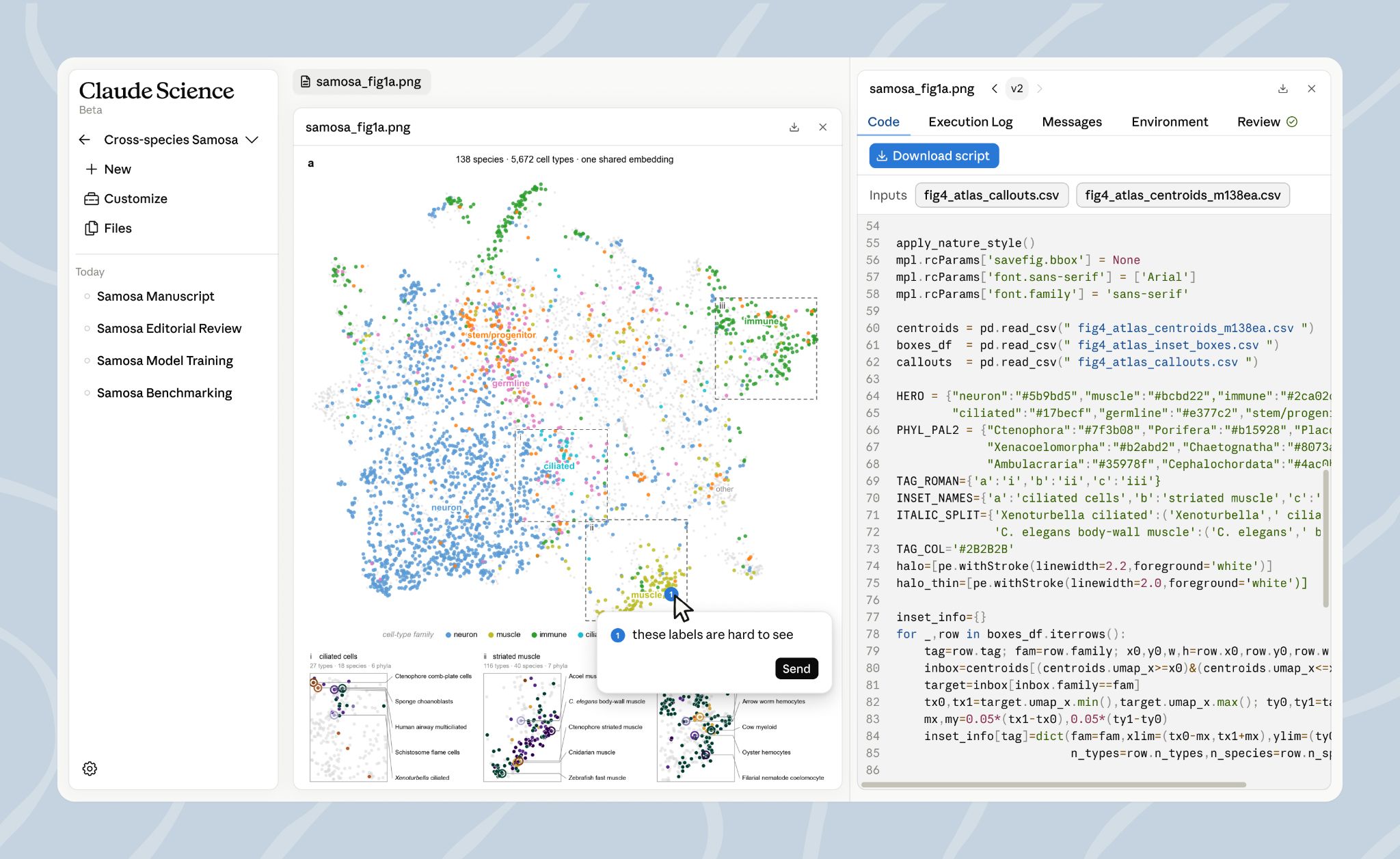
Claude Science is a customizable workbench application developed by Anthropic specifically for scientists working in the life sciences. It brings together the computational tools, literature databases, and analytical frameworks that researchers rely on daily, wrapping them in an intelligent layer powered by Claude's language model capabilities.
The platform natively integrates with PubMed for biomedical literature search, Jupyter for interactive computational analysis, R for advanced statistical computing, and Cluster Terminals for accessing high-performance computing infrastructure. Rather than forcing researchers to juggle dozens of disconnected applications, Claude Science provides a unified workspace where these tools work in concert under the coordination of an AI agent.
What distinguishes Claude Science from a general-purpose AI assistant is its architectural commitment to the scientific method. Every analysis produces what Anthropic calls "auditable artifacts" — complete records that include the code, the computational environment, and the full message history between researcher and AI. This means any result generated through Claude Science can be independently verified, reproduced, and scrutinized, which is fundamental to scientific integrity.
The Problem Claude Science Solves
Modern life sciences research operates at the intersection of massive datasets, sophisticated computational tools, and rigorous methodological standards. The friction points that Claude Science addresses are well-known to anyone who has worked in a wet lab or computational biology group:
Tool Fragmentation
A typical genomics researcher might begin their day searching PubMed for relevant publications, switch to a Jupyter notebook to preprocess sequencing data, open R for statistical testing, log into a computing cluster via SSH for heavy computation, and then use a molecular visualization tool to inspect protein structures. Each transition between tools introduces context loss, potential errors, and wasted time. Claude Science consolidates these workflows into a single environment.
The Reproducibility Crisis
The scientific community has been grappling with a reproducibility crisis for over a decade. Studies across disciplines have shown that a significant proportion of published research findings cannot be independently reproduced. A major contributor is incomplete documentation of analysis pipelines — code gets lost, parameters go unrecorded, and the exact sequence of analytical decisions fades from memory. Claude Science tackles this at the infrastructure level by automatically capturing every computational step, every parameter, and every interaction in a reproducible artifact.
Data Complexity
Life sciences data is among the most complex in any field. Single-cell genomics datasets can contain millions of cells across thousands of dimensions. Proteomics data requires specialized statistical treatment. Structural biology demands three-dimensional molecular visualization. Claude Science ships with over 60 curated skills and connectors that encode domain-specific expertise, lowering the barrier to conducting rigorous analyses without requiring every researcher to be an expert in every computational method.
Citation and Calculation Errors
Even careful researchers make mistakes — a miscited reference, an off-by-one error in a statistical test, a misinterpreted p-value. Claude Science includes a dedicated Reviewer Agent that automatically checks citations against source literature and verifies calculations, flagging discrepancies and suggesting corrections before results are finalized.
How the Platform Works
Claude Science employs a multi-agent architecture that mirrors the structure of a well-run research laboratory.
The Generalist Coordinating Agent
At the heart of the platform is a generalist agent that functions as a research coordinator. When a scientist describes a task — for example, "analyze this single-cell RNA-seq dataset to identify cell-type-specific markers" — the coordinating agent:
- Decomposes the request into discrete analytical steps
- Identifies which tools and skills are needed for each step
- Spins up specialist agents for domain-specific subtasks
- Orchestrates the flow of data between tools
- Compiles the results into a coherent narrative with full documentation
- Routes the output through the Reviewer Agent for quality assurance
Specialist Agents
The platform can deploy specialist agents with deep expertise in specific domains. These agents are equipped with curated skills tailored to their field:
- A genomics specialist understands variant calling pipelines, knows how to work with BAM and VCF files, and can navigate reference genomes
- A single-cell genomics specialist handles clustering, trajectory analysis, and dimensionality reduction with appropriate statistical methods
- A proteomics specialist works with mass spectrometry data, protein identification, and quantification
- A structural biology specialist can parse PDB files, render 3D structures, and perform structural comparisons
- A cheminformatics specialist processes molecular structures, computes chemical descriptors, and analyzes structure-activity relationships
The Reviewer Agent
After analysis is complete, the Reviewer Agent performs an automated quality pass:
- Verifying that every citation refers to a real publication and that claims attributed to cited sources are accurate
- Checking statistical calculations for correctness
- Ensuring that conclusions follow from the data presented
- Identifying potential methodological flaws or confounds
- Flagging and correcting errors where possible
This automated review layer does not replace human peer review, but it catches a substantial class of errors before research reaches the publication stage.
Integrated Skills and Tools
Claude Science launches with over 60 curated skills and connectors spanning the core domains of life sciences research:
Genomics
- DNA sequencing data analysis
- Variant calling and annotation
- Gene expression analysis
- Support for standard file formats (BAM, VCF, FASTA, GFF)
- Population genetics analyses
Single-Cell Genomics
- Single-cell RNA-seq analysis pipelines
- Cell clustering and cell-type identification
- Trajectory and pseudotime analysis
- Dimensionality reduction (UMAP, t-SNE, PCA)
- Differential expression across cell populations
Proteomics
- Mass spectrometry data processing
- Protein identification and quantification
- Post-translational modification analysis
- Protein-protein interaction mapping
Structural Biology
- Native 3D protein structure rendering within the platform
- Interactive molecular visualization
- Structural alignment and comparison
- Support for PDB, mmCIF, and related formats
- Binding site analysis
Cheminformatics
- Native chemical structure rendering
- Molecular property calculation
- Structure-activity relationship analysis
- Compound library management
Integrated External Tools
- PubMed: Direct literature search within the platform, with intelligent filtering and summarization
- Jupyter Notebooks: Full interactive Python environment for custom analysis
- R Statistical Environment: For advanced statistical testing, bioinformatics packages (Bioconductor), and publication-quality visualization
- Cluster Terminals: Direct SSH access to high-performance computing resources and HPC login nodes
Auditability and Reproducibility
The most scientifically significant feature of Claude Science is its approach to auditability. Every analysis session produces an artifact that contains three complete layers of documentation:
1. Complete Code Record
Every line of code executed during the analysis — whether generated by the AI, written by the researcher, or modified collaboratively — is captured with full provenance. This includes the order of execution, any modifications made, and the rationale for each computational decision.
2. Environment Specification
The exact computational environment is documented, including operating system, library versions, package dependencies, and configuration settings. This enables any researcher to recreate the environment and verify that the same inputs produce the same outputs.
3. Full Message History
The complete interaction log between researcher and AI is preserved, providing context for every analytical decision. This means a reviewer can understand not just what was done, but why — what hypotheses were considered, what alternatives were rejected, and what assumptions were made.
This three-layer documentation directly addresses the requirements of major funding agencies (NIH, NSF, ERC) and high-impact journals (Nature, Science, Cell) that increasingly mandate reproducible research practices. A Claude Science artifact can serve as a supplementary material that satisfies these requirements with minimal additional effort from the researcher.
Pricing and Plans
Claude Science is available in beta to subscribers of the following Claude plans:
| Plan | Monthly Price | Best For |
|---|---|---|
| Pro | $20/month | Individual researchers, graduate students, postdocs |
| Max | $100/month or $200/month | Power users with heavier computational needs |
| Team | $30/user/month | Research labs and collaborative groups |
| Enterprise | Contact sales | Large research institutions and universities |
Key Pricing Considerations
- Not available on Claude Free: The platform requires a paid subscription due to the computational resources it consumes. This is consistent with the resource-intensive nature of the integrated tools.
- Max plan tiers: The $100/month tier offers substantial usage limits suitable for most active researchers. The $200/month tier is designed for researchers running continuous analyses or working with particularly large datasets.
- Team plan: Requires a minimum number of users and includes administrative controls suitable for principal investigators managing lab members. Pricing is per active user.
- Enterprise plan: Offers custom integrations, on-premise deployment options, dedicated support, and potential volume licensing — relevant for university-wide or institute-wide deployments.
Compared to the cost of individual licenses for specialized scientific software (which can run thousands of dollars annually per tool), Claude Science's pricing is competitive, especially given that it consolidates multiple tools and adds AI capabilities on top.
Accessing Claude Science from the Gulf and Middle East
Researchers at leading institutions across the Gulf Cooperation Council region are well-positioned to benefit from Claude Science:
Saudi Arabia
- King Abdullah University of Science and Technology (KAUST): With its world-class computational bioscience centers and core labs, KAUST researchers working on genomics, structural biology, and computational biology can leverage Claude Science to streamline their analytical pipelines.
- King Fahd University of Petroleum and Minerals (KFUPM): Active in applied biological and environmental research.
United Arab Emirates
- Khalifa University: Strong programs in biomedical engineering and genomics research, with growing investment in precision medicine initiatives.
- United Arab Emirates University: Established research programs in health sciences and molecular biology.
Qatar
- Hamad Bin Khalifa University (HBKU): Home to the Qatar Biomedical Research Institute, with active research programs in genomics, stem cell biology, and precision medicine — all areas where Claude Science's capabilities are directly applicable.
Getting Started
- Subscribe to a Claude paid plan (Pro or above) at the Anthropic website.
- Request access to the Claude Science beta from the official announcement page.
- Install the application locally on macOS or Linux, or configure remote access via SSH to your institution's HPC login nodes.
For researchers exploring other AI tools that can support their work, the AI Tools Directory provides a curated overview of platforms worth considering.
Comparison with Other Tools
Claude Science vs. Traditional Jupyter Notebook
| Criterion | Jupyter Notebook | Claude Science |
|---|---|---|
| Nature | Interactive computational environment | Integrated AI-powered research workbench |
| Code Generation | Manual | AI-generated with human oversight |
| Literature Search | Not available | Native PubMed integration |
| 3D Visualization | Requires external libraries | Native molecular rendering |
| Error Checking | Manual | Automated Reviewer Agent |
| Reproducibility | Depends on researcher discipline | Automatic auditable artifacts |
| HPC Access | Requires manual configuration | Direct cluster terminal access |
| Learning Curve | Moderate to high | Lower, thanks to intelligent interface |
| Customization | Full programmatic control | Customizable app with AI orchestration |
Jupyter remains an excellent tool and is actually integrated within Claude Science. The distinction is that Claude Science wraps the computational environment in an intelligent layer that can generate code, search literature, coordinate analyses, and document everything automatically.
Claude Science vs. ChatGPT for Research
| Criterion | ChatGPT (general) | Claude Science |
|---|---|---|
| Design Focus | General-purpose assistant | Built specifically for life sciences |
| Tool Integration | None | Native PubMed, Jupyter, R, cluster terminals |
| Execution Model | Cloud-only | Local macOS/Linux or remote SSH/HPC |
| Curated Skills | General knowledge | 60+ domain-specific scientific skills |
| Reproducibility | Limited | Full auditable artifacts |
| Molecular Visualization | Not natively supported | Native 3D protein/chemical rendering |
| Multi-Agent Architecture | Single model | Coordinating + specialist + reviewer agents |
ChatGPT is a capable general-purpose AI assistant, but applying it to scientific research requires the researcher to manually bridge the gap between conversation and computation. Claude Science eliminates that gap by design.
Practical Use Cases
Use Case 1: Single-Cell Genomics Analysis
A postdoctoral researcher at a cancer biology institute is studying immune cell heterogeneity in tumor microenvironments. Using Claude Science, they can:
- Automatically search PubMed for the latest relevant publications on tumor-infiltrating lymphocytes
- Generate a complete single-cell RNA-seq analysis pipeline in Jupyter
- Perform clustering, marker gene identification, and trajectory analysis
- Visualize results as UMAP plots and heatmaps
- Produce a fully documented, reproducible analysis package
- Have the Reviewer Agent verify that all cited methods match the referenced literature
Use Case 2: Structural Biology and Drug Discovery
A PhD student is investigating the binding mechanism of a candidate drug compound to a target protein. With Claude Science, they can:
- Load the protein structure from PDB and render it in 3D within the platform
- Identify and visualize the binding pocket
- Compare binding modes across homologous structures
- Run docking calculations via cluster terminal access
- Calculate binding energies and analyze interactions
- Generate a complete structural analysis report with full code documentation
Use Case 3: Systematic Literature Review and Meta-Analysis
A research group is conducting a systematic review of clinical trials for a new class of therapeutics. Claude Science enables the team to:
- Systematically search PubMed with structured queries
- Screen and filter results based on inclusion/exclusion criteria
- Extract data from selected papers programmatically
- Perform meta-analysis using R's meta-analysis packages
- Generate forest plots and publication bias assessments
- Automatically verify that every claim is backed by the correct citation
Limitations and Considerations
Despite its significant capabilities, Claude Science has important limitations that researchers should understand:
1. Beta Status
The platform is currently in beta. Features may change, bugs are expected, and some workflows may not yet be optimized. Researchers relying on Claude Science for publication-quality work should maintain familiarity with traditional tools as a backup.
2. Life Sciences Focus
The curated skills are concentrated in genomics, proteomics, structural biology, and cheminformatics. Researchers in physics, chemistry, earth sciences, or computational social sciences may find less domain-specific support, though the general computational tools remain useful.
3. Platform Requirements
Local installation requires macOS or Linux. Windows users need to use Windows Subsystem for Linux (WSL) or access the platform through a remote connection. This may create friction for researchers in environments where Windows is the standard.
4. No Free Tier
The requirement for a paid Claude subscription means the platform is inaccessible to researchers without institutional or personal funding for software tools. This may limit adoption in under-resourced settings.
5. Language Support
The platform is designed primarily for English-language interaction. While Claude's underlying model supports multiple languages, the curated skills and integrated tools are optimized for English-language scientific workflows.
6. AI Is a Tool, Not a Replacement
The Reviewer Agent significantly improves quality control, but it does not eliminate the need for human scientific judgment. Researchers must still critically evaluate AI-generated analyses, especially in clinically sensitive contexts. The platform is an amplifier of human expertise, not a substitute for it.
7. Connectivity Requirements
Although the platform can run locally, features like PubMed search and some cloud-dependent skills require internet connectivity. Fully offline operation limits the platform's capabilities.
Frequently Asked Questions
Is Claude Science available for free?
No. Claude Science requires a paid Claude subscription (Pro at $20/month, Max at $100 or $200/month, Team at $30/user/month, or Enterprise). It is not available on the Claude Free plan due to the computational resources the platform consumes.
Can I run Claude Science on Windows?
Native local installation supports macOS and Linux only. Windows users can run Claude Science through Windows Subsystem for Linux (WSL) or access it remotely via SSH connections to Linux-based computing resources.
How is Claude Science different from regular Claude?
Regular Claude is a conversational AI assistant. Claude Science is a full workbench application with integrated scientific tools (PubMed, Jupyter, R, cluster terminals), curated domain-specific skills, a multi-agent architecture (coordinator, specialists, reviewer), native molecular visualization, and automatic production of auditable research artifacts.
Can Claude Science be used for non-life-sciences research?
While the curated skills focus on life sciences (genomics, proteomics, structural biology, cheminformatics), the platform's general computational capabilities — Jupyter notebooks, R integration, code generation — are applicable to any data-intensive field. However, researchers in physics, chemistry, or social sciences will not find the same depth of domain-specific support.
Does the Reviewer Agent guarantee 100% accuracy?
No. The Reviewer Agent significantly improves quality by checking citations and calculations, but no automated system can guarantee complete accuracy. Human review remains essential, particularly for clinically sensitive or high-stakes research. The Reviewer Agent is a powerful aid, not a replacement for scientific judgment.
Conclusion
The launch of Claude Science on June 30, 2026, marks a meaningful moment in the relationship between artificial intelligence and scientific research. For the first time, researchers have access to a platform that was purpose-built for the scientific workflow — not a general-purpose AI tool retrofitted for research, but a workbench designed from the ground up to integrate with the tools, standards, and practices of life sciences investigation.
The potential benefits are substantial: faster discovery cycles, fewer errors, better reproducibility, and the ability for researchers to focus on scientific creativity rather than computational plumbing. For institutions in the Gulf region and globally, Claude Science offers access to advanced research capabilities at a price point that is competitive with — and in many cases lower than — traditional specialized software.
The platform's ultimate success will depend on several factors: the speed and breadth of community adoption, its reliability over extended real-world use, Anthropic's ability to expand domain coverage beyond life sciences, and the evolving relationship between AI capabilities and scientific methodology. The beta release is a promising start, and the research community will be watching closely as the platform matures.
For those interested in exploring additional AI tools for research and productivity, the AI Tools Directory offers a curated guide to platforms worth exploring.
Source: Anthropic — Claude Science: AI Workbench for Scientists (Published June 30, 2026)