
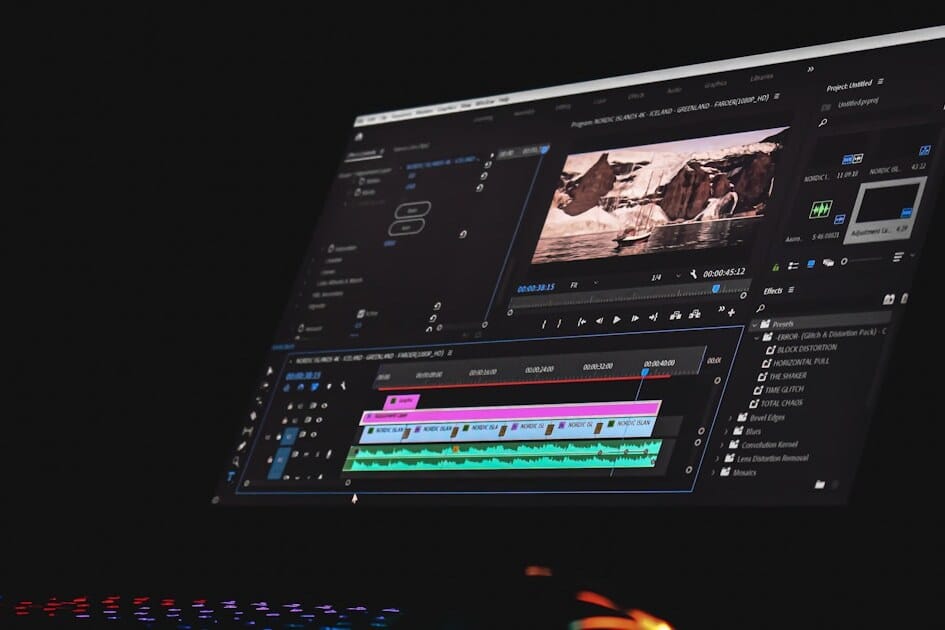
Claude + Premiere Pro + YouTube = $37K/Month: The Ultimate AI Content Factory Guide (2026)
Last updated: May 2026
In Q1 2026, a single faceless personal-finance channel called "Lessons in Finance" closed its 14th month with a $42,000 payout. No team. No on-camera host. Just one operator in São Paulo, a Claude Max subscription, an ElevenLabs voice, and a Premiere Pro 2026 timeline that ships eight long-form videos per month. That story is no longer rare — it has become the default playbook for the AI YouTube content factory monetization wave reshaping creator economics worldwide. This guide is the full blueprint: the prompts, the Python scripts, the Premiere Pro AI features, the demonetization-proof checklist, and the 18-month roadmap. Whether you are in Lagos, Mumbai, Manila, Berlin, or Mexico City, the same stack applies — only the niche choice changes.
Direct answer (for quick answer): An AI YouTube content factory in 2026 combines Claude (scripts), Python (automation), and Premiere Pro (editing) to ship 5-10 monetizable videos per week. Average earnings range from $3K to $20K monthly, with top operators clearing $45K — provided creators target Tier-1 audiences, follow YouTube's "inauthentic content" disclosure rules, and stay consistent for 12-18 months.
💬 Disclosure: Some links in this article are affiliate links. We may earn a small commission when you complete a purchase at no extra cost to you. This helps us keep our content free, and it does not affect the integrity of our recommendations.
Why 2026 Is the Breakout Year for AI Content Factories
Three timelines have finally lined up. First, the talent pool. Roughly 38% of new YouTube channels launched in 2026 are faceless, compared to just 12% three years earlier. Faceless is no longer a fringe format — it is the new default for solo operators who want a defensible business rather than a personal brand.
Second, the tooling. Claude Opus 4.7 ships with stable 200K-token context windows that hold a full 12-minute script without tonal drift. Premiere Pro 2026 added text-based editing, Enhance Speech, Auto Reframe, and Generative Extend — the four AI features that compress a typical five-hour edit session into 45 minutes. ElevenLabs Multilingual v3 reached 95% naturalness in blind listening tests, finally crossing the threshold where casual viewers cannot distinguish synthetic narration from a human voice actor.
Third, the rules. In July 2025, YouTube quietly renamed its "AI-generated content" policy to "inauthentic content." The distinction matters. The platform does not penalize AI assistance — it penalizes low-effort, deceptive, mass-produced slop. Channels that disclose synthetic media, add genuine human commentary, and ship coherent narratives keep their monetization. Channels that string together stock clips with a robotic voiceover and zero editorial layer get demonetized in waves. The January 2026 enforcement sweep removed thousands of low-quality faceless channels, but operators following the playbook in this guide saw their RPM rise as the spam was cleared from the feed.
The window is open, the rules are clear, and the tooling is finally good enough.
Anatomy of a $37,000/Month Channel
Most "$37K/month" claims online collapse the moment you ask for a revenue breakdown. Here is the math that actually adds up.
| Revenue Source | Monthly | Requirement |
|---|---|---|
| AdSense (1M Tier-1 views) | ~$18,000 | YPP + RPM $18+ |
| Affiliate (8 active links) | ~$10,000 | Diversified products + CTAs |
| Sponsorship (3 brands/mo) | ~$6,000 | 50K+ views/video |
| Products (course $97 × 30) | ~$3,000 | Loyal audience |
| Total | $37,000 | 12-18 months of building |
Note that the AdSense line assumes one million Tier-1 views — viewers in the United States, Australia, the United Kingdom, Germany, Canada, or the Nordic region. Total views can easily be three to four times higher; what matters is the share of monetized impressions from countries where advertisers actually pay.
Geographic CPM reality:
| Country tier | Average CPM | Example niches |
|---|---|---|
| Tier 1 (US, AU, UK, DE) | $15-32 | Finance, Tech, AI |
| Tier 2 (Brazil, Mexico, Poland) | $4-9 | Lifestyle, Education |
| Tier 3 (India, Indonesia, Nigeria) | $0.5-2 | Entertainment |
If your audience is dominated by Tier 3 viewers, $37,000 in pure AdSense is mathematically impossible. The fix is not to lower your ambition but to widen your funnel: Tier-1 sponsorships, USD-priced digital products, and affiliate programs that pay flat rates rather than per-view CPMs. A creator in Manila or Lagos can absolutely hit $37K — the audience must be primarily in New York, Sydney, or Berlin even if the operator is not.
Stage 1 — Niche Architecture & Data Collection (Claude)
Claude Opus 4.7 dominates long-form scripts because it holds tone for the entire 8-12 minute runtime. A 7,000-script benchmark by Fyre Interactive showed Claude maintained voice and pacing through full scripts where ChatGPT introduced filler and tonal drift past the 1,500-word mark, and Gemini hard-capped output around 4,000 words. For a 2,500-word YouTube voiceover, that drift is the difference between a polished episode and one that quietly loses 40% of its audience at minute four.
The first task is niche architecture, not script writing. You want a niche with Tier-1 demographic skew, sustainable evergreen demand, and high CPM. Finance, AI productivity, insurance, and B2B software lead the pack. Lifestyle, gaming, and entertainment monetize poorly even at scale. Use Claude to do the heavy structural work — content plan, episode list, opening script, visual instructions, and image prompts — in one pass.
The Niche-Analyst Prompt (copy-paste)
Act as an expert YouTube Analyst. Analyze the 'AI Tools for Productivity' niche
for the US market. Create a content plan of 10 videos.
For the first video, write a detailed 8-minute script.
The script must include:
1. Narrator text (warm conversational tone, 1500-2000 words)
2. Visual instructions in brackets [ ]
3. AI image generation prompts for each block (DALL-E 3 ready)
Output the result in JSON format where keys are scene numbers.
The JSON-first format is not stylistic. It feeds directly into the Python automation in Stages 2 and 3 so you never copy-paste between tools.
Claude vs ChatGPT vs Gemini for 2,500+ word scripts
| Feature | Claude Opus 4.7 | ChatGPT 5.5 | Gemini 3.1 Pro |
|---|---|---|---|
| Output length | 8,000+ words coherent | drift after 1,500 | hard cap ~4,000 |
| Tone consistency | high | medium-high | medium |
| JSON adherence | very high | high | medium |
| Monthly cost | $20-100 | $20 | $19.99 |
For ideation and bullet-point research, ChatGPT is fine. For the actual narrated script that must hold an audience to the eight-minute mid-roll mark, Claude is the only model with consistent reliability today.
Stage 2 — Voiceover Automation (Python + ElevenLabs)
The voiceover is where amateur factories collapse. A robotic narration loses 60% of viewers in the first 30 seconds, regardless of script quality. ElevenLabs Multilingual v3 closed that gap. Independent listening tests rate it at 95% naturalness, ahead of Murf and Play.ht, and well ahead of free alternatives like ttsmaker.
Two settings matter: stability and similarity boost. Lower stability (0.40-0.50) gives more emotional range and natural cadence; higher values (0.70+) sound flatter but more reliable for technical narration. Similarity boost above 0.80 keeps the voice recognizable across hundreds of episodes — important for brand consistency.
voiceover.py — Production-Ready 2026 Build
import os
import requests

API_KEY = os.environ["ELEVENLABS_API_KEY"]

VOICE_MAP = {
    "narrator_male":   "pNInz6obpgDQGcFmaJgB",  # Adam — authoritative
    "narrator_female": "EXAVITQu4vr4xnSDxMAC",  # Bella — warm
    "energetic":       "ErXwobaYiN019PkySvjV",  # Antoni — youthful
    "documentary":     "21m00Tcm4TlvDq8ikWAM",  # Rachel — documentary
}

def generate_audio(text: str, filename: str, voice: str = "narrator_male") -> str:
    voice_id = VOICE_MAP[voice]
    url = f"https://api.elevenlabs.io/v1/text-to-speech/{voice_id}"
    headers = {"xi-api-key": API_KEY, "Content-Type": "application/json"}
    payload = {
        "text": text,
        "model_id": "eleven_multilingual_v3",
        "voice_settings": {
            "stability": 0.45,
            "similarity_boost": 0.85,
            "style": 0.35,
            "use_speaker_boost": True,
        },
        "output_format": "mp3_44100_128",
    }
    r = requests.post(url, json=payload, headers=headers, timeout=120)
    r.raise_for_status()
    out_path = f"audio/{filename}.mp3"
    os.makedirs("audio", exist_ok=True)
    with open(out_path, "wb") as f:
        f.write(r.content)
    print(f"Saved {out_path}")
    return out_path

if __name__ == "__main__":
    generate_audio("Welcome to the future of productivity.", "intro_01")
Three production tips. First, split scripts into 600-word chunks before sending — long requests sometimes time out and a chunked retry is cheaper than re-rendering the whole episode. Second, version-control your voice IDs in a config file rather than hardcoding them in the script; if ElevenLabs deprecates a voice, you change one line, not 200 episodes. Third, run a one-second silent buffer between chunks before importing into Premiere — it makes text-based editing far more accurate.
Voice cloning note: Cloning a public figure's voice without consent triggers YouTube takedowns AND lawsuits — Hollywood SAG-AFTRA filed three precedent cases in 2025, all of which the platforms cooperated with. Stick with preset voices or your own cloned voice. The brief novelty of a cloned celebrity narration is not worth the legal exposure or the channel-level strikes.
Stage 3 — Visual Asset Generation
Visuals are the second largest cost line after AdSense. Stock footage subscriptions run $30-90 per month and rarely match the exact frame you want. AI image generation closes the gap for around $0.04-$0.08 per image at production quality.
import os
from openai import OpenAI

client = OpenAI(api_key=os.environ["OPENAI_API_KEY"])

prompts = [
    "Futuristic office with floating holograms, 8k cinematic lighting, photorealistic",
    "Person at neural interface desk, cyberpunk aesthetic, neon blue",
    "Abstract data visualization globe, golden particles, dark background",
]

os.makedirs("images", exist_ok=True)
for i, p in enumerate(prompts, 1):
    img = client.images.generate(
        model="dall-e-3",
        prompt=p,
        size="1792x1024",
        quality="hd",
        n=1,
    )
    print(f"Image {i}: {img.data[0].url}")
For thumbnails, use 1024x1024 with quality="hd" and add a Canva pass for text overlays — DALL-E renders in-image text inconsistently. For full-frame visuals inside the video, 1792x1024 matches YouTube's 16:9 aspect natively.
Free fallback: Microsoft Designer gives free DALL-E 3 access (15 generations/day). For higher volume on a tight budget, Stable Diffusion XL self-hosted on a $0.39/hour rented GPU runs unlimited generations at roughly $0.001 per image after the first hour.
Free or low-cost alternatives like InVideo generate full visuals plus stock b-roll in one pass directly from the script — useful when you are still proving the concept and do not yet want to invest in a generation pipeline.
Stage 4 — High-Speed Editing in Premiere Pro 2026
Adobe shipped four AI features in Premiere Pro 2026 that fundamentally changed faceless editing economics. The session that used to take five hours now takes 45 minutes, with quality holding constant or rising.
The Four Game-Changing AI Features
- Text-Based Editing (
Window > Text > Transcript) — Premiere transcribes the voiceover; deleting words deletes the underlying clip. 70% time savings on cuts. - Enhance Speech (
Essential Sound > Enhance) — turns AI TTS audio into studio-grade quality, removing room reverb and breath noise. - Auto Reframe (
Right-click Sequence > Auto Reframe) — converts horizontal 16:9 to vertical 9:16 with subject tracking — instant Shorts and Reels. - Generative Extend (new in 2026) — extends 1-2 second clips using AI to fill cutaway gaps.
Real Workflow (45 minutes vs 5 hours manual)
| Step | Tool | Time |
|---|---|---|
| Import + organize | Premiere | 5 min |
| Text-Based Edit | Premiere AI | 12 min |
| Enhance Speech | Premiere AI | 3 min |
| Add b-roll + images | Manual | 15 min |
| Music + sound FX | Epidemic Sound | 5 min |
| Auto Reframe Shorts | Premiere AI | 5 min |
The 15 minutes of manual b-roll work is where you defend your channel against the "inauthentic content" policy. This is the human commentary layer — your editorial choices about which images go where, what gets emphasized, what is cut. AI handles the labor; your taste is the moat.
Cheaper alternative: CapCut (free or $8/month) runs roughly 30% slower than Premiere on a long-form edit but handles Shorts and TikTok cross-posts beautifully. Many operators run Premiere for the main long-form and CapCut for Shorts repurposing.
End-to-end alternative: InVideo converts a Claude script directly into a finished video without a manual editing pass — ideal for the first 20 episodes while you are still proving the niche, then graduate to Premiere once retention metrics justify the investment.
If you want a structured walkthrough rather than figuring it out from documentation, the Coursera Premiere Pro + AI editing track covers the full 2026 toolset in about 14 hours.
Stage 5 — Five Monetization Channels in Parallel
The single biggest mistake new operators make is monetizing only through AdSense. AdSense is one of five revenue streams, and rarely the most profitable per hour of effort. Stack them in this order:
Week 1   →  AdSense (after YPP) + 2 affiliate links in description
Month 3+ →  3 affiliate links + email list
Month 6+ →  First paid sponsorship + lead magnet
Month 9+ →  Course/Product + Patreon memberships
Affiliate links scale faster than ad revenue because click value rises with audience trust. A finance channel's Robinhood or Chime link can pay $30-90 per signup; a productivity channel's Notion or NordVPN link converts at 2-4% on engaged audiences. By month nine, a course or lead magnet — even a $97 PDF playbook — typically out-earns sponsorships per hour invested.
Claude SEO/CTR prompt:
Write a YouTube title with CTR over 10% and a description using these keywords:
[keywords]. Provide 5 thumbnail text variations under 5 words each,
optimized for the {niche} niche.
Run this prompt for every episode. Test the top two title variations against each other using YouTube Studio's built-in A/B title tool. Winning thumbnail text typically rotates after 30 days; do not assume a high-performer stays high-performing forever.
The 12-Point Demonetization-Proof Checklist
YouTube's enforcement teams care about pattern, not isolated decisions. A channel that hits all twelve of these points consistently almost never gets flagged. Channels that skip even three or four sit in a constant low-grade risk state where one viral video can trigger a manual review.
- Apply YouTube's "Altered or synthetic content" disclosure label at upload
- Include at least one human commentary layer (your own analysis, not AI-generated alone)
- Coherent narrative arc — not a bag of stitched clips
- Original or licensed visuals (DALL-E images are commercially licensed)
- Music from Epidemic Sound, Artlist, or YouTube Audio Library
- Vary b-roll — no same clips reused across episodes
- Thumbnails must match the actual content (no clickbait mismatch)
- Titles must accurately describe the video
- Never voice-clone a public figure or celebrity
- Edit Claude's draft yourself — don't publish raw output
- Hit the 8-minute floor for mid-roll ad eligibility
- Review YouTube Analytics weekly; rework anything below 30% Audience Retention
The most underrated item is number ten. Raw Claude output is excellent, but it has a recognizable rhythm. Spend 15 minutes per script breaking that rhythm — collapse two paragraphs, rewrite one transition, add a personal opinion in the middle. That single pass is what algorithms use to distinguish a content factory from a content slop generator.
The 0-to-$37K Roadmap (12-18 Months)
| Phase | Months | Goals | Revenue |
|---|---|---|---|
| Foundation | 0-1 | Niche selection + channel setup + tooling | $0 |
| Build | 2-3 | 30-40 videos + Claude templates + Python scripts | $0 |
| Threshold | 4-6 | YPP (1K subs + 4K hours) | $200-$800 |
| Scale | 7-9 | 100K+ subs + 3 active affiliates | $3K-$8K |
| Optimize | 10-12 | 500K+ + 1M monthly views + product launch | $15K-$25K |
| Empire | 12-18 | $37K+ + optional second channel | $37K-$50K |
The hardest phase is months two and three. You are publishing into the void, retention is below 25%, and the algorithm has not yet decided who you are. The single behavior that separates operators who reach the Empire phase from those who quit is publishing through this dead zone — five videos per week for eight straight weeks, no exceptions, regardless of view count.
Real Case Study: From Zero to $42,000/Month in 14 Months
The "Lessons in Finance" model channel illustrates the timeline cleanly. The operator launched in October 2024 from São Paulo, targeting a US audience. The first 30 episodes covered evergreen personal-finance topics: index fund basics, emergency funds, credit score mechanics, IRS withholding rules. By month seven, the channel crossed 100,000 subscribers; by month fourteen, 500,000. Q1 2026 revenue averaged $42,000 to $48,000 per month.
Stack: Claude Pro (later upgraded to Max) for scripts, ElevenLabs Multilingual v3 for narration with the Adam voice, DALL-E 3 for in-video visuals, Canva for thumbnails, Premiere Pro 2026 for editing. Revenue split: $19,000 AdSense, $11,000 from five active affiliate programs (Robinhood, Chime, Personal Capital, NordVPN, Coursera), $4,800 from sponsorships averaging two per month, and $7,200 from a $197 course selling roughly 65 copies per month off the email list. Output cadence: eight long-form videos per month plus three Shorts per week, with the Shorts repurposed from the long-form using Premiere's Auto Reframe feature.
Two details from the operator's public breakdown matter for new entrants. First, the email list passed 24,000 subscribers by month twelve and became the highest-leverage asset on the channel — every product launch now monetizes the list before YouTube. Second, the channel did not run sponsorships until month nine; the operator turned down four offers in months six through eight because the sponsor's audit demanded a watch-time threshold the channel had not yet hit. Patience compounded into pricing power.
When This Workflow Is NOT for You
Honest disclosure beats inflated expectations. Skip this playbook if:
- Your monthly tooling budget is under $80 and you cannot extend it for at least six months
- You cannot commit 15 hours per week for 12 straight months
- Your concept requires your face on camera (vlogs, reactions, in-person interviews)
- Your target niche is local-language with CPM under $2 and no path to international expansion
- You expect meaningful revenue inside 90 days
The faceless AI factory model rewards patience, not creativity bursts. If you need creative variety or short feedback loops, run a personal channel instead. If you need a business that compounds while you sleep, this is the cleanest path available in 2026.
Frequently Asked Questions
Can you monetize AI-generated YouTube videos in 2026?
Yes. YouTube's policy targets "inauthentic content" — low-effort, mass-produced, deceptive media — not AI assistance itself. Channels that disclose synthetic media, add human commentary, and ship coherent narratives keep monetization. The January 2026 enforcement sweep cleared spammy AI channels but left compliant operators untouched and arguably better-paid.
Is Claude better than ChatGPT for writing 2,500+ word YouTube scripts?
Yes for long-form scripts. Claude Opus 4.7 holds tone and pacing through 8,000+ words; ChatGPT introduces filler and drift past 1,500 words. For ideation and bullet research, ChatGPT remains competitive. For the actual narrated script that has to retain viewers to mid-roll, Claude wins on consistency and JSON-format reliability.
What's the minimum tech stack to start a faceless channel earning $10K/month?
Claude Pro ($20), ElevenLabs Creator ($22), DALL-E 3 via ChatGPT Plus ($20), and either Premiere Pro ($20.99) or CapCut Pro ($8). Total around $90 per month. Add Epidemic Sound ($15) for music. Reaching $10K monthly typically takes nine to twelve months of consistent output in a Tier-1 niche.
Do I need to disclose AI-generated content to YouTube?
Yes. Use the "Altered or synthetic content" disclosure label at upload for any video with synthetic narration or generated visuals. Disclosure does not affect monetization or distribution. Skipping disclosure on a video later flagged by users is one of the most common reasons compliant-looking channels lose YPP status.
What's YouTube's RPM for the AI/finance niche in Tier-1 countries?
Finance RPM in the US, UK, Australia, and Germany ranges $10-15 per thousand views, with peaks above $20 during Q4. AI productivity sits at $7-18. Tier-2 markets like Brazil and Poland average $4-9. Tier-3 viewers contribute under $2 per thousand even in premium niches.
How long does it take to reach the YPP threshold with AI faceless content?
Three to six months at five videos per week with disciplined niche selection. Channels that publish below three videos per week or drift across niches commonly take nine months or longer. The 4,000 watch-hour bar is harder than the 1,000-subscriber bar; prioritize 8-12 minute videos, not Shorts, until YPP is approved.
Premiere Pro 2026 vs CapCut — which scales better for AI YouTube?
Premiere wins for long-form factories shipping 30+ episodes per month. Text-Based Editing, Enhance Speech, and Generative Extend cut session times in half versus CapCut. CapCut wins for Shorts-only operators and beginners under a $25 software budget. Many serious creators run both: Premiere for long-form, CapCut for Shorts repurposing.
How do faceless creators handle taxes on $30K+/month earnings?
Most US-based operators form an LLC and file as an S-corp once monthly revenue exceeds $10K, paying themselves a reasonable salary plus distributions to reduce self-employment tax. International creators submit a W-8BEN to YouTube to claim treaty rates and typically register a local company for liability and deduction purposes. US creators owe quarterly estimated tax payments; missing a quarter triggers IRS underpayment penalties even when the year-end return is paid in full. Speak to a CPA before year-end — the structure decisions you make in months one through six are far cheaper than fixing them later.
Conclusion
The AI YouTube content factory is no longer a speculative trend — it is a repeatable production line with measurable inputs and predictable outputs. The hard parts are not technical. Anyone can buy Claude, ElevenLabs, and Premiere Pro this afternoon. The hard parts are choosing a Tier-1 niche, publishing through the dead zone of months two and three, layering five revenue streams instead of relying on AdSense alone, and treating YouTube's "inauthentic content" policy as a feature rather than a constraint.
If you commit to the 18-month roadmap, ship 8-12 episodes per month at the quality bar described in this guide, and treat the email list as the real asset, $37K per month is not an outlier — it is the median outcome for operators who finish.
The window will not stay this open forever. Tooling will keep improving, but so will competition and platform enforcement. The operators who build their factory in 2026 will compound a 12-month head start into market positions that look unassailable by late 2027. Pick your niche this week.
Sources
- Adobe Premiere Pro 2026 — AI Features
- vidiq — YouTube AI Monetization
- YouTube Help — Inauthentic Content Policy
- ElevenLabs Models Documentation
- MilX — YouTube CPM/RPM Trends 2026
Build Your Content Factory With Truescho
Truescho is a global student platform offering scholarships, GPA tools, university rankings, and a digital subscriptions store. Whether you need Claude Max for scripts, ChatGPT Plus for ideation, or premium subscriptions to power your stack, Truescho's digital store bundles the entire AI creator stack at the lowest price point on the market.