
ChatGPT for Teens: OpenAI's New Under-18 Experience With Study Mode and Parental Controls
Is ChatGPT safe for your teenager to use for homework? As of August 17, 2026, OpenAI's answer is a dedicated product: ChatGPT for Teens, a separate experience for users under 18 that combines a guided Study Mode, homework reminders that redirect shortcut-seeking students, scheduled Study Hours, sensitive-image warnings, and — for the first time in this form — linked parental controls with quiet hours and safety notifications, including new alerts tied to eating disorders. If your child is 13 to 17, or the system estimates they are under 18, they are moved into this experience automatically. No subscription or manual activation is described in the official announcement.
That is the short version parents in Lagos, Manila, Karachi, or Warsaw have been waiting for since AI chatbots became a fixture of teenage life. Now let's look at what each feature actually does, who it applies to, and — honestly — what OpenAI has not yet announced.
Who This Applies To
ChatGPT for Teens is designed for users OpenAI believes are under 18. According to the official announcement, there are two routes into the experience:
- The system's age prediction estimates the user is a minor, or
- The user states their age as between 13 and 17.
In both cases the account is moved into the teen experience automatically. OpenAI has published a separate document on its approach to age prediction, which signals how seriously the company is treating the boundary between adult and teen accounts.
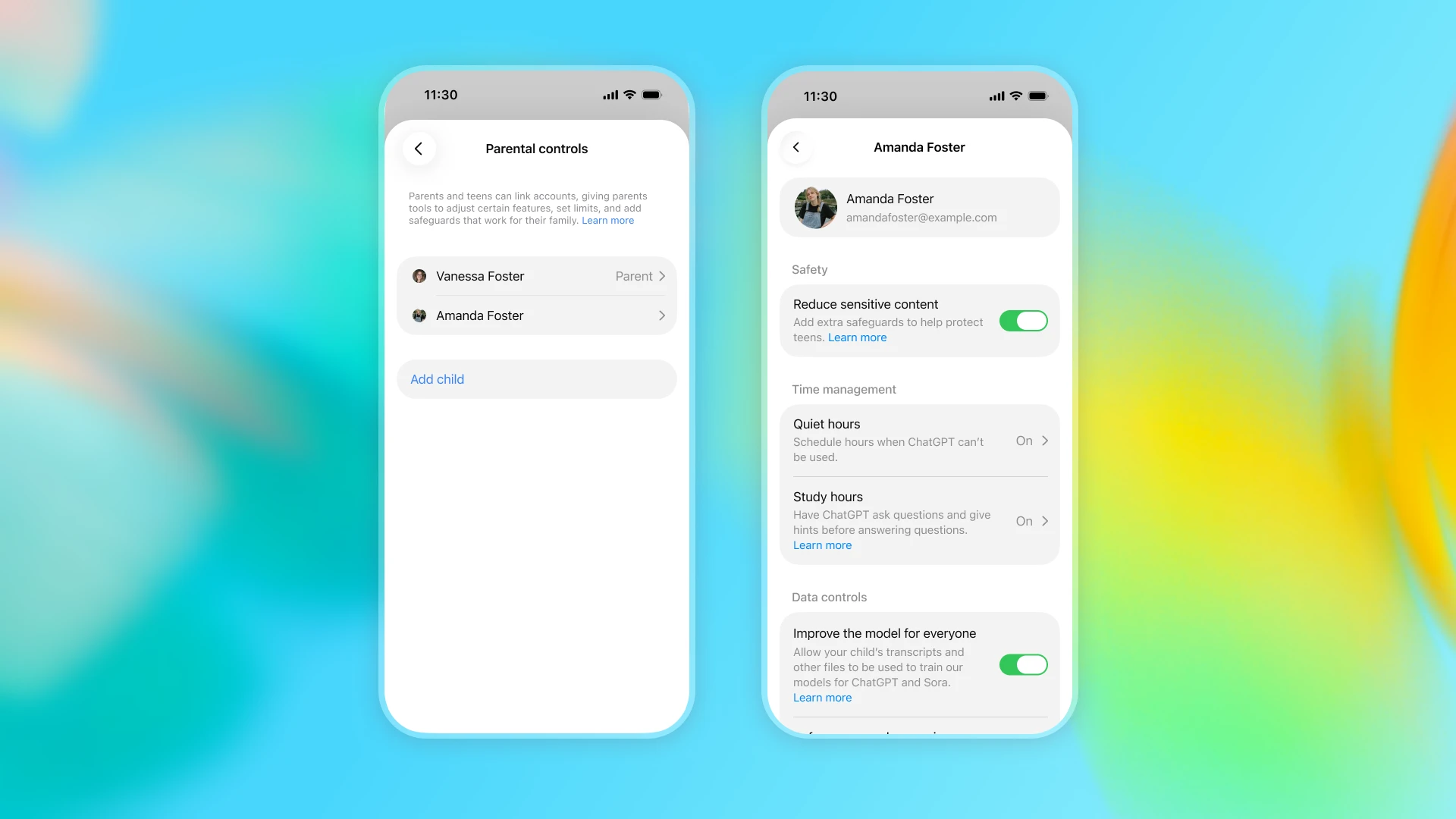
Parents are the second audience. A linked parental account can set "Quiet Hours," manage selected settings, and receive limited safety notifications — a set that now includes new notifications related to eating disorders. Teachers, however, are pointed elsewhere: ChatGPT for Teachers remains a separate product for classrooms and institutions, and OpenAI has kept the two clearly distinct.
What Study Mode Actually Does
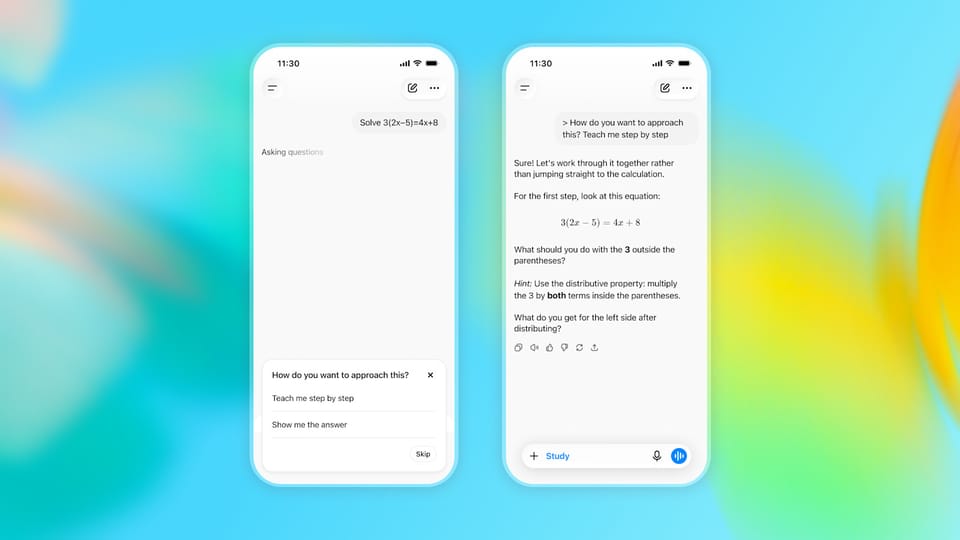
The headline feature for students is Study Mode. Instead of handing over a finished answer — the behavior that made teachers and parents nervous for three years — Study Mode asks guided questions and offers step-by-step support. The teen has to think through the problem with the assistant rather than copy a result.
Alongside it, OpenAI introduced a set of features squarely aimed at the homework wars:
| Feature | What it does | Who controls it |
|---|---|---|
| Study Mode | Guided questions and step-by-step help instead of direct answers | Teen, with scheduled defaults |
| Homework reminders | Detects shortcut or cheating attempts and redirects to Study Mode | Automatic |
| Quizzes & learning visualizations | Turns material into practice quizzes and visual aids | Teen |
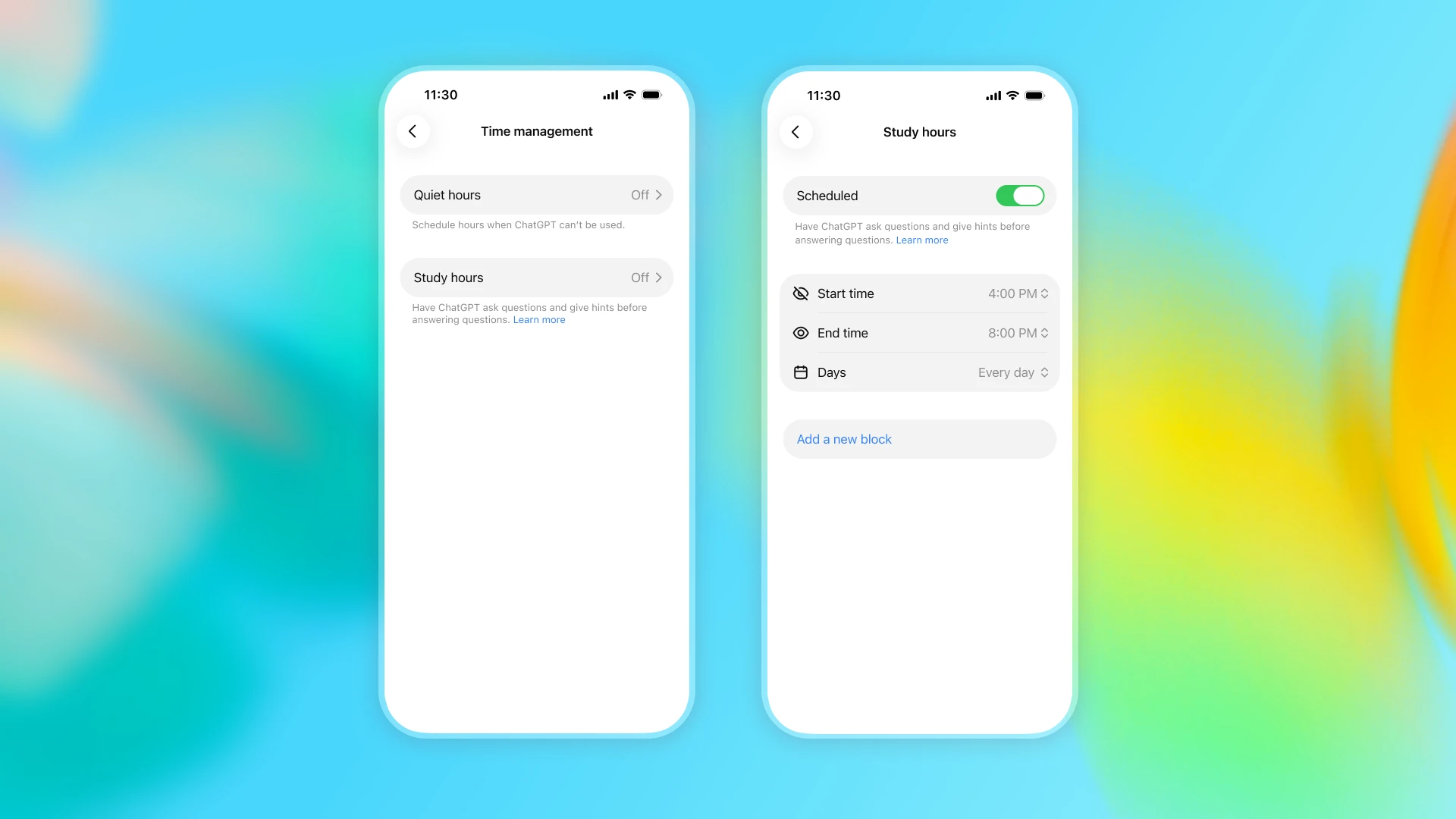
| Study Hours | Scheduled times when Study Mode becomes the default | Teen / parent settings |
| Break reminders | Prompts rest during long sessions | Automatic |
| AI awareness notices | Reminds the user they are talking to an AI | Automatic |
| Sensitive-image warnings | Flags photos (like handwritten homework) containing personal information | Automatic |
The homework reminder is the most consequential row in that table. OpenAI says the system watches for attempts to cut corners or cheat and steers the student back into Study Mode. That is a meaningful change from the standard chatbot behavior international students know — and it is exactly the gap teachers in India, Nigeria, and Indonesia have complained about most loudly.
Source: OpenAI's official announcement
The Protections Underneath
Beyond study features, OpenAI describes age-appropriate handling of several high-risk categories: self-harm, violence, eating disorders, dangerous activities, and explicit content. These protections are not ad hoc — they are anchored in published documents:
- The Model Spec updated with teen protections
- A dedicated Teen Safety Blueprint
- GPT-5.6 safety cards for under-18 users, covering disallowed content
- An Under-18 Model Spec dated August 18, 2026
There are also softer touches: onboarding written for teenagers, and personalization options including colors and sounds, so the experience does not feel like a locked-down school terminal.
Questions Parents Are Actually Asking
Is ChatGPT for Teens free?
OpenAI's announcement does not mention pricing for the teen experience, and it does not describe any paid tier or subscription requirement. The company has not announced whether any features will sit behind a paywall. Treat any claim about cost — free or paid — as unconfirmed until OpenAI publishes pricing details.
How does ChatGPT know a user is under 18?
OpenAI uses age prediction to estimate whether a user is a minor, and users can also state their age as 13–17. Either path moves the account into the teen experience. The company has published a separate explanation of its age-prediction approach, but the announcement does not detail the technical method or its accuracy rate.
Does Study Mode actually stop cheating?
It makes cheating harder, not impossible. Homework reminders detect shortcut and cheating attempts and redirect the student into Study Mode, where the assistant asks guided questions instead of giving answers. OpenAI has not published data on how often the detection works or how it handles determined workarounds.
How do parents set up parental controls?
A parent links their account to the teen's account. From there they can set Quiet Hours, manage selected settings, and receive limited safety notifications, including the new eating-disorder-related alerts. OpenAI documented the parental controls system separately, and the announcement does not specify device or platform requirements.
What is the difference between ChatGPT for Teens and ChatGPT for Teachers?
They are separate products. ChatGPT for Teens is the under-18 experience with Study Mode and parental controls; ChatGPT for Teachers is aimed at classrooms and institutions. A teacher managing students and a parent managing a child use different tools, and OpenAI has kept the product boundaries explicit.
The CodeAI Partnership
One surprise inside the announcement is a "signing partnership" between OpenAI and CodeAI. The stated goal is giving students and teachers tools and resources to teach teenagers how AI works, how to direct it, how to question it, and how to innovate with it. That is a literacy agenda, not just a safety one — closer to how coding platforms rolled out classroom programs than to a simple parental lock. OpenAI published the partnership separately, which suggests more education-related announcements may follow.
Source: OpenAI's official announcement
Quick Comparison: Regular ChatGPT vs ChatGPT for Teens
| Aspect | Regular ChatGPT | ChatGPT for Teens |
|---|---|---|
| Answer behavior | Direct answers available | Study Mode guides step by step |
| Cheating attempts | Not specifically intercepted | Homework reminders redirect to Study Mode |
| Parent involvement | Parental controls exist separately | Linked accounts, Quiet Hours, safety notifications |
| Sensitive images | Standard handling | Warnings before sharing photos with personal info |
| Onboarding | General | Teen-specific, with personalization |
| High-risk topics | General safety policies | Age-appropriate handling for self-harm, violence, eating disorders |
What This Means for You
For families outside the United States, the practical question is availability — and here honesty matters: OpenAI has not announced a list of countries or platforms for ChatGPT for Teens in its announcement. The company has not published a rollout timeline by region. If you are reading this in Nigeria, India, the Philippines, Indonesia, Pakistan, Brazil, Vietnam, Eastern Europe, or the Middle East, do not assume the experience is live for your teen's account today; watch OpenAI's official channels for regional confirmation.
What you can do now is prepare: know that the teen experience is automatic rather than opt-in, understand which settings a linked parent can manage, and talk with your teenager about Study Mode before it arrives. Students preparing for competitive exams — JAMB in Nigeria, board exams in India, national assessments in Vietnam and Indonesia — arguably benefit most from a tool built to coach rather than to complete. If you are mapping out what to study this year, Truescho's course listings can help you pair AI-assisted study with structured learning programs.
For readers following OpenAI's broader trajectory, the teen experience arrives alongside the GPT-5.6 launch, which we covered in our GPT-5.6 launch report, and the August update that brought the free Luna model, covered in our GPT-5.6 Sol and Luna report.
What OpenAI Has Not Announced
An honest assessment requires listing the gaps:
- Country availability — no list of supported countries has been published.
- Platform support — the announcement does not specify apps, web, or operating systems.
- Pricing — no cost information was given.
- Rollout timing — no detailed schedule, phased or otherwise.
- Language coverage — OpenAI has not announced any language-specific support for the teen experience.
- Detection accuracy — no data on how reliably cheating detection or age prediction works.
None of this makes the announcement hollow; it makes it early. The product exists, the safeguards are documented, and the parental architecture is real — but the operational details are still to come.
Where This Leaves Families
OpenAI has effectively conceded the argument parents and teachers have been making since 2023: a general-purpose chatbot is the wrong tool for a 14-year-old's homework. ChatGPT for Teens replaces it with something narrower and more deliberate — an assistant that asks questions back, watches for shortcuts, schedules study time, warns before sensitive photos are shared, and reports a limited but real picture back to a linked parent. The eating-disorder notifications and the age-appropriate handling of self-harm content show the company engaging with the darkest parts of the teen-internet problem rather than only the exam-honesty parts. The unanswered questions — which countries, which platforms, what price, when — will decide whether this reaches teenagers in Jakarta and São Paulo as reliably as it reaches those in Ohio. Until OpenAI fills in those blanks, treat ChatGPT for Teens as a direction, a genuinely promising one, rather than a finished global product. The families who benefit first will be the ones paying attention now.