
Bill Gates' AI Memo: Robot Taxes, 'Human Reserved' Jobs and the Case for Acting Now
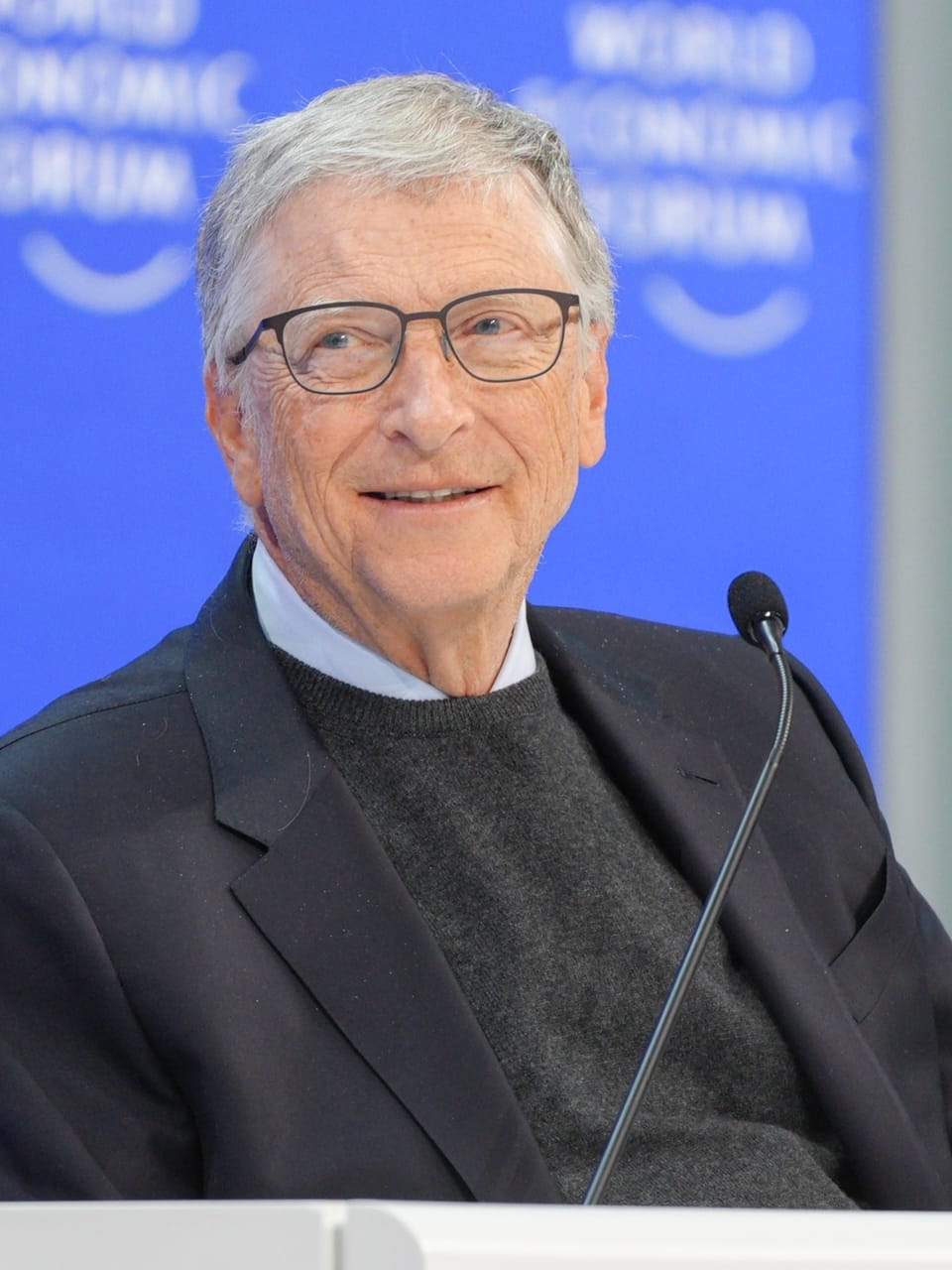
On August 26, 2026, Bill Gates published a roughly 6,000-word essay on his personal blog, Gates Notes, titled "The choices we make about AI now are critical" — his most comprehensive intervention to date in the debate over artificial intelligence and its impact on work and society. The thesis fits in one line: "AI will either be the greatest equalizer ever invented, or the worst source of injustice." Between those two outcomes, Gates lays out a practical policy agenda headlined by a tax on AI tokens and robots for companies that replace workers with machines, and a new category of "Human Reserved" jobs from which automation would be barred no matter how technically capable it becomes. The memo is not passing news; it is a reference document that will be cited for years in education and labor-market debates. This guide explains it in full, without destructive shortcuts.
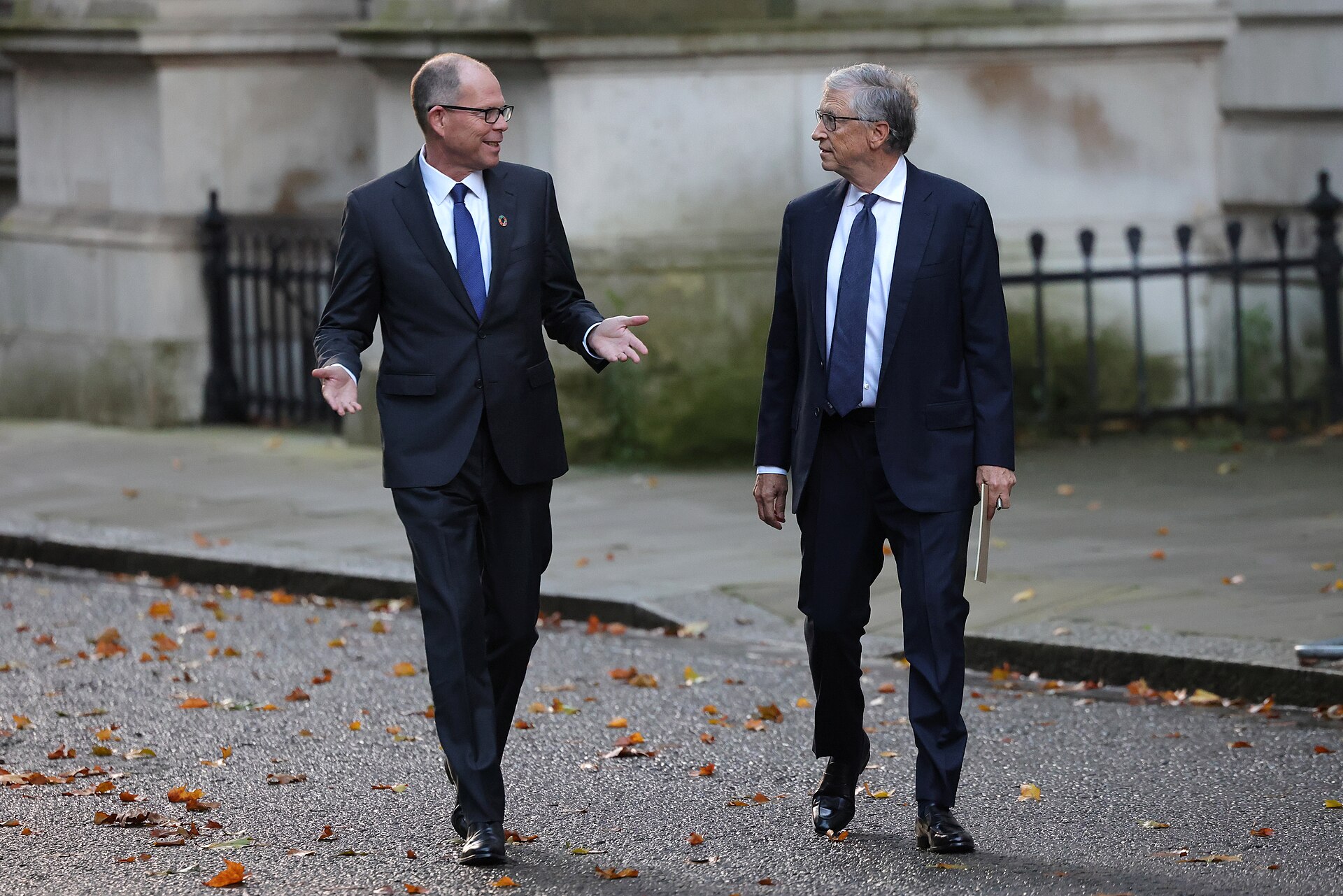
Source: Wikimedia Commons — official photo from the Downing Street session

Why This Memo Deserves a Full Read
Three things separate this document from the usual stream of tech-elder warnings. First, the author is not a spectator: Gates built the personal-computing revolution from inside Microsoft and lived through the economy's transition to software, so his comparison of the AI shift is drawn from experience rather than theory. Second, his position is centrist in a precise sense: he rejects the optimistic marketing that paints the technology as costless abundance, and simultaneously rejects the pause-and-slow-down letters signed by employees at AI companies — he finds the ideas behind "Pacing the Frontier" reasonable but doubts their sustainability in practice. Third, the memo offers concrete, debatable policy tools: new institutions, taxes, and job classifications that any government — including those across the Middle East, Africa, and Southeast Asia — could discuss and adapt.
One distinction worth holding onto: Gates speaks neither as a government official nor as someone selling AI models today, yet he remains one of the world's largest philanthropic funders in health and education. That vantage point shows clearly in his examples, which are built on field visits in Africa rather than office reports.
"This Time Really Is Different": The Core Argument
Gates devotes a full section to answering the most common rebuttal to AI anxiety: "You said the same about computers and the internet, and those technologies created more jobs than they destroyed." His reply is that the comparison hides a decisive temporal difference. The "computer in every home" revolution needed decades to spread: software matured slowly, prices declined gradually, and people and organizations learned the new tools at a pace that let society absorb the change. AI, by contrast, spreads through devices and systems people already own — the phone, the browser, the work inbox — so it requires no new infrastructure and no new buying cycle. Its impact therefore reaches entry-level and mid-level jobs at a speed without precedent, and ahead of the education and retraining systems completing a single turn of their own cycle.
His conclusion: absent early government intervention, the most likely outcome is a net-negative transition for a wide band of workers — not because the technology is malicious, but because the pace of diffusion is outrunning the pace of social adaptation.
The Three Risks the Memo Is Built On
First: Many jobs will disappear forever
Gates invokes a sobering historical figure: at the peak of the Great Depression in 1933, US unemployment stood at roughly 25 percent. His point is not that AI will repeat the Depression, but that a society accustomed to gradual recovery after technological shocks will this time face a wave of job elimination that outpaces the creation of replacements. What worries him most is the disappearance of the bottom rung of the ladder: if machines take over the entry-level tasks in programming, accounting, design, and customer support, where does a fresh graduate learn the craft at all? A ladder without a first rung cannot be climbed. He names fields he expects to be disrupted within the next decade — medicine, law, middle management, and manufacturing — alongside the sales, support, and software-engineering roles highlighted in press coverage of the memo.
Second: Greater capacity to do harm
The second risk is security-shaped. The same tools that accelerate drug discovery can lower the barrier to designing pathogens; the capability that finds software vulnerabilities to patch them can exploit them for attack. Gates paints a picture of the infrastructure at risk: hospitals, financial institutions, water systems, power grids, and systems for distributing government benefits. When those systems are attacked, the first losers are not the companies but the patients, customers, and benefits recipients. Notably, he concedes an explicit failure: society has not yet managed to separate dangerous capabilities from benign usage, and that problem extends beyond any single company.
Third: Gains flow to those who already have
The third risk is distributive injustice. Those who already hold capital, data, and computing capacity are best positioned to harvest the productivity gains first, while frontline workers in developing countries and vulnerable communities pay the price in reduced jobs and compressed wages. That is precisely why Gates argues the question "who benefits, and who suffers" should be the world's top priority rather than an afterthought at the bottom of the agenda.
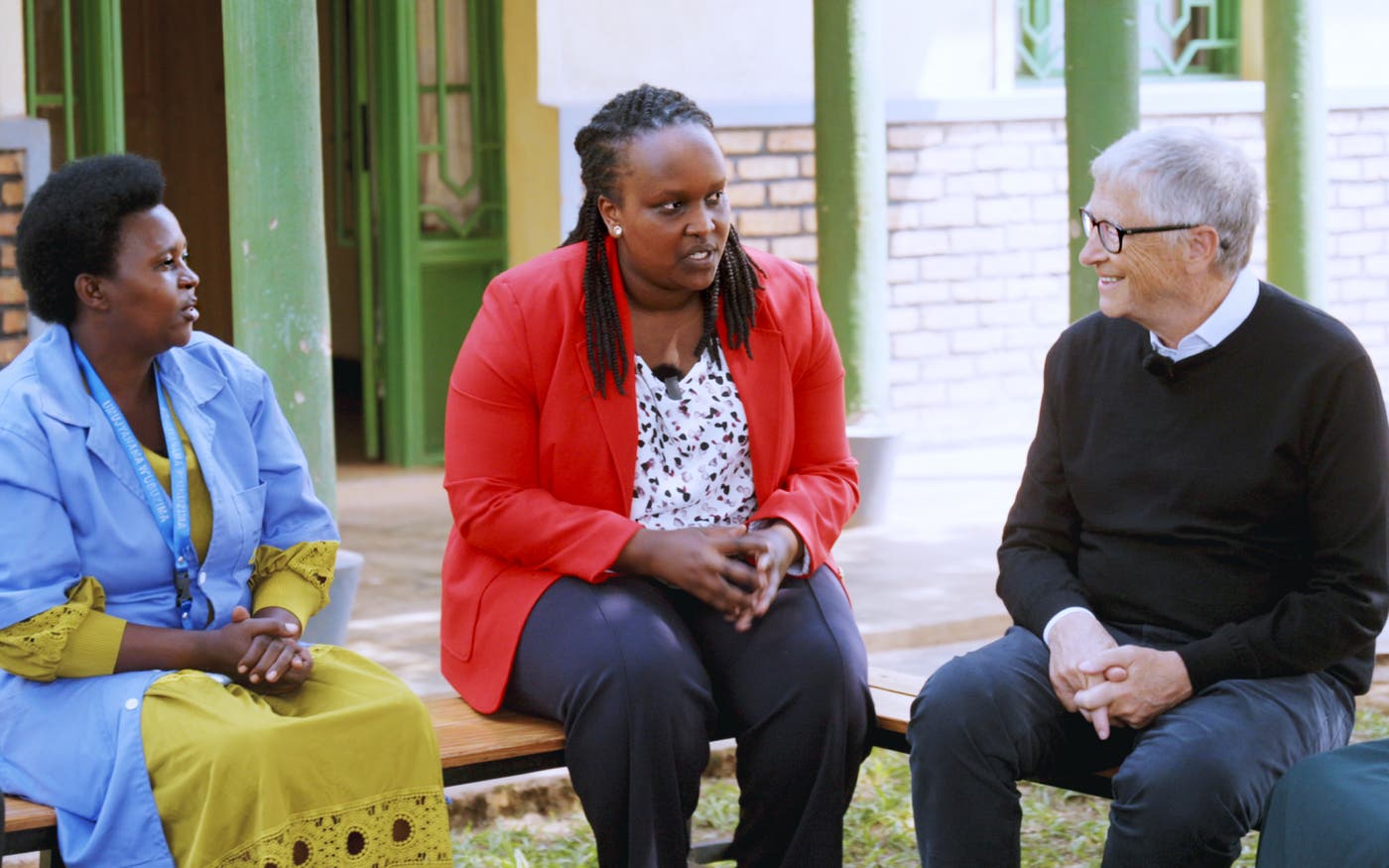
Source: Gates Notes — image from the published essay
The Other Side: "The Good Things Could Be Very, Very Good"
To be fair, the memo is not a doom prophecy. Gates sees historic openings in healthcare, education, agriculture, scientific research, government services, and small-business enablement, and he anchors the optimism in a concrete Rwandan example: the country has about one health worker per 1,000 people against a WHO recommendation of roughly four, and at the current pace of progress the gap would take some 180 years to close. There, the Ministry of Health — as part of its 4x4 reform initiative — has launched an AI-powered Health Intelligence Center to compress that timeline from centuries to years. The equation he draws is plain: the same technology that threatens a ticket clerk's job can bring a specialist within reach of a remote village, and the final outcome depends on policy, not on code.
"Human Reserved" Jobs: The Most Debated Idea
The concept that dominated global coverage of the memo is Human Reserved. The idea: just as societies create nature reserves — places where we could build roads and buildings but choose not to because the loss would outweigh the gain — communities can designate jobs and social roles "for humans only," however capable the machine becomes. His most personal illustration comes from his own life: his father died of Alzheimer's in 2020, and in the later stages of the illness, paid caregivers understood him day and night even when he struggled to express hunger or pain. Gates writes: "Something in the care they gave my dad was irreplaceably human. No robot could or should have done it."
He classifies the motives for reservation into two kinds: economic — when allowing machines to take over a role would displace large numbers of people who cannot easily change jobs, like the 55-year-old construction worker who cannot simply be told to find fulfillment in elder care — and ethical-human, such as who delivers a terminal diagnosis: "There's no technical reason why a robot couldn't do that. Yet it shouldn't." He expects education and mental healthcare to become hybrid domains: a responsible human professional directing the technology to extend their reach rather than being replaced by it.
He also concedes open questions without ready answers: Who decides what gets reserved? By what criteria? How do you stop companies from cheating and using robots anyway? And what happens to international trade when one country permits automation and another does not? These questions, he writes, must be settled in open democratic deliberation involving legislators, educators, health workers, and local communities — not in corporate boardrooms.
The Robot-and-Token Tax: Recalibrating the Incentives
The second proposal concerns money. Gates observes that most countries' tax systems actively push employers toward replacement: when you hire a human, you pay payroll taxes and social contributions on their wages; when you buy a robot or an AI subscription, you typically write it off immediately as a business expense. In other words, the public treasury funds itself from human labor while exempting its machine replacement. His remedy is blunt: "I believe we should tax AI tokens and robots." A tax would slightly slow the rush away from human labor and simultaneously raise revenue to fund retraining and a stronger safety net for those who do lose their jobs. He notes that he proposed a robot tax years ago and the reaction was mostly bafflement, and that he remains a big proponent even though it is not the whole solution — one part of a wise response.
Note the subtle difference in press coverage: some outlets called it a "robot tax," others a "token tax," and the original text combines both — a tax on AI tokens and on robots — deliberately, so the levy does not burden lightweight software uses of AI while heavy physical automation escapes untouched.
The Three-Part Plan: Institutions, Reservations, and Taxes
The memo gathers its proposals into one integrated plan:
- Build a new institutional system to manage the transition, nationally and internationally, because the challenge is structural to how the economy is organized rather than a passing crisis — and because building it will take years, the work must start now, before the damage lands.
- Set aside Human Reserved positions in a framework that evolves, beginning with protecting specific jobs now and phasing AI in over years or decades with an explicit commitment to preserve a share of work for people.
- Rebalance taxation between labor and capital so the system no longer financially rewards an employer every time a worker is swapped for a machine.
He closes by defining his own role: through his foundation he will support the research and dialogue paths that move these solutions forward, describing the task as "monumental" but achievable if started now, because "this unprecedented technology demands an unprecedented global response."
What the Memo Means for Readers Worldwide
- For a student choosing a major: the "Human Reserved" logic offers a practical planning lens. Fields that combine technical skill with an irreducibly human touch — clinical medicine, nursing, teaching, psychological counseling, educational leadership — will need people even in the most pessimistic scenarios, while fully documentable routine roles are the most exposed. Compare Gates' warnings with international demand projections in our analysis of the fastest-growing jobs of 2030 according to the WEF report.
- For working professionals: the memo's message is not "give up" but "reskill before you must." Those who develop supervisory, editorial, and evaluative skills over AI tools move from the exposed column to the beneficiary column.
- For employers in the Gulf and emerging markets: the tax argument concerns you directly. Governments across the region are studying AI governance as part of national transformation programs, and the debate over balancing employment incentives against automation will reach regional legislation sooner or later — early planning beats late compliance.
- For governments: the Rwandan model presented in the memo is an example of leapfrog gains in health and education with cost-conscious AI, worth studying for markets with similar capability constraints.
- For families and communities: the idea that a human being should remain the one present in life's decisive moments — the doctor, the teacher, the caregiver — is not sentimental luxury; the memo defends it with explicit economic instruments.
Quick Comparison: Gates vs Other Prominent Positions
| Position | Diagnosis | Proposed remedy | Dominant trait |
|---|---|---|---|
| Bill Gates (this memo) | Disruption outpacing adaptation; high odds of distributive injustice | New institutions + reserved jobs + token/robot tax | Early institutional reform |
| Employee letters ("Pacing the Frontier") | Reckless race sacrificing safety | Slowing frontier capability development | Direct technical caution |
| Prevailing industry narrative | Gains will diffuse automatically over time | Accelerate deployment; let markets distribute benefits | Marketing optimism |
| "Redistribute later" positions | Acknowledge harm, defer treatment | Post-damage compensation programs | Reactive, not anticipatory |
Gates himself summarizes his stance toward the second camp: he agrees with the spirit of the call but does not trust its durability, which is why he substitutes preparation for deceleration.
Honest Weaknesses and Criticisms
For the reader's fairness, the memo is not beyond critique. First, Gates offers no implementation mechanism for the token tax: how it is measured, on whom it is levied, and how evasion across jurisdictions is prevented. The questions he admits he cannot answer are exactly the ones that will determine whether the proposal is serious. Second, "Human Reserved" jobs face a global commercial dilemma: a country that protects jobs may raise its production costs against competitors, and press coverage noted that both proposals together "would put a serious dent in the profits of the major labs" — one reason they have not been fashionable. Third, the examples lean American and African; readers in other regions will need local translation of the concepts into labor-market legislation that fits their circumstances. Fourth, the historical record so far favors the view that general-purpose technologies ultimately created jobs nobody imagined, and the debate over whether this time is genuinely different remains open.
Frequently Asked Questions
What is Bill Gates' AI memo and where was it published?
A roughly 6,000-word essay Gates published on his personal blog Gates Notes on August 26, 2026, titled "The choices we make about AI now are critical," part of his "An epochal shift" series.
What does "Human Reserved" mean?
Jobs and social roles that communities deliberately keep for humans only, regardless of machine capability — either to protect workers who cannot easily retrain, or for human reasons such as keeping the delivery of difficult medical news in human hands.
Does Gates want a tax on using AI?
Yes. He proposes taxing AI tokens and robots, with the revenue funding worker retraining and a stronger social safety net, replacing the current system that exempts the machine alternative while taxing human employment.
Does Gates expect mass unemployment from AI?
He expects many entry- and mid-level jobs to disappear faster than society can adapt, and considers a net-negative transition highly likely unless governments intervene early with the institutions and policies he details.
How relevant is this to labor markets outside the US?
The ideas transfer directly to AI-governance debates anywhere: balancing tax incentives between employment and automation, protecting human-facing roles in education and health, and steering students toward automation-resistant fields.
The Practical Takeaway
The memo's value lies not in its forecasts but in its instruments: a tax that redraws incentives, a job reservation that protects what is irreplaceable in human experience, and institutions that start today instead of tomorrow. For the individual reader the message is one line: the difference between "the worst source of injustice" and "the greatest equalizer ever invented" is decided less by model efficiency than by who prepares for the transition before it peaks. Start with yourself, your students, and your organization: explore scholarships and opportunities in future-resilient fields, read our analysis of Hugging Face's State of Open Models summer 2026 report to understand the technical side of the equation, and browse the AI courses that changed professional productivity this year.