
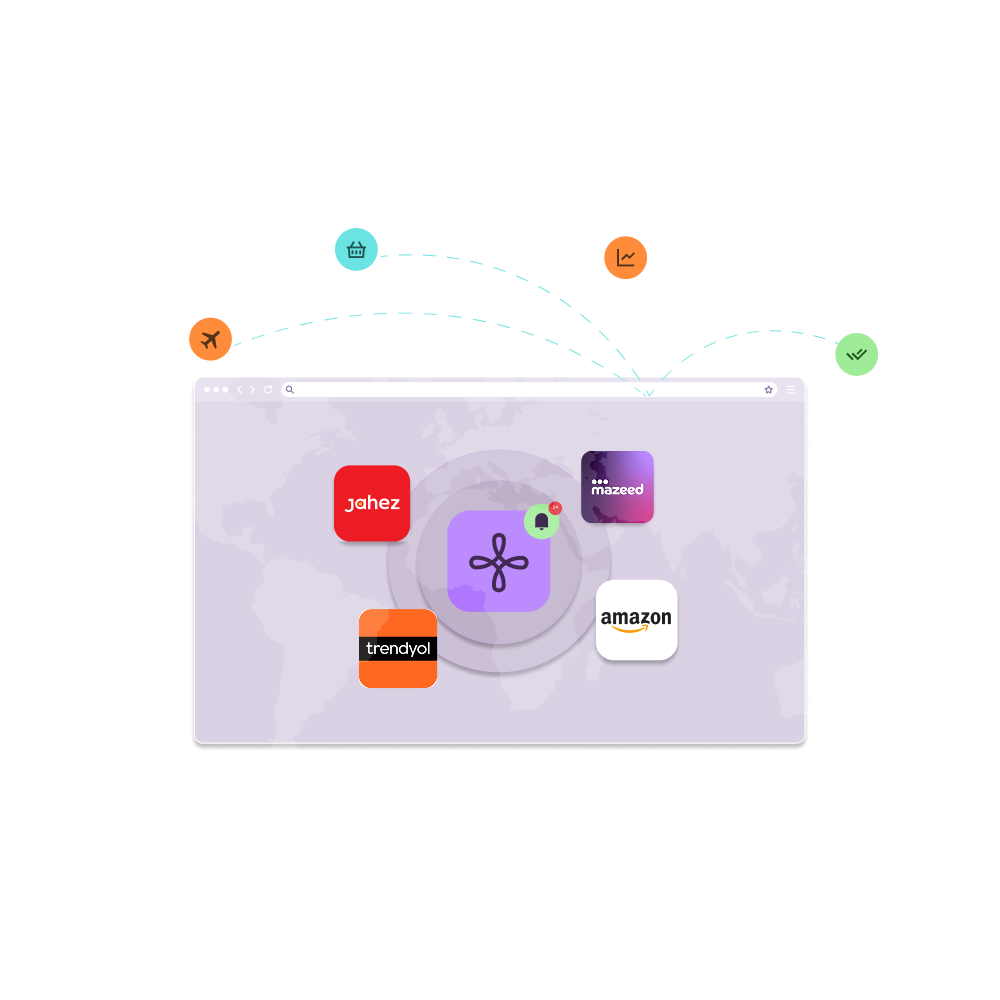
Best E-Commerce Platforms in Saudi Arabia 2026
Imagine you are a business owner in Dubai who has been selling kitchenware through a physical store for six years. Your Saudi customers keep asking for an online option, and you keep hearing that Saudi Arabia is the fastest-growing e-commerce market in the region. You know the opportunity is real, but every time you start researching platforms, you hit a wall of unfamiliar names: Salla, Zid, Mada, Tabby, Tamara. Which platform actually works for a business entering Saudi Arabia from outside? What does it cost? And critically, can you serve Saudi customers without opening a local entity?
This guide answers all of those questions. Saudi Arabia's e-commerce market reached $13.2 billion in 2025 and is projected to hit $24 billion by 2028, driven by Vision 2030 digital transformation initiatives and a population where 80% of adults shop online monthly. For international businesses, the Saudi market offers one of the highest online spending rates in the Middle East. But succeeding requires choosing the right platform, supporting the right payment methods, and understanding local consumer behavior.
Step 1: Understand the Saudi E-Commerce Landscape
Before choosing a platform, you need to understand what makes Saudi e-commerce different from other markets.
Vision 2030 and digital transformation. The Saudi government has invested heavily in digital infrastructure as part of its Vision 2030 program. The Saudi Central Bank (SAMA) launched the instant payment system SARIE-Instant and the national payment system Mada, which now processes over 70% of all online transactions in the country. The government has set a target of 70% digital payments across all commerce by 2025, and early data suggests this target has been met.
Consumer behavior. Saudi consumers are mobile-first, price-sensitive, and highly responsive to Buy Now Pay Later (BNPL) options. Approximately 38% of all e-commerce transactions still use Cash on Delivery (COD), though this percentage is declining year over year as digital payment adoption accelerates. Saudi shoppers expect Arabic-language interfaces, fast local shipping (2-3 days), and the ability to pay using local methods.
Regulatory environment. To sell to Saudi consumers, you need a commercial registration (CR) and VAT registration if your annual revenue exceeds 375,000 SAR (approximately $100,000). The standard VAT rate is 15%. If you are selling from outside Saudi Arabia, you can use cross-border e-commerce, but you will face import duties and longer delivery times.
Step 2: Compare the Three Leading Platforms
Three platforms dominate Saudi e-commerce: Salla, Zid, and Shopify. Each has distinct strengths, pricing models, and target audiences. Here is a detailed comparison to help you choose.
Salla
Salla is the homegrown champion of Saudi e-commerce. Founded in 2018 in Jeddah, it has grown to power over 100,000 active stores, making it the largest Saudi-built e-commerce platform. Salla is designed specifically for the Saudi market, with built-in support for Mada payments, Arabic-first design, COD management, and integration with every major Saudi shipping company.
Pricing (2026):
| Plan | Monthly Cost (SAR) | Monthly Cost (USD equiv.) | Transaction Fee | Key Features |
|------|-------------------|--------------------------|-----------------|--------------|
| Free (Salla Partner) | 0 | $0 | 2% per sale | Basic store, Mada payments, COD, Arabic/English |
| Plus | 99 | ~$26 | 1.5% per sale | Custom domain, advanced design, abandoned cart |
| Pro | 249 | ~$66 | 0.75% per sale | Multi-branch, loyalty programs, API access |
| Premium | 499 | ~$133 | 0% | Zero transaction fees, dedicated support, custom integrations |
Strengths: Native support for all Saudi payment methods out of the box. COD management is built-in, including partial payment collection and courier integration. Arabic-first design that resonates with local consumers. Deep integration with Saudi logistics providers (SMSA, Aramex, SPL). The Salla app marketplace includes over 200 apps built specifically for Saudi merchants.
Weaknesses: Limited international expansion. If you want to sell in the UAE or Egypt, Salla's multi-region features are still developing. The design templates are less polished than Shopify's. Custom development requires working within Salla's proprietary framework.
Best for: Saudi-first businesses, local retailers expanding online, and any business that wants the deepest possible integration with Saudi payment and logistics infrastructure.
Zid
Zid is Salla's primary Saudi competitor, launched in 2020 with backing from STC (Saudi Telecom Company). Zid positions itself as the more developer-friendly and design-forward option, with a robust app marketplace and open API architecture.
Pricing (2026):
| Plan | Monthly Cost (SAR) | Monthly Cost (USD equiv.) | Transaction Fee | Key Features |
|------|-------------------|--------------------------|-----------------|--------------|
| Starter | 69 | ~$18 | 1.99% per sale | Basic store, Zid Payments, COD, single admin |
| Growth | 249 | ~$66 | 1.99% per sale | Multi-admin, abandoned cart recovery, advanced reports |
| Plus | 449 | ~$120 | 1.99% per sale | Custom checkout, subscription products, loyalty programs |
| Advanced | 949 | ~$253 | 1.99% per sale | Dedicated server, priority support, custom development |
Strengths: The most developer-friendly Saudi platform, with full API access on all plans. Beautiful, modern design templates that rival Shopify aesthetics. Strong integration with Tabby and Tamara (BNPL). Multi-vendor marketplace capabilities on higher plans. The Zid Partner program offers certified developers for custom builds.
Weaknesses: The 1.99% transaction fee applies to all plans, even the most expensive one, which makes Zid pricier than Salla at scale. Smaller app marketplace than Salla (approximately 120 apps vs. 200+). COD management is available but less sophisticated than Salla's implementation.
Best for: Design-conscious brands, businesses that need custom development, and merchants who want a more modern aesthetic while staying on a Saudi platform.
Shopify
Shopify needs no introduction. As the world's largest e-commerce platform, it powers over 4 million stores globally and has a growing presence in Saudi Arabia. Shopify supports Arabic language, Saudi Riyal pricing, and integrates with most major Saudi payment gateways through third-party apps.
Pricing (2026):
| Plan | Monthly Cost (USD) | Transaction Fee | Key Features |
|------|-------------------|-----------------|--------------|
| Basic | $29 | 2% (if not using Shopify Payments) | Full store builder, unlimited products, 2 staff accounts |
| Shopify | $79 | 1% | Gift cards, abandoned cart recovery, 5 staff accounts |
| Advanced | $299 | 0.5% | Advanced reporting, calculated shipping rates, 15 staff accounts |
Saudi payment integration: Shopify integrates with Mada, Tabby, and Tamara through third-party apps and payment gateway extensions. However, setup is more complex than Salla or Zid, and some features require technical configuration. Shopify Payments (Shopify's native processor) is not fully available for Saudi-based merchants as of 2026, meaning most Saudi Shopify stores use third-party gateways.
Strengths: The largest ecosystem of apps, themes, and integrations in e-commerce. Works in nearly every country. Excellent scalability from your first sale to millions in revenue. Multi-channel selling (Instagram, TikTok, Google, Amazon) built into the platform.
Weaknesses: Not Saudi-specific. COD requires apps and manual configuration. Mada payment integration requires third-party setup. Total cost of ownership is higher when you add premium apps and themes. Arabic RTL (right-to-left) support is available but some third-party themes do not handle it well.
Best for: International brands entering Saudi Arabia, businesses that plan to expand beyond Saudi Arabia to other markets, and companies that already use Shopify globally.

Source: Truescho
Step 3: Understand Saudi Payment Methods
Choosing a platform is only half the equation. If you cannot accept the payment methods Saudi consumers expect, your conversion rates will suffer dramatically. Here is what you need to know about each payment method.
Mada
Mada is Saudi Arabia's national payment network, similar to Interac in Canada or PIN debit in the US. Over 30 million Mada cards are in circulation, and it processes the majority of online transactions in the country. Mada transactions are instant, secure, and carry lower merchant fees than international credit cards.
- Merchant fee: 0.75-1.0% per transaction (significantly lower than credit card rates)
- Consumer cost: Free
- Supported by: Salla (native), Zid (native), Shopify (via third-party gateway)
- Requirement: Saudi commercial registration and a Saudi bank account
Tabby
Tabby is the leading BNPL provider in Saudi Arabia, allowing consumers to split purchases into 4 interest-free payments. Tabby is integrated directly at checkout and pays the merchant the full amount upfront minus a fee.
- Merchant fee: 3.5-5% per transaction (merchant absorbs the BNPL cost)
- Consumer cost: Free for the buyer
- Supported by: Salla (native app), Zid (native), Shopify (via app)
- Average order value impact: Merchants typically see a 20-30% increase in AOV when BNPL is available
Tamara
Tamara is Tabby's primary competitor in the Saudi BNPL market, backed by over $200 million in funding. It offers similar functionality (pay in 4 installments) and has grown rapidly since launching in 2020.
- Merchant fee: 3-5% per transaction
- Consumer cost: Free for the buyer
- Supported by: Salla (native app), Zid (native), Shopify (via app)
- Market share: Tamara and Tabby together cover approximately 80% of the Saudi BNPL market
Cash on Delivery (COD)
Despite the growth of digital payments, COD remains a significant force in Saudi e-commerce, accounting for approximately 38% of transactions in 2025. Saudi consumers use COD when they are unfamiliar with a merchant, for high-value purchases, or when they want to inspect the product before paying.
- Fulfillment cost: 15-25 SAR ($4-7) per COD order, charged by the logistics company
- Failure rate: 10-20% of COD orders are refused at delivery, compared to under 2% for prepaid orders
- Supported by: Salla (native, with partial collection options), Zid (native), Shopify (via apps like COD King or EasyCOD)
- Best practice: Offer COD but incentivize digital payment with small discounts (5-10 SAR) to reduce fulfillment costs and failed deliveries
Apple Pay and STC Pay
Apple Pay is growing rapidly in Saudi Arabia, supported by Mada integration. STC Pay (owned by Saudi Telecom) is a digital wallet with over 10 million users that allows P2P transfers and merchant payments.
- Apple Pay merchant fee: Same as card transaction rate (typically 1-2.5%)
- STC Pay merchant fee: 1.5-2% per transaction
- Supported by: Salla (native), Zid (native), Shopify (via gateway integration)
Step 4: Calculate Your Total Cost of Selling
The table below shows the real monthly cost of running a store on each platform, assuming $10,000 in monthly sales and 200 orders.
| Cost Component | Salla Plus | Zid Growth | Shopify Basic |
|---|---|---|---|
| Monthly subscription | $26 (99 SAR) | $66 (249 SAR) | $29 |
| Platform transaction fee (on $10,000) | $150 (1.5%) | $199 (1.99%) | $200 (2%)* |
| Payment processing (Mada, ~70% of sales) | $53 (0.75% of $7,000) | $53 (0.75% of $7,000) | $70 (1% of $7,000 via gateway) |
| Payment processing (Credit card, ~20%) | $58 (2.9% of $2,000) | $58 (2.9% of $2,000) | $58 (2.9% of $2,000) |
| BNPL fees (Tabby/Tamara, ~10%) | $40 (4% of $1,000) | $40 (4% of $1,000) | $40 (4% of $1,000) |
| Total monthly cost | $327 | $416 | $397 |
| Effective rate (% of revenue) | 3.27% | 4.16% | 3.97% |
*Shopify waives its 2% transaction fee if you use Shopify Payments, but Shopify Payments is not fully available for Saudi-registered merchants. Most Saudi Shopify stores must use third-party gateways and therefore pay the platform fee.
Key takeaway: Salla offers the lowest total cost for Saudi-focused stores, primarily because of its native Mada integration (lower payment processing fees) and the option to eliminate platform transaction fees on the Premium plan. Shopify becomes more cost-competitive at higher volumes where the Basic plan's fixed $29/month and access to Shopify Payments in some configurations can reduce overall costs.

Source: Truescho
Step 5: Set Up Your Store
Here is the practical process for launching an e-commerce store targeting Saudi consumers.
- Register your business. If you are a Saudi resident or entity, obtain a commercial registration from the Ministry of Commerce. If you are an international business, you can use cross-border e-commerce (shipping from outside Saudi Arabia) or establish a Saudi entity through the Ministry of Investment (MISA) portal.
- Register for VAT. If your projected annual revenue exceeds 375,000 SAR ($100,000), register for VAT with the Zakat, Tax and Customs Authority (ZATCA). The 15% VAT applies to all sales to Saudi consumers.
- Set up a Saudi bank account and payment gateway. Salla and Zid both offer integrated payment solutions (Salla Pay and Zid Payments) that bundle Mada, credit card, Apple Pay, and BNPL. Shopify requires you to integrate with a third-party gateway like Moyasar, HyperPay, or Tap.
- Choose your platform and plan. Based on the cost analysis above, most Saudi-first businesses should start with Salla Plus (99 SAR/month). Design-focused brands may prefer Zid Growth (249 SAR/month). International businesses already on Shopify should extend their existing store with Saudi payment integrations.
- Design for bilingual commerce. Your store must support both Arabic (RTL) and English (LTR). Salla and Zid handle this natively. On Shopify, use a theme that supports RTL and ensure your product descriptions are professionally translated to Arabic.
- Configure shipping and COD. Integrate with at least two Saudi logistics providers. SMSA Express and Aramex are the largest. Saudi Post (SPL) offers government-backed shipping at competitive rates. Configure COD rules: which products are eligible, maximum COD amount, and which regions you will ship to.
- Add BNPL at checkout. Integrate Tabby and Tamara. Both are free to add (the fee is per transaction). Display the "Pay in 4 installments" message on product pages to increase conversion rates.
- Test the full purchase flow. Before going live, complete a test order using each payment method: Mada card, credit card, Apple Pay, Tabby, and COD. Verify that order confirmations, shipping notifications, and invoices all work correctly.
- Comply with ZATCA e-invoicing. Saudi Arabia requires all businesses to issue compliant electronic invoices (Fatoora) through the ZATCA platform. Salla and Zid integrate with ZATCA automatically. On Shopify, you need a ZATCA-compliant invoicing app.
- Launch and monitor. Track conversion rates by payment method. If COD orders exceed 50% of your volume, increase digital payment incentives. Monitor failed delivery rates and adjust your COD regions accordingly.
Common Mistakes International Businesses Make
1. Assuming Credit Cards Are the Primary Payment Method
In many markets, Visa and Mastercard dominate online payments. In Saudi Arabia, Mada debit cards process the majority of transactions. If your platform does not support Mada, you are invisible to the largest segment of Saudi online shoppers.
2. Ignoring Arabic Localization
Machine translation is not sufficient. Saudi consumers can immediately identify poorly translated stores, and it damages trust. Invest in professional Arabic copywriting for product descriptions, policies, and customer service communications. The Arabic content should feel native, not translated.
3. Underestimating COD Costs
COD is expensive. You pay the courier for both delivery and cash collection (15-25 SAR per order), and 10-20% of COD orders come back undelivered. Factor these costs into your pricing model. A product sold for 100 SAR via COD effectively costs you 118-125 SAR when you include fulfillment and return costs.
4. Not Supporting BNPL
Tabby and Tamara are not optional add-ons for the Saudi market. They are expected features. Research shows that stores without BNPL see 15-25% lower conversion rates among consumers aged 18-35, who make up over 60% of Saudi online shoppers.
5. Choosing Shopify Without Understanding the Limitations
Shopify is a world-class platform, but it was not built for Saudi Arabia. COD, Mada, Arabic invoicing, and ZATCA compliance all require third-party apps, each adding monthly fees and technical complexity. International brands already on Shopify should extend to Saudi Arabia, but new stores targeting Saudi Arabia specifically should evaluate Salla or Zid first.
Frequently Asked Questions
What are the best e-commerce platforms in Saudi Arabia?
Salla and Zid are the two leading Saudi-built platforms, with Salla powering over 100,000 stores and Zid serving tens of thousands more. Shopify is the best international option, particularly for brands that operate globally. For Saudi-first businesses, Salla offers the deepest local integration and lowest costs. For design-focused brands, Zid provides a more modern aesthetic with strong developer tools.
How much does Salla cost per month?
Salla offers four plans: Free (0 SAR with 2% transaction fee), Plus (99 SAR/month with 1.5% fee), Pro (249 SAR/month with 0.75% fee), and Premium (499 SAR/month with 0% fee). For a store doing $10,000/month in sales, the total cost including subscription, transaction fees, and payment processing is approximately $327/month on the Plus plan.
Does Shopify support Saudi payment methods like Mada and Tabby?
Yes, but not natively. Shopify integrates with Mada through third-party payment gateways like Moyasar, HyperPay, and Tap. Tabby and Tamara are available as Shopify apps. The setup requires technical configuration and ongoing app subscriptions ($15-50/month per app). In contrast, Salla and Zid include Mada, Tabby, and Tamara support out of the box with no additional configuration.
What is the difference between Salla and Zid?
Salla is larger (100,000+ stores vs. tens of thousands for Zid), cheaper at scale (Premium plan has 0% transaction fees vs. Zid's flat 1.99%), and has deeper logistics and COD integration. Zid is more design-forward, offers better developer tools and API access, and has more modern templates. Choose Salla for cost efficiency and operational depth. Choose Zid for brand experience and custom development.
Which e-commerce platform supports COD in Saudi Arabia?
All three major platforms support COD, but the implementation quality varies. Salla has the most sophisticated COD system, including partial payment collection (if the customer has exact change), courier integration for cash reconciliation, and region-based COD rules. Zid supports COD with basic management. Shopify requires third-party apps and manual configuration, which increases complexity and the risk of errors.
How do I start an online store in Saudi Arabia?
The process involves five key steps: (1) Obtain a commercial registration from the Ministry of Commerce, (2) Register for VAT with ZATCA if applicable, (3) Open a Saudi bank account and set up a payment gateway, (4) Choose your e-commerce platform (Salla, Zid, or Shopify) and design your store, (5) Integrate shipping providers, COD, and BNPL options. International businesses can enter through MISA (Ministry of Investment) or use cross-border e-commerce.
Is WooCommerce good for the Saudi market?
WooCommerce can work in Saudi Arabia, but it requires significant technical setup. You need WordPress hosting, Arabic RTL themes, Mada payment gateway extensions, ZATCA-compliant invoicing plugins, and COD management plugins. The total cost of plugins and development often exceeds the cost of Salla or Zid, with more maintenance burden. WooCommerce makes sense if you already have a WordPress site or need maximum customization; otherwise, a dedicated platform is more efficient.
What payment gateways work with Saudi e-commerce platforms?
The primary payment gateways for Saudi Arabia are: Salla Pay (native to Salla), Zid Payments (native to Zid), Moyasar (works with all platforms, supports Mada), HyperPay (supports Mada, Apple Pay, and international cards), Tap Payments (regional gateway with multi-currency support), and Stripe (limited availability for Saudi-registered businesses, works for cross-border). All of these support Mada, credit cards, and most support Apple Pay. Tabby and Tamara integrate with all major gateways.
Managing Payments and Invoicing for Your Saudi Store
Once your store is running, you need to manage the financial side effectively. Saudi Arabia's ZATCA e-invoicing requirements mandate that every business transaction generates a compliant electronic invoice with specific data fields including QR codes and cryptographic stamps. Your e-commerce platform handles this automatically for consumer-facing receipts, but for B2B transactions and supplier payments, you may need dedicated invoicing software. Our guide to the best invoicing software for small business covers platforms that handle multi-currency invoicing and can integrate with your store's financial data.
Protecting Your Saudi E-Commerce Business
E-commerce businesses face unique risks: chargebacks, delivery disputes, product liability claims, and data breaches. If you are investing in a Saudi store, appropriate insurance coverage protects your investment. Our general liability insurance guide covers what types of coverage e-commerce businesses need and what they should cost.
For broader business opportunities in Saudi Arabia and the wider region, Truescho's opportunities page lists grants, programs, and partnerships that may support your market entry.
- Confirm your platform supports Mada, Tabby, Tamara, and COD before launching
- Ensure your store is fully bilingual with professional Arabic translation
- Set up ZATCA-compliant e-invoicing from day one
- Integrate at least two shipping providers (SMSA and Aramex minimum)
- Monitor COD failure rates weekly and adjust your digital payment incentives
- Calculate your total cost (subscription plus transaction fees plus payment processing) before committing to a platform
- If you are entering from outside Saudi Arabia, consult with a local legal advisor on MISA registration and VAT compliance
- Start with Salla if your primary market is Saudi Arabia; extend Shopify if you are already on it globally
- Test every payment method end-to-end before going live
- Track conversion rates by payment method and optimize monthly