
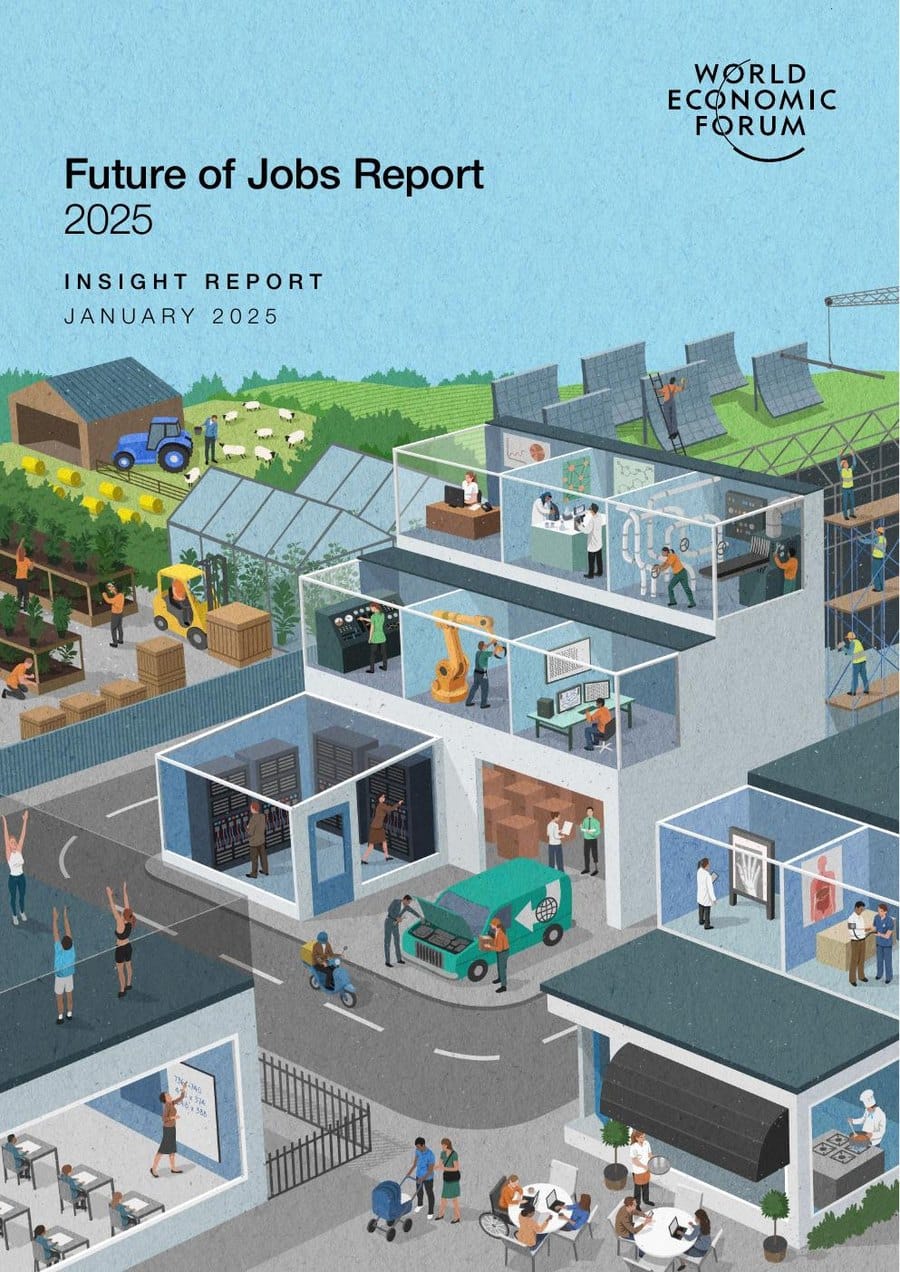
"Which job should I choose?" in the Middle East is no longer answered by instinct but by numbers: the World Economic Forum's Future of Jobs Report projects 170 million new jobs created and 92 million displaced by 2030, the official UAE government portal documents a labor market tilting hard toward digital specializations, and current talent.com aggregations put verified monthly salaries on every major track in the Emirates and Saudi Arabia. This guide weaves those threads into one map: ten career paths leading regional demand in 2026 and 2027, with documented salary ranges, the skills that separate strong candidates from average applicants, and the honest danger zones among shrinking roles.
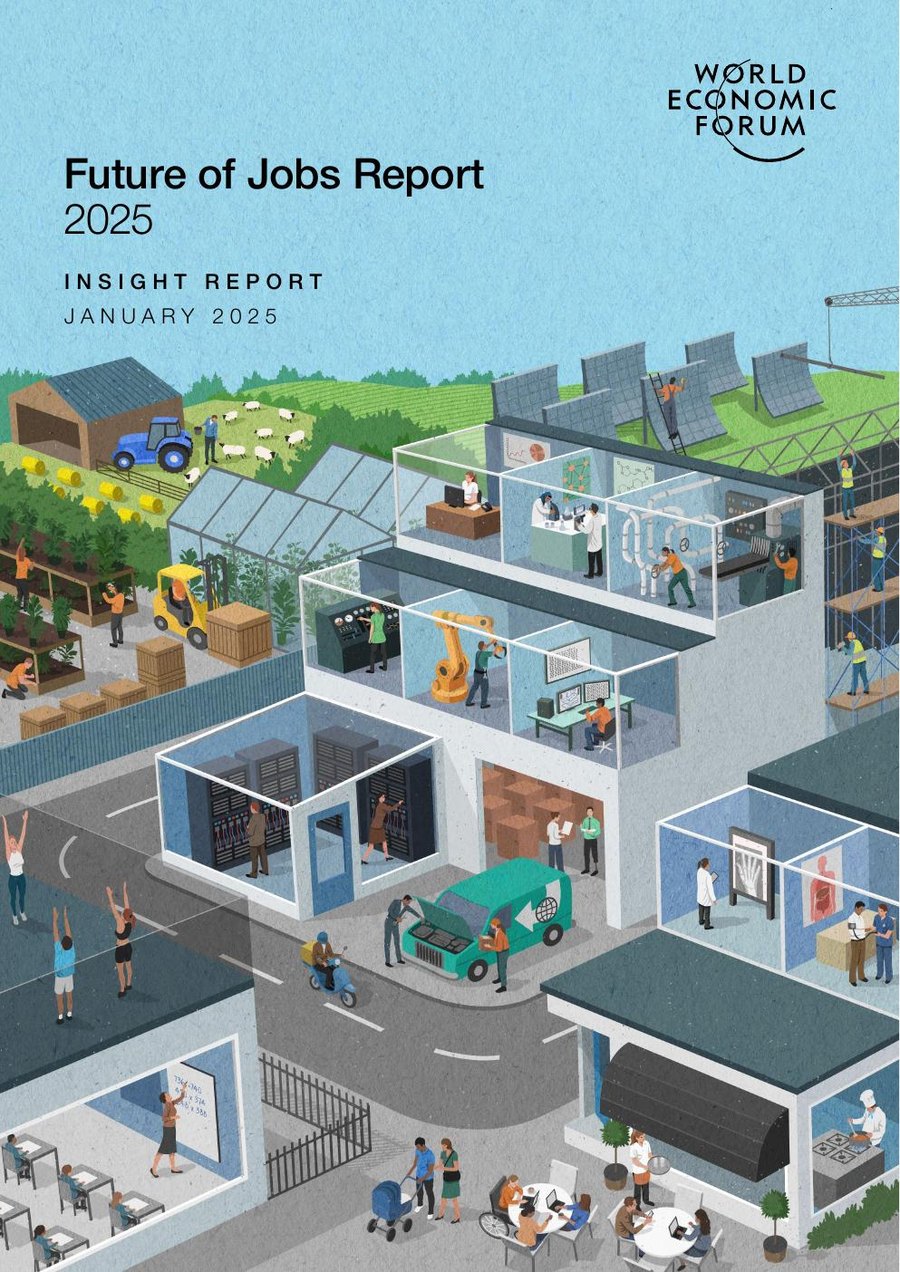
The Governing Number: 14% of Jobs New, 8% Gone
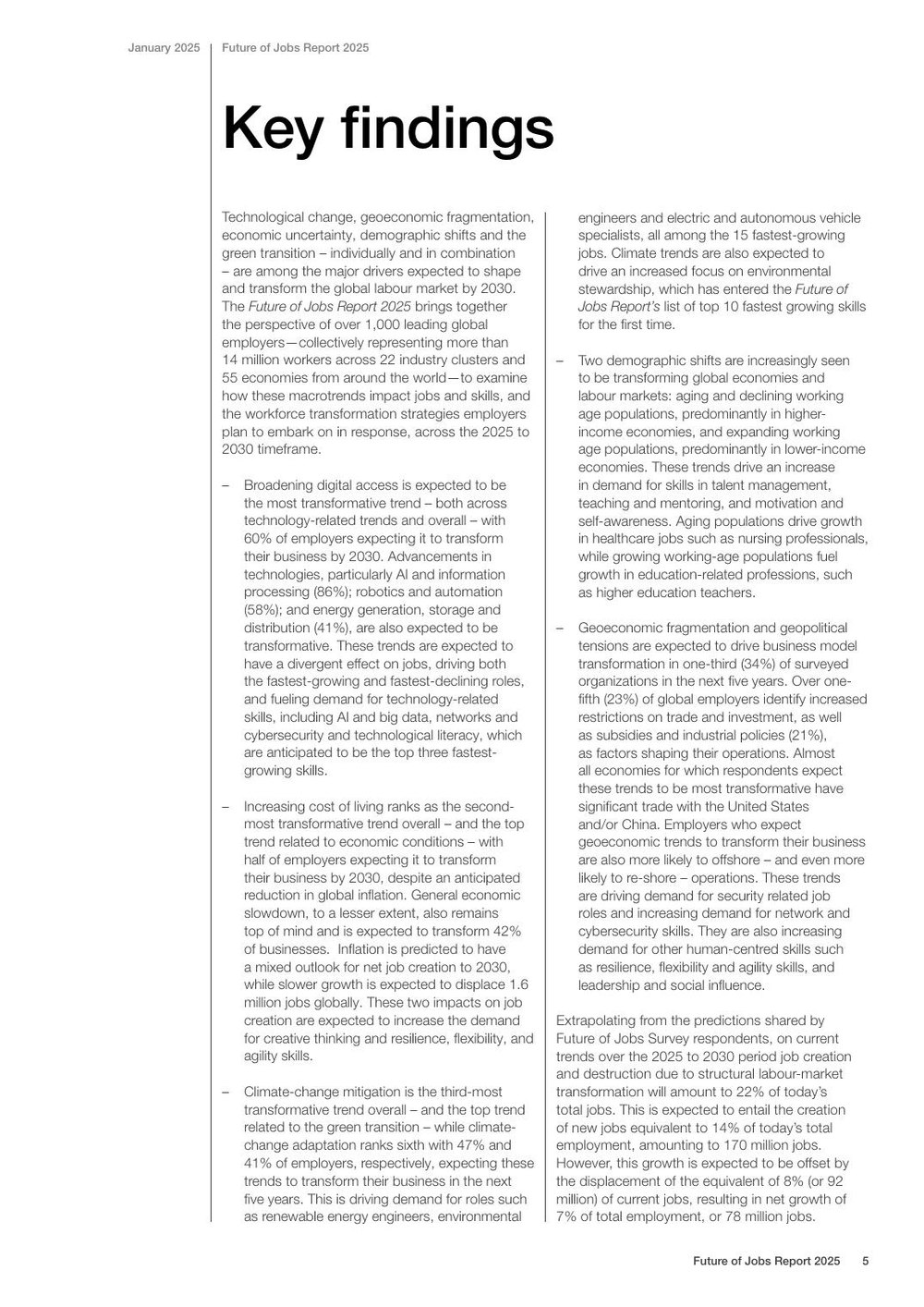
Structure first, lists second. The WEF survey of more than a thousand global employers concludes that technological and economic transformation will create jobs equal to 14% of today's total employment (170 million roles) while displacing 8% (92 million) — a net gain of 78 million jobs, or 7% of the global workforce, by 2030. The regional translation matters even more: 39% of the core skills attached to existing jobs will change within five years, which is precisely why Gulf governments are racing to fund reskilling programs.
The fastest-growing roles globally, in the report's own titles: Big Data Specialists, Fintech Engineers, AI and Machine Learning Specialists, Software and Application Developers, and Security Management Specialists — followed by Autonomous and Electric Vehicle Specialists, Environmental Engineers, and Renewable Energy Engineers. On the opposite side: Cashiers and Ticket Clerks, Administrative Assistants and Executive Secretaries, Postal Service Clerks, Bank Tellers, and Data Entry Clerks — a list worth reading as an early evacuation notice, not a scare story.
Why the Gulf Specifically: Three Facts From October 2026
The region is not a passive receiver of this wave; it is one of its engines. First: the joint Khaleej Times–Naukrigulf hiring index, covered in July and October 2026, tracked roughly 220,000 live job postings from more than 7,000 UAE-registered employers, with 68% of companies planning additional headcount and new Abu Dhabi commercial licenses growing 21% — demand indicators, not intentions.
Second: Marsh's global talent survey, reported by Khaleej Times on September 28, 2026, showed that between 62% and 83% of UAE employers struggle to fill roles depending on category. The problem is not absent jobs; it is absent matching skills — a gap that qualified entrants walk straight through.
Third: 2026 salary projections attributed to Cooper Fitch and Korn Ferry put increases between 1.6% and 4% generally, up to 4.1% for select groups, with raise budgets split 48% internal promotions / 37% market adjustments / 15% retention of critical talent. Translation: the biggest pay moves of 2026 go to people who move internally into scarce roles, not to those waiting for the annual cycle. For the roles where the shortage bites hardest, see our deep dive on UAE's hardest-to-fill jobs 2026–2027.
Path 1: AI and Data Engineering
The top of the global growth list meets sovereign investment in Gulf data centers, smart-government platforms, and national AI strategies. Khaleej Times reporting from July 5, 2026 relayed employer-side scarcity of up to 80% in AI and cloud talent, with companies recruiting from Eastern Europe and Africa to compensate.
The published numbers: talent.com's Saudi aggregation shows data analysts averaging around 240,000 SAR per year (roughly 20,000 SAR monthly) — one of the widest gaps between a familiar job title and a surprising paycheck. The UAE aggregation lists data scientists near 54,000 AED annually, a conservative blend that mixes juniors with senior specialists; treat it as a floor, not a ceiling. The practical entry: a recognized professional certificate such as Google's career certificates, then two documented projects on real business data. We review free and low-cost access routes for these on the Truescho courses page.
Path 2: Cybersecurity — Chronic Shortage, Government Budgets
Since the UAE, Saudi Arabia, and Qatar launched national cybersecurity strategies, the specialist shortage has widened faster than university programs can graduate. Our earlier analysis in Cybersecurity Jobs in the Gulf 2026 documented demand for security auditors, incident-response analysts, and cloud-security engineers with salary bands from the Hays GCC guide — and the trend has not reversed since.
What distinguishes this path for newcomers: professional certifications (from Security+ level up to cloud specializations) compress years of waiting, and Gulf employers routinely fund further certification for candidates who prove a technical base. Saudi IT-category pay averages about 163,275 SAR yearly (near 13,600 monthly) on talent.com, with sensitive security roles commanding premiums above category averages — they sit squarely in the "critical talent" slice of raise budgets.
Path 3: Nursing and Specialized Healthcare
The biggest surprise in the Saudi numbers: hospital nursing companionship averages around 273,000 SAR per year (about 22,750 monthly) on talent.com — above many white-collar office roles. The explanation is structural: new medical cities and newly licensed hospitals are outpacing nursing-college output, and the kingdom recruits internationally under Saudi Commission for Health Specialties standards.
For non-nurses, the side doors are real: laboratory technicians, imaging-equipment operators, and medical billing and coding — one-to-two-year certifications in roles that resist automation because they require physical presence and interaction with mandatory regional health-insurance systems.
Path 4: Accounting and Financial Analysis — Redrawn, Not Deleted
The declining-jobs list names "Data Entry Clerks," yet talent.com shows UAE accountants averaging 90,000 AED yearly (7,500 monthly) with the accounting/admin/HR category average at 123,847 AED based on 59,051 reported salaries. The gap between those two numbers is exactly the distance from "ledger clerk" to "financial analyst and resource planner."
The professional conclusion: accounting starts as documentation and ends as judgment. Pair a professional accounting credential with analytics tools and you move from the threatened category to the growth category — especially with the compliance boom around VAT in the UAE, Saudi Arabia, and Qatar and mandatory e-invoicing regimes creating permanent demand for compliance specialists. Before negotiating, run your numbers through our Gulf tax-free salary calculator.
Path 5: Digital Marketing and E-Commerce
Digital marketing managers in the UAE average around 138,000 AED yearly (11,500 monthly) on talent.com — among the highest category averages on the list, because every major Gulf brand now builds in-house content and performance teams. Demand extends below the manager tier: SEO specialists, paid-campaign buyers, and customer-data analysts form a full production line.
This is also the fastest entry path without a technical degree: Google's professional digital-marketing certificate plus a documented portfolio persuades Gulf hiring managers faster than academic pedigree. The caution: the bottom layer of this market (generic posting, simple design) is being compressed by AI tools, and value concentrates in people who read data and manage real advertising budgets.
Path 6: Civil Engineering and Construction
Gigaprojects, new airports, and urban expansion preserve strong demand for civil engineers: talent.com lists Saudi averages near 102,000 SAR yearly (8,500 monthly) and UAE equivalents around 90,000 AED. The Gulf advantage is density — few world regions build at this scale simultaneously. Sub-specializations raise pay faster than the base degree: contract administration, Primavera-based project planning, and site-safety credentials like NEBOSH.
Path 7: Human Resources and Talent Management
Localization programs (Saudi Nitaqat, Emiratization targets) turned HR from an administrative department into a strategic operations room. talent.com places the Saudi accounting/admin/HR category average at 163,373 SAR yearly. The fastest-growing sub-roles: HRMS systems specialists, workforce analytics, and localization-program managers who combine labor-law fluency with reporting skills — and who document outcomes in numbers, not activities.
Path 8: Hospitality — Brains Over Counters
Hotels, restaurants, and tourism remain among the largest private-sector employers in Dubai, Riyadh, Jeddah, and Doha, but the "front desk" role is rapidly becoming a digital-experience job: distribution-platform revenue analysts, dynamic-pricing specialists, and online-reputation managers. Saudi entertainment destinations coming online create accelerating demand for people who combine hospitality instinct with analytical fluency. The practical entry: international chains run structured management-trainee programs with documented promotion ladders from trainee to department head within a few years for those who learn the language of numbers alongside the language of service.
Path 9: Logistics and Supply Chain
The region is redrawing global trade: expanding UAE and Saudi ports, new shipping lines, automated warehouses around major distribution hubs, and industrial-localization initiatives raising domestic freight volume. The result is dual demand for supply-chain engineers, demand planners, smart-warehouse supervisors, and international-freight analysts — disciplines that e-commerce growth compounds annually. The methodical entry: the APICS CSCP or CLTD certifications, or cheaper short courses in demand planning and inventory management, then hands-on time in any warehouse or freight forwarder. Data-analysis basics accelerate promotion here because the modern job is forecasting and route optimization.
Path 10: Renewable Energy and Efficiency
Global growth lists place Renewable Energy Engineers and energy-efficiency specialists on a steady climb, and the Gulf invests in solar, wind, and green hydrogen as post-oil economy pillars. Today's demand centers on three roles: solar-systems engineers for utility projects, emissions-compliance officers under new environmental rules, and energy-efficiency analysts for buildings and industrial facilities. The path is doubly attractive: current electrical and mechanical engineers enter with one specialized certification in solar or battery systems, while new graduates find growing Gulf university programs run with major energy companies. Recognized international credentials compress the experience-proofing years.
The Consolidated Salary Table: Verified 2026 Figures
| Path | UAE (monthly, AED) | Saudi Arabia (monthly, SAR) | Source |
|---|---|---|---|
| Data analyst / scientist | about 4,500 | about 20,000 | talent.com 2026 |
| Full-stack developer | not listed | about 11,250 | talent.com |
| IT category overall | — | about 13,600 | talent.com |
| Accountant | about 7,500 | about 8,375 | talent.com |
| Civil engineer | about 7,500 | about 8,500 | talent.com |
| Digital marketing manager | about 11,500 | — | talent.com |
| Hospital nursing companion | — | about 22,750 | talent.com |
| Accounting/Admin/HR category | about 10,320 | about 13,600 | talent.com category averages |
Two caveats keep this table honest: these are blended averages across all seniority levels, so top-of-market offers for scarce skills run well above them; and cross-country differences reflect living costs, not absolute advantage — compare net after housing and insurance, not gross before. For role-level UAE shortage data, return to the hardest-to-fill jobs analysis.
The Skills That Decide Salaries Through 2030
The pattern repeats across the WEF data and Gulf coverage: a degree opens the door; three skill families set the salary behind it. The first is explicitly technical — digital analytics, applied AI (prompting, output evaluation, knowing the limits), and baseline digital security — buildable in months through certified tracks. The second is the human counterweight: leadership, resilience, creativity — rising in value precisely as technical competence commoditizes. The third is compound: active learning, the documented ability to re-skill every few years, which the report treats as the single most important capability of the period.
In practice: add one technical certification per year, document at least one applied project on a real problem, and submit your CV in an ATS-friendly format — we published a step-by-step guide in ATS CV Checker for Gulf Jobs 2026.
Shrinking Roles: Read the List to Avoid It, Not to Fear It
The global decline list through 2030 — cashiers and ticket clerks, administrative and executive secretaries, postal clerks, bank tellers, data-entry clerks — shares one property: fully automatable, fully documented, repetitive tasks. The Gulf reading needs one correction: administrative employment here is structurally smaller than in Western markets to begin with, and localization laws redirect many remaining administrative roles toward citizens through funded government reskilling.
The rational strategy if you hold one of these jobs today: do not resign reflexively — reposition inside your sector. Bank tellers move toward digital financial-product sales; administrative assistants toward workflow and automation systems management; data-entry clerks toward data analysis. The permanent reference for the five-year map remains the WEF Future of Jobs 2025 report analysis.
How to Read a Gulf Job Posting: Five Checks Before Applying
A job posting in this region is a negotiation document. Five checks separate serious ads from time-wasters. One: a stated salary range — employers who publish a range know their market and negotiate less aggressively than "salary discussed at interview." Two: the employer's license jurisdiction — a company licensed in a known specialized free zone signals an organized environment and faster visa processing. Three: tool-level skill requirements — a posting demanding "ERP fluency and advanced Excel analysis" is more credible than one demanding "an ambitious personality."
Four: a hierarchical job title (Senior Analyst, Assistant Manager) signals an org chart with promotion paths, unlike vague titles that hide multiple jobs behind one salary. Five: the contact domain — a corporate email domain indicates seriousness; applications collected through personal social-media messages indicate the opposite. Five minutes of checking saves months in a failed hiring cycle.
A 90-Day Plan to Enter Any of the Ten Paths
A map without a step is a pretty picture. Three phases, startable today:
Month 1 — Diagnose and choose. Shortlist two paths compatible with your background from the lists above. Read twenty real postings per path on Gulf job boards and tally the repeated skill requirements into a table. The gap between your profile and those requirements will emerge with uncomfortable clarity.
Month 2 — Focused qualification. Enroll in one recognized certification covering your widest gap — accessible through platforms reviewed on the Truescho courses page — and actually finish it. Completion rates are what separate real applicants from certificate collectors.
Month 3 — Document and market. Execute one project on real data or a real problem from your previous sector, write it as a one-page case study, rebuild your CV in an ATS-friendly format, and apply to fifteen targeted postings per week with a tailored cover note each. That cadence converts the map into offers within one hiring cycle.
Turning the Map Into Your Next Move
Rational career choice in 2026 starts neither from "what do I love" alone nor "what pays most" alone, but from the intersection of three questions: which growth-list skill can I build in 12 months on my current schedule? Which Gulf market shows the deepest shortage in exactly that skill? What is the smallest valuable, documentable step I can take this month? The numbers in this guide will age within a year; the method will not: read official growth reports, cross them with local salary data, and execute one concrete step per week. A labor market creating a net 78 million jobs rewards direction, not speed.
Frequently Asked Questions
What are the best careers in the MENA region in 2026 and 2027?
By the intersection of growth and pay data: AI and data engineering, cybersecurity, specialized nursing, analytical accounting and compliance, digital marketing, civil engineering, talent management, hospitality analytics, logistics, and renewable energy — all with documented Gulf demand and certification-based entry routes.
How much do data analysts earn in Saudi Arabia?
talent.com's Saudi aggregation places data analysts around 240,000 SAR per year — roughly 20,000 SAR monthly — among the highest analytical-track averages, with wide variance by seniority and sector.
Will automation kill accounting jobs?
It kills data-entry accounting specifically, not accounting itself: the UAE average of 7,500 AED monthly for accountants rises toward 10,300 for blended financial-analysis roles, and demand is migrating toward tax compliance, e-invoicing, and advisory work.
What skills will matter most through 2030?
Three families per the Future of Jobs Report: technical skills (data analysis, applied AI, baseline cybersecurity), human skills (leadership, resilience, creativity), and active learning — with 39% of current skill sets transforming within five years.
Are Gulf salaries really higher than international ones?
Gross salaries often are, since the UAE, Saudi Arabia, and Qatar levy no personal income tax on salaries. An honest comparison subtracts housing, schooling, and health insurance — costs borne by states or employers elsewhere. Compare net after obligations, not gross before.
Which certificate is fastest for entering the Gulf tech market?
Google's professional certificates (data analytics, cybersecurity, digital marketing) through platforms like Coursera take three to six months and suffice for entry roles; employers typically fund advanced certification afterward.
Is nursing genuinely in demand in Saudi Arabia?
Yes, by a wide margin: hospital nursing companionship averages about 22,750 SAR monthly on talent.com, and medical-city expansion outpaces local graduating classes, with international entrants requiring Saudi Commission for Health Specialties verification.
Do Gulf jobs require prior regional experience?
Not in technical, healthcare, or financial roles run on international standards. Local experience helps in sales, compliance, and government-relations roles. More decisive is showing you understand the regional work environment: digital authenticated contracts, local banking, and mandatory health insurance.
Sources
- World Economic Forum, Future of Jobs Report 2025 (full official edition): https://www3.weforum.org/docs/WEF_Future_of_Jobs_Report_2025.pdf
- WEF editorial summary of the report (January 2025): https://www.weforum.org/stories/2025/01/future-of-jobs-report-2025-jobs-of-the-future-and-the-skills-you-need-to-get-them/
- talent.com UAE salary aggregation 2026: https://ae.talent.com/salary
- talent.com Saudi Arabia salary aggregation 2026: https://sa.talent.com/salary
- UAE Government official portal — jobs and careers services: https://u.ae/en/information-and-services/jobs
- Khaleej Times — Marsh global talent survey coverage (September 28, 2026), Naukrigulf hiring index (July 6, 2026), AI/cloud talent scarcity (July 5, 2026): https://www.khaleejtimes.com
- Gulf News — UAE hardest-to-fill roles list (October 8, 2026): https://gulfnews.com
The editorial team verified every link and official document above on October 14, 2026. Salary figures are quoted from talent.com aggregation pages as displayed on verification day and are blended averages subject to change.