
Australia to Restrict Student Dependent Visas: 45,000 Family Visas a Year at Stake
Last updated: September 2026
Australia is preparing the biggest shake-up of student family visas in years. Home Affairs Minister Tony Burke is expected to unveil the measures at the National Press Club in Canberra on Thursday, 17 September 2026, in an address pointedly titled "The work of managing the migration program: Who arrives, who stays, who leaves." According to reports by The Guardian and the ABC, most international students will have to travel without their spouses and children, putting roughly 45,000 dependent visas a year — out of more than 337,000 student visas granted last year — directly in the crosshairs.
Source: Department of Home Affairs — official website
The timing is political to its core. Labor is fending off pressure from the far-right One Nation party, which has surged on an aggressive cut-migration platform, and the government wants visible proof it can turn the taps. The reported target: bring net overseas migration down from about 305,000 to 225,000 within two years, while holding permanent intake near 185,000 a year.
What Exactly Is Being Announced?
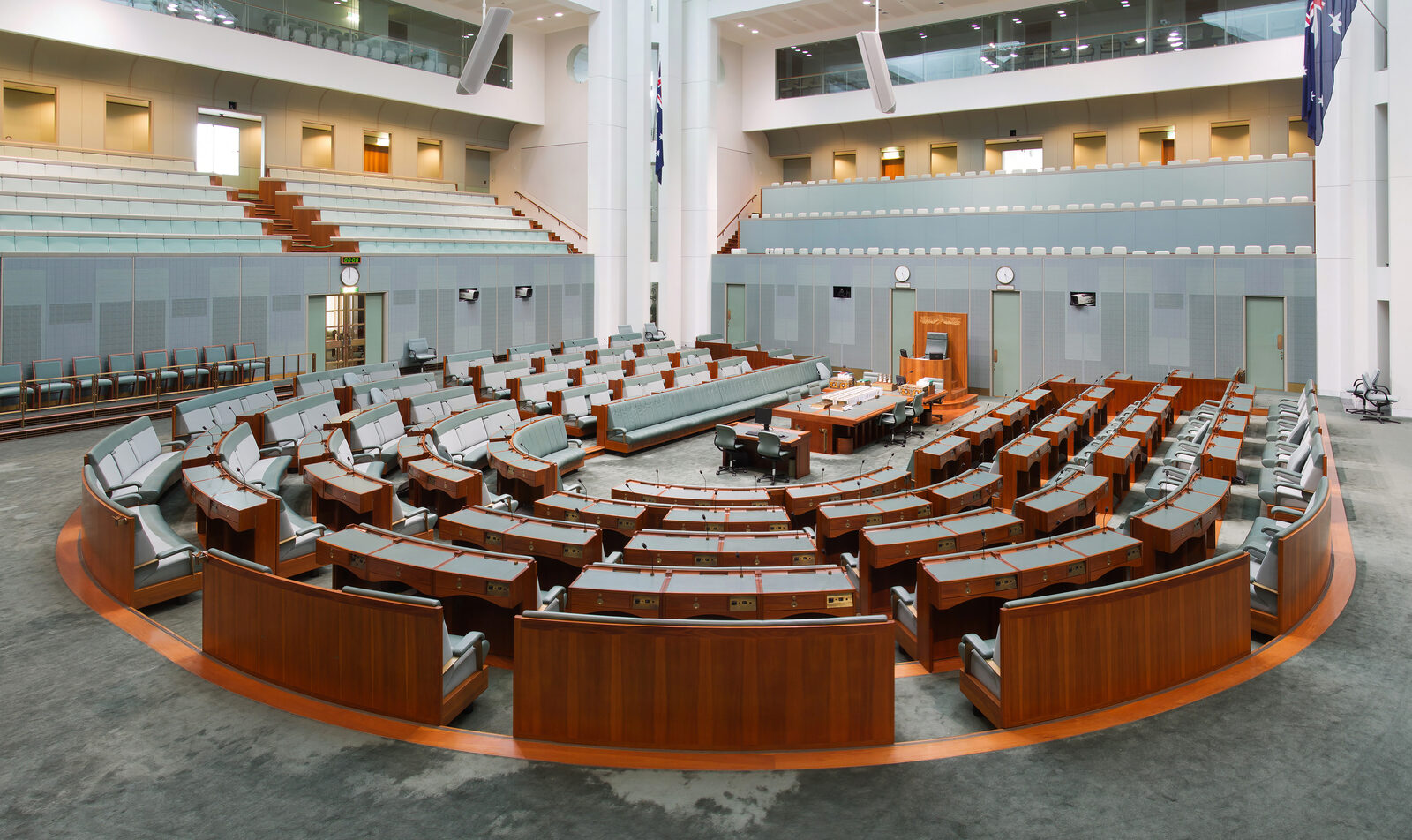
Source: Wikimedia Commons — Australian House of Representatives — CC BY-SA 3.0

Four threads run through the reported package:
- Restricting dependent visas. The partner and child visas that currently ride along with a student's subclass 500 visa would be limited, with the majority of students expected to arrive alone.
- Carve-outs for specific groups. Reportedly spared: postgraduate research students, citizens of Pacific island nations and Timor-Leste, holders of foreign government scholarships, and applicants sponsored by Australian government departments.
- Tighter enforcement on overstays. Reduced ability to hop between visa categories after a visa expires, with some migrants required to leave sooner.
- Hard numbers. Net overseas migration of ~305,000 today, guided toward 225,000 over two years.
The irony: net overseas migration has already fallen for seven consecutive quarters since September 2023. The package is as much about the signal as the arithmetic.
Why Family Visas? Follow the Fastest Lever
| Indicator | Documented figure |
|---|---|
| International student visas granted last year | 337,000+ |
| Dependent (partner/child) visas within that | ~45,000 |
| Current net overseas migration | ~305,000 |
| Two-year target | 225,000 |
| Annual permanent intake (target) | ~185,000 |
One in every seven visas in the student program is a dependant, not a student. No other component of net migration can be cut with a single administrative stroke — without touching university enrolments at all. That is why dependants top the list.
The UK already ran this experiment. After Britain restricted dependants on taught postgraduate courses, dependant numbers collapsed by 87% and student applications fell 11% to 381,500 — a sequence we documented in our analysis of UK student visa applications.
How Should an International Applicant Read This?
If you were planning to study in Australia with your family, the working rule is simple: build your application before the rules tighten, not after. The details will roll out in successive implementation instructions, but the direction is unmistakable — dependants become the exception (chiefly researchers), not the default. Three practical steps:
- Sort your study tier. Coursework bachelor's and master's programs face the brunt; research degrees are the likeliest exemption.
- Plan a family Plan B. A spouse can still come separately — on a visitor visa, an independent student visa, or a work visa if they qualify on their own merits.
- Bulletproof your finances. Every migration crackdown historically pairs with stricter financial scrutiny of new applications.
Students comparing destinations can pair this news with our coverage of the US four-year visa cap frozen by a federal judge one day before it took effect — proof these policies face courtroom tests — and New Zealand's fully online graduate work visa transition from 16 November. For scholarships and program options, Truescho's opportunities database tracks open listings daily, and the free GPA calculator helps you check eligibility before applying.
A Global Pattern, Not an Australian Quirk
Canberra's move lands inside a two-week window of similar headlines across the English-speaking study destinations: a US federal judge blocking the four-year student visa cap, UK dependant numbers down 87%, New Zealand rebuilding its post-study work system. Every one of these governments is trying the same balancing act — cut visible migration numbers while protecting the multi-billion-dollar international education industry. The practical consequence for applicants worldwide: admission standards drift upward, financial documentation gets heavier, and incomplete files get rejected faster.
What the Universities Are Watching Nervously
International education ranks among Australia's largest service exports, and university research budgets lean heavily on foreign student tuition. The sector therefore greets today's news with mixed feelings. There is relief that a package aimed at dependants is lighter than a hard cap on student numbers themselves — the policy universities feared most. But there is real anxiety too: restricting family accompaniment weakens Australia's appeal for mature students from South Asia, Africa, and the Middle East, cohorts for whom leaving a spouse and children behind for two or three years is a genuine sacrifice — and who will comparison-shop Canada, Germany, or the UK accordingly.
That tension is the policy's soft spot. Governments want lower numbers, universities want preserved revenue, and students want a minimum of family stability. A sweeping dependant restriction doesn't shrink the global pool of students; it redistributes them between destinations — which is exactly why education lobby groups have pushed back hardest against the strictest formulations.
Three Scenarios for Burke's Speech Today
Scenario one — a broad restriction with research carve-outs. The announcement follows the leaks literally: most coursework students lose family accompaniment immediately, with a narrow gate for researchers, government scholars, and Pacific nationals. This is the outcome most analysts consider likeliest, and its sharpest effect falls on married applicants to taught master's programs.
Scenario two — a phased rollout. The speech sets a framework and leaves specifics to ministerial direction sequenced over weeks, mirroring how Australia previously raised financial-proof requirements. Practically, that hands applicants a closing window to be assessed under today's rules.
Scenario three — softer than the leaks. The government signals direction without immediate hard limits, deferring the strict measures. Possible, but least likely given the electoral heat around migration right now.
Under every scenario, the smart applicant's rule is identical: don't wait for the final wording to prepare your file. Complete applications submitted early are always assessed under the more generous rules still in force.
A Closing Note for Student Couples
If you and your spouse are planning to study in Australia together, the intelligent play is now the "double application": each of you applies on your own merits — a degree or a qualifying training program — rather than one leading and one depending. Two independent, accepted files beat one principal visa plus a dependent application whose fate hangs on a political speech. Whatever restrictions land, they cannot touch a person who holds their own visa.
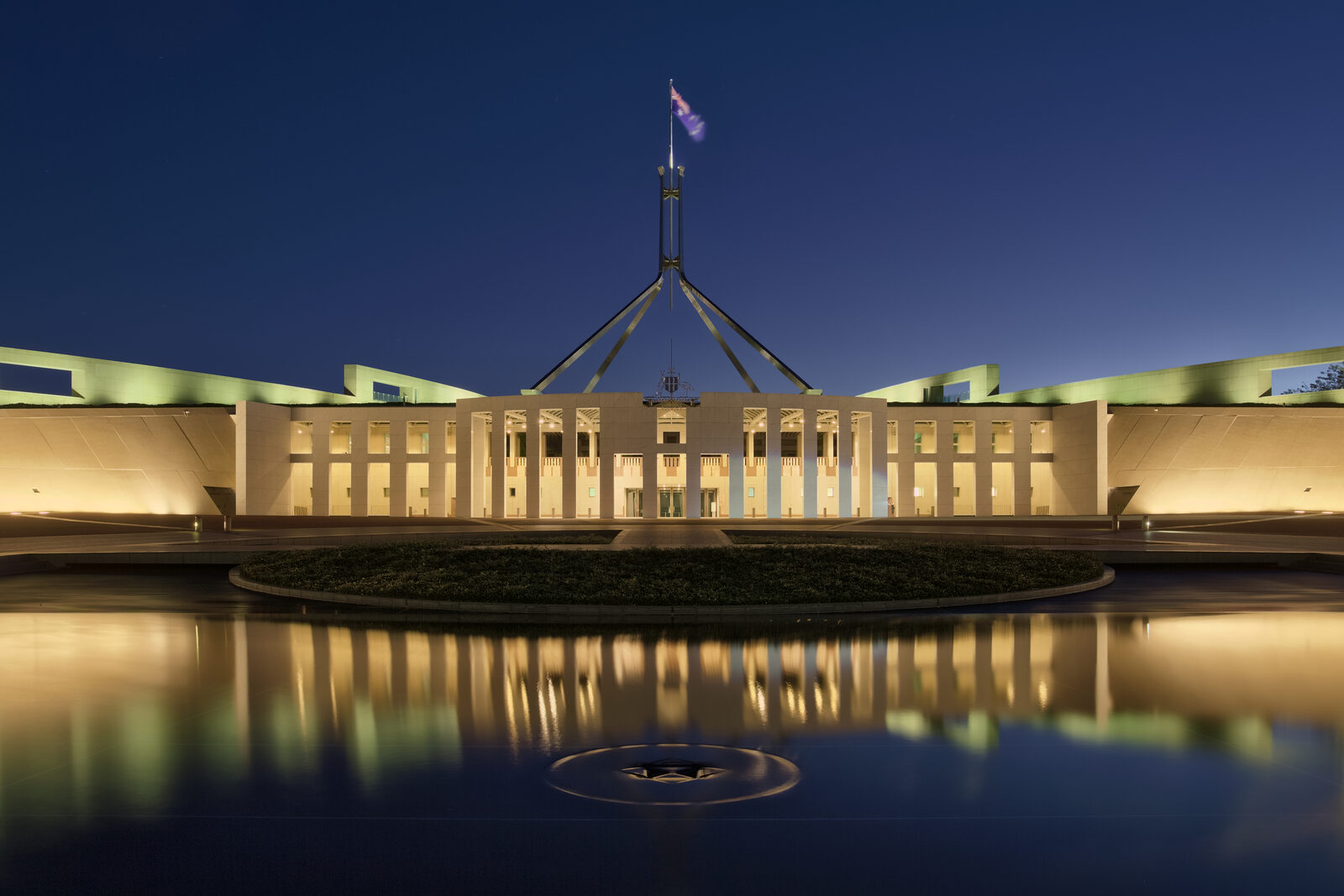
Source: Wikimedia Commons — Parliament House at dusk — CC BY-SA 4.0

Frequently Asked Questions
Are student dependent visas banned in Australia?
Not formally — not yet. What is expected on 17 September 2026 is a broad restriction announced by Home Affairs Minister Tony Burke, with dependent pathways reportedly preserved for postgraduate research students, Pacific and Timor-Leste citizens, foreign government scholarship holders, and government-sponsored applicants.
How many dependent visas does Australia grant per year?
About 45,000 dependent visas (partners and children) were granted alongside more than 337,000 student visas last year — roughly one in seven visas in the entire student program.
Does this affect students applying alone?
The direct impact is limited; the package targets dependants and net migration totals. Indirectly, expect tighter financial checks and faster rejection of incomplete applications as scrutiny rises across the program.
Why is Australia doing this now?
Net overseas migration of about 305,000 has become a hot political file with One Nation rising in the polls. The government wants to show control by steering it to 225,000 within two years, and dependants are the fastest component it can cut by administrative decision.
How does this compare with the UK's student visa changes?
The UK restricted dependants on taught postgraduate courses; dependant numbers fell 87% and applications dropped 11% to 381,500. Australia is adopting the same logic with clearer stated exemptions for researchers and scholarship holders.
Will the announcement make admission itself harder?
It does not touch academic entry requirements directly. The squeeze will show up in administration instead: stricter financial scrutiny, longer review of family-linked files, and sharper competition from students redirected from other destinations. Early, complete applications are the first line of defense.
When would the new restrictions actually take effect?
The 17 September 2026 speech sets the direction, but implementation requires ministerial instructions published afterward — sometimes immediate, sometimes staged. Applicants are generally assessed under the rules in force on the date they apply, which is why filing during the transition matters.
Is a visitor visa a realistic workaround for a student's spouse?
Only partially. Visitor visas suit bounded trips but carry no long stay or work rights, and repeated use to reconstruct quasi-residence puts a file under scrutiny. The serious alternatives are an independent student or work visa for the accompanying partner.
Sources
- Nairametrics — Australia moves to restrict family visas for international students — citing The Guardian and the ABC, with dependent visa figures
- Australian Department of Home Affairs — the agency responsible for the migration program
- Truescho — UK student visa applications fall 11% — the UK comparison in detail
Plan Your Next Move With Truescho
Rules change faster than semesters do. Truescho keeps open scholarships, destination guides, and application tools in one place so you can move first. Get started free →