
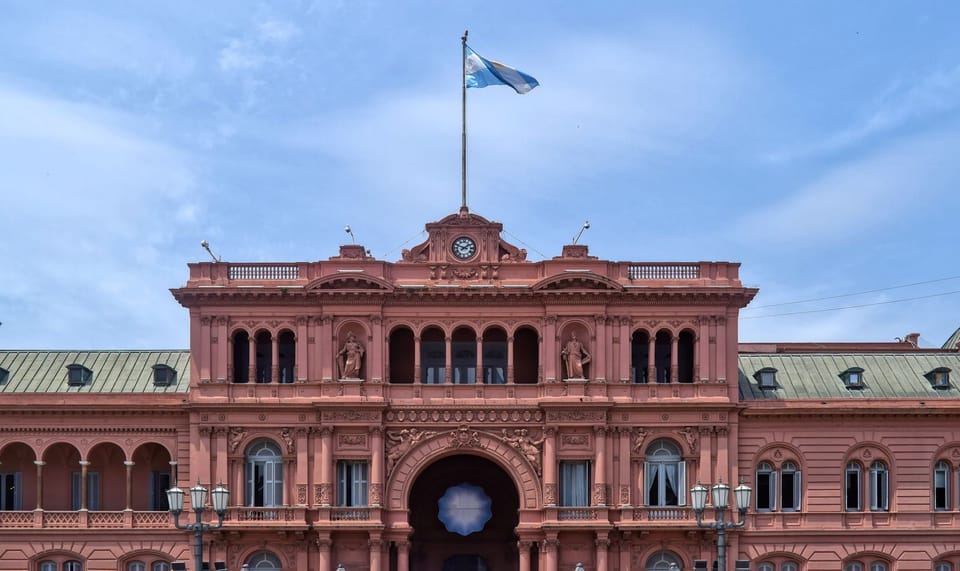
The launch chose its stage carefully. On October 2, 2026, in Paris, Argentina's Economy Minister Luis Caputo and Chief of Cabinet Diego Santilli unveiled the first citizenship by investment program in South American history. In the thirteen days that followed, more than forty major outlets — Reuters, the Financial Times, The New York Times, Fortune, and DW among them — published coverage. Argentina citizenship by investment moved, almost overnight, from rumor to a priced product with a global marketing machine behind it.
The product looks simple on its face. Pay a $350,000 contribution to the Argentine Treasury, or purchase an $800,000 Argentine bond, and a passport ranked 14th in the world — with access to more than 150 visa-free destinations — becomes attainable without the traditional residence clock. The official family example prices a household of four at $500,000 all-in.
The complications are just as concrete. Argentine courts have already voided the underlying decree in two individual cases. A leading constitutional lawyer calls the scheme discriminatory on its face. Opposition legislators have filed repeal bills in both chambers of Congress. And the IMF has just cut its regional growth forecast, with a sharp downgrade for Argentina itself. This guide lays out every number and every risk a serious applicant needs before moving six or seven figures.
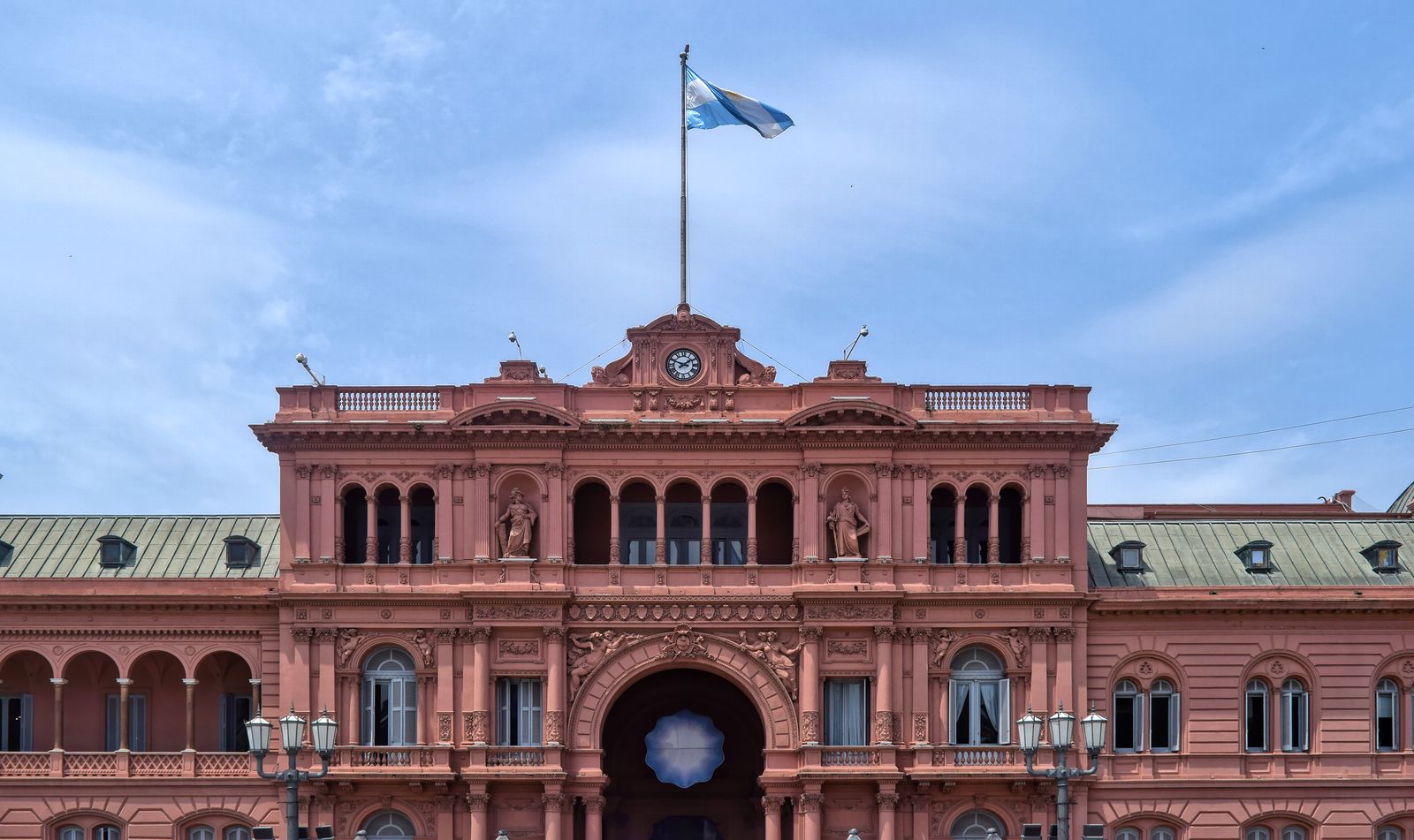
Source: Wikimedia Commons — Casa Rosada

What Argentina Citizenship by Investment Actually Offers: The Two Routes
The legal vehicle is an emergency decree (DNU) originally issued in May 2025, now packaged for the international market and presented in Paris this October. As MercoPress documented on October 12, the program offers exactly two qualifying routes. The difference between them is not only size — it is the nature of what you hold when the wire clears.
| Route A: Treasury contribution | Route B: Bond purchase | |
|---|---|---|
| Minimum amount | $350,000 | $800,000 |
| What the money buys | A contribution to the Argentine Treasury | An $800,000 Argentine bond |
| What you hold afterward | No repayment mechanism is published | A government bond instrument |
| Entry ticket | The lowest published threshold | More than double Route A |
| Best suited for | Buyers who want the cheapest path to the passport | Buyers who prefer a security over a flat payment |
Route A is the headline number, and buyers should underwrite it for what it is. The official framing is a contribution — money paid to the Treasury, not capital parked in an account. No published term provides for repayment, so the honest way to model it is as spent capital. The question is whether the passport and everything attached to it is worth $350,000 of sunk cost to you and your family.
Route B more than doubles the commitment to $800,000 and routes the money into an Argentine bond. That structure appeals to buyers who want to hold an instrument rather than make a flat payment, but it also ties a large sum to Argentine sovereign paper. The launch materials did not publish the instrument's full terms — maturity, transferability, and exit conditions will live in the term sheet, not the press release. Any serious applicant should demand that complete documentation before committing a dollar.
Family Fees: What a Household Actually Pays
A single applicant sees only the $350,000 headline. Families do not. The published fee schedule adds real weight to the check, and the brackets are unusually sharp.
| Family member | Additional fee |
|---|---|
| Spouse | +$100,000 |
| Each child aged 18–25 | +$100,000 |
| Each minor child | +$25,000 |
Two details deserve attention. First, an adult child aged 18 to 25 costs exactly the same as a spouse — $100,000 — while a minor child costs a quarter of that. A 17-year-old adds $25,000 to the application; an 18-year-old adds $100,000. Families with children near that birthday are effectively looking at a $75,000 difference in timing. Second, the published schedule covers only those three categories. Anyone outside them — a parent, a sibling, a child over 25 — is not addressed in the announced terms.
Run the four official-math scenarios:
| Household | Calculation | Total |
|---|---|---|
| Single investor | $350,000 | $350,000 |
| Investor + spouse | $350,000 + $100,000 | $450,000 |
| Investor + spouse + two minor children | $350,000 + $100,000 + $25,000 + $25,000 | $500,000 (the official example) |
| Investor + spouse + one child aged 18–25 + one minor child | $350,000 + $100,000 + $100,000 + $25,000 | $575,000 |
The $500,000 figure is not an estimate — it is the official example cited in the MercoPress report for a family with two minor children. For a household with teenagers in the 18–25 bracket, the same family of four prices at $575,000. At these levels, the fee schedule alone can decide whether Argentina beats the alternatives on your shortlist.
The Constitutional Challenge: Article 20 and Two Cases Already Lost
Walk into the Argentine Congress and you can see where the fight will happen. The constitutional argument against the program was framed most sharply by Andrés Gil Domínguez, a constitutional lawyer challenging the decree. Article 20 of the Argentine Constitution conditions naturalization on residence in the country — traditionally two years — or on exceptional services rendered to the nation. In his reading, the constitution "does not allow buying citizenship."
His second argument is broader: the decree is, in his words, wholly discriminatory on the basis of economic status. It does not merely favor the wealthy in practice; it prices the door itself, so only the wealthy can open it. That is the charge the courts will have to weigh.
And the courts have already started. According to El País reporting cited by MercoPress, courts have voided the decree in two individual cases. Individual rulings do not by themselves strike down the program nationally, but they matter for two reasons. They build a precedent line that higher courts can extend to the whole scheme, and they show that naturalization granted under this decree can be attacked in court — potentially years after the money has been paid and the passport issued.
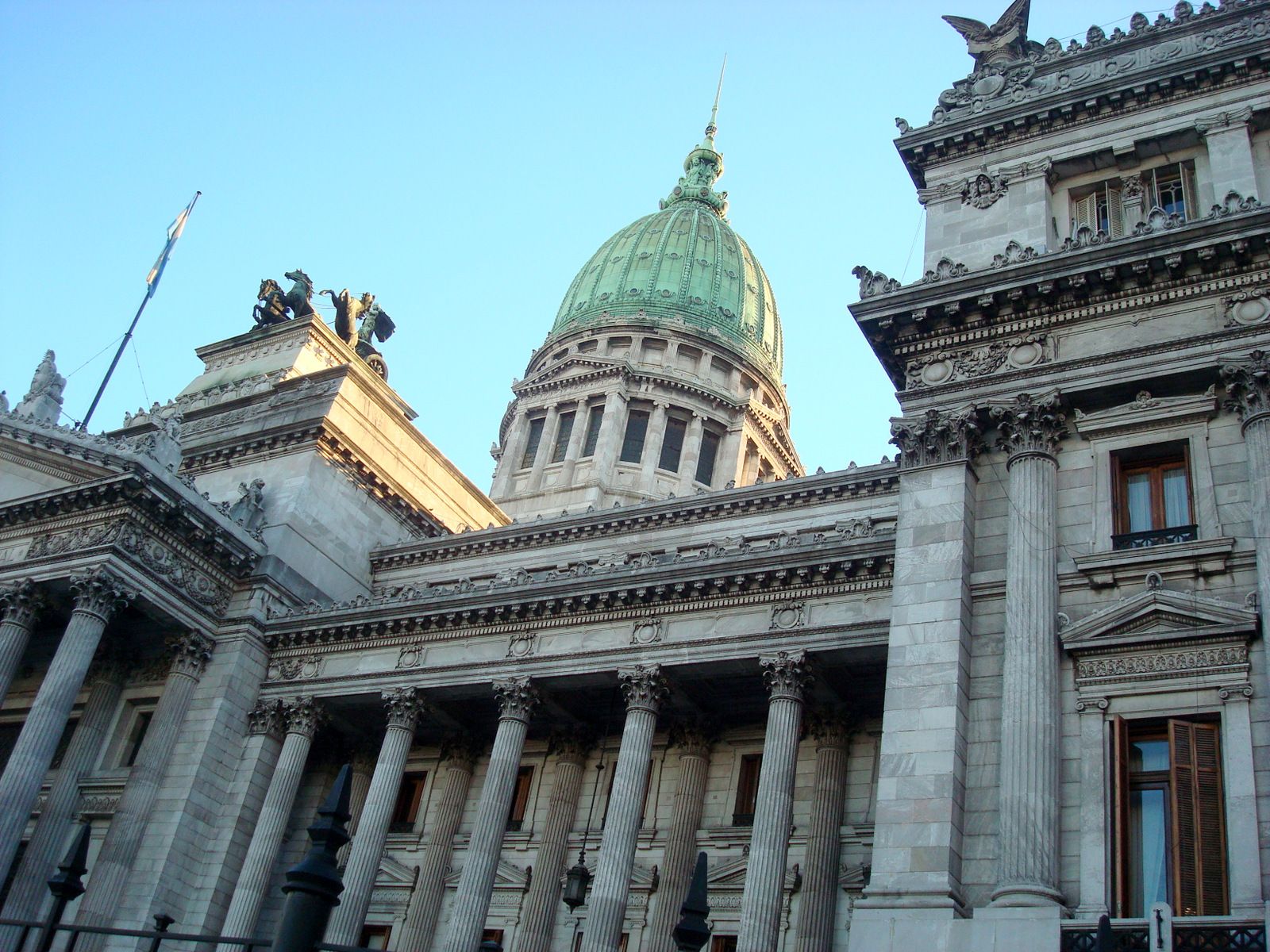
Source: Wikimedia Commons — Congreso Nacional Argentino

For a decision-maker, this is the core legal risk: you would be buying a citizenship whose legal foundation is actively contested in the very courts that govern it.
Congress Pushes Back: Repeal Bills and the Political Clock
The courtroom fight has a legislative twin. Peronist deputy Agustín Rossi, a former defense minister, has led the political attack: it is not acceptable, he argues, that Argentina sells its citizenship, and he has dismissed the scheme as classist — a passport for those who can pay, in a country where millions naturalized the slow way.
By October 6, according to IMI Daily's coverage, opposition legislators had filed repeal bills and information requests in both chambers of Congress. Repeal is a higher bar than rhetoric — it requires votes the opposition may not have — but the bills guarantee continued scrutiny, hearings, and headlines into the application window.
The government's defense is economic. Officials frame the program as a tool to encourage investment, create jobs, and build Argentina into a financial hub. Caputo's pitch leans on geography as much as economics: Argentina, he says, offers the optimal geopolitical location in a world overshadowed by conflict. The program's designer went further in comments to Yahoo Finance: truly wealthy Americans, he predicted, will feel embarrassed not to hold an Argentine passport.
That is marketing confidence. The legislative and judicial reality is that the program will open for business while its own legality is still being litigated and legislated. Applicants are not buying into a settled product; they are buying into an early, contested one.
How Strong Is the Argentine Passport, Really?
The product itself is genuinely strong. According to DW's coverage of the launch, the Argentine passport ranks 14th in global passport rankings and opens the door to more than 150 visa-free destinations. That places it inside the world's top tier — ahead of most emerging-market passports and competitive with long-established second-citizenship products.
Rank 14 translates into practical mobility: broad visa-free access for tourism and short business trips across major regions. For investors coming from countries with weak passports, the jump is significant. For Americans and Europeans, the calculus is different — the passport is less about raw mobility and more about optionality: a second jurisdiction, a second legal identity, a hedge.
Passport strength is also not static. Rankings move with visa negotiations and diplomatic shifts, so the value you buy today is the value Argentina maintains tomorrow. That makes the durability of the program — and the stability of the institutions behind it — part of the asset itself. For a structured comparison of how this route stacks up against other programs, our guide to citizenship by investment programs across markets breaks down the alternatives.
Why Now: Europe Just Closed Its Doors
The timing of the Paris launch is the strategy. Yahoo Finance's October 14 headline said it plainly: the program opens as golden passports vanish across Europe. The European supply of fast second citizenship has been contracting for two years, and the contraction accelerated recently.
Portugal has stretched its naturalization timeline to ten years, ending its status as a quick route. Italy has tightened citizenship by descent, closing the jure sanguinis door. Across the bloc, golden passport programs are shutting down under regulatory pressure. CNN reported as early as January 2026 that a scramble for second passports was already underway — demand looking for a home.
Argentina is positioning itself as that home: the first citizenship by investment program in South America, arriving exactly when the European alternatives are leaving. For market watchers, this is demand displacement in real time — a large applicant pool that suddenly has fewer places to go.
But first-mover status cuts both ways. South America has no precedent for this product, no settled case law, no decades-long track record of processed applicants and renewed passports. The earliest buyers get the best positioning and the freshest terms; they also carry the most legal uncertainty, as the Article 20 fight makes clear.
Timeline, Vetting, and the Five Intermediaries
When can you actually apply? Immigration firm Fragomen reported on October 5, 2026 that applications are expected to open before the end of 2026. As of mid-October, the program is announced, priced, and marketed — but not yet processing.
The distribution model is already visible. Five private firms appeared in the launch: Latitude Group, Arton Capital, Apex Capital Partners, Passport Legacy, and AIM Global. Their arrangement with the Economy Ministry is described as an unpaid technical cooperation agreement — the firms channel applicants, the ministry keeps the program official. Expect these names to dominate the advisory market; treat any operator outside this circle with caution until the ministry publishes its own verified list.
Vetting will be strict, in Caputo's words. The announced checks cover three layers: identity, criminal record, and — the one that disqualifies most failed applicants in every serious program — source of funds. You will need to document where the money came from, not merely that you have it. Wealth built in complex structures, cash-heavy businesses, or jurisdictions with weak paper trails should expect a longer file. Applicants who assemble clean, professional documentation before the window opens will move first; everyone else will move second.
The Economy You Would Be Buying Into
A passport is a legal document attached to a real economy, and Argentina's is in a volatile stretch. On October 13, MercoPress reported that the IMF had cut its growth forecast for Latin America to 2.3%, with a sharp downgrade for Argentina specifically. Caputo spent October 14 at the IMF and World Bank meetings making the counter-case: the ministry's own release projects Argentina as one of the better-performing economies of the coming years.
Investors should hold both readings at once. The skeptical one: the $800,000 bond route ties your capital to sovereign paper in an economy the Fund just downgraded, and the Treasury contribution route is a bet on a reform program that is still contested at home. The bullish one: a government aggressively courting foreign capital, a financial-hub agenda, and a first-mover product priced below most historical European equivalents.
Either way, do the diligence twice. The passport is the product; the macro is the risk. A fuller framework for weighing these programs against each other — costs, timelines, and legal stability — is in our citizenship-by-investment guide.
Frequently Asked Questions
How much does Argentina citizenship by investment cost?
The base cost is $350,000 as a Treasury contribution for the main applicant, or an $800,000 bond under the second route. A spouse adds $100,000, each child aged 18–25 adds $100,000, and each minor child adds $25,000. The official family example — investor, spouse, and two minor children — totals $500,000.
Is Argentina citizenship by investment open for applications yet?
Not quite. The program was unveiled in Paris on October 2, 2026, and Fragomen reported on October 5 that applications are expected to open before the end of 2026. As of mid-October the window is announced and marketed, but not yet processing files.
Is the Argentina golden passport constitutional?
That is the central dispute. Constitutional lawyer Andrés Gil Domínguez argues that Article 20 of the constitution requires residence or exceptional services and "does not allow buying citizenship." Courts have already voided the decree in two individual cases, and the program-wide question remains unresolved.
Can I get Argentine citizenship through investment without residing in Argentina?
The traditional constitutional route requires residence in the country. The investor route is designed to price that requirement out, which is exactly what the legal challenge targets. Anyone applying should confirm the residence implications with licensed Argentine counsel before wiring funds.
What does the $350,000 actually include?
It covers the main applicant's qualifying contribution to the Treasury. Family members are priced separately — $100,000 for a spouse, $100,000 per child aged 18–25, and $25,000 per minor child. The vetting process covers identity, criminal record, and source of funds, and no published term provides for the money's return.
Does Argentina allow dual citizenship?
The launch materials focus on the two investment routes and the family fee schedule rather than the mechanics of dual nationality. Whether a second citizenship works for you also depends on your home country's law, since some states do not recognize dual status at all. Verify both sides — the Argentine position and your own nationality rules — with official sources before applying.
How strong is the Argentine passport?
It ranks 14th globally with access to more than 150 visa-free destinations, according to DW's coverage of the launch. That puts it comfortably in the world's top tier and well ahead of most emerging-market passports. For context, the same coverage places it ahead of every passport in Latin America and on par with several European ones — meaningful strength for applicants whose current passports restrict banking access, visa-free travel, or both.
What happens if the courts void the decree?
Two individual rulings have already done exactly that, and repeal bills are pending in both chambers of Congress. A full annulment would push applicants into territory the published terms do not address, including any question of refunds. That tail risk is the strongest argument for legal advice before you commit money.
The Bottom Line
Argentina citizenship by investment is the biggest passport-market story of 2026: the first program of its kind in South America, a passport ranked 14th in the world with access to more than 150 visa-free destinations, and an entry ticket of $350,000 — $500,000 for the official family of four — launched at the exact moment Europe is closing its golden passport programs. The demand side of the equation is real, and so is the document.
The risk side is equally real. Article 20 litigation is live, courts have voided the decree in two cases, repeal bills sit in both chambers of Congress, and the IMF has downgraded the economy you would be buying into. None of this means the program fails; it means the earliest applicants carry the most uncertainty.
The practical posture for a decision-maker is disciplined. Watch for the application window — expected before the end of 2026 — and resist the marketing pressure to commit early. Demand the complete term sheet, especially on the bond route. Work only with intermediaries the ministry actually recognizes. And put experienced Argentine counsel between you and any wire, because in this program, the fine print is still being written in courtrooms and Congress.