
Last Chance 2026: 7 Fully Funded Scholarships Closing in September — First Deadline in 19 Days
Schwarzman Scholars at Tsinghua University in Beijing closes its worldwide application round on 9 September 2026 at 3:00 p.m. EDT — just 19 days from today — and it is only the first door shutting in a month of deadlines. Next comes MARIHE's European consortium round on 21 September, then Italy's regional scholarship windows snapping closed region by region through mid- and late September, and several Rhodes constituencies in late September and early October. Miss this window and the next comparable cycle is a full year away.
This is not a generic "scholarships now open" list. Every scholarship below has a verifiable September 2026 closing date, checked against official sources and our own updated in-depth guides, and each entry links to a full breakdown we have published covering eligibility, common mistakes, and the application process step by step.
The bottom line first: seven scholarships, the nearest closing in 19 days, full funding across China, the United Kingdom, Canada, Malaysia, Italy, Finland, and Austria. If you are not ready for one of them, start today with the 72-hour plan at the end of this article — deadlines do not wait for your file to feel complete.
Why September Is the Month That Decides Your Funding
Anyone who has been through the international scholarship cycle knows September is not just back-to-school season; it is closing month for next year's funding. Major programmes open applications in early summer, give candidates eight to twelve weeks to assemble files, then shut in September and early October so committees can shortlist and interview through autumn and winter.
The practical consequence: a student who wakes up in November looking for funding for the coming autumn discovers most of the money has been claimed. A student reading this today, on 21 August, holds between 19 and 40 days — a narrow but entirely workable window for anyone with a ready or near-ready file.
There is a second, more expensive misunderstanding: assuming "deadline" means the last day you can open an account. Most application systems close abruptly, and several of these programmes require a recommender who may need a week to write properly. Read every date below as your final submission deadline, and aim to be "submitted" at least 72 hours before the door swings shut.
The Seven Opportunities at a Glance
| # | Scholarship | September 2026 deadline | Country & level | Funding |
|---|---|---|---|---|
| 1 | Schwarzman Scholars 2027 | 9 Sept, 3:00 p.m. EDT | China — one-year master's | Tuition + housing + stipend + travel |
| 2 | MARIHE (Erasmus Mundus) 2027 | 21 Sept, 10:00 a.m. CEST | Finland/Austria/Germany — master's | Tuition + monthly EU stipend |
| 3 | Italy regional DSU grants 2026/27 | Rolling windows to ~19 Sept by region | Italy — bachelor's & master's | ~€5,500 + housing + meals |
| 4 | Universiti Malaya Bright 2027 | End of September (February intake) | Malaysia — PhD | RM3,500 per month |
| 5 | McCall MacBain 2027 (McGill) | September 2026 (North America track) | Canada — master's | Tuition + living stipend |
| 6 | ICO-WGA glaucoma fellowship | September 2026 (official track) | International — medical | Specialized training funding |
| 7 | Rhodes 2027 (selected constituencies) | Late Sept / early Oct by constituency | UK — graduate | Tuition + £20,400 per year |
A note on reading entry 7 honestly: Rhodes operates constituency-specific deadlines — some closed in July, others stay open into mid-October, and the only authoritative source is your own constituency page on the official Rhodes House website. Never generalize one constituency's date to another.
1) Schwarzman Scholars 2027 — 9 September, the Nearest and Most Demanding
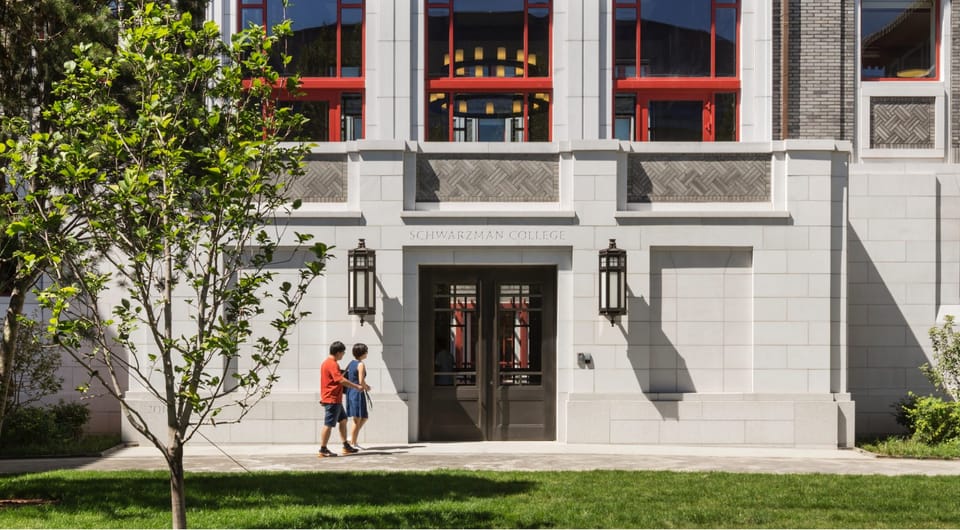
It leads this list for two reasons: the closest deadline and one of the most complete funding packages anywhere — a fully funded one-year master's in Global Affairs at Schwarzman College, Tsinghua University, designed for future leaders roughly under 29 (born after 1 May 1997 for the 2027 cohort).
What the deadline actually closes: the entire application — CV, leadership essays, recommendations, English scores or waiver request, and months of interview rounds afterwards. The official worldwide timing is 3:00 p.m. EDT on 9 September 2026 for the U.S./Global track, with a separate early round for some citizenships you should verify on the official site.
The fatal mistake here: writing leadership essays so generic they could be pasted into any application. Schwarzman's committee reads thousands of files hunting for demonstrable, provable impact — not slogans. Write about one hard decision you made and what measurably changed. A second recurring error: leaving recommendation requests to the final week, then discovering your strongest referee is travelling. Send those requests this week regardless of how rough the rest of your file is.
We cover all of it in depth in: Schwarzman Scholars 2027 Now Open: Fully Funded Master's at Tsinghua — Apply by Sept 9.
2) MARIHE — Erasmus Mundus: 21 September at 10:00 a.m.
MARIHE stands for Research and Innovation in Higher Education — an Erasmus Mundus joint master's shared between universities in Finland, Austria, and Germany (including Danube University Krems, Tampere University, and the University of Kassel), taught entirely in English and moving students across multiple European countries during the degree.
Round 1 closes on 21 September 2026 at 10:00 a.m. CEST. Miss it and Round 2 runs to 11 December 2026 — but waiting is not free: first-round seats are more plentiful, and competition in the second round concentrates on what remains.
Why do we flag MARIHE specifically? Because it is a near-perfect fit for anyone working in university administration, education policy, or academic development — a rare profile that makes your file stand out instead of drowning among thousands of business-school applications. Erasmus Mundus scholarships are among Europe's most generous: full tuition waivers plus a monthly allowance designed to cover living costs across more than one European country.
A strategic note if MARIHE is not your field: it is only one programme in the Erasmus Mundus catalogue, which spans hundreds of joint master's across the continent, each with its own deadline, rules, and scholarship. The practical rule: if you miss a September round in one programme, search the official catalogue for neighbouring programmes in your discipline with later rounds — second rounds (typically November to January) remain genuine full-funding opportunities. And for applicants from under-represented regions, geographic diversity quietly works in your favour when the file itself is strong.
The full guide with requirements and pitfalls: MARIHE Erasmus Mundus Scholarship 2027: Apply Before 21 September for the Higher Education Innovation Master.
3) Italy's Regional DSU Grants 2026/27: September Windows That Do Not Reopen
Italy runs a unique system: each region (Lombardy, Lazio, Campania, and so on) administers its own means-tested grant through regional DSU agencies, covering accommodation, meals, and roughly €5,200–6,000 per year for eligible students. The problem is that international students frequently discover the scheme after their window has closed.
The windows stack through September: some regions close around 12 September, others 17 September, and several hold until 19 September 2026 at 14:00 or 12:00 depending on the region — this is the approximate timetable documented in our guide, and you must confirm your specific region's date because each agency publishes its own.
One point we make in the full guide cannot be repeated often enough: a late application does not get you the grant — at best it gets you a fee waiver. Arriving one day late can mean losing an entire year of funding. If Italy is in your plan this year, next week is your real deadline.
Full dates, documents, and the ISEE ordering process: Italy's Regional Scholarships 2026-2027: €5,500 Plus Free Housing and Meals — Apply in September Only.
4) Universiti Malaya Bright 2027: A Stipended PhD in Kuala Lumpur
Universiti Malaya — Malaysia's top-ranked university — runs its Bright Research scholarship on two cycles: an earlier one, and a second tied to the February 2027 intake that closes at the end of September 2026 per the university's official financial aid pages.
The award pays RM3,500 per month — comfortable in Kuala Lumpur, where living costs run far below Western levels — with tuition coverage on several tracks. For international students, Malaysia is the quiet, practical option: low costs, English-medium research programmes, and a large international campus community.
Who is this deadline for? A researcher who has finished a master's degree and can present a coherent research plan now. Your first move is not the application form — it is emailing a potential supervisor in your target faculty within days, because an encouraging reply from a supervisor measurably strengthens your file before the end-of-September gate.
The details: Universiti Malaya Bright Scholarship 2027: RM3,500 Monthly PhD Funding and the September Cycle.
5) McCall MacBain 2027 at McGill: The North American Track
The McCall MacBain Scholarships fully fund graduate studies at McGill University in Montreal: tuition, a living stipend, and an integrated leadership programme. The main published track for 2027 closes in September 2026 for candidates from Canadian and U.S. universities and Canadians abroad, with later international tracks to verify directly on the official site.
Why does it appear in an internationally-read list? Because a meaningful slice of our readers studies in North America or holds Canadian citizenship, and many of them do not know the scholarship exists at all. Competition for the Canadian seats is measurably less brutal than equivalent U.S. awards, and a file built on genuine volunteer and leadership history competes strongly when written well.
The caveat we always repeat: the scholarship application is separate from your McGill programme admission. You need both, and university admission deadlines run separately afterwards — secure the scholarship application in September, then complete the programme file.
The full guide: McCall MacBain Scholarship 2027: McGill Funding, Deadlines, and Application Strategy.
6) The ICO-WGA Glaucoma Fellowship: September for Ophthalmologists
For ophthalmologists, September carries a deadline most colleagues will miss: the International Council of Ophthalmology's fellowship track with the World Glaucoma Association announces its official closing in September 2026 for specialized training at accredited international centres.
The fellowship targets physicians who have completed — or are completing — ophthalmology residency and want advanced glaucoma training, a subspecialty in acute shortage across many health systems. Funding covers the training period as published by the host centre and the programme.
A timing warning: this deadline passes silently — no advertising campaigns, just an official page and a portal. A clinician buried in clinic hours may find out in October, too late. If this is you, or someone you know, the coming days are for assembling certificates and supervisor letters.
Full track and funding breakdown: ICO Fellowship 2026 for Ophthalmologists: Deadlines, Funding and Application Steps.
7) Rhodes 2027: Constituency Doors Closing Late September into October
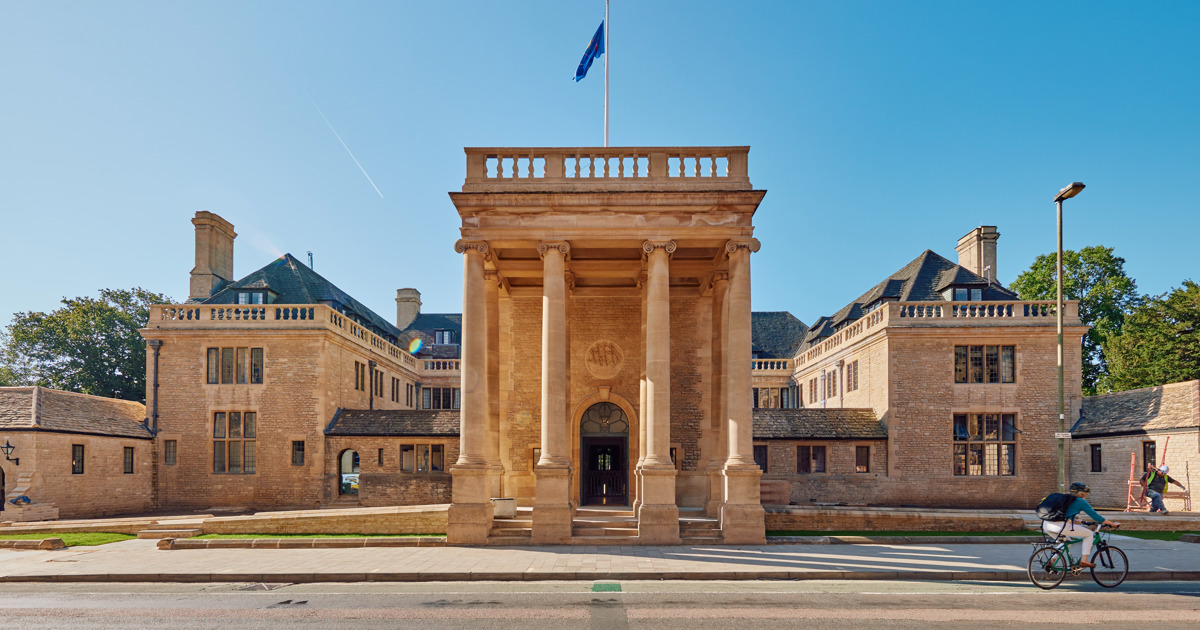
The Rhodes Scholarship at Oxford — the oldest and most storied award of its kind — does not run on one date but on many: national and constituency selections (including global constituencies such as the Syria-Jordan-Lebanon-Palestine circle, Gulf-linked constituencies, and newer global rounds). All constituencies recruit for October 2027 entry between mid-July and mid-October 2026, which means for many candidates the operative date lands in late September or early October.
The funding sits at the very top of the scholarship world: full Oxford fees plus an annual stipend of £20,400 (about £1,700 per month) for graduate study.
The golden rule here: do not memorize a date from social media or group chats. Open your own constituency page on the official Rhodes House site, read its deadline and rules yourself, then target "submitted ten days early" — Rhodes applications are long and reward careful review.
Our updated guide: Rhodes Scholarship 2027 Now Open: Oxford With No Fees and a £1,700 Monthly Stipend for Graduate Study.
Right After September: Two October Deadlines That Matter
If you read this list and realized your file needs more than a few weeks, October brings real extensions:
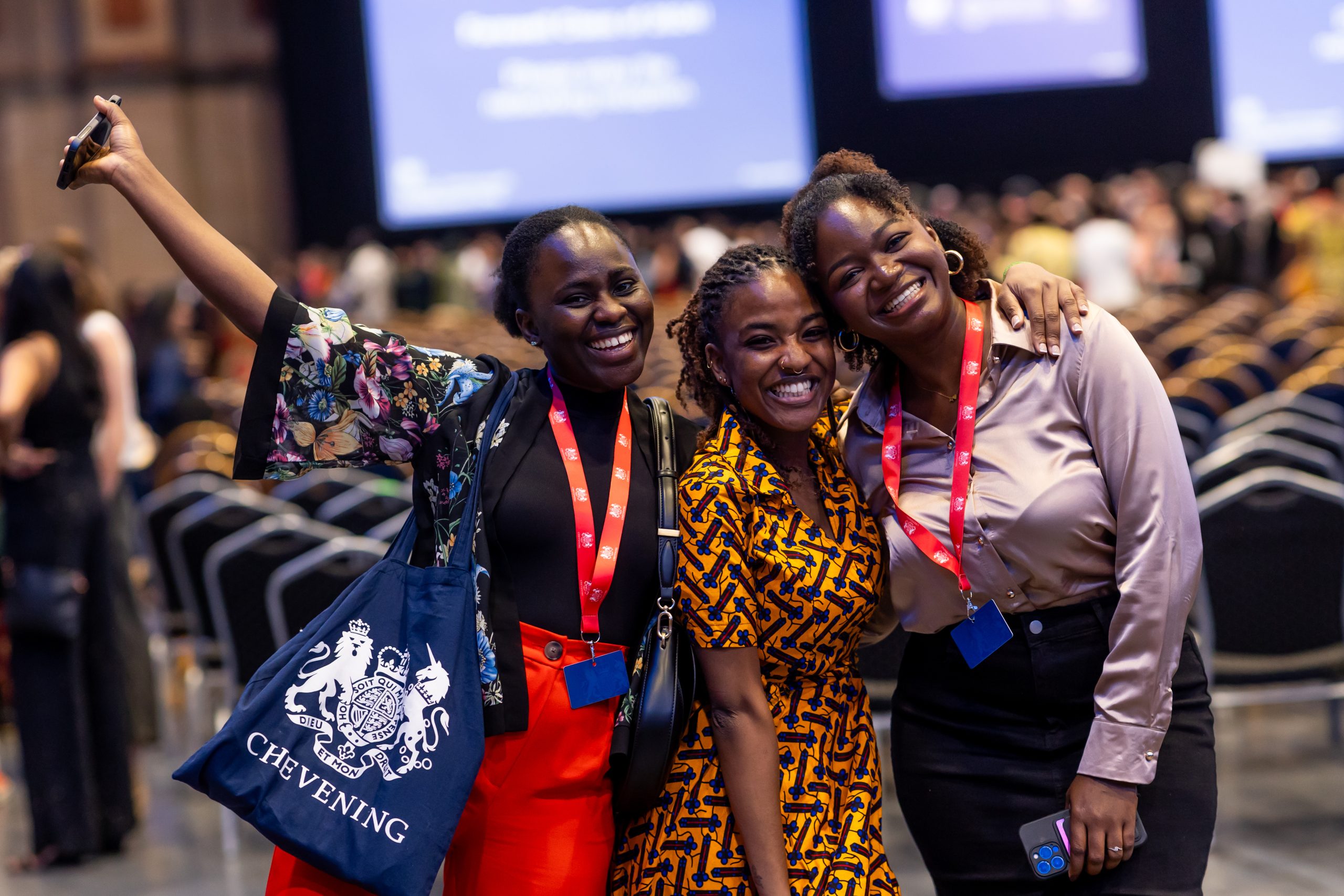
Chevening 2027/2028 closes on 6 October 2026 at 11:00 a.m. UTC. The UK government's flagship scholarship for emerging leaders from 140+ countries funds a full one-year master's in the UK — tuition, monthly stipend, flights, and allowances. One condition cannot be manufactured overnight: at least 2,800 hours of work experience after your undergraduate degree (roughly two years full-time) — check your eligibility before investing in the four essays. Step-by-step details: Chevening Scholarship 2027 Now Open: Fully Funded UK Master's — Apply by October 6.
KAIST in South Korea keeps early-admission documents open for undergraduate entry until 22 October 2026 for anyone who needs extra time: KAIST Undergraduate Scholarship 2027.
That makes nine real opportunities spanning a full 40 days — but the overwhelming majority are decided in the next six weeks.
The Five September Killers — Learn Them From Others
Every season the same failure patterns repeat, predictably enough to map in advance:
Mistake one: trusting a deadline from a group chat. A widely-shared post may be a year old or copied from last cycle. A Rhodes constituency date shifts year to year; an Italian region's date differs from its neighbour's. The rule: never stake a life-changing application on a shared screenshot — open the official source yourself.
Mistake two: assembling documents before reading eligibility. A candidate spends three weeks collecting certificates and certified translations only to discover the award requires two years of post-graduation experience they do not have. Start from the eligibility page, apply every criterion to yourself in writing, then gather documents.
Mistake three: one motivation letter for everyone. Committees detect pasted templates instantly. The paragraph praising "international diversity" in your Malaysian file is identical to your Oxford file. Give every scholarship its own version, even if only 40% changes.
Mistake four: ignoring time zones. "9 September, 3:00 p.m. EDT" is the middle of the night in half the world. Convert to your local time immediately and set an alarm for 48 hours before closure, not five minutes.
Mistake five: waiting for the file to feel complete. It never will. There is always a better grade, a sharper essay. The people who win September deadlines are not the ones with perfect files — they are the ones with sufficient files submitted on time.
How to Verify Any Deadline Yourself in Five Minutes
Before acting on any date you read — including in our own articles — run this routine:
- Find the programme's official page (not an aggregator) and open the Application Deadline or How to Apply section.
- Record the date with its time and timezone. A deadline without a time is an incomplete deadline.
- Check the page's year. A 2026 date is not a 2025 date, and outdated pages linger in search results.
- Scan the news or FAQ section for deferrals and announcements — that is where changes appear first.
- Email the contact address if doubt remains. One polite question beats a wrong assumption that costs a year.
This is the same routine we run before publishing any date at Truescho — and it is the difference between an applicant who knows where they stand and one who finds a closed door.
The 72-Hour Plan: What to Do Immediately After Reading This
Do not read a scholarship list and then return to your week as if nothing happened. Here is the execution sequence that separates readers from applicants:
First 24 hours — decide and diagnose:
- Open the table above and choose one or two scholarships only. Distraction kills every file.
- For each, write on one page: the exact deadline, required documents, and the English requirement if any.
- Assess yourself honestly: which document is ready, and which needs a week or more?
Next 48 hours — the silent documents:
- Send recommendation requests now, not tomorrow. The professor who will write your strongest letter is the slowest to reply.
- Book an English test if your target requires one and your old score is near expiry — some programmes accept a pending test date, some do not.
- Start essay and motivation-letter drafts, even 200 words per question. A bad draft today beats a blank page on deadline day.
Final 72 hours before closure — check and submit:
- Re-read every eligibility criterion (age, experience hours, field, citizenship) and mark each against your case in writing. If you fail one criterion, do not submit — redirect that energy to your second scholarship.
- Upload at least 48 hours before the deadline, not in the final hour. Systems stagger under last-day load, and "the portal froze" reopens nothing.
- After submitting, save your application number and confirmation email in one folder — you will need them during follow-up season.
What This Means for You Specifically
If you are a fresh graduate without substantial work experience, your real battles this month are MARIHE, Italy, and Malaysia; the leadership awards (Schwarzman, Rhodes, Chevening) favour demonstrated impact, and your file will be stronger after two documented years of work than it is today.
If you have three or more years of experience, the picture inverts: Schwarzman, Rhodes, and Chevening were designed for your profile, and every month of delay burns the age window (Schwarzman's is roughly 29). Purely academic funding will still exist later; the "age + experience + leadership" doors are the ones closing in September.
And the deeper message: a scholarship is not a lottery, it is a match. Seven opportunities means seven different sets of criteria. Your job is not to "apply to everything" but to find the one point where you specifically outrank the other applicants — then build the entire application around it.
Frequently Asked Questions
Can I apply to more than one of these at the same time?
Yes — different institutions, different continents, no conflict whatsoever. The only mistake is sending all of them one generic file. Give each application a tailored version of your motivation letter carrying that scholarship's name, philosophy, and criteria.
What if I miss every September deadline?
The money does not vanish, but its nature changes: second rounds like MARIHE's 11 December window remain, and October brings Chevening (6 October) and KAIST (22 October). The trade-off is fewer seats and sharper competition. If your file is genuinely weak today, the smarter play is building toward the spring 2027 rounds properly rather than rushing everything now.
Do these scholarships cover travel and insurance, or only tuition?
Each is fully funded but composed differently: Schwarzman's package includes housing and travel components; Erasmus Mundus pays a monthly living allowance; Rhodes pays an explicit £20,400 annual stipend; Italy funds housing and meals directly. Check the funding column in our table, then the details in each guide.
Is everything taught in English?
Substantially yes: Schwarzman, MARIHE, Rhodes, Universiti Malaya's research programmes, and McGill are English-medium. Italy's regional grants do not require Italian for the grant itself, though the language opens more programmes; some Italian bachelor's tracks teach in Italian. The ICO fellowship operates in English at international host centres.
When should I expect a response after applying?
Timelines differ: Schwarzman shortlists in autumn with interviews roughly late October into November; MARIHE's first round replies within weeks of closing; Rhodes constituency interviews run through autumn and winter 2026. Put these windows in your calendar so an important email never drowns in the waiting.
The Takeaway: A 19-Day Window Starts Now
Seven fully funded scholarships, the first closing in 19 days and the last regional windows shutting with September itself. This article was not written to be browsed; it was written to be printed and pinned. Choose the one or two where you have a real chance, and start the countdown.
To review hundreds of openings throughout the year, follow the Truescho opportunities page, which we update continuously. If you want our team to prepare and submit the application on your behalf, explore the Apply For Me service, or strengthen your language and academic skills through Truescho courses.
Official sources: Schwarzman Scholars · MARIHE · Chevening · Rhodes House · Universiti Malaya · McCall MacBain · ICO Fellowships